





Gut feeling has its place in leadership, but it is a poor substitute for evidence when your cost per hire, your time to fill, and your team's productivity are all on the line. HR Directors and Talent Acquisition Managers who have made the shift from intuition to data report faster pipelines, lower attrition, and hiring decisions that hold up under scrutiny. This guide explains what data-driven recruitment means in practice, why it matters for modern talent teams, and exactly how to move from scattered spreadsheets to a repeatable, scalable hiring process backed by real numbers.
What Is Data-Driven Recruitment?
Data-driven recruitment is the practice of using quantitative and qualitative data to guide every stage of the hiring process, from identifying where to source candidates to evaluating interview performance to predicting future workforce needs. Instead of relying on a hiring manager's intuition or a recruiter's instinct about a candidate, decisions are anchored in patterns, benchmarks, and measurable outcomes.
The scope of this methodology covers the entire talent acquisition funnel.
- Sourcing: Which channels generate the highest volume of qualified applicants?
- Screening: Which candidate profiles have historically led to long-term, high-performing hires?
- Interviewing: Where do candidates drop off, and what does that signal about the process or the employer brand?
- Onboarding: Do early-stage retention rates confirm that the hire was a quality match?
When data flows through each of these stages, patterns emerge. Those patterns become the foundation for decisions that are repeatable, defensible, and continuously improving.
Companies That Prove the Case for Data-Driven Recruitment
The shift from gut-feel hiring to data-informed decision-making has delivered measurable results across industries of every size.
- IBM's adoption of its Watson Recruitment platform produced a 40% reduction in time-to-fill and a 20% improvement in quality of hire, demonstrating that moving faster and hiring better are not mutually exclusive goals. [1]
- L'Oréal implemented data-driven video interviewing and saw a 200% increase in interviews conducted while substantially reducing the time and cost of initial candidate screening. The approach also widened their talent pool by removing geographic constraints, directly supporting the company's diversity goals [1]
- Unilever is perhaps the most cited example of recruitment transformation at scale. By deploying HireVue's automated video interviewing software, the company saved over £1 million and cut recruiting time by 75%. [2]
- Amazon, one of a small number of enterprises to fully embed data in its HR function, alongside Google and Nestlé Purina, uses continuous new-hire surveys to track which attraction factors drive candidates to apply. That feedback loop directly shapes sourcing strategy and employer brand investment. [3]
5 Essential Data-Driven Recruitment Strategies
To successfully transition your department, follow these actionable steps to build a robust data pipeline.
1. Audit Your Current Process
Document your current time-to-fill, cost-per-hire, source-of-hire distribution, and offer-acceptance rate. This baseline serves as the reference point for whether future changes are working.
- Tools: ATS Reports Module (e.g., Manatal) or a simple spreadsheet tracker
- Action: Pull and record your current Time to Fill and Cost per Hire for the last 6–12 months across each role type and department
- Result: A documented baseline that makes it possible to quantify improvements and justify the investment in data tools to leadership
2. Select the Right Metrics (KPIs)
Focus on the metrics that align with business goals; vanity metrics waste attention and create noise.
- Tools: KPI framework template (e.g., OKR tool, Notion, or Confluence) aligned with your HR leadership's strategic goals
- Action: Prioritize Quality of Hire, Offer Acceptance Rate, and Retention at 90 days over surface metrics like total applicants, then map each KPI to a business outcome
- Result: A lean, focused KPI dashboard that HR directors can act on, rather than a bloated report full of data that doesn't drive decisions
3. Centralize Your Talent Data
Scattered spreadsheets create data silos that blind you to patterns. A single source of truth is the backbone of any data-driven recruitment function.
- Tools: Applicant Tracking System (ATS) with CRM capabilities or a unified HRIS platform
- Action: Migrate candidate records, communication logs, source attribution, and stage data into one platform; retire isolated spreadsheets and enforce a single data entry standard
- Result: A holistic, real-time view of pipeline performance that surfaces bottlenecks and source quality, eliminating the blind spots created by siloed data
4. Use Data for Predictive Hiring
Historical patterns reveal when and where talent needs arise, allowing you to source proactively before demand becomes a crisis.
- Tools: People analytics platform (e.g., Visier, Tableau + HRIS data export, or Power BI) integrated to your ATS and HRIS historical records
- Action: Analyze 2–3 years of turnover by quarter and average time-to-hire by role; if engineers take 45 days to hire and Q3 shows consistent attrition, build a hiring calendar that starts sourcing in Q2
- Result: A holistic, real-time view of pipeline performance that surfaces bottlenecks and source quality, eliminating the blind spots created by siloed data
5. Visualize Data for Stakeholders
Clear visual reporting transforms numbers into narratives that executives can act on and that justify your budget.
- Tools: BI/Dashboard tool, Tableau, Looker, Power BI, or even Google Data Studio, connected to your centralized ATS data
- Action: Build a live recruitment funnel dashboard showing stage-by-stage conversion, source ROI, and KPI trends; present this monthly to executive leadership instead of static spreadsheet exports
- Result: Faster stakeholder buy-in for budget requests and process changes, and a credible, data-backed narrative that positions the recruitment function as a strategic business driver
Stop tracking your recruitment funnel across disconnected spreadsheets. Manatal's Reports and Analytics feature gives your team a real-time, centralized view of every KPI that matters. See exactly where candidates drop off, which channels drive your best hires, and how your time to fill compares over time.
{{cta}}
The 4 Numbers You Must Track
If you are just beginning your data-driven recruitment journey, these four numbers are the non-negotiable starting point. Each one maps directly to a business outcome that a hiring team can influence.
Breaking Down Each Metric
- Time to Fill: This measures the speed of your process from the moment a job requisition is approved to the moment a candidate accepts the offer. A high Time to Fill often indicates an inefficient interview process or unrealistic job requirements.
- Cost per Hire: Total recruitment spend (advertising, software, agency fees) divided by the number of hires. This is the primary metric for measuring the ROI of your recruitment budget.
- Source of Hire: Which channels, such as LinkedIn, Indeed, or employee referrals, provide the best ROI? Data often reveals that the cheapest source of applicants is actually the most expensive in terms of turnover.
- Offer Acceptance Rate: Are you losing top candidates at the finish line? If your acceptance rate is low, data can help determine if your salary offers are uncompetitive
For more information about talent acquisition metrics, click here
How Manatal Powers Data-Driven Hiring
While the theory of data-driven recruitment is straightforward, the execution is difficult without the right tools. Tracking these metrics in Excel is manual, error-prone, and lacks the real-time speed required for modern hiring.
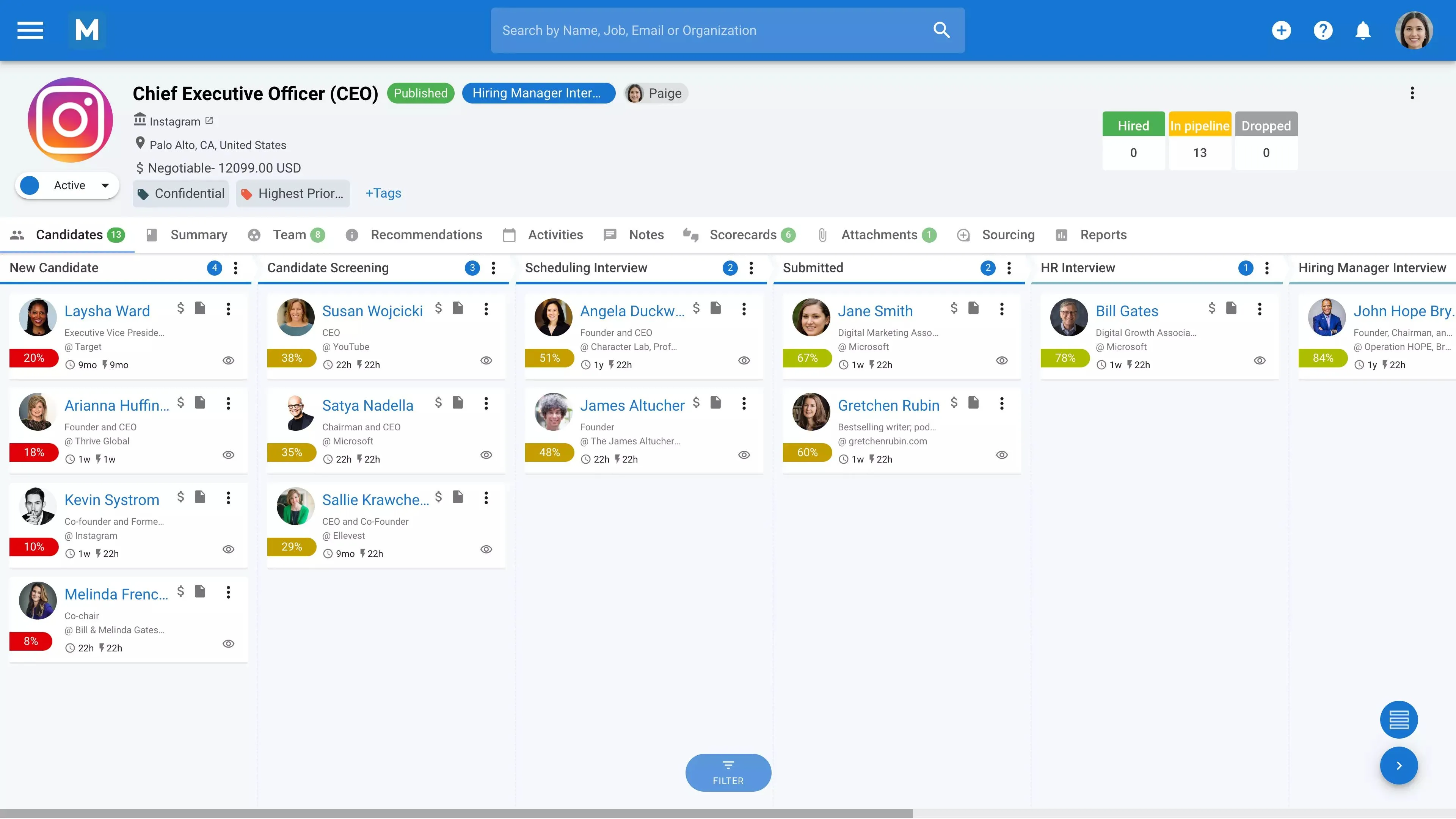
Manatal provides a proactive solution by aggregating data from job boards, career pages, and email interactions into a single, real-time dashboard.
- Reports & Analytics Suite: Manatal instantly visualizes your recruitment funnel, allowing you to spot bottlenecks as they happen.
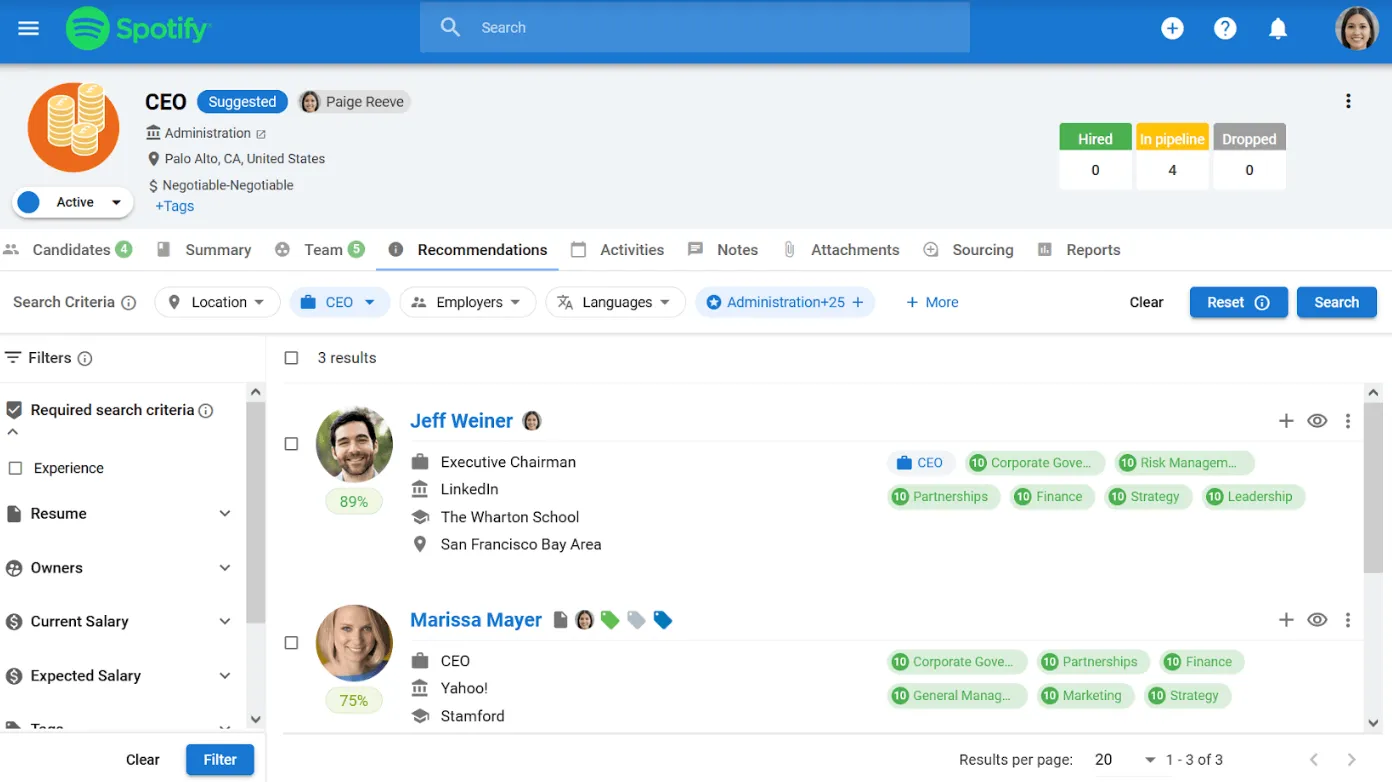
- AI-Powered Scoring: Manatal’s AI capabilities score candidates based on data-driven matches, significantly reducing manual screening time and ensuring the best fits rise to the top.
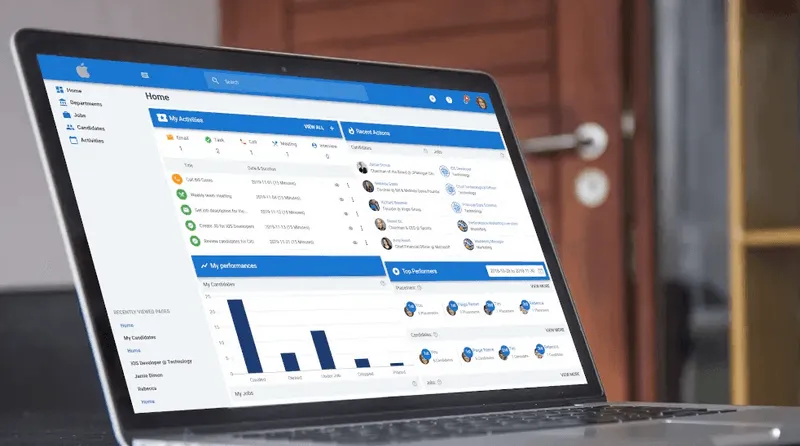
- Central Source of Truth: Move away from reactive spreadsheets and manage your entire talent acquisition strategy from one centralized platform.
Overcoming Common Implementation Challenges
Even with the right tools and the right intent, data-driven recruitment programs can stall. Two challenges account for most failed implementations.
Challenge 1: Data Quality
The accuracy of every metric, dashboard, and predictive insight depends entirely on the quality and consistency of the data entered. If some recruiters log every candidate interaction and others log none, your source of hire data is unreliable. If pipeline stages are defined inconsistently across departments, your time-to-fill calculations are meaningless.
The solution is to ensure process compliance before adopting the tool. Define your pipeline stages. Standardize how sources are categorized. Make data entry a non-negotiable part of the recruiting workflow, not an optional administrative task.
Challenge 2: Analysis Paralysis
The moment a team gains access to a comprehensive analytics platform, there is a temptation to track everything. Conversion rates at every stage. Source effectiveness by geography. Interview-to-offer ratios by hiring manager. These are all useful eventually. In the early stages, they are a distraction.
Start with the Big 4 metrics described above. Build habits, establish baselines, and make decisions based on the data. Add complexity only after the fundamentals are embedded in your team's workflow.
Conclusion
In 2026, relying on intuition to build your workforce is no longer viable. Data removes the guesswork, streamlines the budget, and ensures you hire based on merit and potential rather than a "gut feeling." Adopting data-driven recruitment is the ultimate competitive advantage for securing top talent in an increasingly complex market.
Frequently Asked Questions
Q: What metrics should I track first in data-driven recruitment?
A: Start with the Big 4: time to fill, cost per hire, source of hire, and offer acceptance rate. These four metrics cover pipeline speed, budget efficiency, channel performance, and candidate experience without overwhelming your team with unnecessary complexity.
Q: Can small teams use data-driven recruitment?
A: Yes. Data-driven recruitment scales to team size. A two-person recruiting team tracking time-to-fill and source-of-hire in an ATS gains a significant advantage over competitors who rely on intuition. The tools and processes can be proportionate to team size; the discipline is what matters.
Q: How does an ATS support data-driven recruitment?
A: An applicant tracking system centralizes candidate data, automates pipeline tracking, and generates real-time reports on key recruitment KPIs. Without a centralized platform, teams rely on manual data entry into spreadsheets, which creates errors, silos, and delayed insights.
Q: What is the difference between the quality of hire and the offer acceptance rate?
A: Quality of hire measures performance and retention after the hire is made; it is a long-term metric. Offer acceptance rate measures how often candidates accept after an offer is extended; it is a near-term signal of how competitive and appealing your process and compensation are. Both are essential components of a complete data-driven recruitment program.
Citation:
.webp)







.webp)

.webp)


.webp)


