


The global IT recruitment market was valued at about USD 198.8 billion in 2025 and is projected to reach around USD 416.3 billion by 2035. [1] Growth is driven by strong demand for software, cloud, cybersecurity, and AI talent. To recruit top tech talent, recruiters can no longer sit back and wait for applications to start flowing in. Instead, you have to take a more proactive approach and show that your organization has what applicants are looking for. For that, you need a strategy. In this article, you’ll learn about planning your tech recruitment strategy to attract top talent in the field.
Before You Start: The Pre-Flight Checklist
Most hiring mistakes happen before the first sourcing call. Use this checklist before opening every technical role. The four stages that follow will make more sense once these are locked in.
- Calibrate requirements with the engineering manager (non-negotiables vs. nice-to-haves)
- Confirm that the tech stack details and specific frameworks are included in the job description.
- Set up a technical candidate assessment tool before posting the role
- Define your salary range using current market data (Levels.fyi, LinkedIn Salary, Glassdoor)
- Identify sourcing channels beyond LinkedIn (GitHub, Stack Overflow, tech job boards, niche communities)
- Document your selling points for this specific role (remote policy, tech stack modernization, team size)
- Set automated follow-ups so no candidate goes silent after a take-home assignment.
- Confirm internal offer approval authority before final-stage interviews
Your Tech Recruitment Strategy in 4-Stages
Stage 1: Sourcing
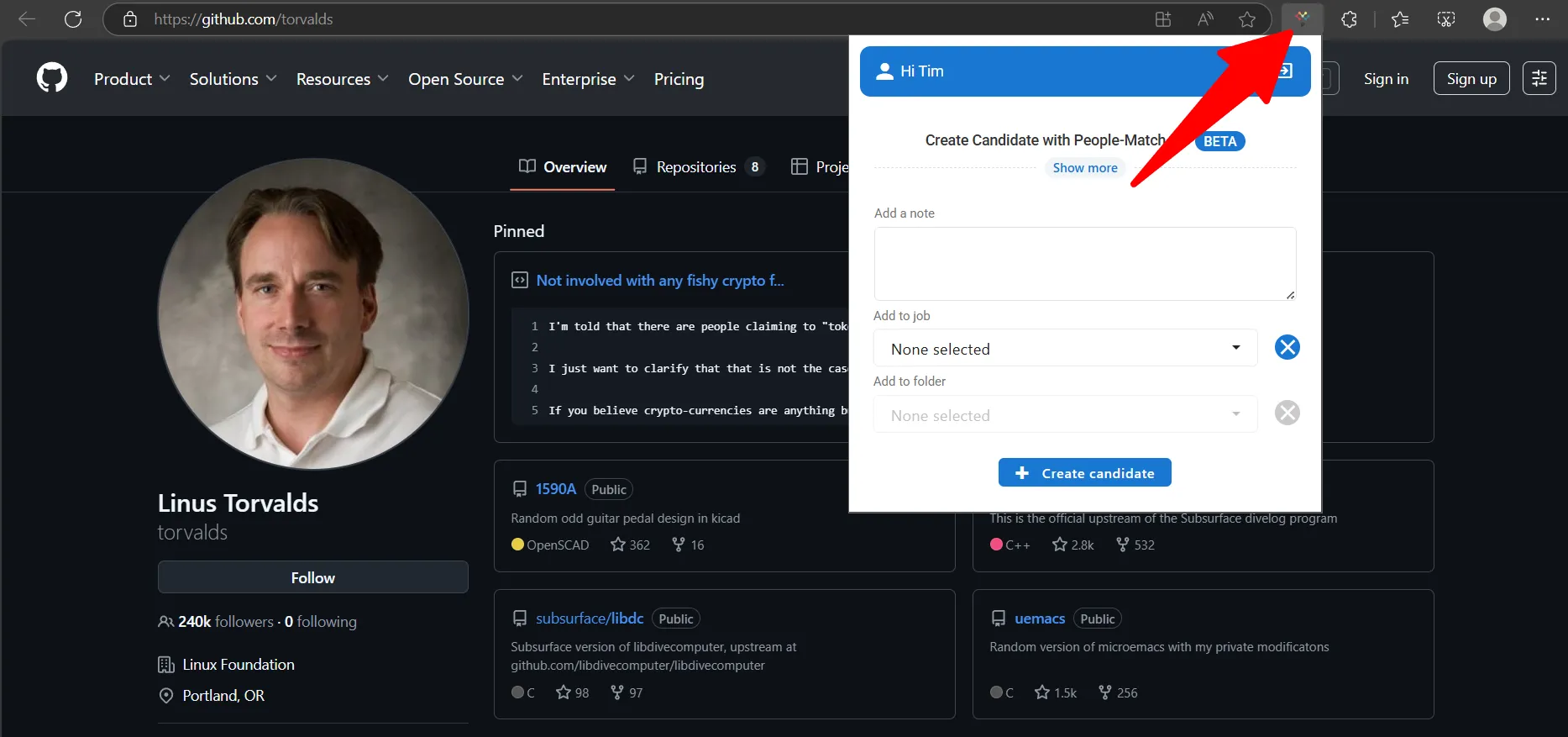
Target the spaces where developers actually spend time, such as GitHub, Stack Overflow, Dev.to, and Discord communities for specific frameworks; these are where you find people who are actively building. When you look at a GitHub profile, pay attention to three things even without a technical background:
- Recency of contributions (are they actively coding?)
- Variety of repositories (are they curious or narrow?)
- Quality of README files (Can they communicate clearly?)
Manatal's People-Match AI Chrome extension lets you source directly from GitHub and more than 10 other platforms. It automatically parses public profile data into candidate profiles, eliminating the need to copy and paste between tabs.
{{cta}}
Tech job boards worth adding to your sourcing rotation:
Stage 2 Match: Use AI to Handle Skill-Matching at Scale
Cross-referencing technical skills across hundreds of resumes is one of the most time-consuming bottlenecks in tech recruitment. Candidates rarely describe their experience using the exact terminology in a job description, and without deep technical knowledge, it's difficult to assess equivalency or relevance at volume. Manual filtering at this stage is slow, inconsistent, and prone to missing strong candidates.
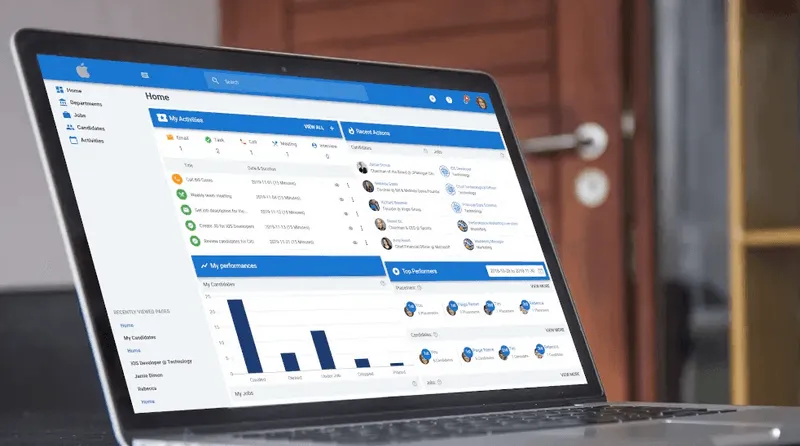
This is where AI earns its place in your tech recruitment strategy. Manatal's AI recommendation engine understands the meaning behind a job description, instantly surfacing the best candidates from your existing pool and delivering a ranked shortlist of candidates who fit the actual requirements of the role.
To implement it:
- Ensure your job description is complete. The engine uses a Job Completion Score, a 1–5 bar indicator, to help recruiters complete the critical fields that fuel better recommendations. Aim for a Grade B or A (4–5 bars) to unlock the "See Recommended Candidates" button.
- Let the AI extract requirements automatically. The engine automatically identifies core skills and requirements from your job description to surface the best talent immediately, and candidates are scored and ranked based on your specific job criteria.
- Review the AI Match Overview for each candidate. Every recommended candidate comes with a match score (a clear percentage indicating fit), line-by-line justifications explaining why a candidate matches specific requirements, and a gap analysis showing which preferred skills are missing.
- Apply weighting to prioritize what matters most. With the weighting tool, you can assign specific levels of importance to your requirements, giving you granular control to fine-tune exactly how candidates are ranked and ensuring the AI prioritizes the skills that matter most to your specific role.
- Use it for candidate rediscovery. The engine searches across your entire database, not just recent applicants, making it possible to instantly surface a past candidate who is now a perfect match for a new opening.
This also reduces cost per hire. Every role filled through an agency costs between 15% and 25% of the first-year salary. Moving technical sourcing in-house with the right tooling cuts that spend directly.
Stage 3 Assess: Test Skills, Not Resumes
Resumes only show past experience, but actual coding skills must be proven through action. The real challenge in tech hiring is designing a test that is accurate and respects the candidate's time, so you don't lose top talent midway through the process.
- Calibrate the assessment with the engineering manager. A four-hour take-home assessment for a junior role kills your offer acceptance rate. A focused 30-minute problem is enough to see how someone thinks through a constraint.
- Prefer practical assessment over algorithm gymnastics. Platforms like HackerRank, Codility, and Coderbyte offer structured environments, but what you're evaluating isn't whether someone can reverse a binary tree. It's whether they can explain their thinking as they solve a real problem.
- Check your requirements against reality. Do not post a job requiring 10 years of experience in a framework that has existed for six. It signals you don't know the space, and developers share these postings publicly on Reddit and Twitter to call it out.
With tools like Manatal, you can automate post-assessment follow-ups through stage-based email workflows. Whether it’s a rejection, a request for clarification, or next-step instructions, you ensure every candidate receives a timely response.
Stage 4 Close: Build a Brand, Developers Actually Respect
Treat the closing stage like developer relations, not an HR transaction. Companies that consistently attract strong engineers aren't just offering competitive salaries. They publish engineering blogs, speak at conferences, open-source internal tools, and talk openly about their technical challenges. Developers want to know four things before they consider signing:
- What is your actual tech stack? Name the frameworks, not "modern technologies."
- How often do you deploy? Weekly, daily, or manually with prayer?
- How do you handle incidents? The answer tells them more about your culture than any values statement.
- Is remote or async work available?
Tip: If your candidate is in final-stage interviews, they're also in final-stage interviews elsewhere. Know your offer range (check Levels.fyi, Glassdoor, and LinkedIn Salary) and approval authority before you get there. Speed at the offer stage is not a nicety. It's a competitive requirement.
KPIs That Tell You Where Your Process Is Breaking
Track these three numbers every quarter. Each one points to a different problem.
- Time to Fill: From job open to offer accepted. In competitive tech markets, anything above 45 days means you're losing candidates mid-funnel. Target 30 days or less for senior roles.
- Offer Acceptance Rate: If you extend 10 offers and only 6 are accepted, the issue is salary, employer brand, or candidate experience. Each has a different fix. Track this by role level, not just in aggregate.
- Quality of Hire: Do they pass the 90-day mark? Are they still there at 12 months? Connect this back to your sourcing channels. Referral hires typically show stronger 12-month retention than job board hires, and that data changes how you allocate sourcing time.
Conclusion
A tech recruitment strategy that worked two years ago will not close engineers today. The best developers are passive, ignore generic outreach, and make quick decisions. The four stages in this guide, Find, Match, Assess, and Close, reflect how strong technical recruiting teams actually work.
Use the preflight checklist before opening your next role. Fix the stage where your numbers drop. Build your employer brand before you urgently need to hire. Teams that do this stop reacting to hiring crises and start managing a pipeline they control.
Frequently Asked Questions
Q: What is a tech recruitment strategy, and why does it need to be different from standard hiring?
A: A tech recruitment strategy is a structured approach to sourcing, assessing, and closing technical candidates like developers and engineers. It needs to differ from standard hiring because most senior tech talent isn't actively job-seeking. They require proactive sourcing, faster processes, and technical credibility in your communication.
Q: How long should a tech recruitment strategy take from sourcing to offer?
A: Target 30 days or less for senior roles. Top engineers typically receive competing offers within 10 days of entering the market. A process longer than 45 days consistently loses strong candidates at the final stages.
Q: Which sourcing channels should be part of a tech recruitment strategy?
A: Go beyond LinkedIn. GitHub, Stack Overflow, Dev.to, and niche Discord communities are where active developers spend time. Supplement with job boards like Hired, Dice, and We Work Remotely, depending on the role type and seniority.
Q: How does AI fit into a tech recruitment strategy?
A: AI handles the first-pass skill matching that non-technical recruiters can't do manually at speed. Tools like Manatal's AI Recommendation Engine score candidates against job requirements and enrich profiles with public GitHub data, giving you a fuller picture before you spend time on outreach.
Citations
.webp)







.webp)

.webp)


.webp)


