





Replacing an employee often costs 50-200% of their annual salary (commonly 1.5x-2x), excluding morale hits, knowledge loss, and ramp-up time (typically 3-9 months). [1] Most companies respond by optimizing either their recruitment process or their employee retention into separate teams and separate KPIs. This is the core issue. Bad hires can't be fixed by retention alone, and great hires flee toxic cultures. In 2026, success requires a unified talent lifecycle: retention thinking starts pre-offer, and recruitment insights improve ongoing management. This article walks through seven recruitment and retention strategies, organized across three phases: Attract, Retain (first 90 days), and Long-Term Structure.
What Are Recruitment and Retention Strategies?
Recruitment and retention strategies are a connected set of practices that help organizations attract qualified candidates and reduce employee turnover. Rather than treating hiring and keeping talent as separate functions, effective strategies link the two into a single talent lifecycle.
7 Recruitment and Retention Strategies
Phase 1: The Attract Phase (Recruitment That Sets Up Retention)
Strategy 1: Transparent Employer Branding
The fastest way to kill retention is to oversell the role. Candidates who join based on an inflated pitch leave within six months, once the reality becomes clear. And they tell others. The fix is Realistic Job Previews (RJPs): a deliberate practice of showing candidates what the role actually looks like, including its friction points.
How to implement:
- Audit your current job descriptions. Where does the language say "fast-paced and dynamic" when it means "understaffed and reactive"?
- Add a "What's hard about this role" section to your JDs. It signals maturity and filters out candidates who will not last.
- Have current team members record short video clips about their real day-to-day. These convert well and set accurate expectations.
Research consistently shows that candidates hired through RJP processes have higher tenure, even when the role sounds less glamorous. They stayed because they knew what they signed up for.
Strategy 2: Treat Candidate Experience as a Signal
A clunky, slow, or disrespectful application process tells candidates something about how you operate internally. And candidates are paying attention.
Practical steps:
- Time your own application process. If it takes more than 12 minutes to apply, cut it.
- Send a confirmation email within 24 hours of every application.
- Give rejected candidates a status update. The ones you reject today are the ones you might want in two years.
Candidate experience is a brand. How you treat people during the hiring process is your first concrete proof of your claims about your culture. Manatal's email automation handles this automatically, sending customized post-application emails to every candidate as soon as they apply through your career page, with no manual follow-up required. You set the template once, and every candidate gets acknowledged on time.
{{cta}}
Strategy 3: Hire for Culture-Add, Not Culture-Fit
Hiring for "fit" is hiring for familiarity. Over time, it produces a homogenous team that thinks the same way, has the same blind spots, and cannot adapt to change.Culture-add hiring means asking, "What does this person bring that we do not already have?" It produces stronger teams, higher engagement among new hires (who feel genuinely valued), and better long-term retention.
How to shift the interview process:
- Replace "Would this person fit in?" with "What perspective does this person add?"
- Add at least one structured interview question that directly tests for a different viewpoint or approach.
- Brief interviewers before panels to ensure the criteria are consistent.
Using Data to Hire Better From Day One
After you have audited your attract phase, the next question is, how do you know if it is working?
Spreadsheets can track applications. They cannot tell you whether the candidates sourced from LinkedIn are still with you two years later, or whether your referral hires outperform your job board hires on 90-day performance reviews.
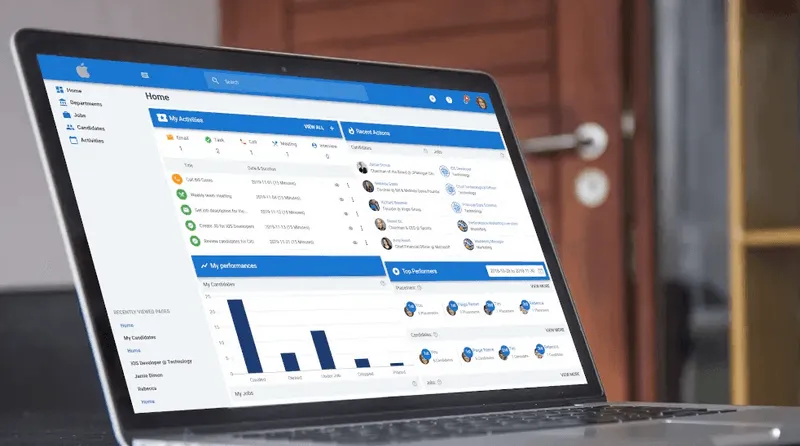
That answer lives in your pipeline data. Manatal's Reports & Analytics gives you a full view of where candidates drop off in your recruitment funnel, which sourcing channels are actually producing hires, and how your team is performing against KPIs like time-to-hire and cost-per-hire.
.webp)
Phase 2: The Retain Phase (First 90 Days)
Strategy 4: Run a Structured 30-60-90 Onboarding Plan
Most voluntary turnover happens in the first six months. The leading cause is not low pay or a bad manager; it is a lack of clarity. New hires do not know what success looks like, who to ask for help, or whether they made the right decision.
A 30-60-90 plan eliminates that ambiguity.
What each phase should cover:
Day 1-30 (Learn):
- Introductions to every key stakeholder the role touches
- Access to all necessary tools and systems, set up before day one
- One documented goal for the first 30 days
- Weekly check-in with the direct manager (30 minutes, structured)
Day 31-60 (Contribute):
- First independent project or deliverable
- Feedback session on the 30-day goal
- Introduction to cross-functional workflows
Day 61-90 (Own):
- Performance review against 90-day goals
- Career conversation: "Where do you want to go from here?"
- Transition from onboarding check-ins to standard 1:1 cadence
Communication during onboarding is not a separate item on the checklist. It is built into every phase. The weekly check-ins, the documented goals, and the feedback session: these are all communication structures. Build them into the plan.
Strategy 5: Map Visible Career Pathways
Employees leave when they cannot see where they are going. The manager thinks the path is obvious. The employee thinks they have hit a ceiling. The fix is to make the career ladder explicit and visual, not a conversation that happens once a year at review time.
How to build visible pathways:
- Document the criteria for each level within a role family (not just titles, but skills, scope, and impact).
- Show entry-level hires what the next two levels look like within their first 30 days.
- Run career conversations quarterly, not annually. Ask: "What would you need to see to feel like you are moving forward here?"
Let’s take a look at some real-life examples of career development programs:
- Mentoring programs: Mentoring programs pair experienced employees with less experienced ones to provide guidance, feedback, and support. Mentoring can help employees learn new skills, gain insights, and build relationships. For example, Abbott Laboratories offers a mentoring program that matches employees with mentors based on their career interests and development needs. [2]
- Upskilling: Upskilling is the process of teaching employees new skills or enhancing their existing ones to meet the changing demands of their roles or the market. It can help employees adapt to new technologies, processes, or challenges. Amazon embraced this program by investing $700 million to upskill 100,000 of its employees by 2025 through various programs, such as Machine Learning University, Amazon Technical Academy, and Career Choice. [3]
- Employee resources groups: Employee resources groups, or ERGs, are voluntary, employee-led groups that foster a diverse, inclusive, and supportive workplace. ERGs can help employees connect with others who share similar backgrounds, identities, or interests, and provide opportunities for personal and professional development. Infosys Limited, USA, a digital service consulting firm, has several ERGs, such as Women in Leadership, Pride@Infosys, and Veterans@Infosys, that offer mentoring, networking, and learning events for their members. [4]
- Personalized learning and development: Personalized learning and development is the practice of tailoring learning opportunities to the individual needs, preferences, and goals of each employee. Personalized learning and development can help employees learn at their own pace, in their preferred format, and on topics that are relevant to them. Take an example from Google: its Googler-to-Googler platform, where employees can create and deliver courses on any topic they are passionate about, such as mindfulness, public speaking, or coding. [5]
The practical takeaway: career development does not have to be expensive. It needs to be documented, communicated, and followed through.
Phase 3: The Structural Phase (Long-Term Retention)
Strategy 6: Build a Total Rewards Strategy
In 2026, employees benchmarking their pay have more data than ever: Glassdoor, LinkedIn Salary, and a growing number of jurisdictions with pay transparency requirements. If your pay ranges are not internally consistent and externally competitive, your employees already know. The shift is from "competitive salary" to Total Rewards: salary, benefits, flexibility, equity, and career investment, communicated transparently.
Steps to build a Total Rewards approach:
- Benchmark your pay ranges against current market data by role and level, not just when you open a new position.
- Audit for internal pay equity. If two people doing the same job at the same level are paid significantly differently without documented justification, fix it before someone else finds it.
- Be explicit about what your non-salary benefits are worth. If you offer four weeks of PTO, a health stipend, and remote flexibility, state the approximate value. Most employers undersell this.
- Communicate openly about how pay decisions are made. Employees do not need to know everyone's salary; they need to understand the system.
Pay transparency is increasingly a legal requirement in many markets. Build the practice now rather than reactively.
Strategy 7: Use Exit Data to Fix Recruitment Criteria
Most organizations run exit interviews. Almost none feed the results back into their hiring process. That is a significant missed opportunity.
If your exit data shows that a consistent percentage of departures cite "misalignment with manager expectations," that is not purely a management problem. It is a recruitment problem. Your JD, interview process, or offer conversation is creating a mismatch in expectations before the person even starts.
How to close the feedback loop:
- Analyze exit interview data quarterly, not just as individual anecdotes. Look for patterns by department, tenure bucket, and hiring source.
- Share relevant findings with Talent Acquisition. If people hired from a particular source consistently leave within 12 months, that source needs to be reviewed.
- Add "retention risk indicators" to your hiring criteria. If certain candidate profiles correlate with short tenure in your specific environment, screen for them.
Stay interviews are as valuable as exit interviews, and more actionable. Ask current employees twice a year: "What would make you consider leaving? What keeps you here?" You get the data while there is still time to act.
Your Recruitment and Retention Plan Checklist
Ensure no step is missed in your talent strategy. Use this checklist as a practical audit. Work through each item with your TA and HR teams.
Attract Phase
- [ ] Audit all active job descriptions for accuracy vs. the real role
- [ ] Add a "challenges of this role" section to each JD
- [ ] Time your application process end-to-end; cut anything that takes it past 12 minutes
- [ ] Define your culture-add criteria and brief all interviewers
First 90 Days
- [ ] Build a documented 30-60-90 onboarding plan for each role family
- [ ] Ensure system access and equipment are ready on day one, not week one
- [ ] Schedule weekly manager check-ins for the first 30 days
- [ ] Run a 90-day performance and career conversation for every new hire
Long-Term Structure
- [ ] Benchmark pay ranges against current market data
- [ ] Run an internal pay equity audit
- [ ] Implement stay interviews twice per year
- [ ] Map visible career paths for all entry-level roles
- [ ] Analyze exit interview data quarterly and share findings with TA
- [ ] Review sourcing channel performance against 12-month retention data
Conclusion
Employee engagement and retention are vital for any organization, as they can help you attract, develop, and retain the best talent, as well as improve your performance, culture, and image. By following these strategies, it’s safe to say that you’ll be able to create and sustain a strong and loyal workforce that can help you achieve your organizational goals and objectives. We encourage you to invest in the areas and aspects discussed above and to prioritize employee engagement and retention for your organization.
Frequently Asked Questions
Q: Why do recruitment and retention strategies fail?
A: Most recruitment and retention strategies fail because they are built in silos. Talent Acquisition focuses on filling roles quickly, while HR manages engagement separately. When the two teams do not share data or goals, the result is high turnover that neither side can fully explain or fix.
Q: What is the most important phase in a recruitment and retention strategy?
A: The first 90 days are the highest-risk window. Studies show that a significant share of voluntary turnover happens within the first six months, often due to unclear expectations or a lack of a structured onboarding plan. Getting this phase right has an outsized impact on long-term retention.
Q: How do recruitment and retention strategies affect company culture?
A: Recruitment and retention strategies directly shape culture because who you hire and how long they stay define your workforce over time. Hiring for culture add rather than culture fit and investing in clear career pathways builds a more engaged and diverse team that is less likely to leave.
Q: How can data improve recruitment and retention strategies?
A: Data closes the loop between hiring decisions and retention outcomes. By tracking which sourcing channels produce the longest-tenured employees and feeding exit interview patterns back into recruitment criteria, HR teams can continuously refine both their hiring process and their retention programs over time.
Citations:
1. StaffCost Blog: How Much Does It Cost to Replace an Employee in 2026?
2. Abbott
3. Amazon
4. Infosys
5. LinkedIn
.webp)







.webp)

.webp)


.webp)


