





Finding the right executive requires more than posting a job and waiting for applications. In 2026, organizations are facing stronger demand for experienced leaders alongside growing challenges in sourcing critical talent. Senior-level job postings increased 14.7% year over year as of May 2026, according to Indeed Hiring Lab, while SHRM reports that more than two-thirds of organizations struggled to fill open positions this year. [1] [2] These trends make a structured executive search strategy increasingly important. This guide is for the in-house talent leader filling a VP or C-suite seat without a retained firm. A clear executive search strategy is what makes that search repeatable, measured, and accountable.
What Is Executive Search Strategy?
Executive search strategy is a proactive, targeted blueprint designed to identify, attract, and secure high-caliber executives, such as C-suite officers, VPs, and board directors, who align with an organization's long-term goals. Rather than relying on public job postings and screening inbound applicants, as in traditional recruitment, an executive search strategy centers on precise market mapping and direct engagement with proven leaders.
Because top-tier candidates are typically employed and not actively job hunting, the strategy focuses on discreet, targeted outreach. Hiring the wrong executive carries high financial and operational risks, making a structured, research-driven methodology essential for securing the right leadership fit.
How to Run an Executive Search Strategy
The workflow below runs an in-house executive search strategy without a retained firm. It assumes a lean starter stack and a human checkpoint at every scoring gate. Most searches run about three to six months, with intake and market mapping front-loaded before any outreach begins.
The Starter Toolset
Keep your tech stack lean, specialized, and high-touch to manage discreet candidate interactions:
- Core ATS/CRM: An executive-search-capable ATS such as Manatal to manage confidential pipelines, executive scorecards, and off-limits databases in one system.
- Executive Sourcing & Mapping: LinkedIn Recruiter paired with specialized executive networks and databases (e.g., BoardEx for C-suite connection mapping or ExecThread).
- Market & Executive Intelligence: Niche leadership job boards and industry sources such as Exec-Appointments (Financial Times) or The Ladders.
- Multi-Stakeholder Scheduling Tool: To seamlessly coordinate confidential panel interviews with busy board members and candidates.
The Executive Search Workflow
Step 1: Define the Mandate and Compensation Structure
Conduct a structured intake call with the board, CEO, or search committee. Document the role's primary purpose, 12-to-18-month strategic deliverables, compensation package (including equity, stock options, and LTIPs), and strict off-limits companies.
Step 2: Build the Executive Competency Scorecard
Convert the mandate into 5 to 7 weighted leadership competencies (e.g., P&L responsibility, crisis management, post-merger integration), clearly separating non-negotiable core competencies from nice-to-haves.

.png)
How to do it: Go to "Administration" > "Features" > "Candidate Scorecards" > "Forms" and click "Add new scorecard.” Name your scorecard template and click "Add a field" to define key evaluation criteria (such as ratings or text fields) to standardize interview reviews across your team.
Step 3: Map the Target Market and Source Candidates
Use Manatal’s Candidate Sourcing Chrome Extension to instantly import executive profiles and check for duplicates, keeping your target database organized and auditable.
Identify 50 to 100 high-performing leaders using targeted Boolean search strings tailored for discreet C-suite sourcing (e.g., ("Chief Executive Officer" OR "CEO" OR "Managing Director") AND ("P&L" OR "turnaround")) AND NOT "Interim"
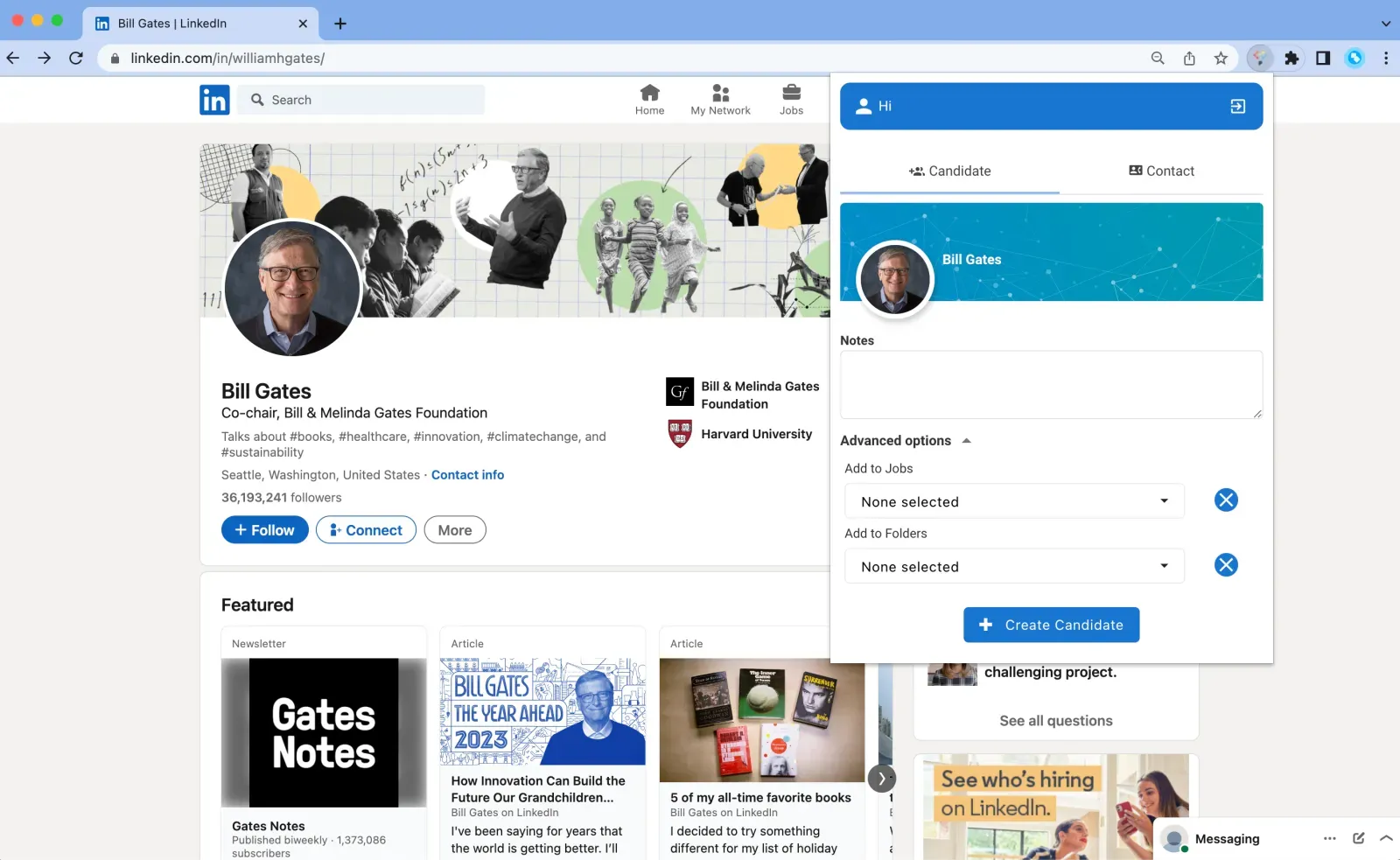
How to do it: Install the "People-Match AI" Chrome Extension from the Chrome Web Store and log in using your Manatal CRM credentials. Browse supported platforms (such as LinkedIn or LinkedIn Recruiter) and use the extension icon to seamlessly import candidates, contacts, or organizations directly into your system.
Step 4: AI-Assisted Executive Matching & Human Verification
Leverage Manatal AI Recommendations to analyze, score, and rank mapped profiles against your complex leadership brief. Professional executive recruiters then review, context-check, and fine-tune every AI score before finalizing the outreach target list.
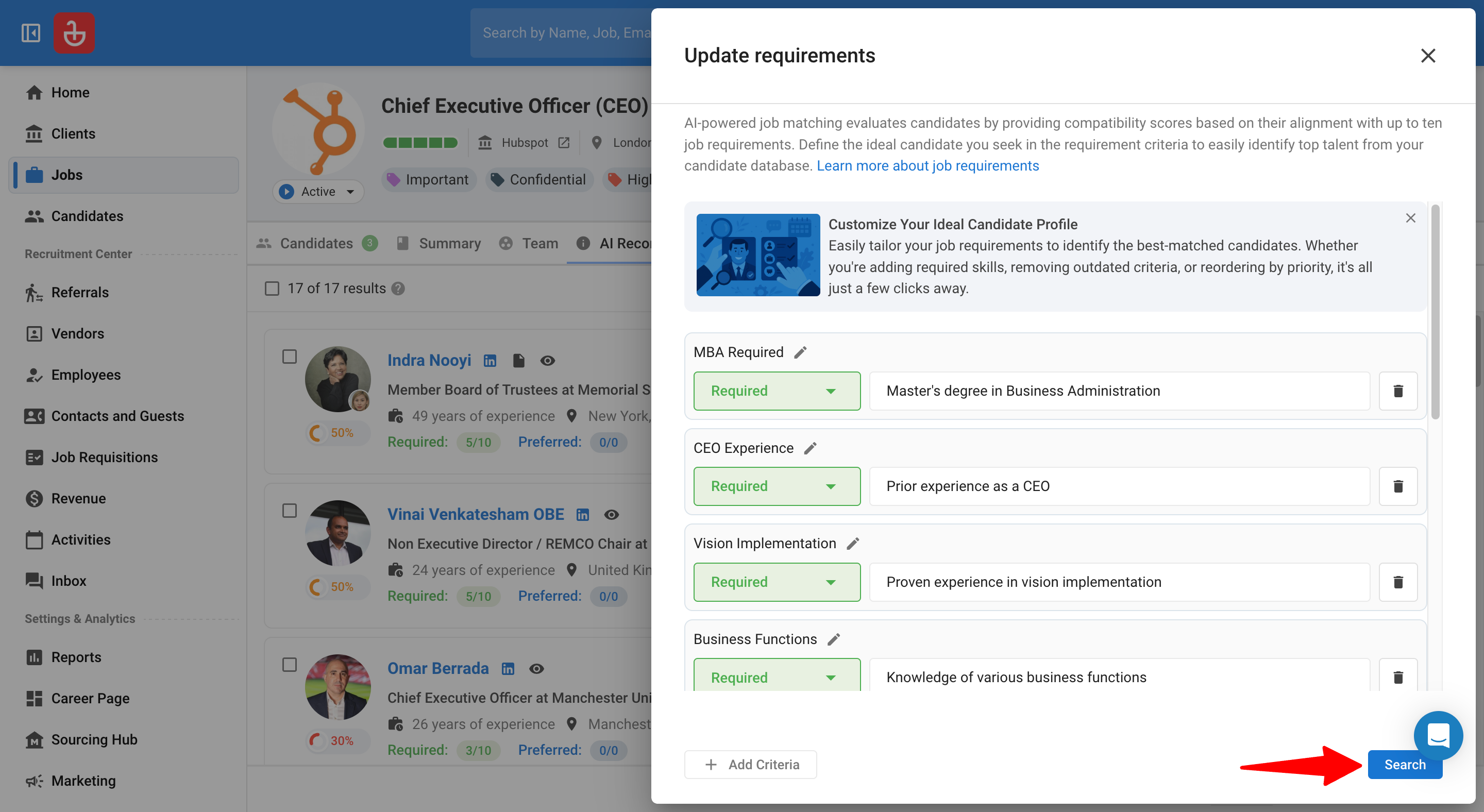
How to do it: Open the job and select the "AI Recommendations" tab. Click "Update requirements" to set required or preferred criteria (and optionally enable weights), then review candidate match percentages, click "See the AI match overview" for detailed candidate summaries, and select top candidates to "Add to Job" in bulk.
Step 5: Conduct Discreet, Personalized Outreach
Approach passive executives using confidential, highly tailored value propositions. Utilize Manatal’s personalized email automation and candidate communication tools to track private correspondence, follow-up cadences, and pipeline stages within your secure system.

How to do it: Configure automated outreach under "Career page settings" > "Email automations,” or build advanced stage-based triggers under Workflow Automation by choosing the "Applied To The Job" trigger and setting the action to "Send an Email" using your integrated G Suite/Outlook or default email address.
Step 6: Evaluate Candidates and Calibrate Assessments
Conduct structured behavioral interviews paired with specialized executive assessments (e.g., psychometric profiling or scenario-based case studies). Evaluate candidates using Manatal’s customizable recruiting scorecards to calibrate ratings objectively across all interviewers prior to shortlisting.
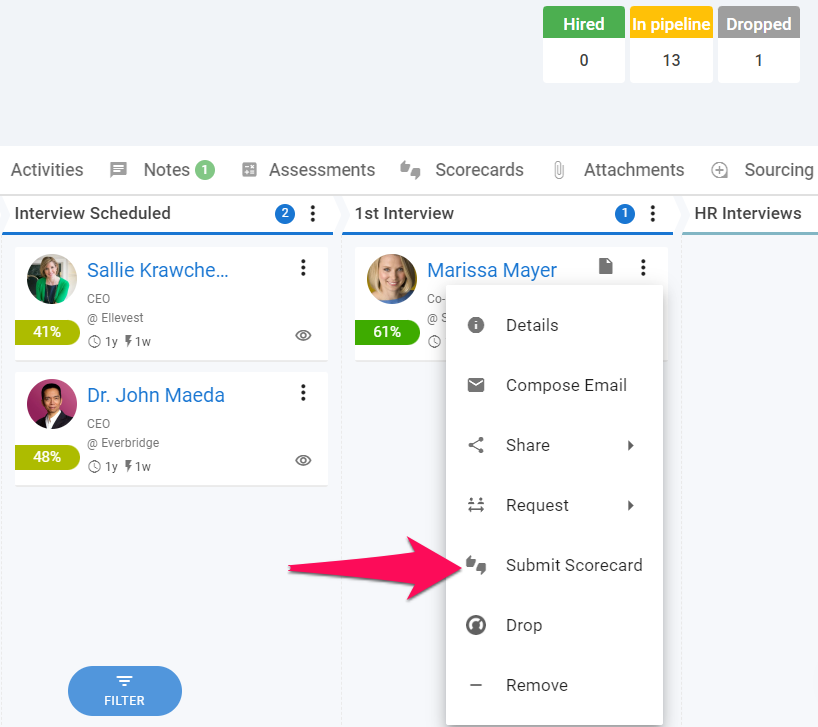

How to do it: Open a candidate's profile within the job pipeline and select "Submit a scorecard.” Choose the appropriate scorecard template from the dropdown menu, rate the candidate against each defined leadership field, and submit the review to aggregate scores for team calibration.
Step 7: Present Finalists and Conduct Panel Interviews
Present a curated shortlist of 3 to 5 finalists accompanied by comprehensive candidate dossiers (highlighting career track records, leadership style, and compensation expectations) to the board. Conduct multi-stakeholder panel interviews using shared, synchronized scorecards inside the platform.
How to do it: Move qualified candidates to the "Shortlisted" or "Client Submission" pipeline stages. Request panel members and board stakeholders to access candidate cards directly within Manatal to complete assigned scorecards simultaneously during or after the panel interviews.
Step 8: Conduct Reference Checks, Extend the Offer, and Plan Onboarding
Perform 360-degree reference checks with former board members, peers, and direct reports, focusing specifically on risk areas flagged during evaluation. Extend a structured executive offer, formulate a 30-60-90 day strategic onboarding plan, and monitor long-term executive retention using Manatal’s Analytics Dashboard.
How to do it: Navigate to "Reports" > "Try Now" to open Advanced Reports, create a custom dashboard, and build tailored charts using datasets such as Hiring Performance or Candidate Data to track executive pipeline metrics, time-to-fill, and recruitment performance.
Key Principles for Executive Search
- Fixed Alignment Upfront: The hiring committee must sign off on the mandate and scorecard weights before outreach starts. Redefining criteria mid-search burns time and candidate trust.
- AI Speed with Human Judgment: AI automates profile parsing and initial ranking, but recruiters make every advancement decision. According to LinkedIn’s Future of Recruiting 2025, companies whose recruiters use AI-assisted messaging the most are 9% more likely to make a quality hire than those that use it the least. [3]
- Structured Evaluation Over Casual Chats: Apply the exact same rubric across interviews, case studies, and assessments to ensure fair, data-backed candidate comparisons.
Handling a Confidential Executive Search
Senior searches are often confidential, and the risk of leaks lies in outreach and assessment. Keep the candidate list and notes in the ATS with role-based permissions, rather than in shared spreadsheets or email threads.
Brief every interviewer on what can be said and to whom. When you circulate a slate to stakeholders who do not yet need names, use anonymized profiles so the search stays discreet without slowing down.


How to Measure Executive Search Success
Without measurement, a failed executive search strategy can pass for a success until the new leader underperforms. Few teams track quality of hire rigorously for senior roles, so most searches close without proof the choice was right. Track a compact set of KPIs for every search:
- Time-to-fill: Days from requisition opening to accepted offer.
- Search duration: Days from the signed search mandate to accepted offer.
- Shortlist quality: the average scorecard fit score of the finalists you present.
- Offer-acceptance rate: the share of offers accepted at the terms you set.
- Slate diversity: Representation across the candidate pipeline and shortlist, where legally and ethically appropriate to measure.
- 12-month retention: Whether the placed executive remains with the organization 12 months after joining.
- Post-hire performance: Where available, assess performance against the outcomes defined in the original mandate.
Separate these into operational metrics and post-hire outcomes. Search duration and offer acceptance show how the process is progressing, while retention and post-hire performance provide evidence about the outcome of the hire.
Manatal and our reports and analytics features provide the structure and data-driven insights that teams often lack: a repeatable, measured pipeline that links intake to final slates within a single system. Internal teams can run credible executive searches without retained firms by running a structured, scored pipeline in sequence: mandate, leadership brief, mapped market, scorecard, and final slate.
Why Executive Search Strategy Matters In 2026
A Gartner survey found that 56% of CxOs were likely to leave their roles within two years and 27% within six months. [4] When vacancies arise, unstructured searches under time pressure make it difficult to evaluate candidates consistently.
Senior appointments shape strategy, culture, and team performance across the organization. Defining requirements, mapping talent, and setting evaluation criteria early integrates executive search strategy into effective succession planning, allowing teams to manage transitions proactively rather than starting from scratch.
>> For how the discipline shifted toward this proactive model, see our overview of how executive search has changed.
Building Blocks of an Effective Executive Search Strategy
A strong executive search strategy rests on five building blocks. Each one is a decision you make before outreach begins, not something you improvise mid-search.
- Define the business mandate before the candidate profile: what this leader must accomplish in the first 12 to 18 months.
- Build a leadership brief and scorecard with weighted competencies, clear must-haves versus nice-to-haves, and a comp range.
- Map the market first: target companies, comparable roles, and pay benchmarks that show where the talent actually sits.
- Design discreet, personalized outreach for passive leaders who are not applying and will not answer a generic note.
- Build diversity into the slate at every stage, so a representative field is the default rather than a late correction.
Defining the business mandate and scorecard drives the entire process. Weighting competencies prevents interviewer bias toward charismatic candidates over qualified ones.
Market mapping reveals the true availability of talent and surfaces diverse candidates early. Tracking diversity metrics at mapping, shortlisting, and final stages ensures equity by design rather than through late corrections. Personalized outreach that links the mandate directly to a candidate's background yields far higher response rates than generic templates.
Common Reasons Executive Searches Fail
Most failed executive search strategies trace back to three avoidable mistakes. Pair each with its fix, and the search holds up.
- Intake misalignment: the sponsor and recruiter never agreed on what success looks like. Fix it with a written, signed-off mandate before sourcing.
- Résumé over evidence: shortlisting on pedigree instead of demonstrated behavior. Fix it by scoring every candidate against the same competency rubric.
- Onboarding as an afterthought: the offer gets treated as the finish line. Fix it with a 30-60-90 day plan and tracked check-ins.
Each fix is already built into the workflow above. The failures happen when a team skips the step under time pressure, usually because no one owned the mandate or the scorecard from the start.
Conclusion
An in-house executive search strategy holds up when it is written down, scored, and measured at every stage. Define the mandate, score the brief, map the market, run the pipeline with human checkpoints, and track the KPIs that prove the hire worked. Do that and you no longer depend on a retained firm to fill a leadership seat with confidence.
Manatal gives in-house teams one system to run that pipeline: enriched profiles, AI match scoring, and offer and onboarding tracking. Start a 14-day free trial and run your next executive search as a measured process.
Frequently Asked Questions
Q: What is the 70/30 rule in hiring?
A: The 70/30 rule commonly weights about 70% of a hiring decision toward demonstrated competencies and 30% toward potential and culture fit. Interpretations vary, so confirm the split your team means before applying it. For executive hiring, platform capabilities like Manatal's custom scorecard and evaluation weighting help translate this ratio into clear metrics, ensuring every finalist is judged fairly on the same balance of proven results and future potential.
Q: Will executive search be replaced by AI?
A: No. AI speeds sourcing, market mapping, and shortlisting, but the final call on a leadership hire stays with people. In Manatal, AI engines handle candidate ranking and profile enrichment, while recruiters retain total authority over hiring decisions. The ideal division of labor for high-stakes leadership roles.
Q: What is the difference between executive search and recruitment?
A: Executive search is proactive: it targets passive senior leaders who are not applying and approaches them directly. Standard recruitment is largely reactive, built on posting roles and screening inbound applicants. Engagement models such as retained and contingency search are a separate question, covered in our retained executive search guide.
Q: How do you measure the success of an executive search strategy?
A: Measure it with a compact KPI set: time-to-fill for the role, shortlist fit score, offer-acceptance rate, slate diversity, and 12-month retention of the placed executive. Utilizing built-in analytics dashboards in systems like Manatal ATS makes tracking these long-term retention and fit metrics effortless, proving the true value of the search beyond just speed to hire.
Citations:
.webp)








.webp)

.webp)


.webp)


