





LinkedIn's latest research found that 66% of recruiters say it has become harder to find qualified talent, despite growing application volumes. [1] The strategy now involves building and maintaining a proactive talent pool to access suitable candidates before positions open. This guide walks through the exact steps to build and manage a talent pool in 2026, making the process easier to scale.
What Is a Talent Pool?
In HR discussions, "talent pool" and "talent pipeline" are often confused but are distinct concepts. Talent databases often fail because teams expect immediate recruiting ROI and lose interest when there is no quick conversion, resulting in outdated and unused contacts.
- A talent pipeline is the active process of handling candidates moving through the hiring stages, such as those responding to job posts or scheduled for interviews.
- A talent pool comprises identified professionals not currently in a hiring process but tracked for future opportunities based on their career progression.
Building an effective and diverse talent pool not only reduces cost-per-hire but also ensures that you always have a pipeline of qualified candidates ready to meet your company’s future hiring needs. [2] Here are 7 key steps to build one effectively.
7 Steps To Build A Robust Talent Pool
Step 1: Build Your Talent Pool Structure First
The most common mistake in talent pool management is sourcing first and structuring later. You end up with a messy database that cannot be searched, filtered, or acted on quickly.
Before you source anyone, answer these questions:
- What are your core talent segments? Define the 5 to 8 role families that actually matter to your organization's growth. Not every possible job title. The functional clusters where hiring velocity directly impacts business outcomes.
- What signals will you track? Skills are static. Career velocity is what you want. Define what a "signal" looks like for each segment: a promotion, a company acquisition, a new GitHub repository, a LinkedIn post about switching stacks.
- What does a disqualified profile look like? Set clear archiving rules now. If a profile has no new data point or engagement activity for 18 months, archive it automatically. Stale records slow down your search algorithms and inflate your pool with contacts who have moved, changed roles, or gone completely off-market.
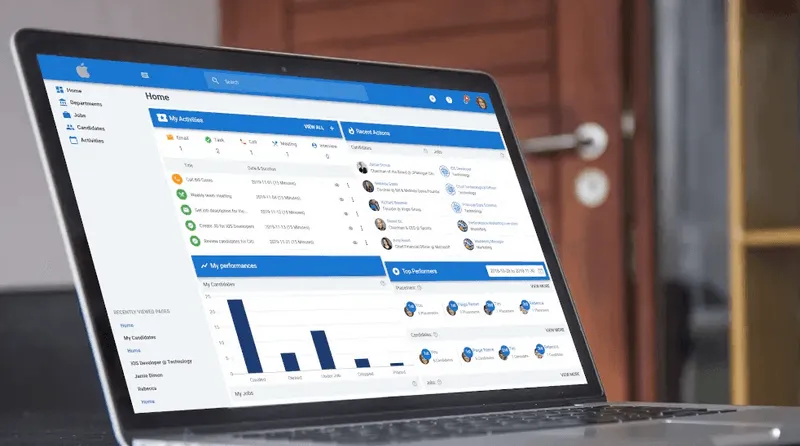
Use an applicant tracking system (ATS) like Manatal to organize, filter, and manage candidate profiles efficiently, enabling quick identification of diverse talent. Once you have created/imported profiles into your candidate database, you can easily view them in one view. This creates a solid starting point to having a rich database for you to work with in the long term.
{{cta}}
Step 2: Source Candidates Through High-Signal Channels
Standard talent pool sourcing methods rely on generic job boards. That approach only captures highly visible candidates. True high-signal sourcing finds passive talent right before they enter the market.
- Crunchbase: Use this platform to monitor venture capital funding, mergers, and executive transitions. Look for the "Acquired by Private Equity" trigger. When a competitor is bought by a private equity firm, corporate culture usually shifts toward cost-cutting. Set a calendar reminder to scrape and reach out to their senior engineering and product talent exactly three to six months post-acquisition.
- Harmonic.ai: This startup directory tracks real-time headcount velocity. Monitor the "Headcount Contraction" signal. A 10% drop in competitor engineering staff signals internal instability. Target the remaining overworked top performers immediately.
- PitchBook: This database provides financial data on private market deals and company valuations. Track "Down Rounds." A down round often destroys employee equity value overnight. Target their vice president and director-level staff immediately. Their stock options are now underwater, making their compensation packages uncompetitive.
- Layoffs.fyi: This live tracker records global tech layoffs. Look for "Department-Specific Cuts." If a competitor shuts down an entire division to pivot to a different technology, scrape the affected talent instantly. You can capture highly vetted professionals who are ready to start working tomorrow.
Use Technical Communities to Identify Talent
For specialized technical roles, standard professional networks are lagging indicators. Software engineers change their code portfolios long before they update their text profiles.
- GitHub: Search repositories related to your specific tech stack. Sort the results by "Commits." Target the top contributors to active, complex open-source projects. These individuals are writing production-grade code daily, regardless of their current job titles.
- Kaggle: Track data science and machine learning professionals who consistently place in the top 10% of specific competitions. Focus on domain-specific challenges like computer vision or natural language processing to find proven problem solvers.
- Hugging Face: Monitor the creators and primary maintainers of highly downloaded models in your industry domain. These engineers are actively building the open-source infrastructure your company likely uses.
Step 3: Use the Right Data Collection Tools
You need a modern infrastructure to extract and structure this data before it enters your applicant tracking system. Manual data entry limits your scale. These three tools automate the collection workflow.
- Clay handles data enrichment with what they call waterfall enrichment. You feed it a name and a GitHub profile, and it pings over 50 different API providers in sequence until it finds a verified personal email, recent employer, and job change history. The output formats directly for ATS import. It converts an unstructured social profile into a structured, importable contact record.
- PhantomBuster automates extraction from LinkedIn at scale. The specific use case worth building: find invite-only LinkedIn audio events or technical webinars in your niche and use the LinkedIn Event Scraper phantom to pull the attendee list. These are professionals who are actively upskilling in a specific area. That behavioral signal beats passive profile data.
- Magical is a text expander that maps unstructured data from portfolio sites or niche forums directly into custom ATS fields with two keystrokes. For roles where candidates maintain personal sites or community profiles, this cuts manual entry almost entirely.
Step 4: Write Job Ads That Expand Your Talent Pool
LinkedIn data indicates that job posts that clearly feature relevant skills in their requirements attract more applicants and can improve conversion rates. [3] Expand your owned database by cutting arbitrary requirements and optimizing your distribution network.
- Develop Inclusive Job Descriptions: Use tools like Textio or Gender Decoder to identify and eliminate biased language. Focus on essential qualifications to avoid deterring candidates who may not meet every listed requirement.
- Select Appropriate Platforms: Post on mainstream job boards and niche platforms such as PowerToFly, which connects companies with women in tech and underrepresented groups. DiversityJobs.com caters to diverse candidates across various industries.
- Collaborate for Extended Reach: Partner with universities, alumni associations, and professional organizations that serve diverse populations to promote job openings.
- Monitor and Optimize Distribution: Utilize tracking tools or your recruitment platform’s analytics to assess the performance of different job boards and refine your posting strategy accordingly.
Step 5: Preventing Data Decay
A list of B2B names decays at a rate of roughly 25% per year as people change roles, get promotions, or move locations. [4] Your talent pool recruitment strategy will fail if your search algorithms are scanning outdated data. You must implement strict hygiene rules.
- Dynamic Tagging: Static tags like "Junior Developer" become inaccurate within 12 months. Your architecture must use dynamic tagging driven by time elapsed and external data signals. If a profile sits in your system for two years, automated enrichment should update that tag to "Mid-Level Developer" based on their calculated experience.
- The 18-Month Archiving Rule: Set hard rules for engagement decay. If a profile has not triggered a new data point, changed jobs, or responded to an outreach message in 18 months, archive it automatically. Keeping dead data out of your main views ensures your internal search queries remain lightning-fast.
- The Compliance Ledger: Data privacy laws require automated compliance tracking. Your system must log the exact timestamp of candidate consent for CCPA and GDPR. Set your system to auto-purge candidate profiles when the legal retention window expires, which is typically six to 12 months in the European Union, unless you secure a renewed consent signal.
Manatal solves the problem of data decay automatically. The platform continuously monitors external professional profiles and pulls fresh social data into your system. When a passive candidate in your database gets a promotion or changes their skill stack, their candidate history updates in real time without manual recruiter intervention.
Step 6: Engage Candidates Based on Relevant Signals
Generic corporate newsletters destroy candidate engagement. Passive talent does not want to read about your company picnic or Q3 earnings report. Your communication should rely on asynchronous, high-value micro-engagements tailored to specific candidate cohorts.
Step 7: Engage Alumni and Internal Talent Before Hiring Externally
Mobilizing these channels cuts your onboarding time to zero. Both groups already understand your cultural nuances, eliminating the standard 90-day ramp-up risk associated with external hires.
- Alumni Networks: Transition exiting top performers into an exclusive corporate alumni network during offboarding. Offer them industry insights, product beta access, or annual company event invites. Share critical open roles with this group 14 days before posting them publicly.
- Internal Talent: Map internal succession pipelines long before a vacancy opens. Identify high-potential employees and match them with executive mentors. Implement a strict "Internal First" policy, ensuring internal candidates are interviewed and considered before any budget is spent on external sourcing.
Conclusion
Having a talent pool can help you improve your recruitment process and outcomes by giving you access to a ready supply of qualified candidates for your current and future needs. To create a talent pool that works for you, follow the strategies outlined in this article, such as creating a candidate database, crafting inclusive job ads, leveraging employee referrals, and maintaining regular communication with your talent pool.
Start your free trial of Manatal
Frequently Asked Questions
Q: What is a global talent pool, and why does it matter?
A: A global talent pool is a geographically distributed database of pre-mapped candidates. It matters because your local talent market is finite. For technical and specialized roles, the delta in candidate quality between your local market and a global search is often significant. Building geographic segments into your talent pool from the start, not as an afterthought, is what separates companies that can hire ML engineers in 3 weeks from those that cannot.
Q: Why does a talent pool reduce time-to-hire?
A: When a talent pool is current and segmented correctly, the first step of any new search is querying existing contacts rather than starting from zero. The sourcing phase compresses from weeks to days. The quality-of-hire metric also improves because you are working from a list of people you have already assessed rather than cold inbound applications.
Q: How does AI improve talent pool management?
A: The manual version of a talent pool is a full-time job. A recruiter manually updating profiles, sending individual messages, and auditing for data decay cannot manage a pool above a few hundred contacts with any consistency. AI changes the math. Automated enrichment keeps profiles current without manual input. Algorithmic ranking surfaces the right profiles at the moment a new role opens. Compliance automation handles consent tracking and purging without a human checking dates. The result is a talent pool that scales with your hiring volume instead of with your headcount.
Q: What is the difference between talent pool recruitment and standard recruitment?
A: Standard recruitment is reactive. A role opens; sourcing starts from scratch. Talent pool recruitment is proactive. Sourcing is a continuous process, and by the time a role formally opens, you already have a shortlist. The financial difference is measurable: companies with mature talent pools spend 30 to 40% less per hire than those relying entirely on job boards, and their time-to-fill runs 2 to 3 weeks shorter on average.
Citation:
.webp)







.webp)

.webp)


.webp)


