





AI recruitment is reshaping hiring. Recent surveys report that 87% of organizations use AI at some stage of the hiring process, and some sources estimate cost-per-hire reductions of up to 30%. alongside significantly faster resume screening and candidate sourcing.[1][2] These gains are compelling, but adoption levels, tool maturity, and concerns about fairness still vary widely among organizations.[2] Alongside a comprehensive list of leading AI recruitment tools, this article explores their advantages, offers practical advice on tool selection, and examines the challenges shaping the future of digital hiring.
Best AI Recruitment Tools
Below are the widely used AI recruitment tools across sourcing, screening, chatbots, and interview workflows.
AI-Powered ATS
Manatal
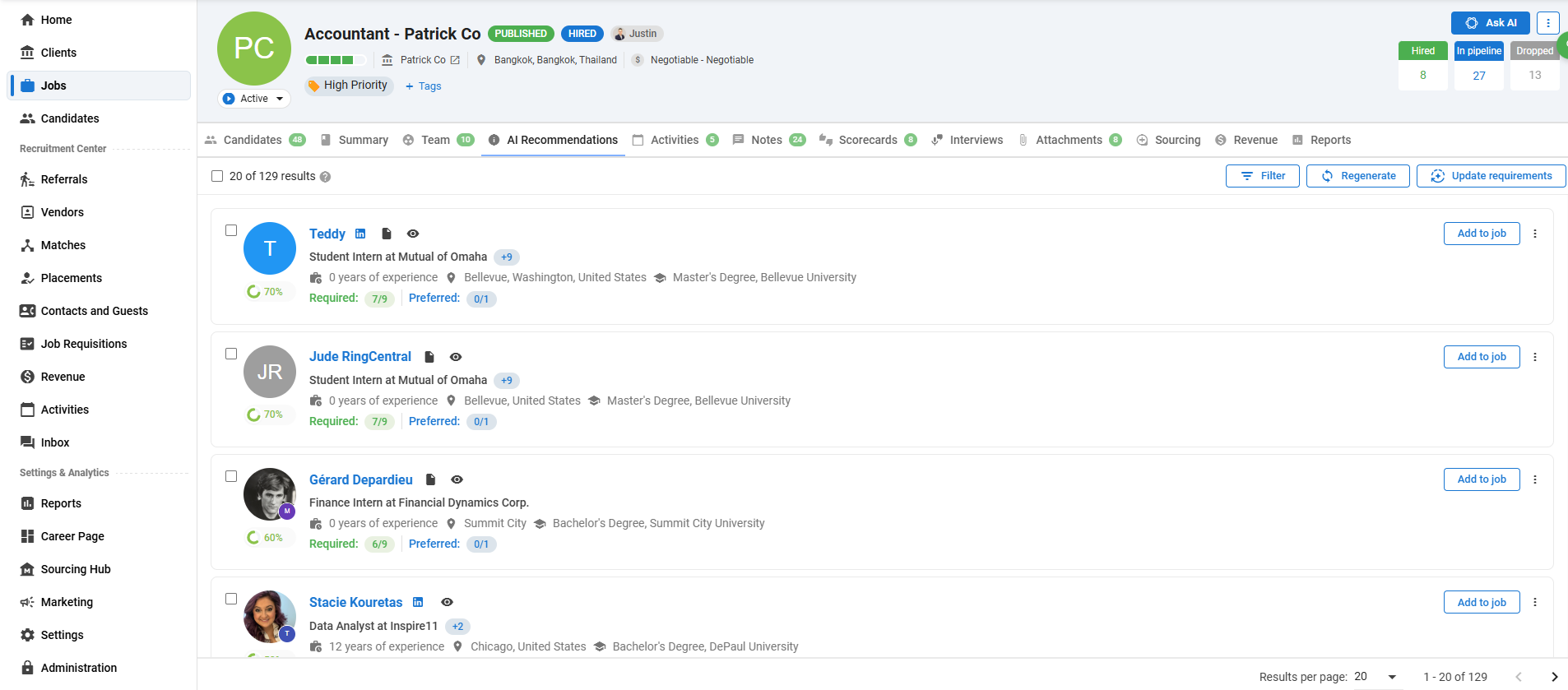
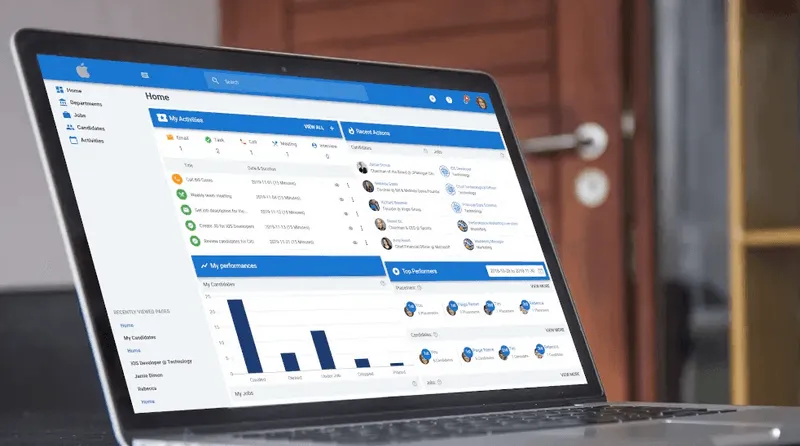
Manatal’s Applicant Tracking System utilizes AI to automate resume parsing, which extracts and centralizes candidate data from high-volume CV uploads. The system’s AI Candidate Recommendation feature analyzes job descriptions to establish structured criteria for skills and experience, subsequently scanning the database to generate match scores for each profile. This process results in a ranked list of candidates accompanied by data points that explain the rationale behind each recommendation.
Pricing: Starting from $15/user/month (billed annually). Check out our pricing page for more details.
{{cta}}
AI Tools for Optimized Job Descriptions
Textio
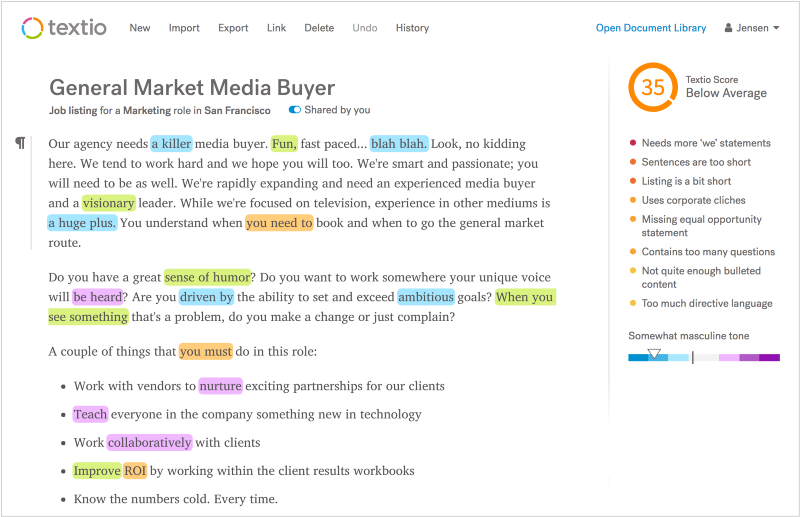
Textio uses an augmented writing interface to highlight gendered language, corporate jargon, and exclusionary phrases in real-time. As you type, the tool suggests specific vocabulary replacements backed by predictive data from millions of hiring outcomes to ensure the post resonates with a broader demographic. It also provides centralized templates and brand guidelines, preventing hiring managers from deviating from established company standards.
Pricing: Pricing is based on the size of your organization.
Datapeople
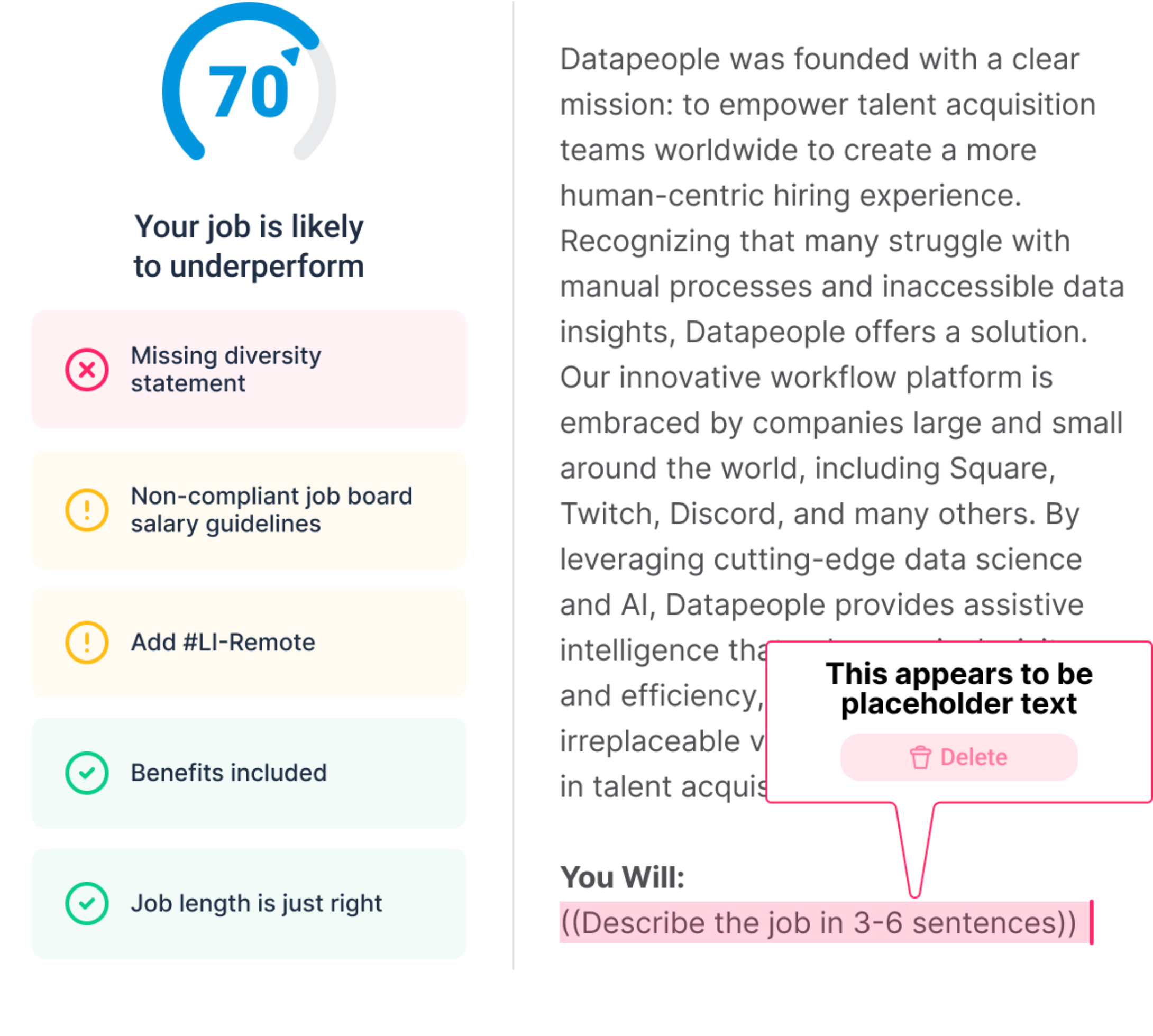
Datapeople audits job descriptions against 10,000+ market benchmarks to generate an objective performance score. The platform identifies excessive qualifications that statistically deter qualified candidates, and flags formatting errors that hinder mobile readability. The platform increases both the volume and diversity of the applicant pool by removing "nice-to-have" requirements and neutralizing exclusionary language.
Pricing: Pricing is customized based on hiring volume and team size.
Ongig
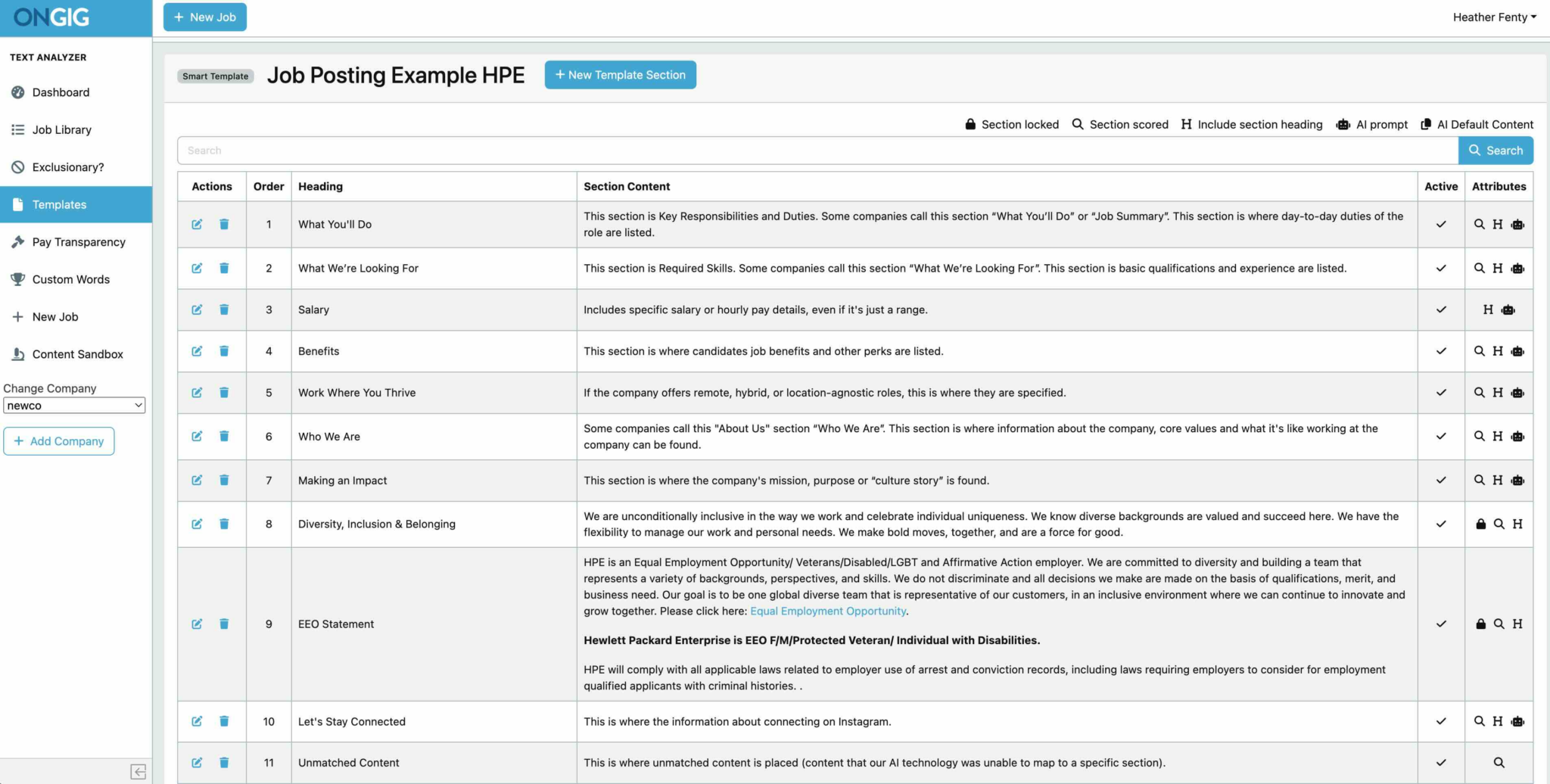
Ongig scans job descriptions to identify exclusionary language and automates formatting to maintain a consistent appearance across career pages. The platform provides suggestions for readability and SEO intended to influence the search engine placement of job listings.
Pricing: Pricing is customized based on your organization's specific needs.
recruitRyte
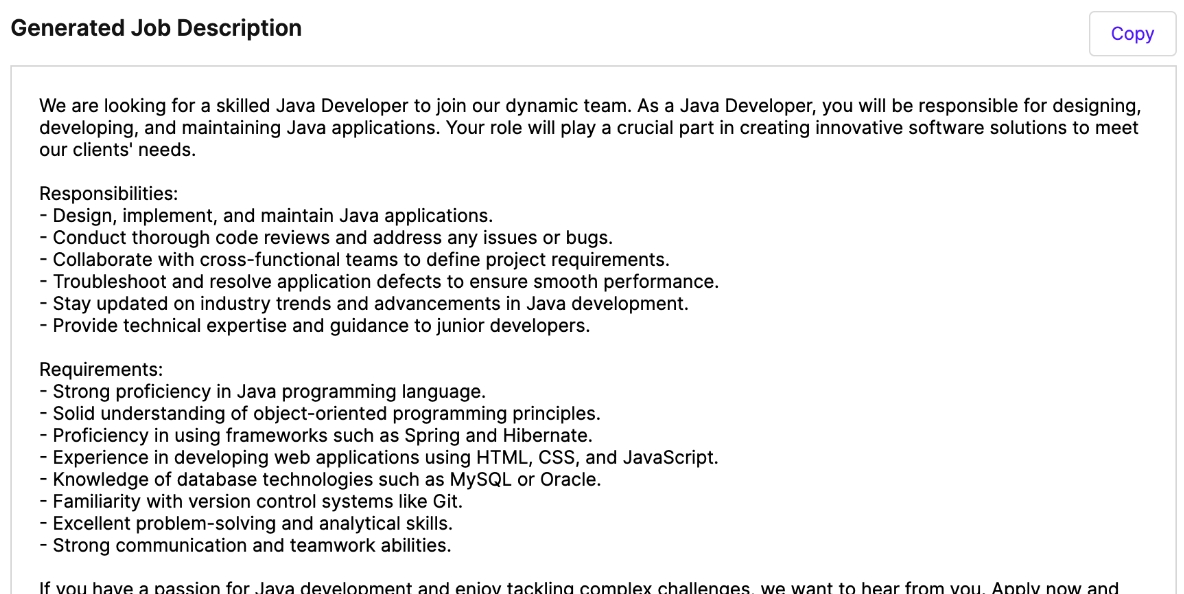
recruitRyte compares job postings against industry benchmarks to assess alignment with current market standards. The platform identifies technical jargon and dense qualification lists for restructuring while extracting specific compensation and flexibility details for emphasis. It also evaluates job titles and descriptions to align with performance metrics intended to improve candidate conversion rates.
Pricing: Starter plan starts at $29/month.
Joveo
Joveo optimizes your job descriptions by utilizing data-driven insights to improve click-through and conversion rates. You adjust your content based on performance metrics that indicate which phrases or structures resonate best with your target audience. The platform helps you streamline the language in your posts to ensure they remain competitive across various job boards and social media channels.
Pricing: Pricing is customized based on hiring volume and requirements.
AI Sourcing Platforms
SeekOut
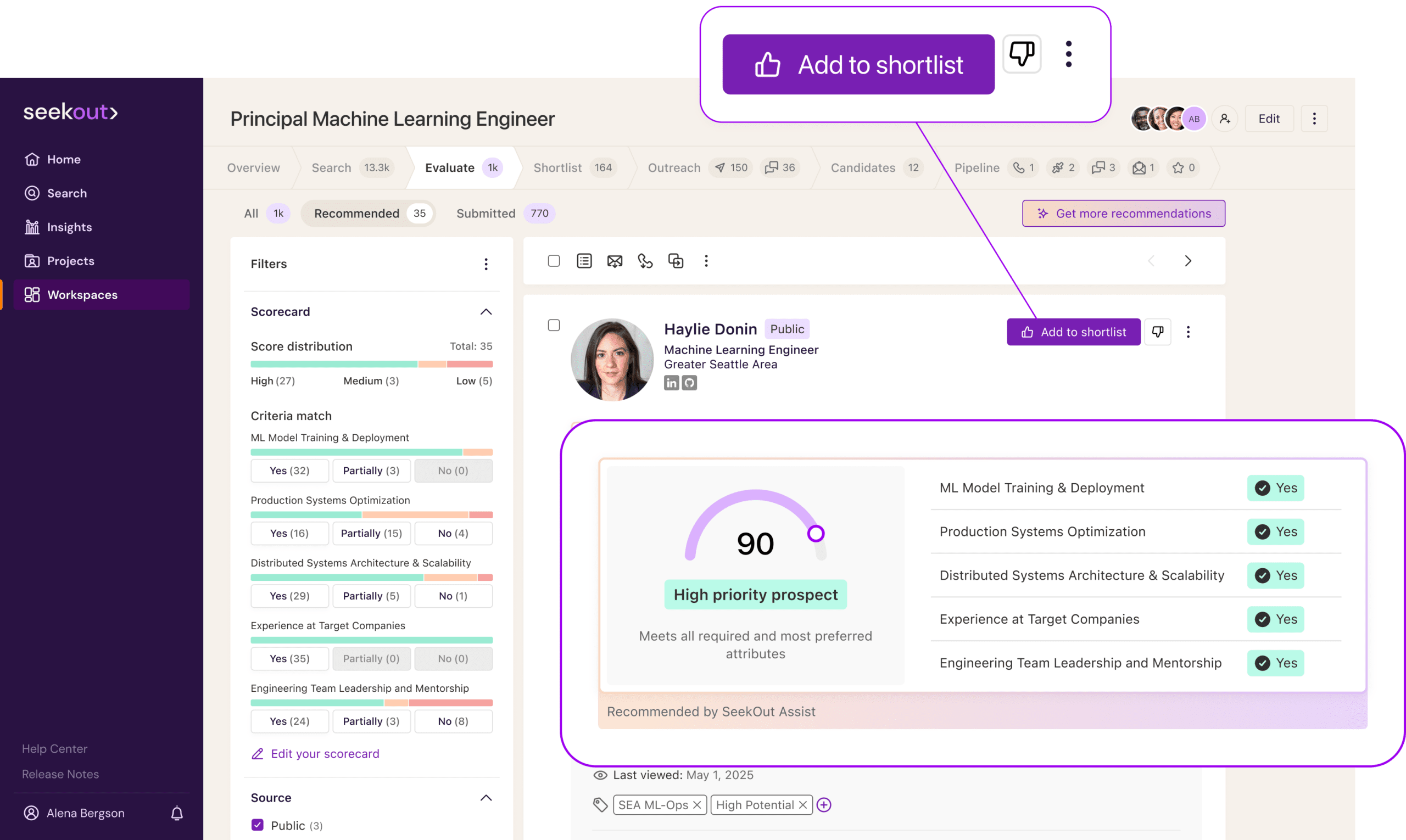
SeekOut Recruit uses AI-assisted search, smart filters, and profile matching to narrow candidate pools based on job requirements, experience, and related profile attributes. Its AI can also score, rank, and filter candidates to help recruiters focus on the most relevant profiles when standard searches return too many unrelated results.
Pricing: Pricing starts from $179/month.
hireEZ
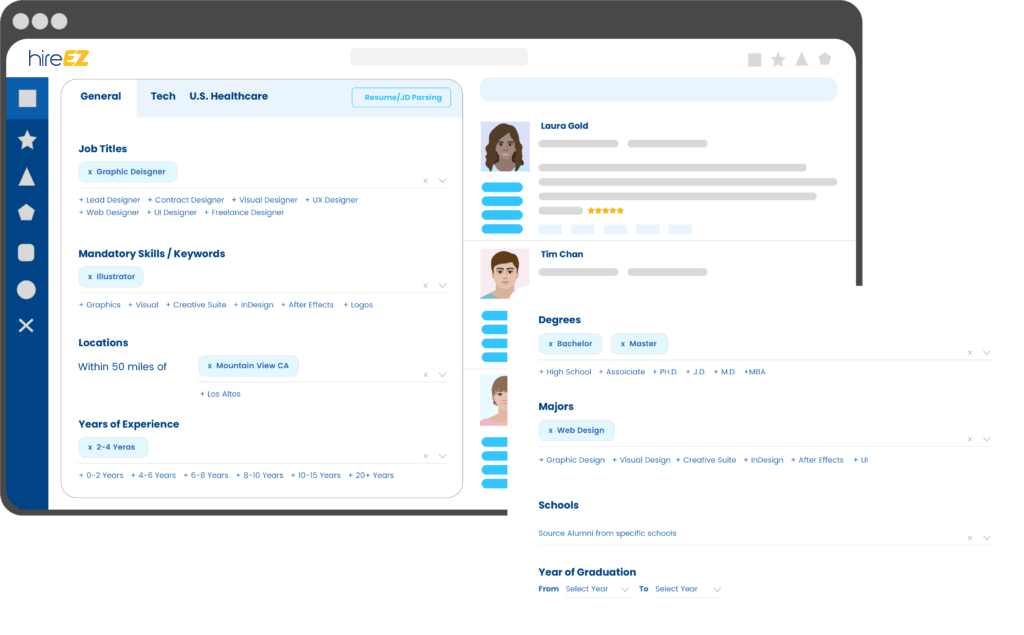
hireEZ scales outbound recruitment by searching over 800 million candidates across 45+ open web platforms through its AI sourcing engine. B The AI engine analyzes role requirements and candidate profile data to identify and prioritize profiles that align with the defined search criteria, helping recruiters refine candidate searches beyond basic keyword matching. When integrated with Manatal, candidate profiles and contact details can sync directly to your ATS. This allows recruiters to transfer sourcing data into their existing workflow without manual entry.
Findem
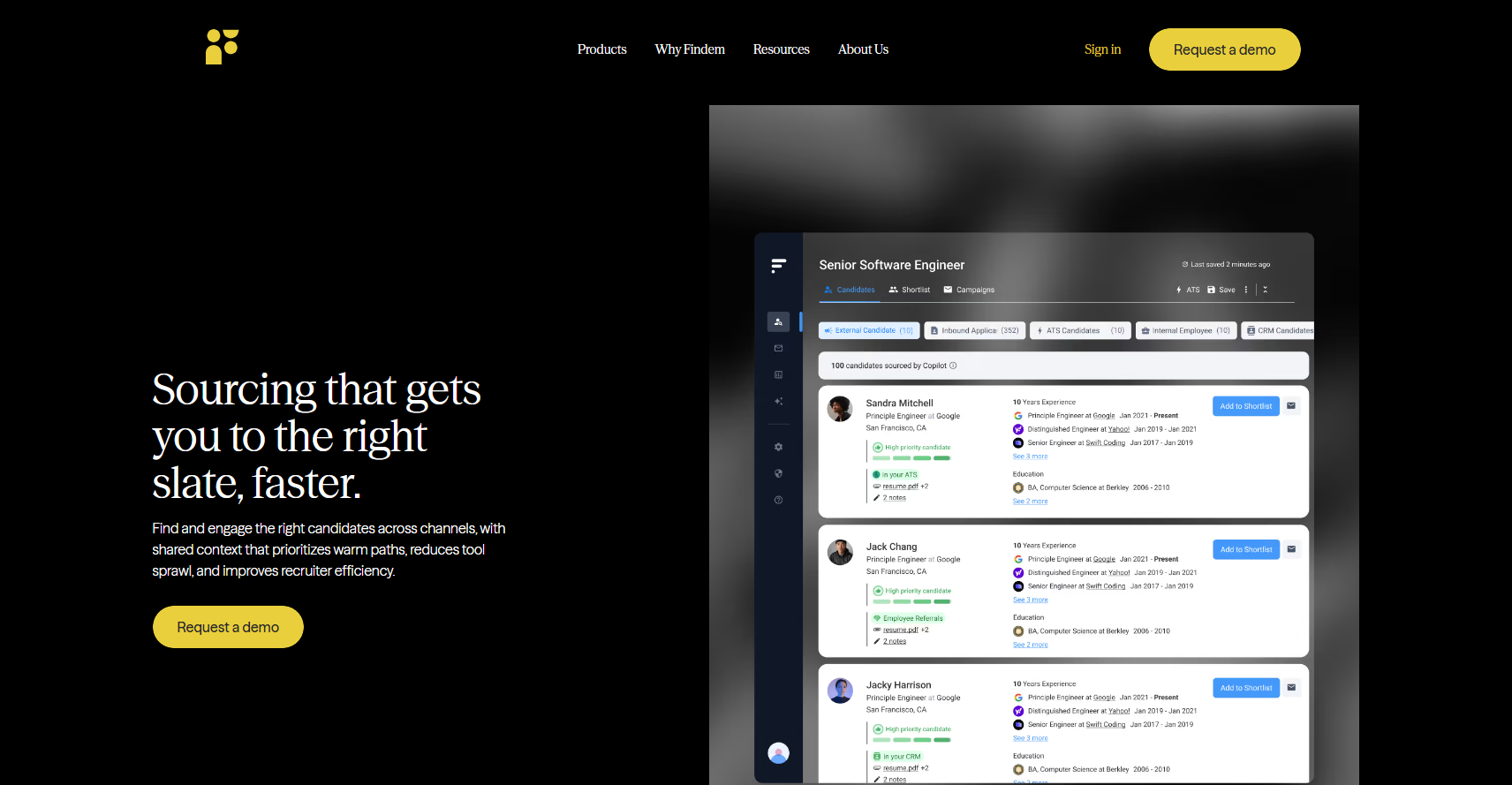
Findem is built for teams that need to search by signals instead of labels. Career milestones, relationship data, and contextual attributes matter more here than a job title, which makes the platform more useful when you are trying to build a tighter slate for a niche role or a senior search.
Note: Pricing is not publicly listed for hireEZ or Findem.
AI Chatbot Options for Hiring
XOR
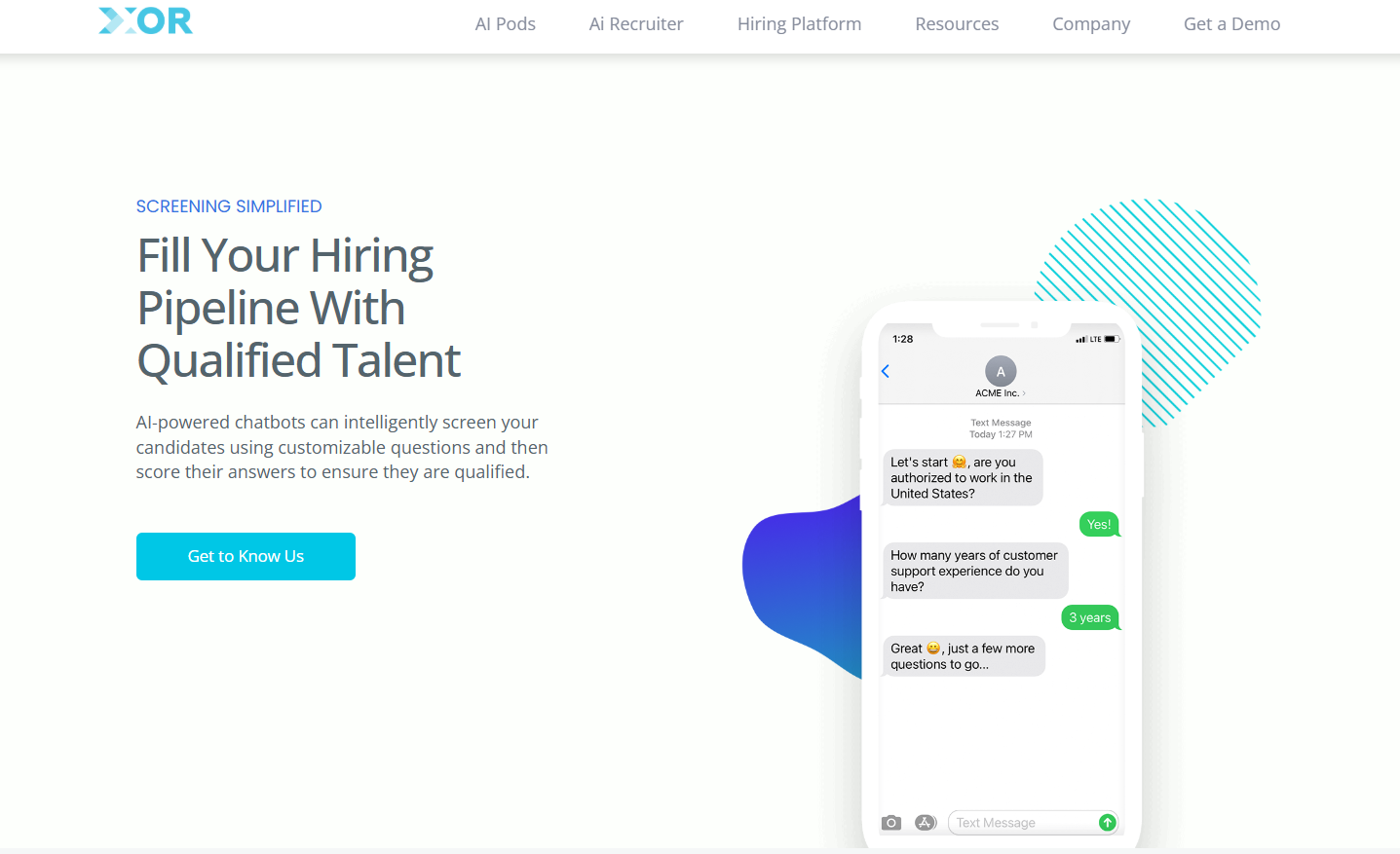
XOR manages candidate screening and interview coordination at scale. You utilize the platform to automate repetitive early-stage tasks, such as vetting applicants against basic requirements and booking calendar slots. This focus on automation allows your team to move candidates through the hiring pipeline when dealing with a high frequency of applications.
Pricing: XOR’s official pages direct users to book a demo or schedule a call.
Paradox “Olivia” (Paradox AI)
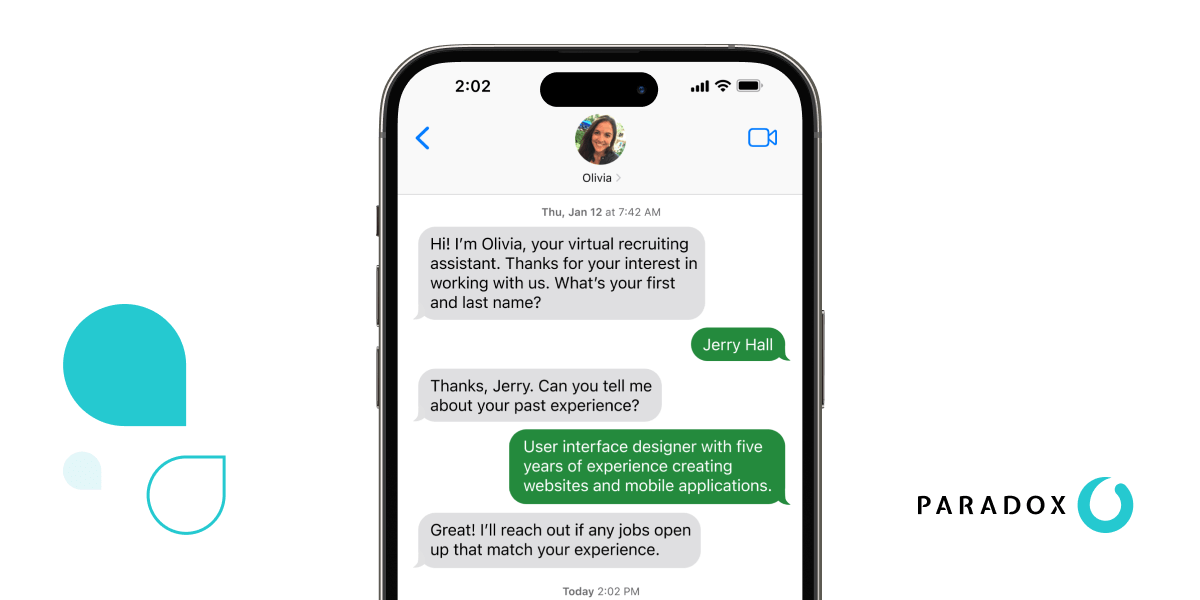
Paradox "Olivia" automates the initial stages of candidate interaction through chat and SMS interfaces. You can use this tool to deliver screening questions and manage interview scheduling without manual coordination. This functionality assists in maintaining communication flow during high-volume hiring periods or outside of standard business hours.
Humanly
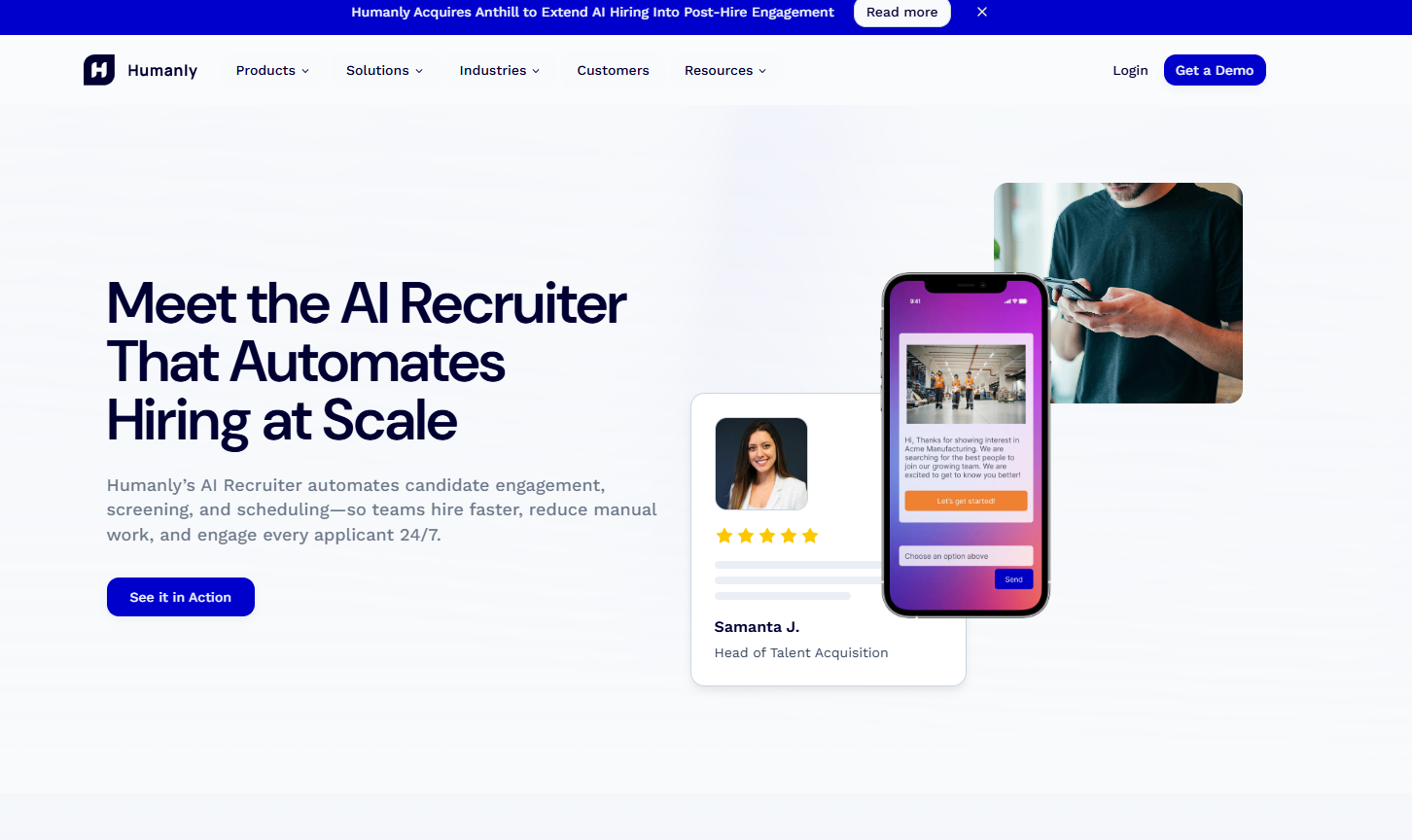
Humanly’s AI Recruiter provides automated screening and scheduling services designed for high-volume recruitment pipelines. You use the platform to establish a consistent conversational interface for applicants, which handles the initial stages of the funnel. This automation reduces the number of manual touchpoints required to advance a candidate to the next stage of the process.
Note: Pricing details for Paradox and Humanly are not publicly listed.
AI Interview and Assessment Tools
Manatal AI Interviewer
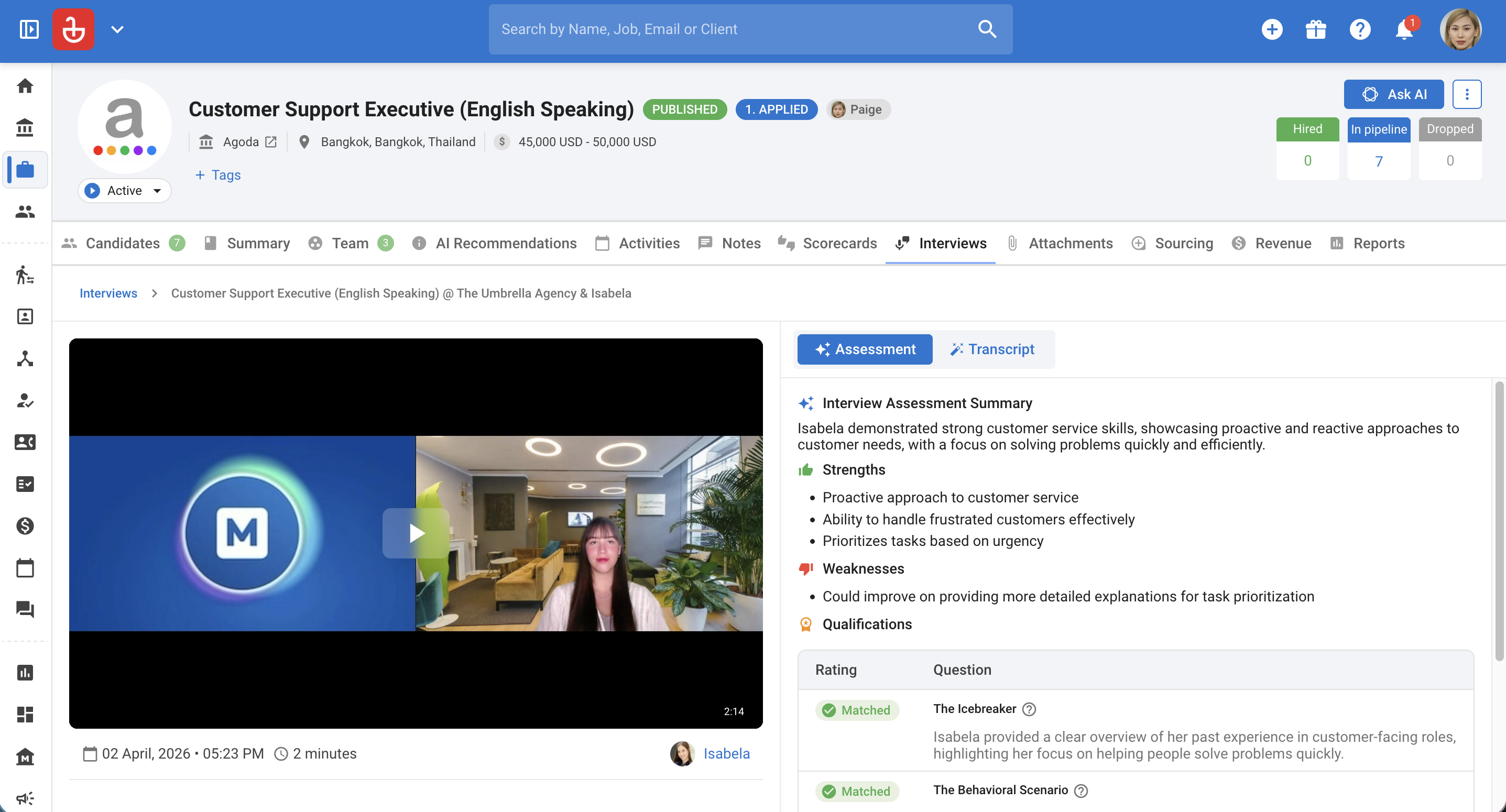
Manatal’s AI Interviewer adds asynchronous video interviews inside the ATS, which you can use to screen candidates outside live interview slots or standard business hours. You can generate interview questions from the job description or add your own, define grading criteria for each question, and then review the transcript, recording, and AI-generated assessment summary after the candidate finishes. Your team still controls the process, while the AI applies the same criteria across candidates.
Pricing: AI Interviewer is listed as an add-on.
TestGorilla
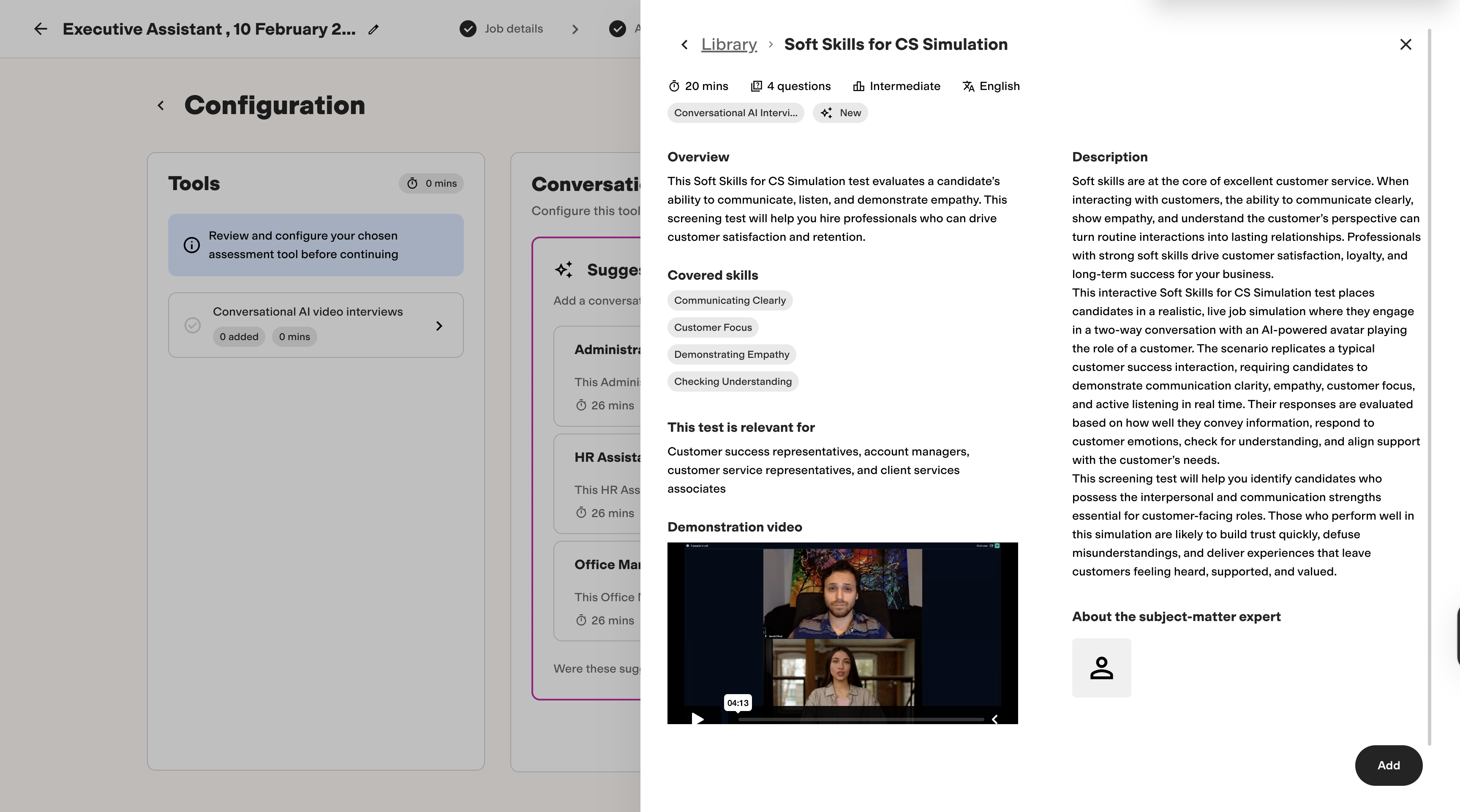
TestGorilla focuses on pre-employment assessments used before live interviews begin. You can assign technical, cognitive, language, or role-specific tests to applicants and review the results before deciding which candidates move further into the hiring process. The platform also includes one-way video interviews and conversational AI interview features under the same credit-based system.
Pricing: TestGorilla uses a credit-based model.
BrightHire
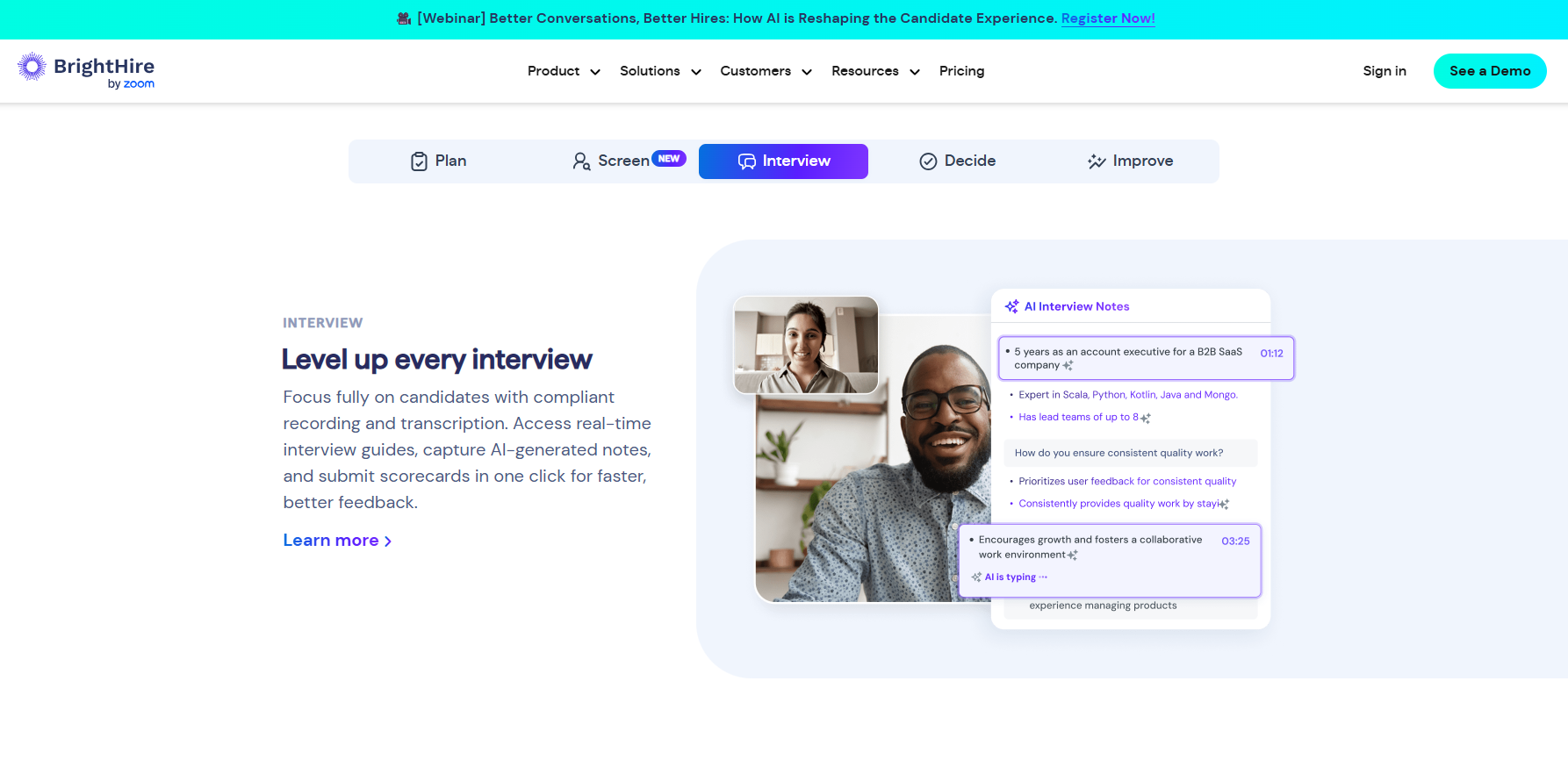
BrightHire is used to record interviews, store transcripts, and centralize interview feedback in one place. Your hiring teams can review specific sections of a conversation, revisit scorecard evidence, and compare interviewer feedback without relying entirely on personal notes or memory. It is commonly used in structured interview processes where multiple interviewers are involved in evaluating the same candidate.
Pricing: Contact sales. BrightHire’s pricing page lists plans for recruiters and related teams, but it does not publish list rates.
How AI Recruitment Software Improves Hiring
AI recruitment software improves hiring by automating intensive tasks such as candidate sourcing, resume screening, and skill assessments. Implementing AI recruitment software accelerates your shortlisting process and provides data-driven insights to help you identify top talent while reducing the risk of unconscious bias. For organizations that receive AI-assisted application materials, incorporating an AI detector into the review process can provide additional context when evaluating writing samples while keeping final hiring decisions under human oversight.
Integrating these AI recruitment technologies ensures your communication remains consistent and professional throughout the hiring journey. You maintain momentum and candidate interest through several automated functions:
- AI Agents and Chatbots for Recruiting: These engage applicants instantly with tailored responses and guide them through the initial application steps in real-time.
- Automated Platforms: These manage personalized email sequences for everything from interview invitations to rejection notices, upholding your professional brand.
- Follow-up Assistants: These handle routine reminders and status updates so your candidates stay informed without requiring manual intervention from your team.
Choosing the Right AI Recruitment Tool
Selecting the right AI recruitment tool depends on your company’s size, industry, hiring volume, and specific needs.
Company Size and Hiring Volume
Organizations with large hiring pipelines typically require more automation, integrations, and scalability than smaller businesses with occasional recruitment needs.
Key considerations:
- Whether the platform can manage high volumes of applicants and job postings
- How pricing scales across users, recruiters, or enterprise plans
- Availability of integrations with ATS platforms, HRIS systems, and job boards
Industry and Regulatory Requirements
Industries such as healthcare, finance, and government often face stricter regulations around privacy, fairness, and data security.
Key considerations:
- Availability of compliance tools, audit logs, and bias mitigation features
- Secure handling of candidate data and identity verification capabilities
- Support for industry-specific certifications, skills, and hiring requirements
Hiring Needs and Process Complexity
Recruitment processes vary significantly between organizations. Some companies require only basic applicant tracking, while others rely on multi-stage approvals, assessments, and collaborative evaluations.
Key considerations:
- Support for candidate scoring, interview scheduling, chatbots, and content generation
- Automation for recruiter communication and status updates
- Flexibility to customize workflows, scoring criteria, dashboards, and hiring stages
Budget and Return on Investment (ROI)
AI recruitment tools should improve efficiency and hiring outcomes enough to justify their implementation and operating costs.
Key considerations:
- Total ownership costs, including subscriptions, integrations, onboarding, and support
- Vendor claims regarding time-to-hire reduction and recruiter productivity gains
- Availability of free trials, demos, or pilot programs before full deployment
Usability and Support
Even advanced platforms can create operational friction if teams struggle to adopt them.
Key considerations:
- Ease of use for recruiters and hiring managers
- Access to onboarding resources, training materials, and customer support
- Mobile accessibility and remote collaboration capabilities
- Simplicity of customizing reports, dashboards, and user permissions
Challenges in AI Recruitment and How to Address Them
Even mature AI recruitment workflows can run into bias, transparency, and integration issues. Below are some of the common issues and strategies to address them.
Bias: AI models can inherit bias from training data or proxy variables, privileging certain demographics.[3]
Solution: Use diverse, representative datasets; remove sensitive or proxy attributes; conduct regular bias audits and involve human oversight.[3]
Lack of transparency: Black-box models or opaque algorithms make it hard for recruiters (or candidates) to understand why some candidates are favored or rejected.[6]
Solution: Choose tools that offer explainable AI (audit trails, logs); maintain human review over AI recommendations.[5]
Over-reliance on automation / Loss of human touch: Fully automated pipeline steps may reduce candidate engagement, overlook culture fit or soft skills, or give applicants a sterile experience.[5]
Solution: Keep humans involved in evaluation and final decisions; personalize communication; balance automation with human interaction.[]
Integration gaps and workflow mismatch: Some AI recruitment tools may not align with existing ATS/HRIS systems or internal hiring workflows, leading to friction, redundant data entry, or inefficiencies.[8]
Solution: Test integrations in pilot phases; map your hiring workflow beforehand; select tools that are flexible in workflow design.[8]
Data quality and technical limitations: Incomplete, outdated, or inconsistent data (résumés, skill records) degrade AI performance. Errors in AI may produce faulty matches.[8]
Solution: Maintain and update source data; establish processes to clean and standardize input data; monitor AI outputs and correct for drift.[5]
Ethical and legal risks: Misuse of AI recruitment tools can lead to discrimination, breaches of privacy law, or non-compliance with employment regulations.[5]
Solution: Engage legal and compliance experts; document and audit AI decision-making; maintain transparency with stakeholders and candidates; seek vendors who follow legal best practices.[5]
Conclusion
AI recruitment changes how organizations attract, evaluate, and hire talent, delivering faster processes, more accurate candidate matching, and improved experiences for applicants. As AI recruitment tools continue to evolve, they hold the potential to make hiring more efficient, data-driven, and inclusive, helping companies stay competitive in a dynamic labor market. To prepare for this future, organizations can explore platforms like Manatal, whose AI-driven solutions offer the flexibility and intelligence needed for a modern, future-ready recruitment strategy.
Frequently Asked Questions
Q: Can AI help reduce biases in hiring decisions?
A: More structured hiring processes can improve consistency across candidate evaluations. AI-driven systems support this by focusing attention on skills, experience, and job-related qualifications instead of subjective factors. Manatal’s AI recommendations and candidate scoring features can help recruiters compare applicants more systematically, although human oversight remains important to ensure fair and balanced hiring decisions.
Q: What impact does AI have on candidate engagement and experience?
A: Faster communication and quicker response times tend to create a better candidate experience. Automated scheduling, screening, and follow-up tools help reduce delays while keeping applicants informed throughout the hiring process. Within Manatal, features such as AI Interviewer and AI Data Chat support faster screening workflows and personalized communication without removing the human side of recruitment.
Q: How does AI support intelligent candidate sourcing and hiring quality?
A: AI improves sourcing and hiring quality by helping recruiters identify candidates whose experience and qualifications align closely with role requirements. Technologies like natural language processing and machine learning can analyze large candidate databases more efficiently than manual searches alone. In Manatal, candidate sourcing, AI recommendations, resume parsing, and candidate enrichment tools help recruiters surface stronger matches and make more informed hiring decisions.
Citations
.webp)






.webp)

.webp)


.webp)


