





The staffing industry evolves rapidly; agencies specializing in high-growth sectors gain a competitive edge. By focusing on high-demand areas, firms attract top talent, serve clients effectively, and scale confidently. Technavio projects the global staffing services market to grow at a 6.53% CAGR through 2028, [1] demonstrating sustained momentum across the recruitment landscape. For agencies aiming to capitalize, identifying high-potential sectors is essential.
High Growth Industries for Staffing - Full List with Market Data
1. 🏥 Healthcare and Medical Services
The healthcare industry is one of the fastest-growing sectors worldwide, driven by factors such as an aging population and ongoing health issues. Overall employment in healthcare occupations is projected to grow much faster than the average for all occupations from 2024 to 2034.
- Hiring Volume: The U.S. Bureau of Labor Statistics (BLS) projects about 1.9 million openings each year, on average, in healthcare occupations due to both employment growth and the need to replace departing workers, making it an exceptionally high-volume market for staffing.
- High-Growth Sub-Niches: While travel nursing stabilizes, agencies should focus on the surging demand for Advanced Practitioners (Nurse Practitioners, Physician Assistants) and Telehealth specialists. These roles offer flexible care models and are critical for servicing rural and underserved areas, a key trend in 2025 (Source: QX Global Group, TotalMed Staffing).
- Specialization Opportunity: The median annual wage for healthcare practitioners and technical occupations was $83,090 in May 2024, reflecting the premium for skilled talent, according to the BLS.
2. 💻 Information Technology
Digital transformation and the acceleration of emerging technologies ensure that the IT sector remains a dominant force in the professional staffing market.
- Market Value & Growth: The IT staffing segment is the largest share of professional temporary staffing revenue in the US, forecast to reach a size of $43.2 billion with a year-over-year growth of 7% in 2024, according to Staffing Industry Analysts (SIA).
- High-Value Roles: The most in-demand roles offer high pay, such as Machine Learning Engineers ($206,000 for a senior role) and Data Scientists ($183,000 median), with roles in Cloud Architecture ($135,000–$170,000 range) and Cybersecurity also commanding significant premiums (Source: University of Cincinnati, Invensis Learning).
- Hiring Volume: The BLS projects about 317,700 annual openings for IT professionals through 2034. Many tech managers are relying on contract professionals, particularly for skills in AI, security, and cloud development (Source: Robert Half Technology).
3. ⚙️ Engineering
The engineering sector benefits from significant government investment in infrastructure, manufacturing, and R&D.
- Market Growth: Engineering is a high-growth segment, expected to strengthen with a forecasted growth of 8% in 2024, translating to a market value of $10.4 billion, according to SIA.
- Drivers: Major legislative acts (like the Infrastructure Investment and Jobs Act) are promoting the development of infrastructure and manufacturing, creating sustained demand for engineering talent in civil, mechanical, and electrical specialties.
4. 🔗 Logistics and Supply Chain
E-commerce growth and the push for supply chain resilience and modernization have made logistics a major growth area, particularly in the tech-enabled segments where platforms like Commerce can shape storefront, product data, and fulfillment needs.
- Market Growth: The global supply chain management market is projected to grow from $26.25 billion in 2024 to $63.77 billion by 2032, exhibiting a Compound Annual Growth Rate (CAGR) of 11.7%, according to market analysis.
- Specialized Roles: The fastest-growing segment is the transportation management system module, projected to grow with a CAGR of 14.2%, highlighting the need for professionals who can manage and optimize complex distribution networks.
5. 💰 Accounting and Finance
The finance and accounting sector faces twin demands: the need for core talent and the emerging need for tech-savvy professionals to manage AI/automation shifts and new regulatory complexities.
- Job Outlook: Employment of accountants and auditors is projected to grow 5% from 2024 to 2034, with an average of about 124,200 openings projected each year, per the BLS.
- High-Value Niche: Compliance: Compliance Officers earned a median annual wage of $78,420 in May 2024. However, specialized Risk and Compliance Managers in Finance/Banking, with 10+ years of experience, can earn in the range of $130,000–$180,000 (Source: BLS, Vintti). This high-value, specialized area is critical for contract staffing due to increasing regulatory pressure.
6. ☀️ Renewable Energy and Sustainability
The global energy transition is creating a new, rapidly expanding job market focused on green technology and environmental compliance.
- Exponential Job Growth: The number of jobs in renewable energy recorded the highest annual growth rate in 2023, increasing from 13.7 million in 2022 to 16.2 million globally, according to the International Renewable Energy Agency (IRENA).
- Skilled Trades Wages: These are high-growth roles with strong pay: Wind Turbine Technicians have a median annual wage of $62,580 and an outlook of 50% growth. Solar Photovoltaic Installers have a median wage of $51,860 and a 42% growth outlook (Source: BLS). Specialization in these trades provides entry into a booming sector.
7. ⚖️ Legal Services
Regulatory expansion and the increasing complexity of global business are fueling strong, sustained demand for legal expertise, especially in compliance.
- Market Size & Growth: The global legal services market, valued at $1.12 trillion in 2024, is expected to grow at a CAGR of 5.4% to reach $1.86 trillion by 2034, based on market forecasts.
- High-Growth Segment: The Corporate and Commercial Services segment is the largest and fastest-growing, projected to expand at a CAGR of 6.7% to reach $620 billion by 2034. This includes compliance, risk management, and M&A support, which often utilize contract legal professionals.
8. 🏗️ Construction and Skilled Trades
Infrastructure investment and a persistent shortage of skilled workers ensure strong demand in this sector.
- Hiring Volume: Overall employment in construction and extraction occupations is projected to grow faster than the average for all occupations from 2024 to 2034, with about 649,300 annual openings projected due to growth and replacements, per the BLS.
- Regional Hotspots: Staffing agencies should target key growth regions. Texas added over 28,600 construction jobs in one year due to energy and infrastructure projects. Ohio and New Mexico also show accelerated growth driven by manufacturing revival and federal lab/renewable energy investments, respectively (Source: The Birmingham Group).
9. 📣 Sales and Marketing
As caution in the broader economy gives way to resumed business activity, marketing and sales roles are seeing a sharp recovery, driven by the shift to digital platforms.
- Growth Outlook: After a predicted decline in 2023, the marketing staffing segment is expected to see a 5% increase in 2024, equating to a market value of $2.1 billion, according to SIA.
- Digital Driver: Digital advertising expenditure by US firms is expected to increase by 50% over four years, fueling a massive need for digital marketing specialists, content creators, and social media managers, as detailed in industry analyses.
10. 📞 Customer Service and Call Centers
While evolving with technology, the need for human interaction and specialized support remains strong, especially as the global market size continues to grow.
- Market Size & Trends: The global call center market is expected to reach $500.1 billion by 2030.
- Demand for Human Agents: Despite the rise of digital tools, a majority of customers still prefer to speak to a live agent, and 77% expect to reach someone right away, according to customer experience surveys.
- High-Turnover Opportunity: High-volume demand and turnover, indicated by key performance indicators (KPIs) like a world-class First Call Resolution rate target of 90% and an industry benchmark of answering 80% of calls within 20 seconds, ensure a constant, predictable need for staffing solutions.
11. 🏫 Education and Training
The sector is undergoing significant change, from K-12 staffing shortages to a massive corporate need for upskilling and e-learning content.
- Staffing Need: While employment in education is not always a high-growth sector overall, the need for replacement workers and temporary staff (such as substitute teachers, corporate trainers, and technical instructors) creates persistent openings.
- Specialization Niche: The growth of online learning platforms and corporate initiatives to upskill employees in areas like AI and compliance are creating new, high-demand niches for specialized training and e-learning development staff.
12. 🏨 Hospitality and Food Service
While often characterized by high turnover, the sheer volume of jobs in this sector makes it a perennial choice for staffing agencies.
- Volume & Velocity: The Leisure and Hospitality sector employs over 17 million people. The high-turnover nature is reflected in the large volume of monthly job openings, hires, and separations (e.g., in September 2025, there were 1,173,000 openings and 1,192,000 separations), creating a fast-paced environment for agencies, per BLS data.
- Key Roles: Hotels, restaurants, catering companies, and event venues consistently need front-line staff, offering volume opportunities for agencies that can efficiently source and place hospitality workers.
13. 📄 Administrative and Office Support
Despite automation concerns, this sector remains essential for business operations and is defined by massive replacement-based hiring volume.
- Hiring Volume: Although overall employment in office and administrative support occupations is projected to decline over the 2024–34 decade due to technology, about 2 million openings are projected each year, on average, due to the need to replace workers who leave the occupations permanently, notes the BLS.
- Industry Focus: These roles are highly concentrated in specific industries, such as Business Support Services (which includes call centers and document preparation), Freight Transportation Arrangement, and the Finance and Insurance sector, allowing agencies to easily target clients, according to BLS industry data.
Build Strategic Talent Pipelines
Once you've selected target sectors, invest systematically in building candidate pipelines. This requires ongoing sourcing efforts, not just reactive responses to client job orders. Leverage sourcing tools like Manatal's Candidate Sourcing feature to pull profiles from job boards, social platforms, and industry databases. Create separate talent pools for each niche sector, allowing you to tailor outreach and maintain relationships with passive candidates who may not be immediately available but represent future placement opportunities.
Ensure your recruiters are equipped with the right tools to handle volume.
- ATS/CRM: Manatal (for AI sourcing and pipeline management).
{{cta}}
- Contact Enrichment: Apollo.io or Lusha (to find direct emails of Hiring Managers in target sectors).
- Market Intelligence: G2 or Capterra (to understand the software stack your clients use, which helps in technical recruiting).
The "Passive Candidate" Outreach Checklist
Customize your outreach content for the specific persona. The value proposition that attracts a cybersecurity analyst is vastly different from what engages a healthcare professional or a logistics manager. When building pipelines in a new sector, use this sequence:
- Day 1 (Connection): LinkedIn connection request with a non-sales note (e.g., "Building a network of top [Industry] experts").
- Day 3 (Value Add): Send a piece of relevant content (e.g., "Saw this salary report for [Industry] and thought of you.").
- Day 7 (Soft Ask): "I’m working with a few high-growth firms in [Sector]. Not sure if you're looking, but would you be open to seeing a spec if the salary range was right?"
Adopt AI-Driven Matching for Speed and Quality
Manual resume screening is becoming increasingly unsustainable as the volume of placements grows. AI-powered matching technology, such as Manatal's AI Recommendations, enables agencies to maintain quality while dramatically accelerating the matching process. The key is treating AI as an augmentation tool rather than a replacement for recruiter judgment. Train your team to use AI outputs as a starting point, applying their industry expertise and client knowledge to make final decisions.
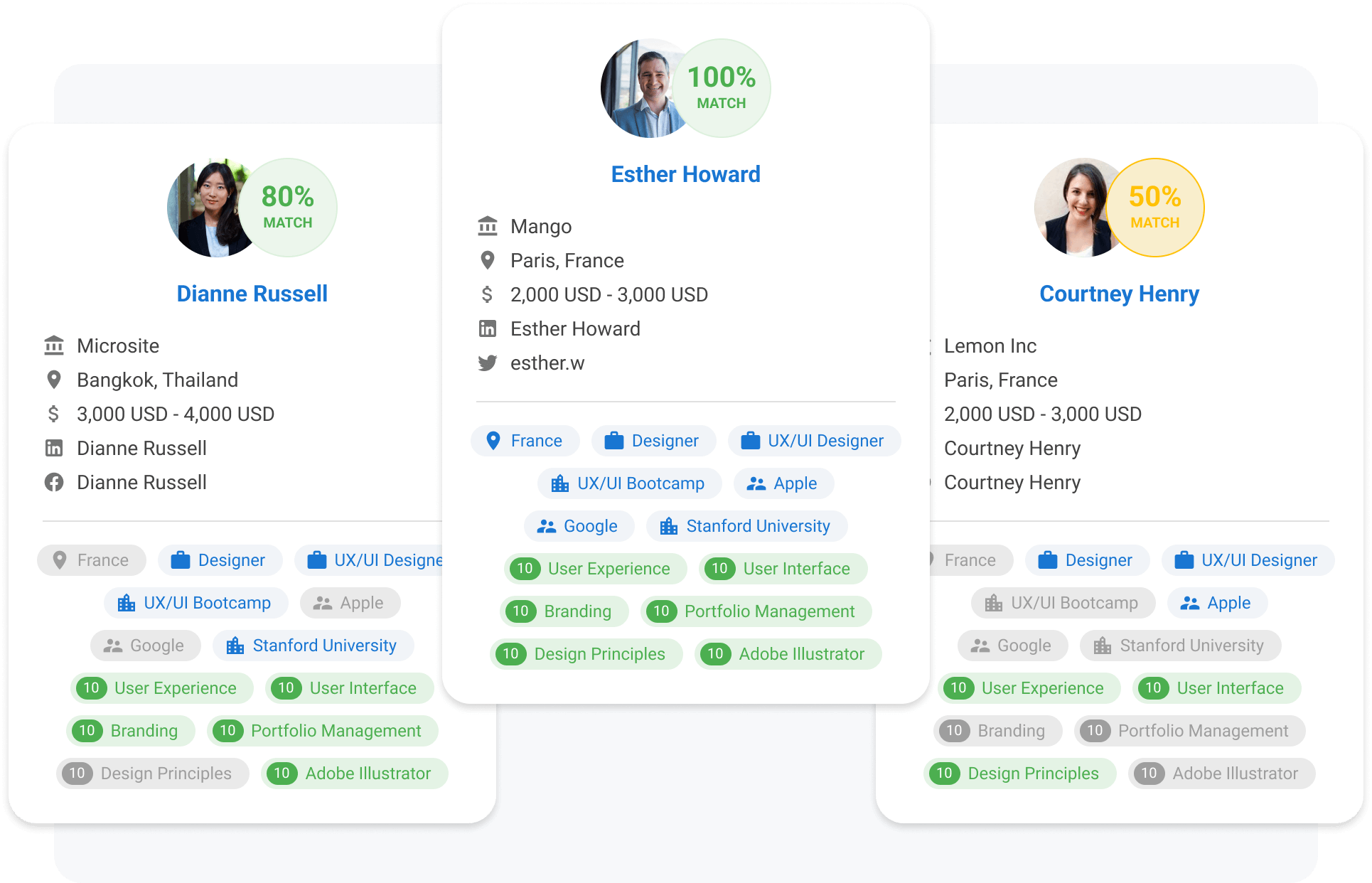
Pro Tip: Track which AI recommendations convert to placements and use this data to refine your job descriptions and candidate profiles for even better matching over time.
Measure Performance with Analytics Dashboards
You can't improve what you don't measure. Implement recruitment analytics to track metrics including time-to-fill, source efficiency, conversion rates, and margin by sector. This data reveals which sectors deliver the strongest returns and where your processes need refinement.
Set up your dashboard to track these specific KPIs for the new sector:
- Submission-to-Interview Ratio: (Is our quality good enough for this new industry?)
- Pipeline Velocity: (How fast do candidates move in this sector compared to our average?)
- Source of Hire: (Are we finding these candidates on LinkedIn, Indeed, or referrals?)
Pro Tip: Review metrics weekly with your team, celebrating wins and analyzing losses to build institutional knowledge about what works in each sector.
.webp)
Benefits of Specialization
Agencies that commit to specializing in high-growth sectors and adopt the right technology platform can expect measurable improvements across key performance indicators:
- Faster Candidate Screening: AI-powered recommendations can reduce the time spent on manual resume review by an estimated 50-70%, [4] allowing recruiters to focus their expertise on relationship-building and client consultation rather than administrative tasks.
- Higher Placement Accuracy: AI-driven candidate-job matching can enhance match relevance and, in some cases, lead to higher placement success and retention compared with traditional matching.
- Reduced Time-to-Fill: Many organizations that adopt AI-based recruitment tools report reductions in time-to-fill / time-to-hire, often around 30–50% faster than traditional methods, when sourcing, matching, screening, and analytics are combined
- Data-Driven Decisions: With robust analytics, agencies can track metrics like time-to-placement and team performance, enabling continuous improvement and more strategic resource allocation.
- Scalable Growth: As the staffing software market expands at approximately 10.1% CAGR through 2032 [5], agencies using modern recruitment platforms position themselves to scale efficiently alongside market demand.
Conclusion
Specializing in high-growth industries for staffing agencies offers a proven path to differentiation, client retention, and sustainable revenue growth. The combination of strategic niche focus, AI-powered matching, and data-driven workflows creates a competitive advantage that compounds over time. Ready to get to work recruiting? Start with our guide on how to start a recruitment agency and how to get clients for a recruitment agency.
Frequently Asked Questions
Q: What are the future trends in staffing?
A: Staffing is shifting toward AI-driven automation for sourcing and screening, wider adoption of remote and hybrid work, stronger focus on diversity and inclusion, and continued growth of the gig economy; this pushes organizations to become more agile in how they hire and manage talent. Platforms like Manatal support these trends with AI-powered candidate matching, centralized pipelines, and tools that enable efficient remote hiring and collaboration.
Q: What are the five cores of staffing?
A: The five core components are recruitment, selection, onboarding, training and development, and retention, covering the full employee lifecycle from attracting talent to keeping them engaged; Manatal primarily supports the recruitment and selection stages with features like resume parsing, candidate tracking, and collaborative hiring workflows that improve decision-making speed and accuracy.
Q: Which industries use recruitment agencies the most?
A: High-demand and skill-constrained sectors rely most on agencies, including IT, healthcare, engineering, finance and accounting, manufacturing and construction, sales and marketing, hospitality and retail, and legal; these industries benefit from faster access to specialized talent pools and scalable hiring support, often managed through systems like Manatal to handle high-volume and multi-role recruitment efficiently.
Q: How do recruitment fees work in the staffing agency business model?
A: Fees are typically structured as contingency, where agencies are paid only upon successful placement at around 15 to 25 percent of first-year salary, or retained, where clients pay upfront in stages for dedicated search services; agencies often use tools like Manatal to track placements, manage client relationships, and maintain visibility over pipelines tied to revenue.
Citations:
.webp)








.webp)

.webp)


.webp)


