





HR departments rely heavily on digital tools for tasks like hiring, onboarding, and performance reviews to make the workplace more efficient. Technological advancements have transformed traditional HR roles into streamlined digital operations. According to research, 85% of companies use HR technology to manage people. Their HR teams can respond to employees’ requests faster, maintain accurate records, and focus on strategic initiatives.[1] This article examines essential HR toolkit components, categorizes tools by HR function, and reviews outstanding tools that enhance organizational success.
What’s an HR Toolkit?
An HR toolkit is a collection of resources and tools that human resources professionals use to effectively manage and support their organization's workforce. It can include tools, templates, forms, guidelines, and checklists related to recruiting, onboarding, performance management, employee relations, and compliance with labor laws. With these toolkits, HR teams can save time, reduce errors, and focus more on strategic initiatives that contribute to a positive work environment and the overall success of the organization.
Top Software for Your HR Toolkit
Creating an effective HR toolkit means equipping yourself with tools that streamline your HR functions. These tools help build diverse, equitable, and inclusive workplaces through effective policies.
Recruitment and Sourcing Tool
- Applicant Tracking Systems (ATS): To streamline the recruitment process by managing job postings, tracking candidate applications, and providing analytics to enhance hiring efficiency.
- Job Boards and Online Platforms: Leverage platforms like LinkedIn, Indeed, and Glassdoor to source and attract qualified candidates, expand your reach, and engage with potential hires.
Manatal
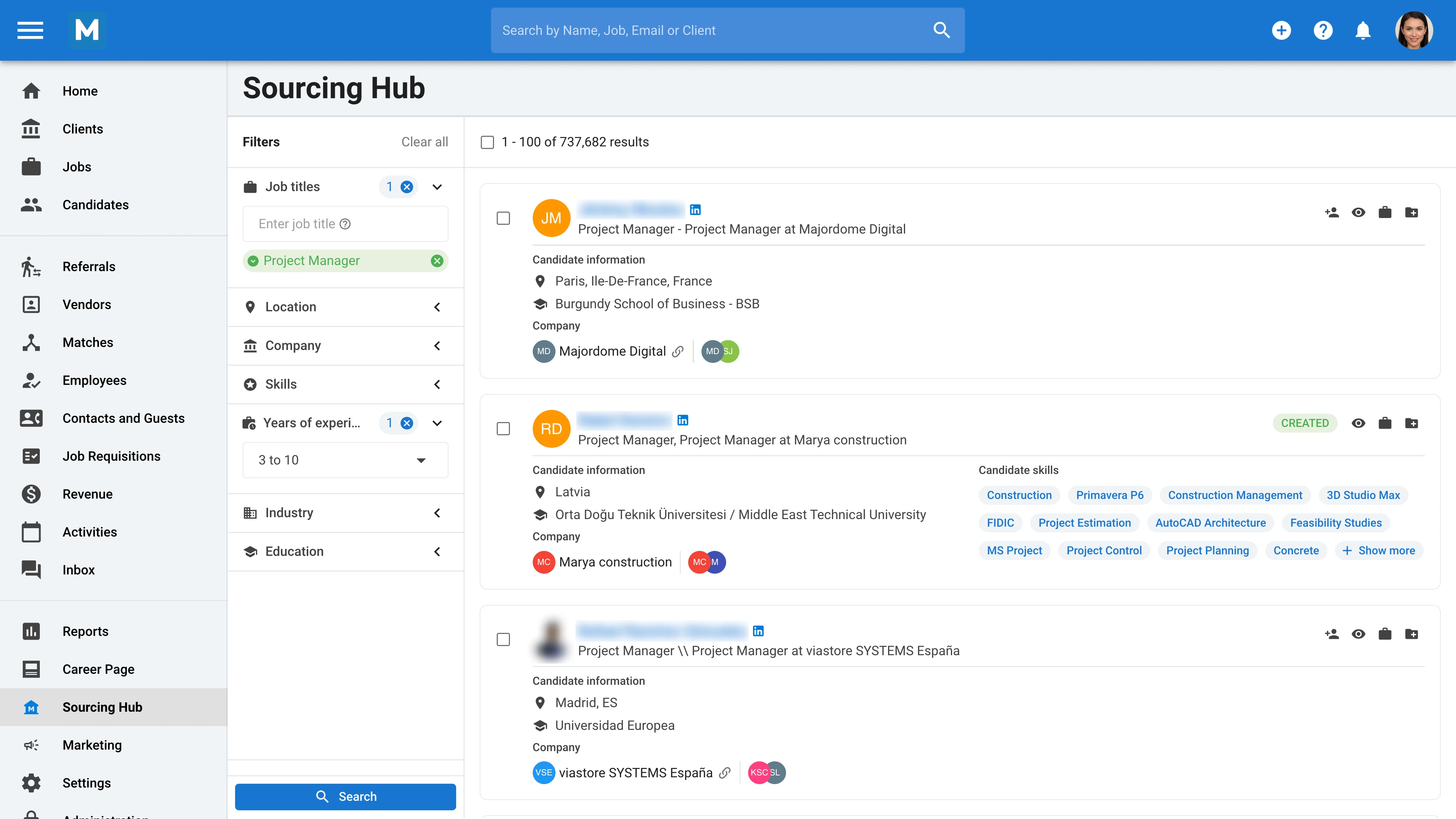
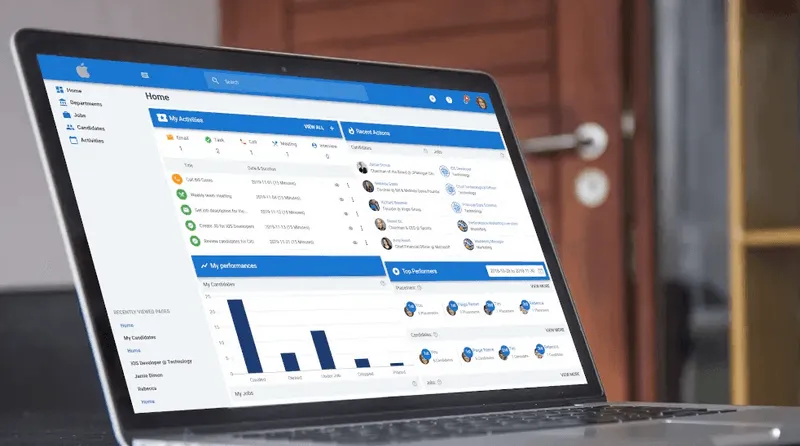
Manatal’s Candidate Sourcing feature connects you to all the top sourcing channels. You can share your open roles on more than 2,500 free and premium platforms such as Indeed, LinkedIn, Monster, and more, all within a single talent sourcing software. Plus, you can extend your search beyond your immediate contacts by leveraging its Sourcing Hub, accessing an external database of over 600 million professionals. This way, you can discover ideal matches for your roles from within the Manatal candidate sourcing platform.
{{cta}}
Employee Management Tools
- Human Resource Information Systems (HRIS): Centralized systems for managing employee data, including payroll, benefits, and personal details.
- Time and Attendance Tracking Software: Tools for managing employee work hours, schedules, and leave requests.
- Performance Management Systems: Platforms for setting employee goals, conducting appraisals, and providing feedback.
BambooHR
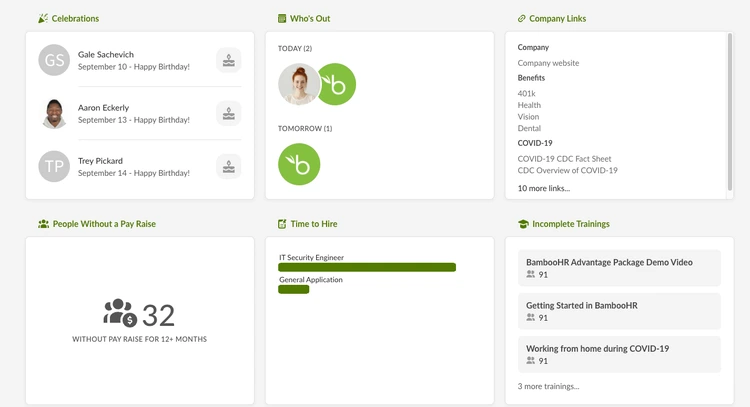
BambooHR is a cloud-based human resources information system (HRIS) that consolidates various HR functions, including payroll, employee time tracking apps, engagement tools, and an applicant tracking system all within a single platform. It is designed primarily for small to medium-sized organizations and enables centralized access to employee data for HR teams, managers, recruiters, and employees.[2]
Key features: Self-service portal, automated onboarding workflows, and e-forms and e-signatures.
Pricing: They offer three pricing tiers, Core, Pro, and Elite. However, you need to contact them to get a custom quote.
TimeClock Plus by TCP Software
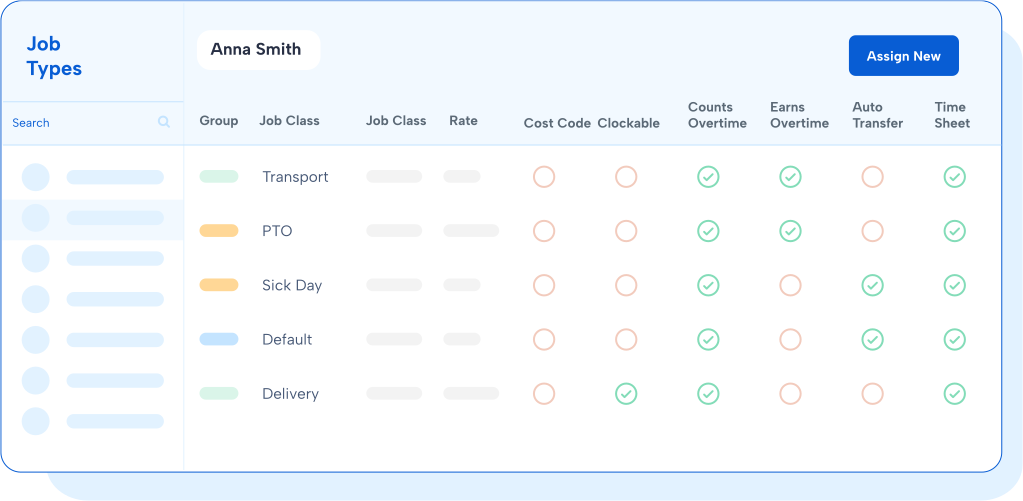
TimeClock Plus by TCP Software is a flexible and scalable time and attendance system designed to support organizations with evolving workforce needs. It helps HR teams manage time tracking, scheduling, and payroll-related processes while providing tools for compliance and workforce oversight.[3]
Key features: Time tracking, policy compliance management, and dashboard and reporting.
Pricing: The company provides custom pricing based on your business size and needs.
Learning and Development Tools
- Learning Management Systems (LMS): Software for delivering, tracking, and managing employee training and development programs.
- E-Learning Platforms: Online resources and courses for upskilling and professional development.
- Knowledge Management Systems: Tools for creating, sharing, and managing organizational knowledge and information.
Absorb LMS
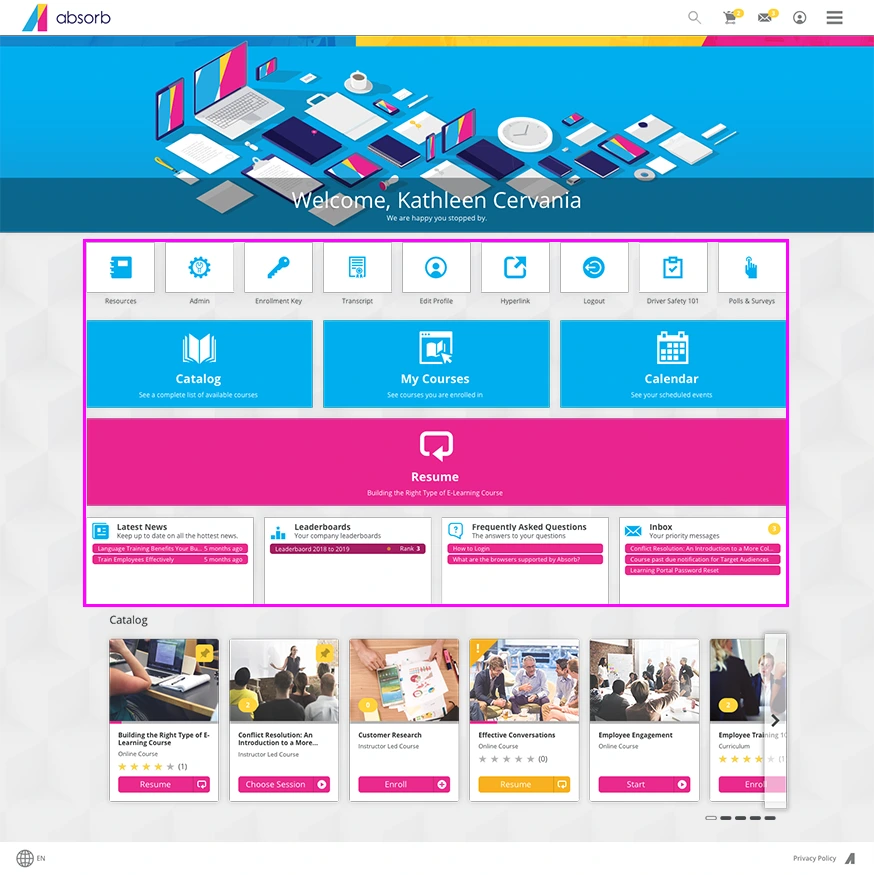
Absorb LMS is a scalable, AI‑enhanced platform that supports HR teams in automating onboarding, compliance, and employee upskilling, featuring customizable reporting, seamless HR system integration, and mobile access to streamline workforce development.[4]
Key features: Content delivery and tracking, content creation, and certifications.
Pricing: The vendor offers a free trial and demo. You need to contact them to get custom pricing.
iSpring Learn

iSpring Learn is a cloud-based LMS designed to help HR teams streamline employee onboarding, compliance, and development through structured learning paths, automated workflows, and performance tracking. It supports real-time reporting, 360-degree appraisals, and integrates with tools like MS Teams and Salesforce, enabling efficient training management within a familiar organizational structure.[5]
Key features: Content delivery and tracking, content storage management, and assessments and practice.
Pricing: The Start plan is priced from $6.70/user/month.
Employee Engagement and Communication Tools
- Employee Engagement Platforms: Systems for measuring and boosting employee morale and satisfaction.
- Internal Communication Tools: Platforms like Slack, Microsoft Teams, or Yammer facilitate internal communication and collaboration.
- Feedback and Survey Tools: Tools for conducting employee surveys and gathering feedback on workplace culture and processes.
Leapsome

Leapsome is a performance management platform designed to help HR teams foster growth through streamlined feedback and review processes. It facilitates regular performance conversations and continuous feedback, making it especially useful for tech-savvy or fast-paced environments that prioritize ongoing development. The platform’s intuitive tools help reinforce a culture of improvement and support teams in reaching their potential.[6]
Key features: 360 reviews, customizable forms, and goal setting.
Pricing: There is a 14-day free trial. They are using a modular pricing structure where you pay based on chosen features or modules.
Microsoft Teams
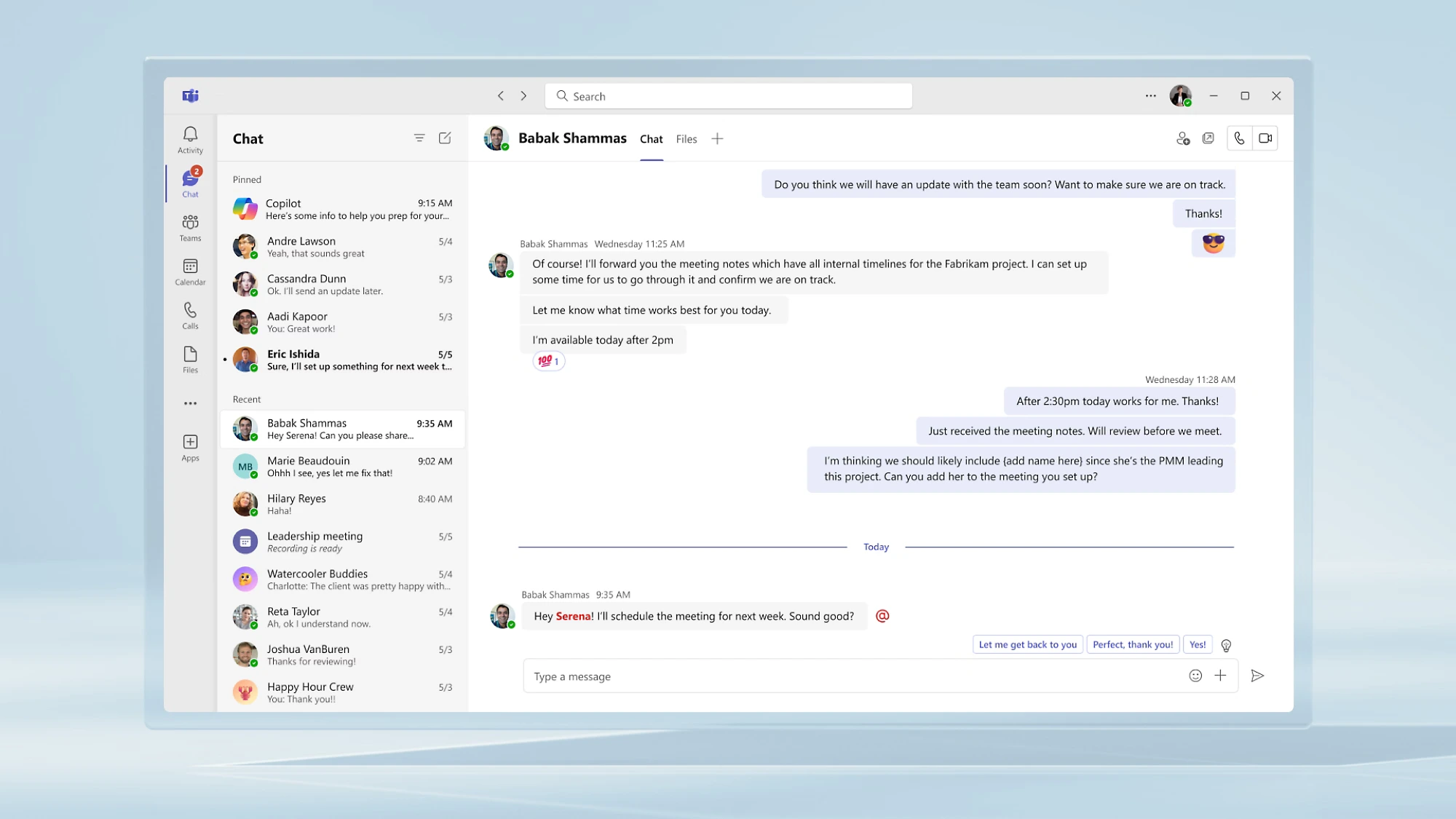
Microsoft Teams serves as a unified workspace that brings together chat, video meetings, file collaboration, and task scheduling within the Microsoft 365 ecosystem, enabling users to initiate meetings, co‑author documents, and organize group interactions seamlessly from one platform, unlocking productivity through deep, cohesive integration with familiar Office tools.[7]
Key features: Integrated chat and channels, deep Microsoft 365 integration, and virtual meetings and collaboration tools.
Pricing: The Microsoft Teams Essential plan is priced at $4/user/month.
Payroll and Benefits Administration Tools
- Payroll Software: Tools for automating payroll processing, taxation, and compliance.
- Benefits Administration Systems: Platforms for managing employee benefits, such as health insurance, retirement plans, and other perks.
- Compensation Management Tools: Systems for managing employee compensation, including salary, bonuses, and equity distribution.
ADP Payroll

ADP is recommended for its comprehensive benefits and compensation capabilities. Its benefits administration includes health, dental, vision, retirement plans (401(k), SIMPLE IRA, SEP IRA), paid leave, tuition reimbursement, and wellness programs, all accessible via a user‑friendly online platform with mobile enrollment. On the compensation side, ADP integrates planning and payroll data to support merit increases, bonuses, pay equity assessments, and off‑cycle payouts, offering interactive budgeting tools and workflow guidance to help ensure fairness and regulatory compliance.[8]
Key features: Automated payroll processing with built-in tax compliance, scalable integration, and comprehensive benefits administration.
Pricing: You need to contact ADP to get a custom quote that is based on your business needs.
Remote

Remote is an all-in-one global employment platform designed to support HR professionals in managing distributed teams through a centralized system that handles hiring, payroll, compliance, and contractor management. It enables companies to recruit talent internationally, onboard employees with locally compliant processes, administer tailored benefits, and manage payments across multiple currencies. With built-in services like HRIS, performance management, and employer-of-record capabilities, Remote helps reduce reliance on fragmented HR tools and ensures legal and data compliance across jurisdictions, making it a practical solution for organizations scaling globally.[9]
Key features: Comprehensive global employment platform, modular service options with clear compliance, and centralized HR administration and automation.
Pricing: The starting price (Contractor Management) is $29/contractor/month.
Compliance and Risk Management Tools
- Compliance Management Software: Tools that monitor and manage adherence to labor laws, health and safety regulations, data privacy rules (e.g., GDPR), and workplace policies.
- Document Management Systems: Secure systems for storing, retrieving, and auditing HR-related documents such as contracts, policy acknowledgments, and certifications.
- Audit and Risk Assessment Tools: Platforms for conducting HR audits, tracking risk exposures, and documenting preventive or corrective actions.
- Workplace Safety Management Systems: Especially useful in industrial environments, these systems track incidents, manage safety protocols, and conduct training.
AuditBoard

AuditBoard is a cloud‑based risk management and compliance platform that HR teams can leverage to streamline HR audits, policy tracking, and compliance oversight. With features like HR-specific audit templates (e.g., hiring, performance, benefits, termination workflows), continuous evidence collection linked to underlying systems, and centralized document management, it helps HR departments assess and monitor compliance across critical functions. Custom dashboards, reporting tools, and AI-powered framework mappings keep teams informed and audit-ready.[10]
Key features: Automated workflows and evidence collection, AI-powered audit and risk insights, and a real-time dashboard.
Pricing: You need to contact their sales team for a tailored quote.
HR Analytics and Reporting Tools
- HR Analytics Platforms: Tools for analyzing HR data and generating insights for informed decision-making.
- Reporting Tools: Systems that provide customizable reports on various HR metrics, trends, and key performance indicators (KPIs).
Deel
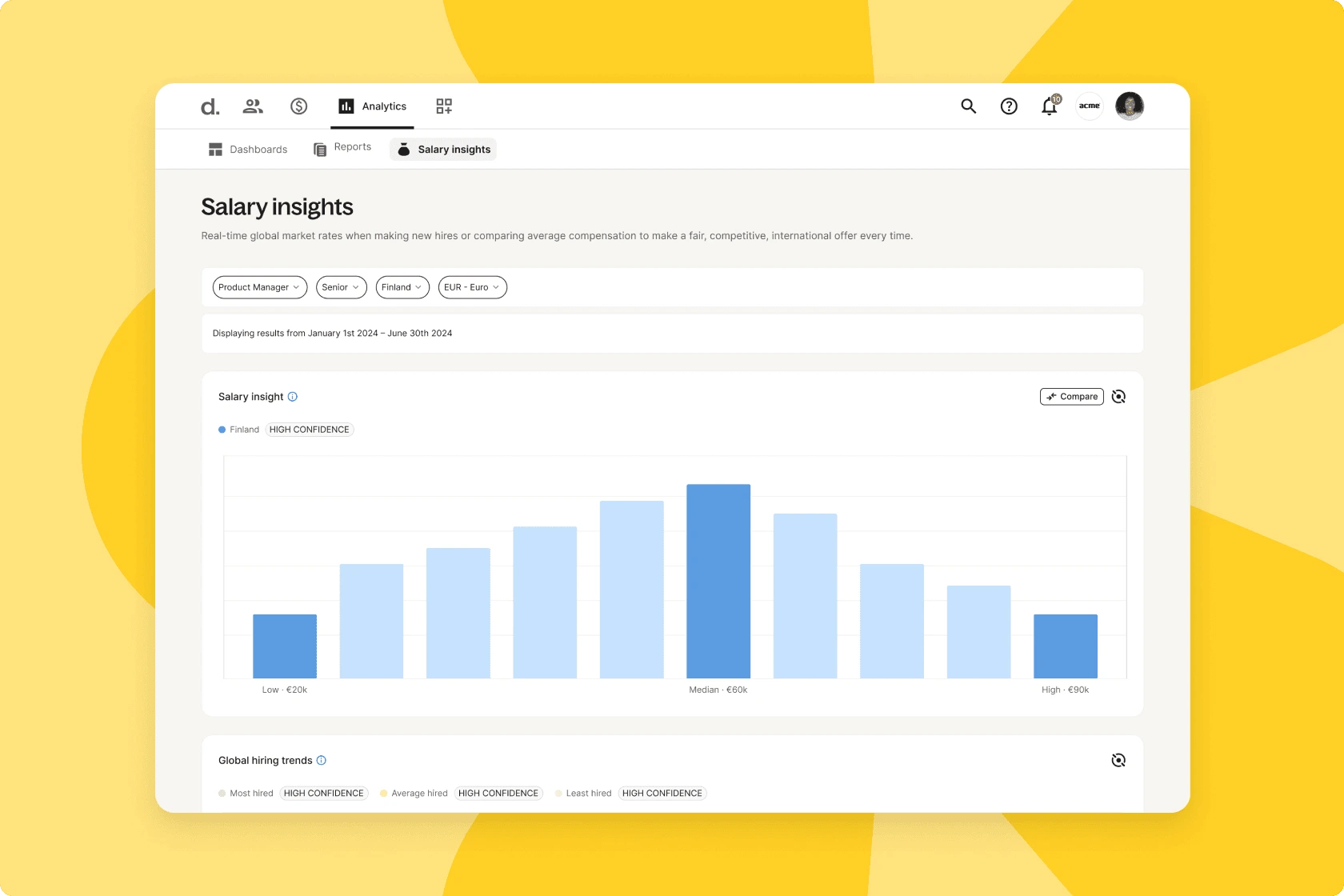
Deel is a global HR and payroll platform that offers analytics tools specifically designed for workforce insights. HR professionals can access dashboards providing real-time data on headcount trends, compensation distribution, time-off usage, and diversity metrics like gender pay gaps and attrition by demographic. These analytics help inform strategic decisions on hiring, retention, and equitable workforce development.[11][12]
Key features: Real-time employee feedback, AI-powered insights into performance, and a robust tool for managing teams and facilitating remote work.
Pricing: Deel Engage plan starts at $20/worker/month.
Paylocity
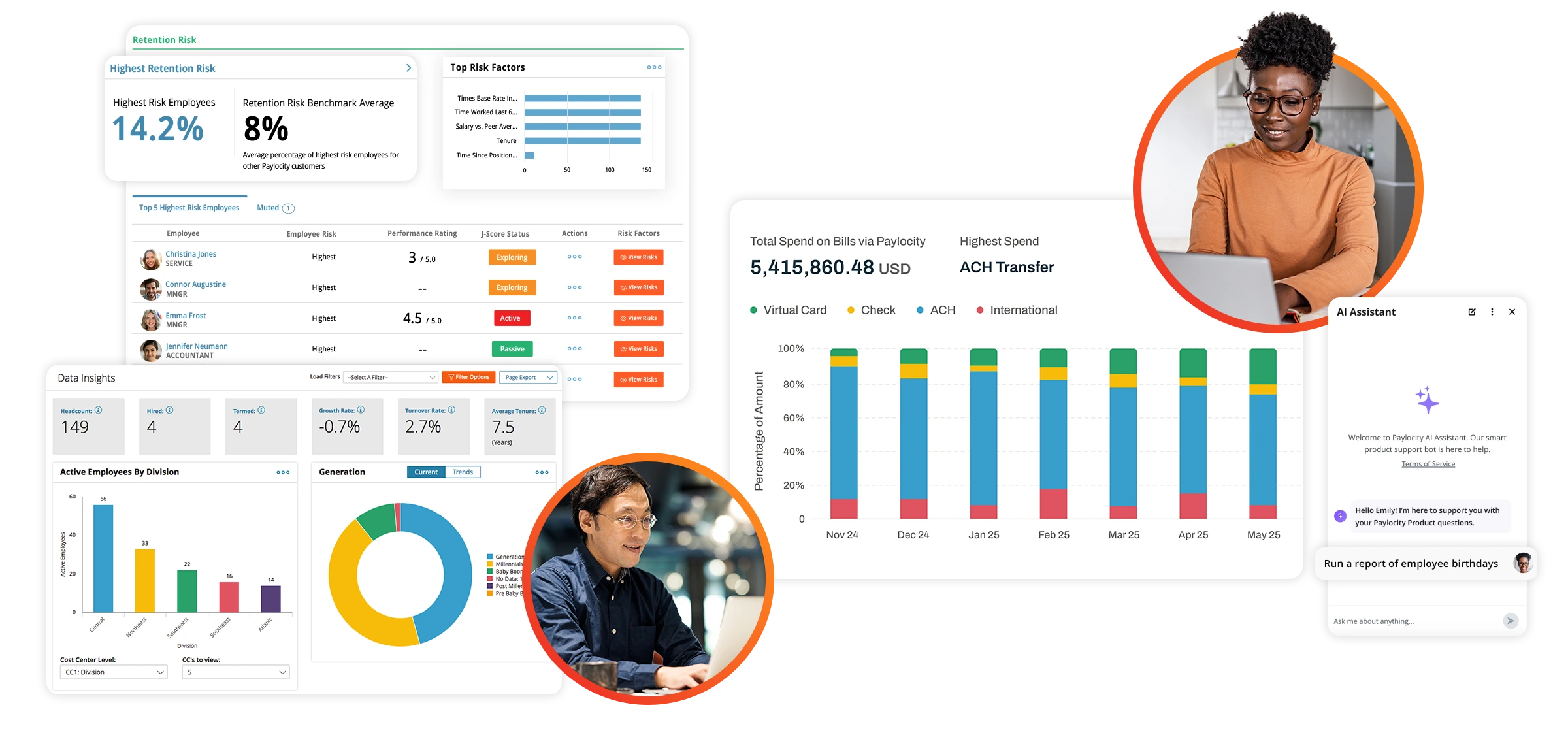
Paylocity is a human capital management solution that includes HR analytics designed to give HR teams insight into workforce utilization and engagement. Its Modern Workforce Index surfaces trends in system usage, employee engagement, demographics, retention rates, and labor costs. HR professionals can also leverage customizable dashboards and reporting tools to monitor these metrics, supporting data-driven workforce strategies.[11][13]
Key features: Workforce analytics, interactive reporting, AI assistant for insights and recommendations.
Pricing: Paylocity uses a modular, per-employee-per-month pricing model, where HR analytics features, such as dashboards and workforce insights, are bundled within broader platform modules rather than offered as a standalone tier.
Top Free Tools to Include In Your HR Toolkit
While many HR tools come at a price, there are several high-quality, free options available that can significantly enhance the effectiveness of your HR toolkit without straining the budget. These tools cater to various HR functions, from recruitment to employee engagement, offering essential features at no cost.
1. Slack (Communication)
Functionality: Slack revolutionizes workplace communication, allowing teams to exchange messages seamlessly. Dedicated channels can be set up for different departments, ongoing projects, or general discussions, facilitating organized and fluid communication.
Free Plan: Offers unlimited messages, access to 10,000 of the most recent ones, and allows integrations with up to 10 other apps, ensuring you can start improving team communication without any initial cost.
2. Google Drive (Document Management)
Functionality: A robust cloud-based platform for storing, sharing, and collaborating on documents. It eliminates the need for cumbersome email attachments and allows multiple users to work on documents simultaneously.
Free Plan: Provides 15GB of storage space across Google Drive, Gmail, and Google Photos, along with access to Google Docs, Sheets, and Forms, covering a wide range of HR documentation needs.
3. Trello (Project Management)
Functionality: Ideal for organizing tasks and projects visually. Trello uses boards, lists, and cards to help teams manage work effectively and transparently.
Free Plan: Allows unlimited cards, 10 boards per Workspace, and one Power-Up per board, making it a perfect tool for managing HR tasks and projects efficiently at no cost.
4. Zoho People (HR Software)
Functionality: A comprehensive HR management platform designed to simplify HR processes, covering everything from employee records to automating daily activities.
Free Plan: Suitable for small teams of up to 5 users, offering features like time tracking, leave management, and a basic self-service portal for employees.
5. SurveyMonkey (Employee Surveys)
Functionality: Collecting employee feedback and gauging satisfaction levels is crucial for any HR department. SurveyMonkey allows you to craft surveys easily to understand employee sentiments.
Free Plan: Includes the ability to create surveys with up to 10 questions and collect 100 responses per survey, providing foundational insights into employee engagement and satisfaction without any expenditure.
6. Bitrix24 (Collaboration and HR Management)
Functionality: Bitrix24 provides a suite of tools for collaboration and HR management, making it easier to keep track of tasks and employee productivity.
Free Plan: Offers unlimited users, task management, worktime tracking, and a basic CRM, ideal for small to medium-sized businesses looking to coordinate team efforts cost-effectively.
Benefits of Having the Right Tools in an HR Toolkit
Equipped with the right tools, HR professionals can efficiently manage essential functions, from recruitment and onboarding to employee engagement and performance management. Here are the benefits of having a well-curated HR toolkit and how it can enhance organizational efficiency and employee satisfaction.
Enhanced Recruitment and Onboarding: HR tools like ATS and AI-driven recruitment software help identify ideal candidates efficiently, while onboarding platforms ensure a seamless and engaging start for new hires.
Improved Employee Engagement: Engagement tools gather real-time employee sentiment and promote a culture where people feel heard and valued.
Streamlined Performance Management: Automated appraisal systems deliver timely feedback, align goals, and ensure consistency across the organization.
Legal Compliance and Risk Management: Compliance software keeps the organization up to date with regulations and automates documentation to prevent costly errors.
Data-Driven Decision Making: Analytics tools help HR teams forecast needs, close skill gaps, and measure the impact of HR initiatives.
Conclusion
In conclusion, a well-curated HR toolkit is essential for modern HR departments striving for efficiency, compliance, and employee satisfaction in today’s digital-first workplaces. By integrating the right mix of recruitment platforms, performance management tools, compensation systems, and employee engagement solutions—alongside a selection of powerful free tools—HR professionals can streamline administrative workflows, reduce manual overhead, and focus on strategic initiatives. Whether you're managing a small team or a global workforce, equipping your HR operations with versatile, scalable tools ensures a proactive approach to workforce management and fosters a more productive, inclusive, and resilient organizational culture.
Frequently Asked Questions
Q: Who should use an HR toolkit?
A: An HR toolkit is a valuable resource for managing human resources, particularly beneficial for small to medium-sized business owners, startup founders, and HR professionals in larger organizations. It includes templates, guidelines, and best practices to handle HR functions efficiently, ensuring compliance with labor laws, and improving processes like recruitment, onboarding, and employee engagement. Team leaders and department heads can also use HR toolkits to better understand HR policies and manage their teams effectively.
Q: Can I customize an HR toolkit?
A: An HR toolkit can be customized to align with an organization's specific needs and culture by adapting resources like job descriptions, onboarding procedures, and performance forms. This ensures the toolkit reflects the company's policies, branding, and values, enhancing efficiency, compliance, and a cohesive culture.
Q: Are there industry-specific HR toolkits?
A: Industry-specific HR toolkits are designed to meet the unique needs of various sectors, offering tailored resources and best practices. These toolkits address specific industry challenges, such as patient privacy in healthcare or remote team management in the tech industry, helping organizations align with industry standards and improve productivity and employee satisfaction.
Q: How often should I update my HR toolkit?
A: Regularly updating your HR toolkit, at least annually, is essential for staying compliant with labor laws and industry standards, effectively managing workforce dynamics, and integrating new technologies. This ensures alignment with organizational goals, fosters a positive work environment, and enhances productivity. Significant changes in company structure or regulations should prompt immediate updates to maintain the toolkit's relevance and effectiveness.
Q: What’s the difference between an HR toolkit and HR software?
A: An HR toolkit and HR software both play important roles in human resource management. The toolkit includes resources and templates for tasks like recruitment and compliance, requiring manual customization by HR staff. In contrast, HR software automates processes such as payroll and employee data management. While the toolkit focuses on providing guidance, the software facilitates efficient implementation. Together, they help HR departments function effectively both strategically and operationally.
Citations
.webp)






.webp)

.webp)


.webp)


