





Many hiring managers accidentally break the law while trying to build rapport. Casual questions about family or background can quickly lead to costly EEOC complaints and settlements. These slips often involve illegal interview questions that put your company at risk. Understanding the line between assessing cultural fit and violating federal law is essential for every recruiter. This guide breaks down the definitive list of prohibited topics and explains why they are restricted. Learn how to rephrase your questions to get the information you actually need while staying fully compliant and protecting your organization from legal liability.
Why Illegal Interview Questions Matter
The Equal Employment Opportunity Commission (EEOC) enforces Title VII of the Civil Rights Act, the Americans with Disabilities Act (ADA), and the Age Discrimination in Employment Act (ADEA). These laws exist to prevent hiring decisions based on protected characteristics: race, color, religion, sex, national origin, age, disability, and genetic information.
When you ask a candidate about their personal life, you create liability. Even if you don't use that information to make a hiring decision, the question itself can be used as evidence of discriminatory intent if the candidate isn't hired. EEOC's FY 2023 enforcement data shows total monetary relief of approximately $665 million for over 22,000 victims, including $440.5 million through administrative processes (mediation, conciliation, settlements) for private/state/local sectors, $22.6 million via litigation, and $202 million for federal employees. [1] That doesn't include legal fees, reputational damage, or the cost of employee turnover when word gets out that your hiring process is compromised.
Illegal interview questions: The Red Zone
To keep your hiring process compliant and your legal team happy, you need to navigate these "Red Zone" topics with care. Here is a streamlined guide to rephrasing high-risk questions into professional, job-related inquiries.
- Age: (e.g., "When do you plan to retire?" or "What year did you graduate?") These questions often violate the ADEA, which protects workers over 40. Even asking for a graduation date can be seen as "reverse-engineering" a candidate's age [2].
- Family and Marital Status: (e.g., "Are you married?" "Do you have kids?" "Are you pregnant?" Probing into family life can violate Title VII regarding sex discrimination. Assuming a parent (specifically a mother) won't be available due to childcare is a major liability.
- National Origin and Citizenship: (e.g., "Is English your first language?" "Where are you actually from?" Title VII and the IRCA prohibit discrimination based on an individual's place of origin. You can verify the right to work, but you cannot investigate birthplace, ancestry, or accent.
- Religion: (e.g., "What holidays do you observe?") Asking about faith or religious holidays before an offer is made suggests you are screening candidates based on their beliefs, which violates Title VII [3].
- Disability and Health: (e.g., "Do you have any health conditions?" and "How many sick days did you take last year?") The ADA strictly prohibits medical inquiries before a job offer. You cannot ask about health history, sick days, or the need for accommodations during the interview. [4]
- Financial Status: (e.g., "Do you own a car?" "Do you have debt?" Questions about home ownership or credit scores often disproportionately affect protected groups and rarely correlate with job performance. [5]
Illegal Interview Questions and What to Ask Instead
Recruiters ask illegal questions in an interview because they're trying to assess legitimate job requirements. The issue is phrasing.
The Small Talk Trap
Recruiters frequently ask illegal job interview questions because they lack a script. They try to fill the silence during "small talk" and end up violating federal law. You must treat every interview as a legal deposition. If a question does not relate directly to the candidate's ability to perform specific job duties, delete it from your process.
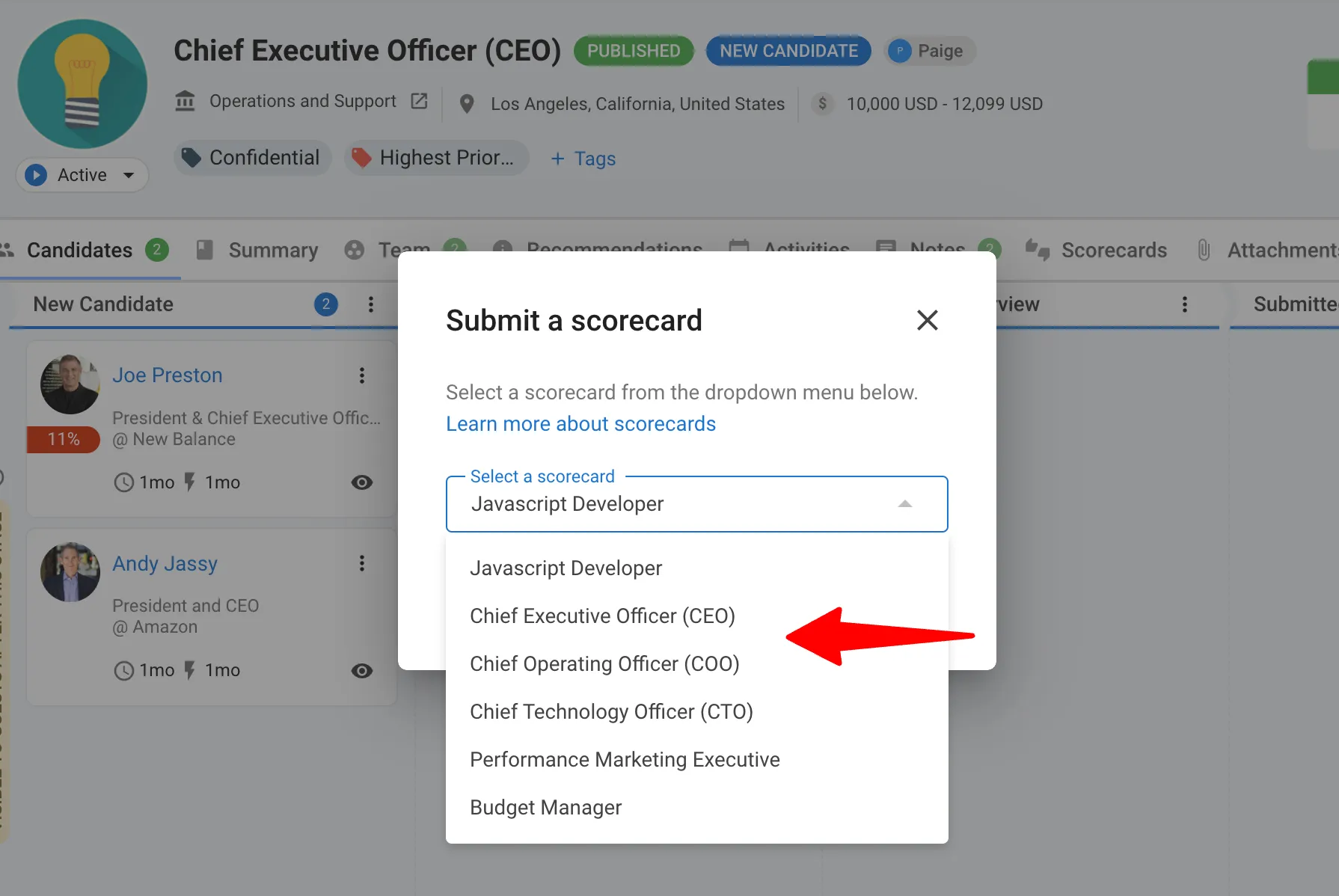
Manatal's interview scorecard feature lets you create question sets that map to specific job requirements. When a hiring manager opens a candidate's profile, they see exactly which questions to ask and how to score the responses.
{{cta}}
This approach does two things. First, it prevents illegal questions by eliminating the opportunity to ask them. Second, it ensures that every candidate is evaluated against the same criteria, thereby removing unconscious bias from the process.
When an EEOC complaint is received, you can produce documentation showing that all candidates for the role were asked the same questions and scored using the same rubric. Without that structure, you're relying on memory, scattered notes, and the interviewer's ability to recall exactly what they asked six months ago. That doesn't hold up under scrutiny.
Consequences of Asking Illegal Job Interview Questions
Let's say an interviewer asks an illegal question. The candidate doesn't get hired. They file a complaint. The EEOC investigates. You have to produce interview notes, emails, scorecards, and any documentation related to the hiring decision. If your notes reference the candidate's age, family status, or disability, you've handed the EEOC evidence of discrimination.
Even if you didn't make the hiring decision based on that information, you still have to settle. Because fighting it costs more than paying out. Beyond the financial cost, you've damaged your employer's brand. Word spreads fast in tight industries. Candidates talk. Glassdoor reviews mention discriminatory interviews. Your talent pipeline dries up because no one wants to work for a company that asks illegal interview questions.
Compliance Trends for 2026 and Beyond
Regulators are increasingly looking at "proxy" questions. These are legal questions used to uncover protected information. For example, asking about someone's neighborhood to guess their race or socioeconomic status. Courts are becoming less tolerant of these tactics.
Audit your interview questions script today. Remove every question that does not link directly to a Key Performance Indicator (KPI). If your hiring managers cannot explain exactly why they are asking a question, they should not be asking it. Fix it before the EEOC does it for you.
Frequently Asked Questions
Q: Can I ask about a candidate's availability to work weekends?
A: Yes. You can ask about specific scheduling requirements for the job. You cannot ask why they're unavailable or probe into religious practices, childcare arrangements, or family obligations. Stick to "This role requires weekend shifts. Can you meet that requirement?"
Q: Is it illegal to ask if someone is authorized to work in the U.S.?
A: No. You can ask about work authorization. You cannot ask about citizenship status, birthplace, or nationality. The legal question is, "Are you authorized to work in the United States?" Do not ask, "Are you a U.S. citizen?"
Q: What should I do if a candidate volunteers protected information during an interview?
A: Don't engage with it. If a candidate mentions their pregnancy, religion, or disability unprompted, redirect to the job requirements. Do not ask follow-up questions. Document that the information was volunteered, not solicited, in your interview notes.
Q: Can I ask about gaps in employment history?
A: Yes, but be aware of state laws (e.g., ban-the-box restrictions) and ensure no disparate impact. You cannot ask if the gap was due to medical leave, maternity leave, or disability. Keep the question neutral: "I noticed a gap between 2022 and 2023. Can you walk me through what you were doing during that time?"
Q: Are all questions about age illegal?
A: No. You can verify that a candidate is over 18 for legal work eligibility. You cannot ask how old someone is, when they plan to retire, or use graduation dates to calculate age. The only legal age question is "Are you over the age of 18?"
Citations:
.webp)







.webp)

.webp)


.webp)


