




Microsoft’s global workforce of over 228,000 shows that the company doesn't just hire for skill.[1] It hires for a specific mindset. For talent acquisition (TA) leaders and recruiters, understanding the Microsoft interview process offers a blueprint for scaling high-bar recruitment while maintaining a focus on culture and diversity.
This article breaks down Microsoft recruitment process, the technology it uses to stay efficient, and the principles that ensure they land top-tier talent in a competitive market.
What is the Microsoft Interview Process?
The Microsoft interview process is a structured, multi-stage framework designed to evaluate three core pillars: technical proficiency, problem-solving agility, and cultural alignment. Unlike many legacy corporations, Microsoft emphasizes real-world scenarios and competency-based assessments in its interviews.
At its core, the process is built around the interview loop. This is a series of interviews where different team members evaluate specific competencies to ensure a well-rounded view of the candidate. This prevents 'groupthink' and ensures that every hire brings a unique perspective to the team.[2] Microsoft’s structured interview loop reflects the same principles found in any well-designed hiring workflow, and you can explore the key stages in more detail in this guide to the full recruitment process.
Microsoft Hiring Process: Key Steps
The journey from applicant to employee at Microsoft is meticulously tracked and highly transparent. Here is the standard progression:
- Application and Action Center Tracking: Candidates apply through the Microsoft Careers portal. All interactions are tracked via the Action Center, providing candidates with transparency regarding their application status.[3]
- The Interview Loop: This stage involves 2-4 conversations with interviewers for up to an hour each. Each interviewer assesses specific competencies (e.g., system design, behavioral, or collaboration) to avoid redundant questioning.[3]
- Technical/Functional Assessment: Depending on the role, candidates may complete an online assessment (e.g., coding) or a technical interview to verify foundational skills.[3]
- Offer and Total Rewards: Once approved, recruiters present the Total Rewards package. This stage focuses on long-term career growth in addition to compensation.[3]
- Pre-Onboarding and Hired: After acceptance, the transition is managed by onboarding buddies and the AskHR support system, ensuring the new hire is productive from day one.[3]
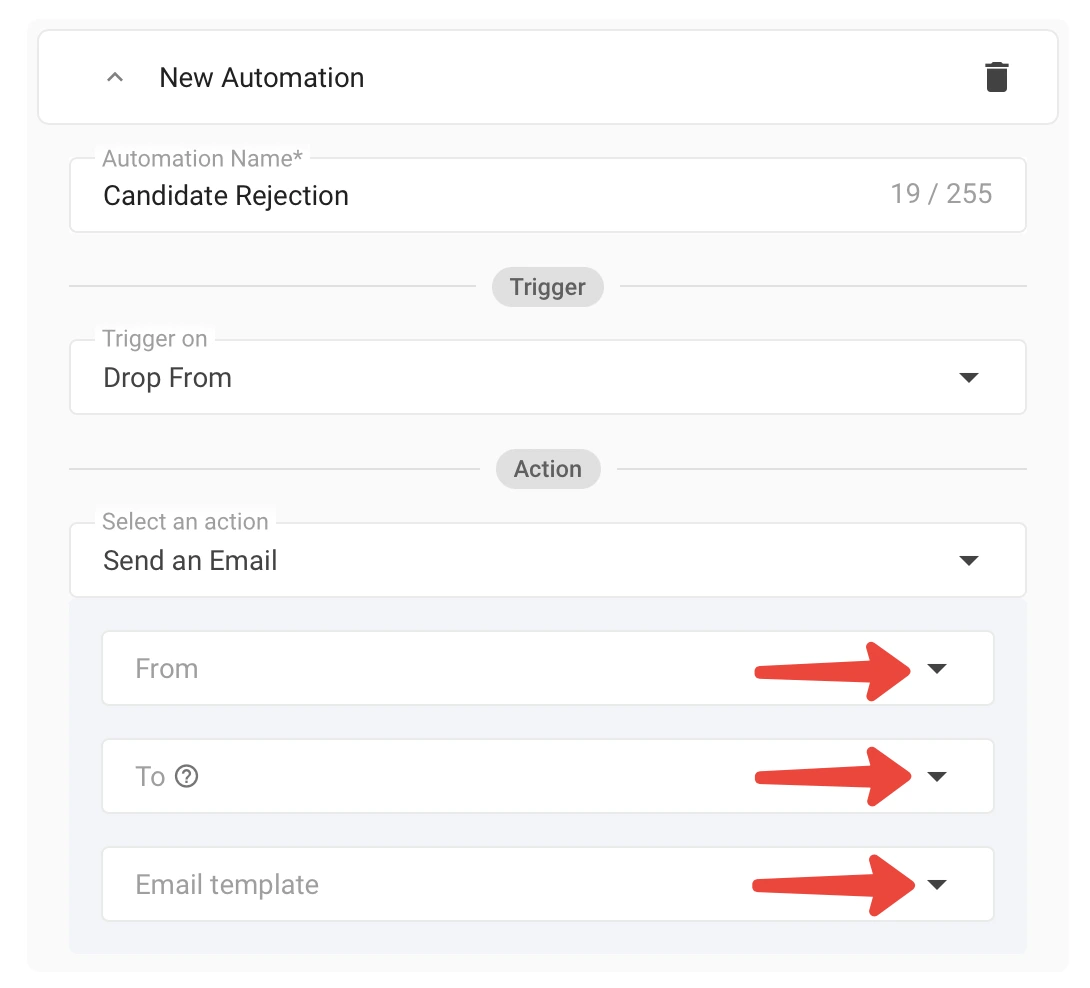
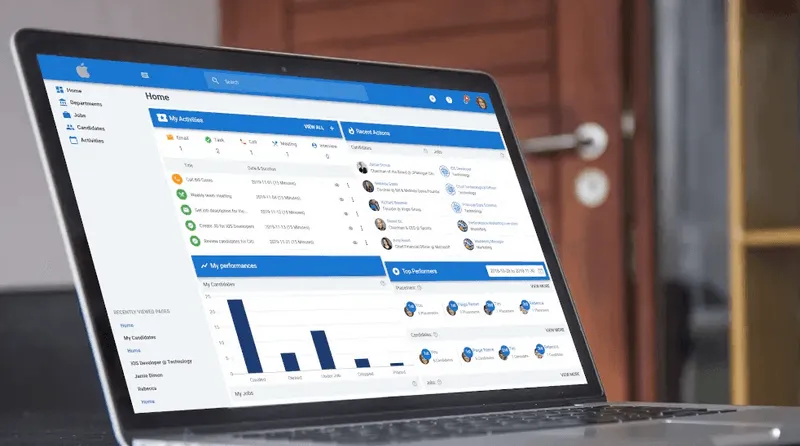
Managing multi-stage interview processes like Microsoft’s can be time-intensive and complex. With Manatal’s Workflow Automation, you can set up rule-based triggers to automatically move candidates between stages once screenings or assessments are completed. This reduces manual work, ensures consistent candidate follow-ups, and accelerates the time-to-hire process.
{{cta}}
Role-Specific Interview Variations
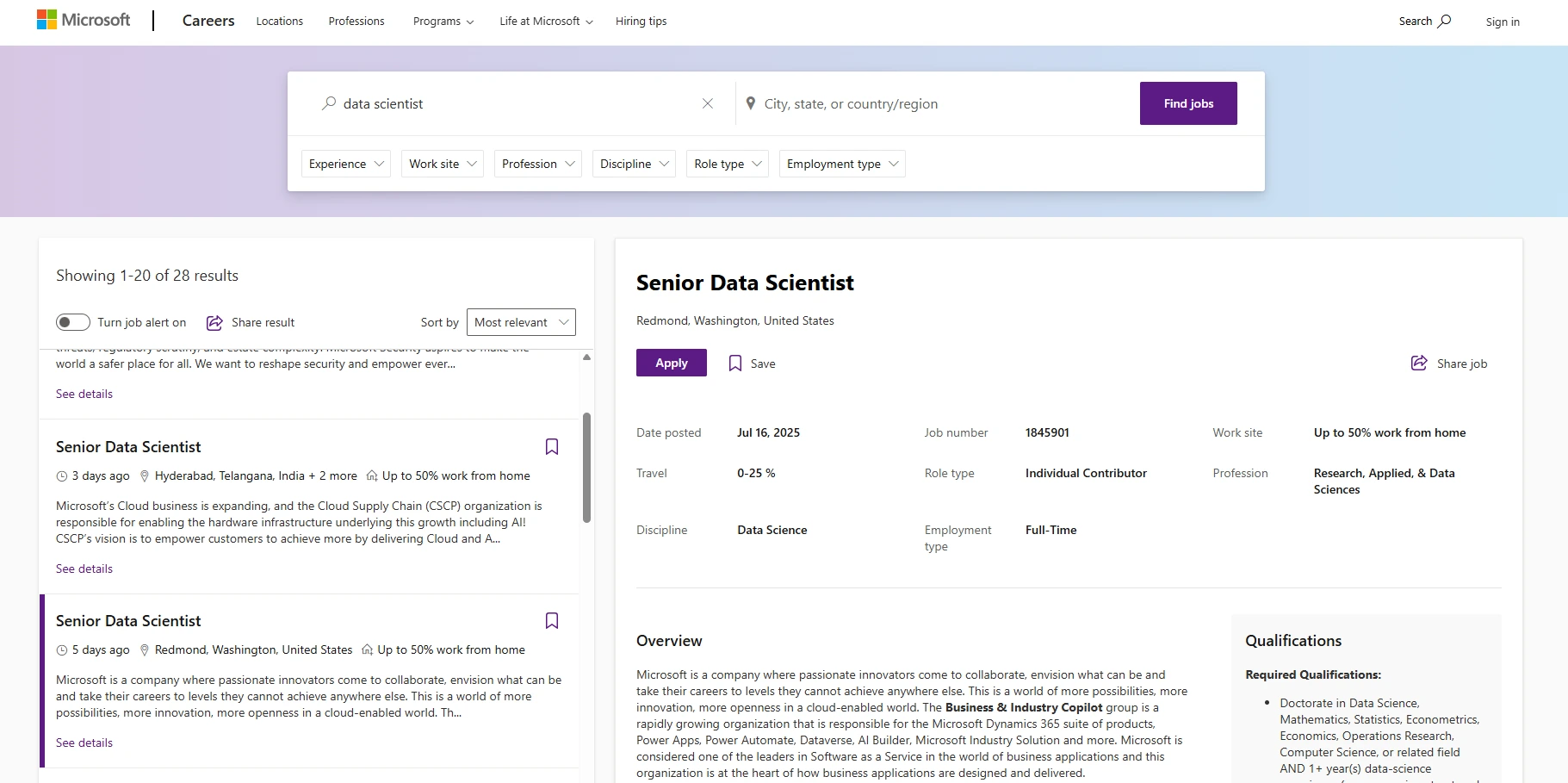
Microsoft adjusts its interview loops based on the technical demands of the role:
- Software Engineering: Focuses on coding, API design, and system architecture. Candidates are expected to explain their logic in real-time.
- Data Science: Interviews emphasize SQL proficiency, machine learning case studies, and translating data into business value.
- Product Management: These interviews prioritize customer focus and bridging engineering with user experience. While less coding-intensive, product managers must demonstrate technical literacy.
Microsoft Recruitment Principles
Microsoft links its recruitment standards to its values of respect, integrity, and accountability. These expectations apply from application to onboarding. For recruiters and HR professionals, this approach sets a defined compliance and ethics framework on three areas:
- Honest representation: Candidates must provide accurate information in resumes, applications, coding assessments, assignments, and interviews. This standard extends through the offer stage and onboarding process.[3]
- Responsible use of AI: During interviews and formal assessments, candidates must complete tasks without AI support, third party assistance, or external resources unless permission is given. [3]
- Adherence to responsible AI principles: Microsoft aligns recruitment practices with its responsible AI standards, including fairness, accountability, transparency, inclusivity, reliability, safety, and privacy. [3]
Microsoft’s Flexible Work Policy
Microsoft has updated its hybrid work policy, which is a key part of its recruiting. Starting in February 2026, employees near offices are expected to work on-site three days a week, with flexibility varying by role (e.g., hybrid, remote, or on-site). The organization reduces alignment issues by specifying in job postings, which helps match candidates' needs with operational models.[4]
Microsoft’s Core Culture Values
Microsoft positions culture as a key driver of innovation, employee engagement, and customer impact. For recruiters and HR teams, these values explain how Microsoft builds talent strategy and internal alignment. [5]
Microsoft’s culture centers on five core principles:
- Growth Mindset: Microsoft encourages employees to keep learning, experiment, and improve through feedback. The company treats adaptability and continuous development as core expectations, not optional traits. [5]
- Customer Obsession: Teams focus on understanding customer needs through active listening and direct engagement. This approach supports product decisions based on user outcomes and long term value. [5]
- Diversity and Inclusion: Microsoft prioritizes teams that reflect global diversity across background, identity, and lived experience. The company promotes belonging by encouraging employees to challenge bias and support inclusion through internal communities and resource groups. [5]
- One Microsoft: Microsoft promotes collaboration across functions, teams, and regions. This structure helps reduce silos and supports shared accountability across the organization. [5]
- Giving Back: Microsoft integrates philanthropy into its workplace culture through employee led volunteering and skill based contributions. Employees contribute time, funding, and expertise to support social and community initiatives. [5]
Diversity and Inclusion in the Microsoft Interview Process
For Microsoft, diversity and inclusion form the foundation for innovation. You see the scale and intent of these efforts in global ERGs, non traditional talent pipelines, and structured workplace accommodations. These programs define Microsoft’s long term direction for inclusive growth. [6]
Their strategy covers hiring, retention, and daily operations across the business.
Inclusive Culture and Workforce: Microsoft builds a workforce that reflects global communities across regions and markets. They focus on diverse experiences, backgrounds, and capabilities to influence product design and service delivery.
Employee Resource Groups and Communities: Microsoft supports nine global Employee Resource Groups with additional peer led communities. These groups remain open to all employees and promote mentorship, professional development, and belonging.
Targeted Inclusion Programs: Microsoft runs focused initiatives to expand access to employment.
- Military and Veterans: The Microsoft Software and Systems Academy supports service members and their spouses as they transition into technology careers across multiple countries. [7]
- Disability Hiring and Accessibility: Microsoft provides structured accommodations such as interpreters, extended assessment time, and privacy adjustments to support candidates and employees.
- Neurodiversity Hiring: Microsoft adapts interview formats, provides dedicated support resources, and hosts virtual hiring events to engage neurodivergent talent. [6]
What Other Companies Can Learn
Implementing a tech-integrated, low-code framework like Microsoft’s can transform recruitment by automating routine processes, surfacing insights through smart search, and empowering data-led decision-making. This model demonstrates how HR teams can scale operations efficiently while maintaining high engagement and outcome quality.
- Leverage Integrated Low-Code Tools: Microsoft built a robust recruitment dashboard using Power BI to track key metrics, such as CV volume, acceptance rates, time-to-hire, recruiter efficiency, and cost-per-hire. They supplemented this with Power Apps (an FAQ interface) and Power Automate to streamline workflows.[8]
- Use Smart Search & FAQs: By integrating Azure Cognitive Search with Power Apps, they enabled recruiters and hiring managers to effortlessly access relevant information about HR processes through internal natural-language queries. This drastically reduces the time spent searching documents manually.[8]
- Automate Repetitive HR Tasks: Power Automate requests data from cognitive services and feeds it into the Power Platform tools so HR teams can focus on more strategic activities.[8]
- Drive Data-Informed Decisions: Combining dashboards and automated tools offers real-time visibility into recruitment effectiveness, enabling teams to pivot quickly, optimize budgets, and refine recruiter performance based on solid analytics.[8]
Conclusion
Microsoft’s recruitment process offers a powerful example of how a global company can attract, evaluate, and retain top talent through a strategic blend of values-driven culture, flexible work policies, inclusive hiring, and cutting-edge technology. From emphasizing transparency and ethical AI use to implementing low-code tools and data-driven decision-making, Microsoft sets a high standard for modern hiring practices. Organizations looking to enhance their own recruitment strategies can take inspiration from Microsoft’s ability to align purpose, innovation, and people-centric values across every stage of the hiring journey.
Frequently Asked Questions
Q: How long does the Microsoft interview process take?
A: The Microsoft interview process can last from two weeks to several months and includes screening, interviews, and assessments. The timeline varies based on the role, location, and number of candidates, with technical positions often requiring more evaluation.
Q: How many rounds are there in the Microsoft interview process?
A: The Microsoft interview process involves several stages to assess technical skills, problem-solving, and alignment with values. It typically includes screening, 2-4 interview conversations, and assessments. The process can have three to five rounds, depending on the role.
Q: What is Microsoft looking for in candidates?
A: Microsoft seeks candidates with technical and problem-solving skills, a growth mindset, and a passion for innovation. They value collaboration, respect, integrity, and accountability. Candidates should align with Microsoft's mission to empower others through technology.
Q: How technical are Microsoft interviews for Product Manager or non-dev roles?
A: Microsoft Product Manager interviews emphasize collaboration, strategic thinking, and customer focus, with some technical questions to assess product understanding and engineering collaboration. Coding isn't required, but technical literacy is important.
Citations
.webp)






.webp)

.webp)


.webp)


