





Quiet hiring is a talent strategy that resurfaces whenever budgets tighten and headcount freezes. Instead of opening a new requisition, an organization covers a critical skills gap with the people and contractors it already has. For HR teams asked to do more with the same team, it is a workforce planning decision you will likely face this year. This guide explains what the practice is and why it returned to the agenda. It covers the internal and external forms, how to run it fairly, and where your applicant tracking system fits in.
What Is Quiet Hiring
The term went mainstream after Gartner named quiet hiring a top workplace trend for 2023. Emily Rose McRae, a senior director at Gartner, defined it as acquiring new skills without adding full-time employees. [1] In practice, that means reassigning current staff to higher-priority work or bringing in short-term help for a defined need.
According to SHRM, the practice takes two forms: internal and external. The label is new, but redeploying talent is not. As built-in notes, internal recruiting of high performers existed long before the term went viral. [2]
Why Quiet Hiring Happens
- Cost Control: Leaders slow down expensive external hiring while still pushing for ambitious growth goals.
- Severe Skills Shortages: Sourcing specialized talent externally is increasingly difficult and time-consuming.
- Stronger Retention: LinkedIn's Workplace Learning Report found that 94% of employees would stay longer at a company that invests in their learning and development. [3] Making internal moves and stretch projects is a visible driver for career growth.
Quiet Hiring: A Step-by-Step Workflow
Quiet hiring pays off only when you develop capability; that point comes from Harvard Business Impact's take on the real way to quiet hire. [3] The workflow below turns it into an operational sequence, then goes further with the candidate database most guides ignore.
- Run a skills gap analysis. Map what employees and known candidates already offer against what you will need in 6 to 12 months.
- Define the gap precisely. Name one role or skill at a time, rather than a vague push for more capacity.
- Search internally first, then your known-candidate pool, before you post externally.
- Choose the path for each gap. Redeploy, upskill, or bring in a contractor, and write down the decision criteria.
- Document the change and confirm the terms. Clarify the new responsibilities, reporting structure, duration, and any changes to title or compensation. Obtain any required employee agreement or approvals before the assignment begins.
- Onboard or redeploy with a defined time boundary and an opt-out path.
- Measure results against the metrics in the next section.
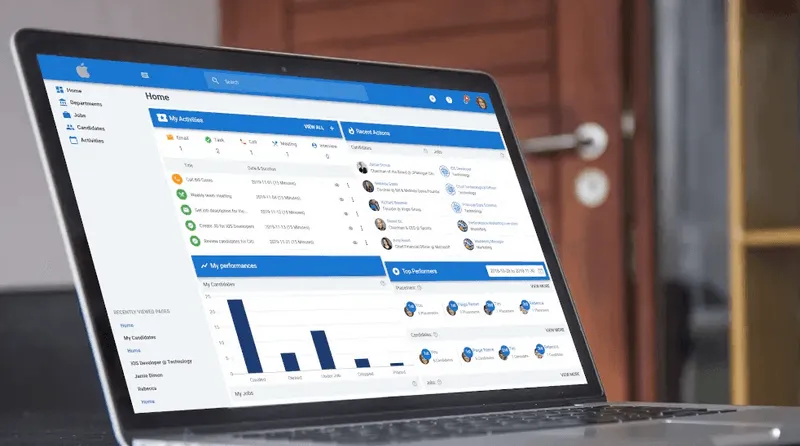
Manatal AI Advanced Search combines semantic search, Boolean keywords, and filters to help recruiters find relevant profiles in their candidate database. This can help teams rediscover past applicants and other candidates already stored in the database before launching a new external search. If employee profiles are maintained in the candidate database, recruiters can also use the same search capabilities to identify internal talent.
Learn More: Boolean Search Recruiting
{{cta}}
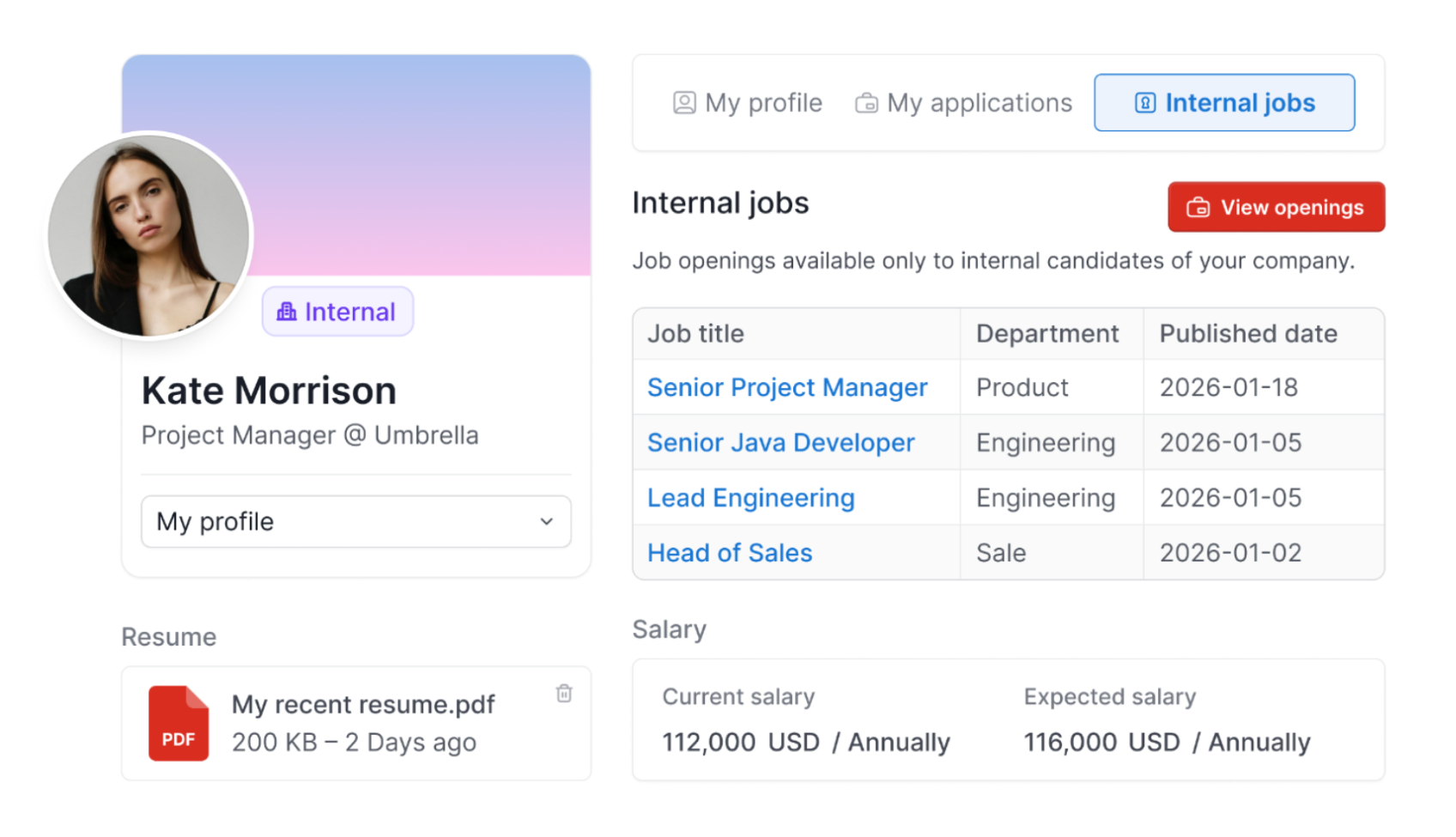
If your organization uses Manatal's Employee Portal, verified employees can access internal-only job postings and participate in the internal hiring process.
Manatal's AI Recommendations extracts core skills and requirements from a job description, scores candidates against those criteria, and ranks the strongest matches. Its requirement-level analysis also shows where each candidate meets or falls short of the specified criteria.

Internal Mobility Is Only Part of It
Internal mobility is one mechanism within quiet hiring, while a well-maintained candidate database can extend the search to former applicants, alumni, and other known talent outside the current workforce.
You might like: External Hiring vs Internal Mobility
Quiet Hiring vs. Quiet Quitting vs. Quiet Firing
These terms sound alike and get mixed up in job-market coverage. They describe different actors and different intent.
Quiet hiring and quiet firing both involve employer decisions, but they have different aims. Quiet hiring seeks to address capability gaps through existing or contingent talent, while quiet firing describes practices intended to encourage an employee to leave.
How to Measure Whether Quiet Hiring Is Working
Treat it like any other hiring channel and measure it. Four metrics tell you whether it is paying off:
- Internal-fill rate: the share of gaps you close with existing people instead of external hires.
- Time-to-fill versus external: how fast a redeployment closes a gap against your external benchmark.
- Redeployment retention: whether the people you move stay and perform after the change.
- Opt-out and satisfaction rate: how often redeployed staff decline or report the change went poorly.
Retention is particularly useful because successful internal development can support both workforce stability and mobility. LinkedIn's 2024 Workplace Learning Report found that companies with strong learning cultures had 57% higher retention rates and 23% higher internal mobility rates than companies with lower levels of commitment. [4] Track it alongside your external benchmark so you can prove the channel earns its place.
Quiet Hiring Risks to Plan For
The approach has real downsides when it is rushed.
- Overload: piling new duties onto current staff without removing anything causes burnout. Get explicit consent before the assignment starts, and give the person room to decline.
- Unclear expectations: people need to know why the reassignment matters and how long it lasts. Set a clear time boundary so a temporary stretch does not become permanent by default.
- Skipped recognition: extra responsibility without reward reads as a demotion in disguise. Review pay and title against the new scope, and adjust before the work begins.
- Neglected pipelines: relying only on internal moves hides the need to keep sourcing externally, a problem we cover in our look at ghost jobs.
Conclusion
Quiet hiring works best as a planned motion. Audit your skills, define one gap at a time, search the talent you already have, set fair terms, and measure the result. Give the internal recruiting the same rigor you give external recruiting, and you protect both delivery and retention. The next step is making existing talent easy to find and rank the moment a gap appears.
Start a 14-day free trial with Manatal and put your internal and external pipelines in one place.
Frequently Asked Questions
Q: What is quiet firing, and how is it different from quiet hiring?
A: Quiet firing is when an employer lets conditions decline, through withheld raises, poor assignments, or ignored development, so an employee leaves on their own. Quiet hiring adds responsibility and, done right, recognition. Modern ATS platforms like Manatal make quiet hiring easier by helping HR track existing employee skills and internal mobility before looking outside. Ultimately, one pushes people out; the other invests in the people you keep.
Q: Is quiet hiring legal?
A: Quiet hiring is not a specific legal category, so whether a particular arrangement is lawful depends on what the employer changes and which employment laws apply. Organizations should review employment contracts, wage and hour requirements, worker classification rules, discrimination laws, and any requirements governing changes to duties or compensation. When an assignment materially changes an employee's role or terms, HR or legal counsel should review the arrangement.
Q: Is quiet hiring good or bad for employees?
A: It depends on how you run it. With consent, clear scope, and fair pay, it gives employees stretch assignments and visible growth; as unpaid extra work, it drives burnout and attrition. The fairness checklist above is what keeps it on the right side.
Q: What are some real examples of quiet hiring?
A: A retailer trains store staff on inventory analytics to cover a data need. A marketing team hands a contractor a single campaign launch, while a manufacturer moves an engineer into a product role for two quarters, using Manatal ATS to match candidate skill tags with internal project demands. Each covers a skill gap without opening a permanent requisition.
Q: How do I start quiet hiring if I don't have an internal talent marketplace?
A: You do not need dedicated software to start. A skills matrix in your HRIS or a spreadsheet is enough to map capability and then let your ATS, such as Manatal, surface current staff profiles, talent pools, and past applicants. Add a dedicated talent marketplace later if you scale the practice.
Citations:
.webp)







.webp)

.webp)


.webp)


