





Recruiting requires speed, agility, and a sales-focused mindset to track down external talent and bring it in. It is high-energy and often transactional. While Human Resources (HR) requires patience, nurturing, and a policy-focused mindset to cultivate the talent you already have, ensuring they grow, stay productive, and remain compliant. Excellent recruiting fails without strong HR support. In this article, we break down the differences between recruiting and HR, why your business needs to bridge the gap, and how to do it.
Differences Between Recruiting and HR
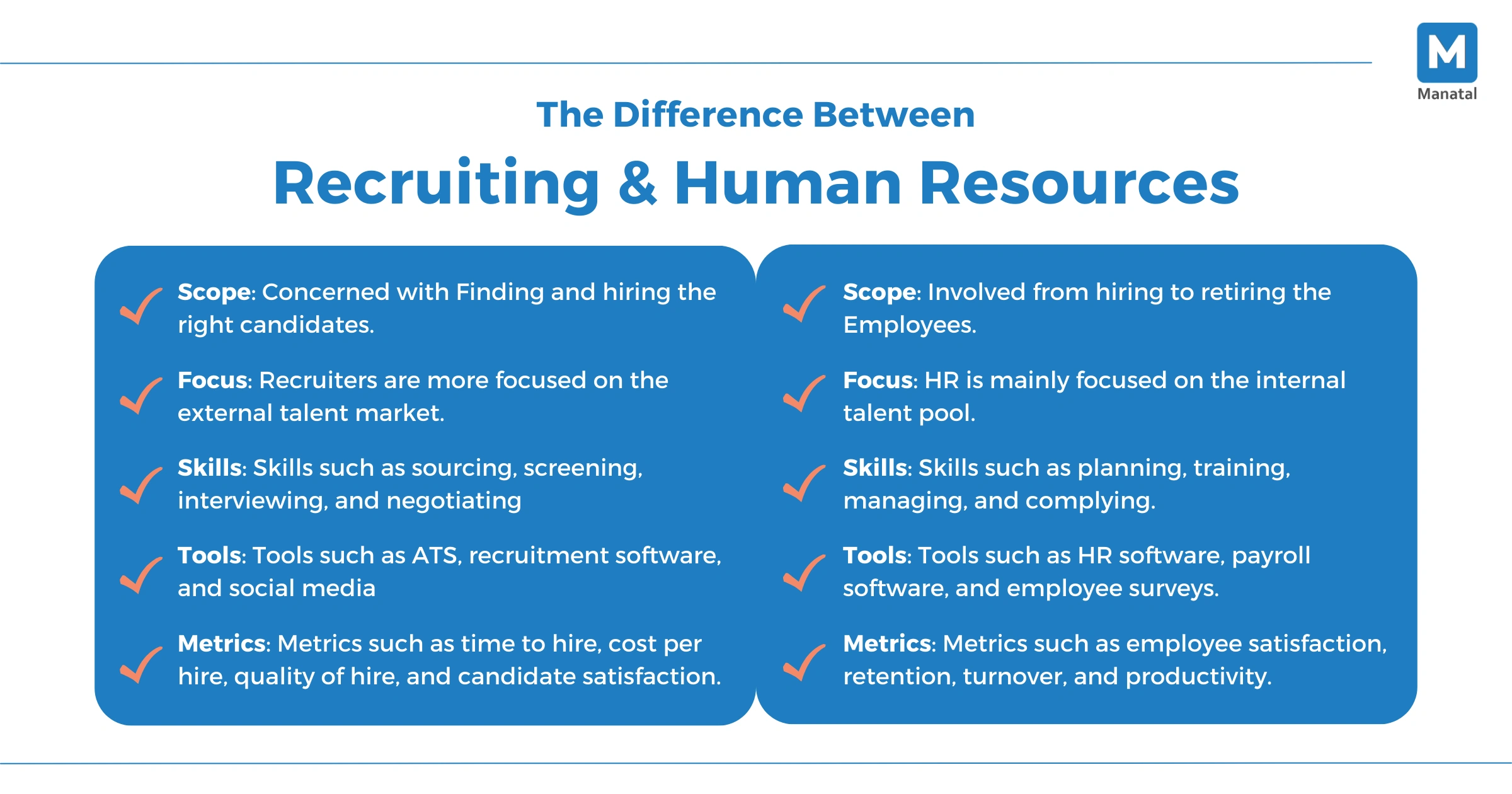
The most direct answer is that recruiting is a specialized subset of HR focused on acquisition, while HR is the broader function of employee lifecycle management. Recruiting ends when the new hire starts, and HR picks up the baton and carries it until the employee leaves the company.
To visualize this, here is how the two functions stack up against each other:
What Is Recruiting?
Recruiting exists to solve one core problem, which is getting the right people into the business at the right time. For organizations scaling internationally, this challenge extends beyond local pipelines to navigating cross-border compliance, payroll structures, and market-specific talent pools, which is why many companies click for a global talent acquisition services to support aligned, compliant hiring across regions. Effective recruiting strategies goes beyond filling vacancies. It focuses on:
- Closing talent gaps with candidates who can perform, adapt, and stay.
- Translating external labor market availability into job-ready internal capability.
- Balancing speed, cost, and quality of hire to protect business continuity.
- Supporting hiring managers with structured, data-backed decisions.
- Acting as the entry point to the employee lifecycle, setting expectations before Day 1.
Organizations hiring remote employees often need to balance long-term recruitment goals with immediate project requirements. While permanent hiring remains a core part of talent acquisition, many businesses also use IT staff augmentation service to quickly access specialized expertise and support growing workloads without extending hiring timelines.
This approach can be especially valuable when onboarding remote professionals across different locations and time zones. By combining structured recruitment practices with flexible staffing strategies, companies can maintain productivity, reduce talent gaps, and create a smoother transition for new team members.
How Recruiting Supports HR Outcomes
Strong recruiting directly influences downstream HR performance by:
- Improving onboarding and early retention through better role and culture alignment.
- Reducing employee relations issues caused by rushed or misaligned hires.
- Reinforcing employer brand promises that HR must sustain post-hire.
- Feeding hiring data into workforce planning and long-term talent strategy.
- Creating continuity between candidate and employee records, reducing friction at handover.
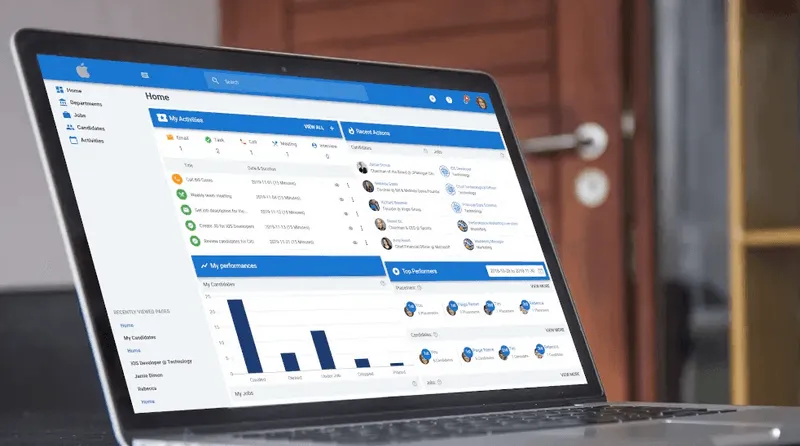
This is why visibility into hiring performance matters, which is where a recruitment dashboard helps teams track quality, speed, and hiring outcomes in one place.
What Is HR?
HR is responsible for managing and optimizing the organization’s human capital over time. Its core objectives include:
- Sustaining a workforce that is engaged, productive, and compliant.
- Aligning people practices with business strategy, culture, and values.
- Managing risk across performance, conduct, and employment law.
- Enabling employee development and long-term contribution.
- Ensuring consistency and fairness across the employee lifecycle.
How HR Drives Long-Term Workforce Outcomes
HR contributes to organizational stability by:
- Translating business goals into policies, frameworks, and people programs.
- Strengthening retention through engagement, development, and well-being initiatives.
- Maintaining trust via transparent processes and equitable treatment.
- Supporting managers with guidance on performance, feedback, and employee issues.
- Using retention, turnover, and productivity data to inform strategic decisions.
Is Recruiting Part of HR?
The short answer is yes, but the organizational structure varies significantly depending on the company's size.
- In Small Businesses (SMBs): You often see the "HR Generalist" or "People Manager" wearing both hats. They spend the morning sourcing candidates on LinkedIn and the afternoon managing benefits enrollment. In this context, recruiting is just one task within the HR function.
- In Enterprise Organizations: Recruiting usually splits off into a standalone department called Talent Acquisition (TA). The TA leader might report to the Chief Human Resources Officer (CHRO), but their budget, HR software, and team are distinct from the Generalist HR team that handles employee relations and payroll.
This distinction is best understood at a fundamental level, which we break down in recruiting 101.
Where Recruiting Ends and HR Begins
Misalignment most often occurs during the transition from candidate to employee. A clean handoff determines whether a new hire feels confident or disoriented.
1. Pre-Hire (Recruiting Owns This)
At this stage, the recruiter is the brand ambassador. They own sourcing, screening, scheduling, and closing the offer. They hold the relationship and the data. The goal here is conversion.
2. The Bridge (Shared Responsibility)
This is the onboarding phase. Technically, the candidate has signed, but they aren't fully integrated.
- Recruiting ensures the candidate actually shows up on day one (preventing "ghosting").
- HR triggers the administrative setup (IT access, payroll, compliance).
- The trap: If these two don't talk, the new hire has to repeat their story, resubmit data, and often faces a disjointed Day 1 experience.
3. Post-Hire (HR Owns This)
HR takes over once the employee is seated. The focus shifts to development, benefits administration, conflict resolution, and performance reviews.
Bridging the Gap Between Recruiting and HR
With Manatal’s Collaboration and Team Management, recruiters can pass the full recruitment process context to HR once an offer is accepted. Candidate conversations, evaluations, and decisions remain visible, allowing HR to onboard new hires with clarity rather than starting from scratch.
{{cta}}
Job Roles: Recruiter vs. HR Professional
If you are looking to hire for these roles or trying to decide which career path to take, understand that the day-to-day realities are starkly different.
Recruiter Profile
- Mindset: Sales and marketing-oriented.
- Key Skills: Sourcing, negotiation, market intelligence, and candidate communication.
- Primary Focus: Filling roles efficiently without compromising quality.
HR Professional Profile
- Mindset: Compliance, psychology, and organizational design.
- Key Skills: Employee relations, employment law, performance management, data analysis.
- Primary Focus: Long-term workforce stability and effectiveness.
Why Silos Between Recruiting and HR Hurt Businesses
When recruiting and HR operate independently, issues compound:
- Offers stall due to internal process friction
- Hiring decisions prioritize speed over long-term fit
- Early attrition increases, creating additional workload for both teams
Use this checklist to ensure recruiting and HR stay aligned on hiring quality, retention, and workforce outcomes.
1. Early Turnover Review
- Review employees who exited within their first 6 months
- Identify whether exits were driven by role mismatch, management issues, or onboarding gaps
- Document patterns pointing to recruiting or HR process breakdowns
- Agree on corrective actions for future hires
2. Job Description Validation
- Reassess active job descriptions against actual role performance
- Confirm required skills and experience reflect real success indicators
- Remove inflated or outdated requirements that slow hiring or reduce fit
- Align hiring criteria between recruiters and hiring managers
3. Compensation Alignment
- Compare internal salary bands with current market benchmarks
- Review rejected offers and declined candidates for compensation-related trends
- Flag roles where pay ranges are no longer competitive
- Agree on adjustments or escalation paths before reopening roles
4. Onboarding Feedback Review
- Review first-week and first-month feedback from new hires
- Identify friction points in the handoff from recruiting to HR
- Confirm expectations set during hiring match the onboarding reality
- Prioritize fixes that improve early engagement and clarity
5. DEI Funnel Review
- Review diversity data at each stage of the hiring funnel
- Compare sourcing diversity with actual hiring outcomes
- Analyze early retention by demographic group (where legally permissible)
- Identify process changes to improve equitable hiring and retention
Conclusion
The differences between HR and recruiting are distinct, but they cannot exist effectively in isolation. Recruiting fills the pipeline, and HR keeps it flowing. The most successful companies have both recruiting and HR that complement each other. Create a single competitive advantage when you align your tech stack, metrics, and communication.
Frequently Asked Questions
Q: Is Talent Acquisition the same as HR?
A: No. Talent Acquisition (TA) is a specialized subset of HR focused specifically on sourcing, attracting, and hiring external talent. While TA often sits under the HR department, its day-to-day functions are more closely related to sales and marketing than to generalist HR duties like benefits and compliance.
Q: Can you move from a recruiting role to an HR role?
A: Yes, this is a common career path. Recruiters often move into HR Generalist or HR Business Partner roles. However, the transition requires shifting focus from 'selling' the company to managing employee relations, understanding employment law, and handling internal organizational development.
Q: Who is responsible for onboarding: HR or Recruiting?
A: Ideally, it is a shared responsibility. Recruiting manages the pre-boarding phase (keeping the candidate warm until Day 1), while HR typically takes ownership of the formal onboarding process (paperwork, orientation, and training) once the employee starts.
Q: Why is the distinction between HR and recruitment important?
A: Confusing the two leads to resource mismanagement. If you treat a Recruiter like an admin, you lose out on top talent because they aren't sourcing. If you treat an HR manager like a headhunter, current employees suffer from a lack of support. Specialized roles yield better results.
.webp)






.webp)

.webp)


.webp)


