





Managing a hiring process without a clear system leads to lost resumes, fragmented feedback, and missed next steps, common challenges when tracking recruitment manually without a structured system. This is why effective recruitment tracking matters. According to Jobscan’s report, 97.8% of Fortune 500 companies use an Applicant Tracking System (ATS), making systematic tracking a core component of modern hiring.[1] Whether you are a small business starting to hire or a growing company constrained by manual processes, a structured approach is essential. This guide offers a free spreadsheet template to organize hiring immediately and explains when it is time to move from a basic tracker to a more advanced recruitment tracking system that turns data into automated action.
Using the Recruitment Tracker Template
This template provides a centralized view of your hiring activity and supports tracking recruitment at a basic level, with each row representing a single applicant and each column capturing a specific data point in the recruitment process. It is designed to help you manage candidate information consistently from application to decision. Below is a brief overview of how to use its key components:
Role and Application Details: Columns such as Applicant #, Position, Department, Required Experience, and Applied On define the role context for each candidate. These fields allow you to filter and sort applicants by position, team, or application date when managing multiple roles.
Candidate Information: Use the Name, Phone, Email, Resume, Current Employer, and Current Job Title columns to store all essential candidate details in one row. The resume column should contain a link to a file stored in a shared location for easy access.
Interview Tracking: Interview Date, Interviewer Name, and Interview Score columns are used to record interview activity and feedback. This keeps evaluations tied directly to each candidate and avoids scattered notes or separate documents.
Status Tracking: The Status column reflects where each applicant stands in the hiring process. Updating this field as candidates move forward or are rejected provides a clear, real-time view of your recruitment pipeline.
We have created a recruitment tracker template, which you can download here. This template is best suited for hiring 1–5 roles per year, where a spreadsheet remains manageable. Beyond that, manual updates quickly become inefficient, signaling the need for a more robust recruitment tracking system.

Transitioning from Spreadsheets to Automated ATS for Tracking Recruitment
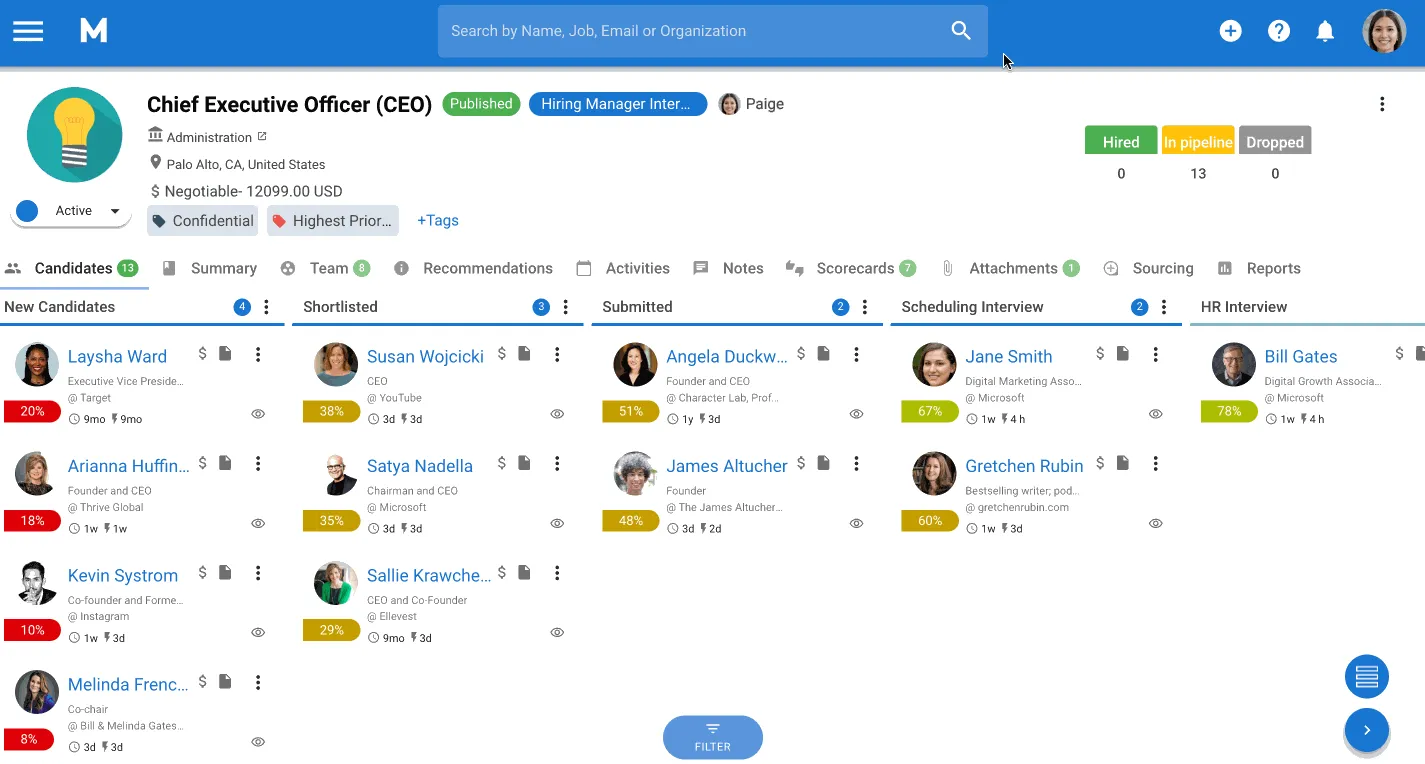
A spreadsheet helps you record hiring data, but it stops at visibility. It cannot take action or move candidates forward automatically. This is where its limitations become clear:
- Manual updates only: Status changes rely on someone editing a cell. No actions are triggered when a candidate moves stages.
- No automation: Interviews must be scheduled manually, emails sent individually, and follow-ups tracked outside the file.
- Limited scalability: As hiring volume increases, coordination and consistency quickly break down.
This is the point where many teams move from a spreadsheet to an applicant tracking system like Manatal:
- Visual recruitment pipeline: Manatal converts your spreadsheet columns into a clear, drag-and-drop Kanban board, making pipeline status instantly understandable.
- Action-driven workflows: Moving a candidate to a new stage can automatically trigger tasks such as interview invitations, email notifications, or reminders.
- Less manual work: Routine coordination is handled by the system, reducing admin time and missed steps.
In short, while a spreadsheet stores hiring data, Manatal turns that data into action, giving you a recruitment process that actively supports your hiring instead of relying on manual effort.
{{cta}}
When Spreadsheets Reach Their Limits (The "Excel Ceiling")
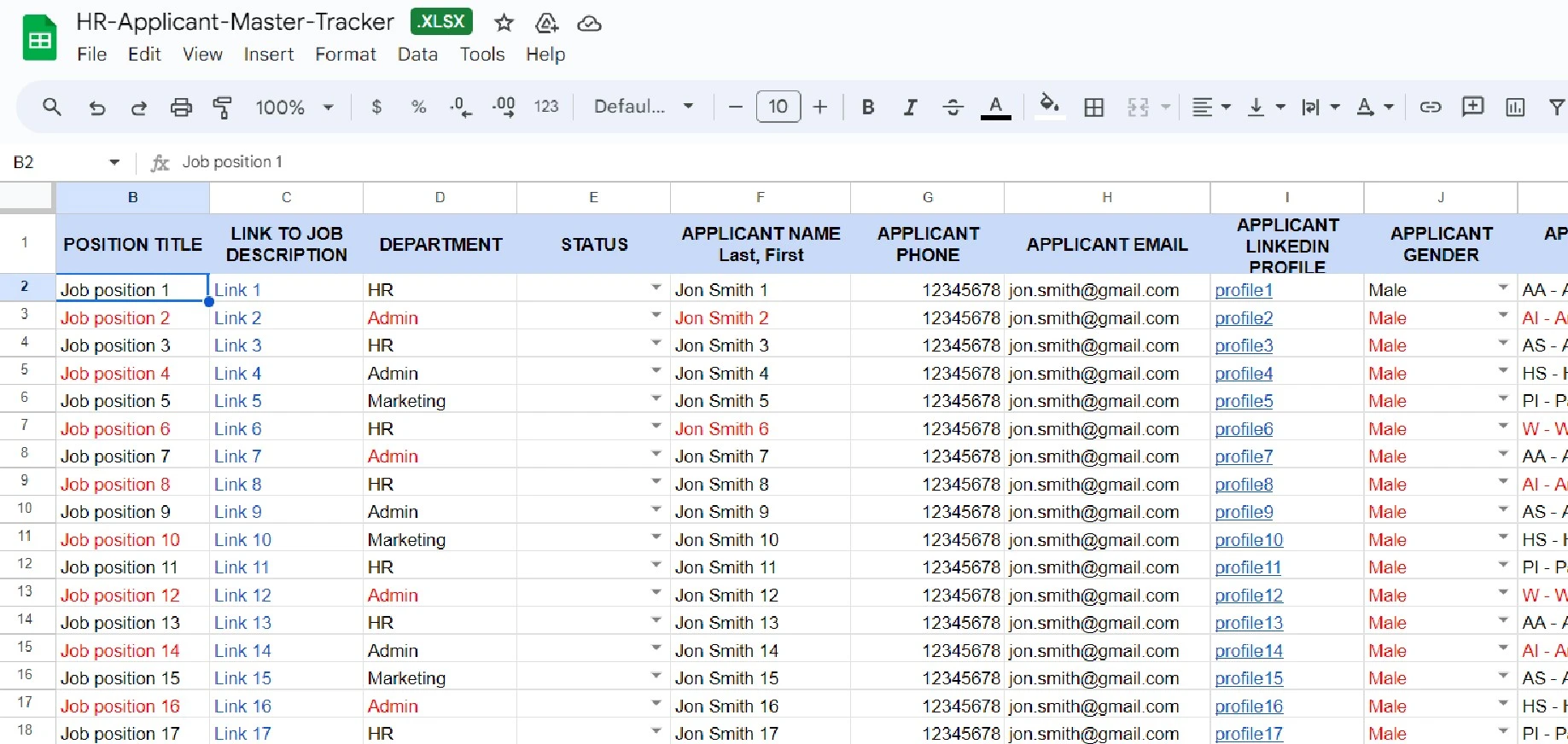
Spreadsheets work for low-volume hiring, but they break down as applications increase. This “Excel Ceiling” is the point where manual tracking becomes slow, error-prone, and risky. The most common signs include:
- Search limitations: Finding candidates with specific skills requires opening and reviewing resumes one by one, making it easy to miss qualified applicants.
- Manual data entry: Copying candidate details into rows increases admin time and introduces errors that can disrupt interviews or offers.
- Data security risks: Sharing spreadsheets exposes sensitive candidate information to loss, misuse, and compliance issues.
These challenges signal that a spreadsheet is no longer enough and that a dedicated recruitment tracking system is needed to manage hiring efficiently and securely.
Template vs. ATS: Side-by-Side Comparison
The difference between a starting tool and a long-term solution becomes clear when comparing how each approach supports tracking recruitment at scale. The template is about manual organization, while a system is about automated efficiency.
Conclusion
Starting with structured hiring and tracking, recruitment doesn’t need to be complicated or expensive. Our free template is an excellent starting point for organizing applications and tracking candidate progress efficiently. It aids in centralizing information and tracking candidate progress, setting the foundation for your hiring process. However, as your recruitment needs grow, this template can become cumbersome due to manual entry and limited search capabilities. At this stage, a recruitment tracking system becomes essential, offering automation, deep data insights, and robust security, allowing you to prioritize finding top talent. Begin with our template, and when you're ready to streamline your process, consider transitioning to a dedicated system like Manatal's free trial.
Frequently Asked Questions
Q: What tool is commonly used for recruitment and applicant tracking in HR departments?
A: Applicant Tracking System (ATS) like Manatal is one of the widely used tools in HR departments for recruitment and applicant tracking. This powerful tool streamlines and enhances the recruitment process by automating key tasks, including managing job postings, tracking applications, organizing candidate information, and facilitating communication with applicants—all within a single, user-friendly platform.
Q: How do applicant tracking systems work to benefit recruitment tracking?
A: Applicant tracking systems streamline recruitment by automating tasks such as resume sorting, keyword scanning, and candidate evaluation. Manatal’s AI technology quickly identifies top candidates and filters out unqualified ones. The system centralizes candidate data, tracks progress, manages communication, and provides insights through analytics to optimize hiring strategies. It helps reduce bias and improves the overall candidate experience.
Q: How does an ATS enhance recruitment tracking by automating candidate communication and engagement?
A: An Applicant Tracking System (ATS) enhances recruitment tracking by automating candidate communication and engagement. Manatal allows users to create custom automation triggers based on specific platform events, such as sending stage acknowledgments, assessments, interview schedules, and rejections. This streamlining of processes ensures consistent, timely interactions, reducing manual tasks and improving the candidate experience.
Q: What is the role of automation in recruitment tracking through an ATS, and how does it improve overall efficiency?
A: Automation in recruitment tracking through an Applicant Tracking System (ATS) improves efficiency by managing job postings, screening resumes, and tracking candidates automatically. It uses algorithms to filter applications, saving time and allowing recruiters to focus on engaging top talent. Automated communication keeps candidates informed, enhancing their experience.
Q: How does recruitment tracking with an ATS contribute to data privacy compliance and secure candidate data management?
A: An Applicant Tracking System (ATS) helps with data privacy and secure management of candidate information by storing it safely and following regulations like GDPR and CCPA. ATS platforms use encryption, access controls, and audit trails to protect data. They also help manage candidate consent and provide clear communication about data usage. This ensures privacy, builds trust, and improves the recruitment process.
Q: Why do recruiters choose Manatal for recruitment tracking?
A: Recruiters choose Manatal for its easy-to-use interface and features that simplify the hiring process. It helps source candidates from job boards and social media, and offers tools for team collaboration, ensuring smooth communication. Manatal also provides reports and analytics to track key metrics and improve recruitment strategies. With affordable pricing and customizable options, it’s a great choice for organizations of any size.
Citation
.webp)







.webp)

.webp)


.webp)


