





ecruiters face recruitment challenges from multiple directions: rising applicant volumes, candidate no-shows, slower decision cycles, and expanding diversity and data privacy obligations.[1] This guide breaks down the most common challenges recruiters face in 2026 and outlines practical, execution-ready fixes. Each section diagnoses the operational root cause and then provides concrete actions grounded in data, process discipline, and modern HR technology.
How Today’s Recruitment Challenges Actually Unfold
In most hiring teams, these pressures compound rather than appear in isolation. A widening skills gap forces recruiters to expand sourcing efforts. Broader sourcing increases applicant volume. As volume rises, screening and decision-making slow down. Delays then weaken candidate experience and, over time, increase compliance and operational risk. The challenges below are ordered the way they typically emerge in real recruitment operations, starting with structural constraints and moving into execution breakdowns.
1. Talent Shortage and Skills Gap
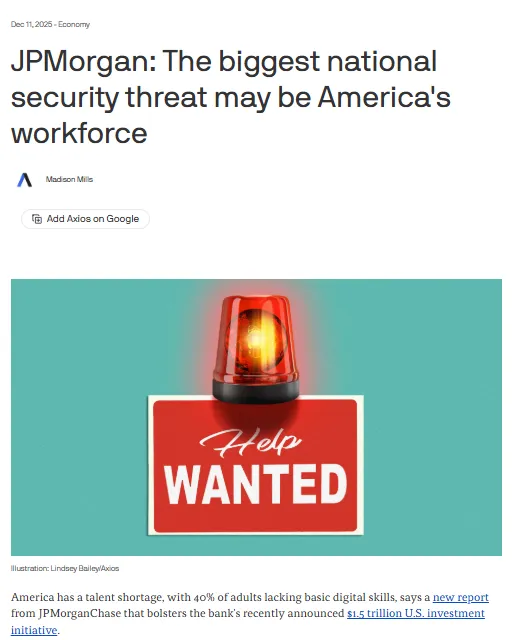
Challenge: Engineers, technical specialists, and healthcare professionals remain in short supply because available talent often lacks required skills. Employers specify exact requirements, such as years of experience with particular tools, yet most applicants fall short. At the same time, Gen Z and millennial workers are projected to make up roughly two-thirds of the labor force within the next few years and expect clear development paths.[2] Degree-based hiring alone no longer works.
Action Plan: Shift to skills-based hiring and upskilling
- Conduct a skills gap analysis using role-level skill inventories or simple matrices.
- Partner with Learning and Development to create internal upskilling paths or funded certifications.
- Rewrite job descriptions to emphasize skills rather than degrees.
- Introduce short skills assessments early in the funnel.
- Use AI-assisted skills inference where available. In platforms like Manatal, inferred skills extracted from resumes and profiles can be used to rank candidates by relevance rather than credentials alone.
This approach shifts hiring from credential filtering to capability validation, while building a reusable internal talent base.
2. High-Volume Recruiting Overload
Challenge: Single job postings often attract hundreds or thousands of applications. LinkedIn reporting indicates that the average recruiter now handles 56% more open job requisitions and about 2.7× more applications (2,500+) than three years ago, underscoring the scale of volume recruiters face and the associated screening challenges.[3] This overwhelms them, increases time-to-fill, and causes qualified candidates to be missed. Manual screening does not scale under this level of volume.
Action Plan: Automate screening and triage
- Apply knockout questions at application stage.
- Rank candidates using AI or rule-based scoring.
- Route near-qualified applicants into future consideration pools.
- Use ATS automation to send acknowledgments and stage updates automatically.
Where Manatal Fits
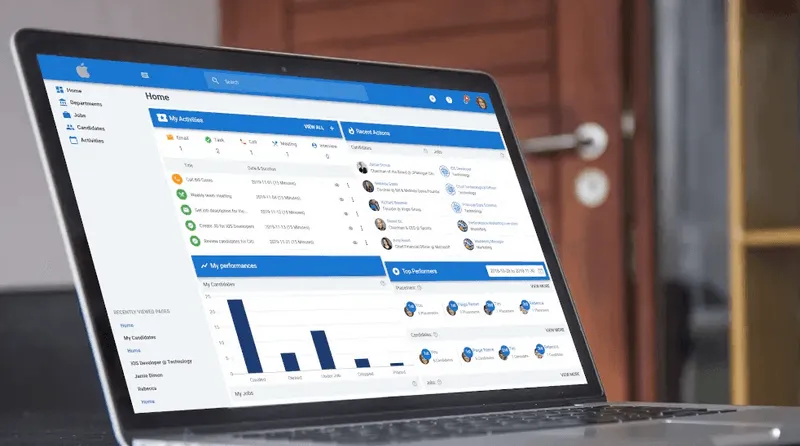
Manatal is a cloud-based ATS with recruitment CRM capabilities designed to manage application volume without increasing recruiter workload.
- Its AI candidate recommendation engine scores applicants against job requirements, allowing recruiters to prioritize review.
- Candidate enrichment pulls in public data from sources such as LinkedIn or GitHub, reducing manual research.
- Stage-based automation enforces consistent triage and communication.
- Near-qualified applicants can be tagged and organized in ATS pipelines that can be reused across roles, preserving sourcing effort and reducing repeat work.
{{cta}}
3. Employer Ghosting: Impact on Candidate Experience
Challenge: A 2025 Stepstone Group survey found that 64% of jobseekers reported being ghosted by companies, meaning they never received a final response after applying.[4] Long gaps between interviews and decisions drive candidate disengagement, no-shows, and offer declines.
Action Plan: Reduce delays and maintain communication
- Audit and trim interview steps.
- Send interview reminders via email or SMS.
- Automate stage-based updates so candidates always know their status.
- Use structured interview scorecards to speed feedback.
- Monitor drop-off and no-show rates in ATS reports.
Consistent communication reduces candidate attrition and protects employer reputation.
4. Employer Branding and Passive Candidates
Challenge: Relying solely on active applicants produces volume but not quality. A 2025 report finds that while 77% of HR and recruiting professionals say active sourcing is essential, the majority of companies actively source fewer than half their hires, indicating that passive talent must be engaged proactively rather than waiting for applications.[5]
Action Plan: Build and nurture a talent community
- Invest in visible employer branding through social content and employee advocacy.
- Maintain opt-in talent lists or communities for future roles.
- Track passive leads using CRM-style outreach inside the ATS.
- Strengthen and publicize employee referral programs.
- Measure engagement and conversion rates across sourcing channels.
Sustained outreach turns sourcing from reactive posting into pipeline management.
5. Data Compliance and Bias
Challenge: Recruiters must comply with evolving privacy regulations while addressing bias and fairness in hiring decisions. Missteps risk fines and reputational damage. According to LinkedIn, data protection laws like GDPR are actively enforced, with over 2,245 fines totaling billions in penalties. Enforcement priorities now include automated decision-making and candidate data rights, meaning recruitment practices are directly subject to these privacy obligations.[6]
Action Plan: Embed compliance into process
- Audit candidate data collection and retention policies, referencing GDPR compliance in recruitment.
- Use blind screening where feasible.
- Standardize interview evaluations with structured criteria.
- Monitor diversity and drop-off metrics.
- Schedule periodic compliance reviews as regulations evolve.
Transparent, auditable processes reduce risk while improving trust.
Hiring Operations Pressure Test Checklist
While talent shortages remain real, many recruitment challenges in 2026 stem from execution failures inside the hiring process. Your ATS already captures the data needed to identify where hiring slows, leaks candidates, or creates unnecessary workload. The checklist below uses measurable system output to expose process bottlenecks that directly impact speed, quality, and recruiter capacity.
Multiple misses indicate systemic inefficiency rather than isolated issues. These healthy benchmarks are grounded in recruiting industry data and practitioner standards. For example, global time-to-fill averages 36–42 days across most roles (with high-performing teams targeting faster), internal recruiter dashboards often set stage-level response SLAs in business days to avoid delays, and combined internal hires and referral sources typically account for 15 percent or more of hires in benchmark reports.[7][8][9]
Conclusion
Recruitment performance in 2026 is defined by execution discipline. Clear metrics, streamlined workflows, and structured automation determine whether teams move quickly or stall. Technology should enforce consistency, surface insight, and reduce manual effort. Teams that treat hiring as an operational system rather than a series of tasks consistently achieve faster hires, stronger pipelines, and better candidate experiences.
Frequently Asked Questions
Q: How do I make skills-based hiring practical?
A: Start by rewriting job descriptions to list key skills clearly. Use screening questions or short tests focused on those skills. Remove degree requirements when possible. Partner with your L&D or training team to offer upskilling opportunities that broaden who is qualified for roles.
Q: How can I reduce candidate ghosting?
A: Simplify and shorten your hiring steps, and keep candidates informed. Automate acknowledgments at each stage (application received, interview scheduled, offer decision) so candidates aren’t left wondering. Train interviewers to commit feedback quickly so you can update candidates within days, not weeks.
Q: What if my team is small but faces big hiring volumes?
A: Lean teams need automation. Use an ATS to filter and rank resumes automatically. Even if you use spreadsheets, set up rules (for example, if “Java” not found, auto-remove the resume). Consider simple AI tools built into modern ATS (like Manatal’s) to surface top candidates. Also, cross-train other employees to help with parts of the process, and schedule dedicated times for heavy tasks so they don’t overwhelm day-to-day work.
Citations
.webp)







.webp)

.webp)


.webp)


