





Modern organizations face a scale paradox. They need to expand their workforce rapidly while remaining resilient against economic fluctuations. Recruitment process outsourcing (RPO) addresses this by transferring hiring functions to an external partner to achieve scalable agility. Collaborating with an RPO provider grants companies access to external expertise and technology, which accelerates hiring and facilitates the adjustment of staffing levels as needed. With the RPO market reaching approximately $9.53 billion in 2026, this model has become a standard for enterprise growth.[1] In this article, we provide a comprehensive breakdown of RPO engagement models, technical integration requirements, and pricing structures.
Is Recruitment Process Outsourcing the Right Move for Your Organization?
Recruitment Process Outsourcing (RPO) isn't a universal fix. While it solves scale and capacity issues, you must first determine whether you face a scale problem or a process problem. RPO delivers results when sustained, measurable hiring demand exceeds your internal team's capacity. However, the model fails if unclear ownership, weak systems, or inconsistent decision-making stall your hiring.
To decide if RPO fits your organization, compare your current bottlenecks against these two categories:
If you apply an RPO solution to a process problem, you will simply pay an external provider to navigate your internal chaos. The provider will struggle to hit targets, and your cost-per-hire will climb without improving the quality of your talent.
When to move forward:
- Define your metrics: Ensure you can measure success through data.
- Audit your workflow: Fix internal bottlenecks before handing the reins to a partner.
- Choose your model: Select an RPO provider that scales with your specific demand cycles.
RPO Engagement Models
Selecting the appropriate RPO framework is the first step in ensuring the partnership aligns with specific business objectives. The following models offer different levels of control and scalability, depending on the scope of the hiring need.
- End-to-End RPO: The provider manages the entire lifecycle from job requisition to onboarding. This is the most effective choice for large-scale, ongoing hiring where full process ownership and system integration are required.
- Project-Based RPO: This model supports specific hiring campaigns or short-term expansions, such as launching a new department. It offers specialized expertise without a long-term commitment.
- Recruiter-on-Demand: Organizations add expert recruiters to their existing team to fill niche roles. This flexible option allows for rapid scaling of headcount that can be reduced once goals are met.
- Hybrid RPO: Selective outsourcing involves the provider handling specific functions while others remain in-house. This allows an organization to retain control over critical areas while using outside expertise where it is most impactful.
Once a model is selected, the focus shifts to how the day-to-day operations are actually executed between the organization and the provider.
Employer-Side Operational Processes
Selecting a model is only the foundation; the actual value of an RPO engagement is realized during the execution phase. A structured four-part process ensures that the transition of responsibilities occurs without disrupting the recruitment pipeline.
1. Discovery and Process Mapping
The provider conducts a structured intake process to understand:
- Hiring volume forecasts
- Role complexity
- Approval workflows
- Compliance requirements
This phase should also clarify data ownership and reporting expectations.
2. ATS Alignment and System Access
This is the leverage point. Outsourcing recruiting without a shared ATS shifts control away from you. Email, spreadsheets, and parallel tools turn RPO into a black box. You lose visibility, data ownership, and negotiating power. The rule is simple: never outsource recruiting unless the provider works inside your system of record.
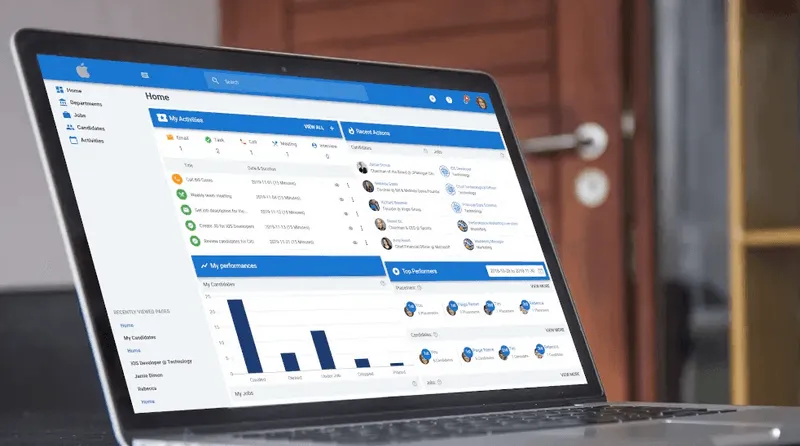
When RPO teams operate within your Applicant Tracking System, you retain governance while delegating execution. The ATS becomes the control layer that defines access, accountability, and reporting.
A platform like Manatal supports this structure through:
- Role-based access for RPO recruiters, hiring managers, and leadership
- Shared pipelines with controlled data exposure
- Structured interview and approval workflows
- Centralized reporting across all vendors
This setup ensures candidate data stays in your system, not the provider’s. Performance remains measurable in real time. Compliance and audit trails remain intact. Integrations with HRMS or payroll systems should be validated during discovery. Data flow expectations must be documented before execution begins. If an RPO cannot operate inside your ATS, that is a governance risk, not a technical limitation.
{{cta}}
3. Sourcing and Pipeline Development
The provider builds candidate pipelines using a mix of:
- Job boards
- Social sourcing
- Internal databases
- Referral channels
Performance is tracked through conversion metrics and hiring velocity.
4. Screening, Selection, and Reporting
Structured scoring frameworks, interview coordination, and compliance documentation are managed by the RPO team, with visibility maintained inside the shared ATS.
Final reporting should include:
- Time-to-fill
- Cost-per-hire
- Offer acceptance rate
- Source effectiveness
Ownership of candidate data after contract termination should be explicitly addressed in the agreement.
Technological Infrastructure for Transparent Recruiting
Technology alignment determines whether RPO feels transparent or opaque. If providers operate outside the primary ATS, organizations often experience:
- Manual data transfers
- Fragmented reporting
- Compliance exposure
- Reduced internal visibility
The preferred model is provider access within the client’s existing system, supported by structured permissions and standardized workflows. The ATS becomes the single source of truth. Without this, performance tracking and governance become difficult.
The Role of Shared Technology in RPO Success
Recruitment process outsourcing depends on a reliable and scalable technology stack. A modern applicant tracking system is central to this. It standardizes workflows, increases visibility across hiring activity, and enables consistent delivery at scale.
Manatal provides an ATS designed to support RPO operations with practical, execution-focused capabilities. These include AI-driven candidate recommendations, automated screening, and structured reporting that allows RPO teams and clients to track performance, quality, and time-to-hire with precision.
This approach is reflected in the collaboration between ManpowerGroup and Manatal. The partnership integrates ATS technology directly into RPO delivery, improving recruiter productivity, standardizing the candidate experience, and strengthening data-driven workforce decision-making. The result is an RPO model that is more transparent, measurable, and aligned with executive-level expectations for efficiency and ROI.
Pricing Structures and Financial Considerations
The complexity of the chosen technology and the volume of hiring activity determine the final cost of the RPO partnership. Choosing the right model ensures that the financial commitment remains predictable and aligned with performance goals.
Before signing, clarify:
- What is included in the base fee
- Technology costs
- Exit clauses
- Knowledge transfer requirements
- Data access after termination
Hidden administrative costs often arise when systems are not aligned.
Strategic Advantages and Operational Risks
Every outsourcing decision involves a trade-off between increased efficiency and the management of external risks. A successful RPO strategy maximizes the benefits of speed and cost reduction while implementing safeguards against cultural misalignment.
Business Benefits
- Cost Efficiency: Organizations often see recruiting cost reductions of 30% to 50% through optimized overhead and specialized tools.
- Increased Velocity: Specialized processes can reduce time-to-fill by 40% to 55%, ensuring critical roles do not remain vacant.
- Diversity and Branding: RPO partners use bias-mitigating tools and broader sourcing networks, often resulting in a 30% increase in diverse hires.
Operational Risks
- Cultural Alignment: External recruiters may not immediately grasp the nuances of company culture, which can affect the quality of hire.
- Vendor Dependency: High reliance on a single provider creates risks if the partnership ends abruptly without a knowledge transfer plan.
- Technical Complexity: Difficulty in linking internal systems with provider tools can stall the hiring process if not addressed during discovery.
Recognizing the benefits is the logical next step, but leadership must also confirm that the internal infrastructure is prepared for a third-party partner.
Organizational Readiness Checklist
Before moving forward with an RPO provider, leadership must evaluate if the company is culturally and technically ready for an outsourced model. This checklist helps identify if the internal team is positioned to support a partner successfully.
Once the table is filled, total the "Yes" responses to determine your implementation path:
- 10–12 Points: High Readiness. Proceed to vendor selection for a Full End-to-End RPO.
- 7–9 Points: Moderate Readiness. Start with a Project-Based RPO while closing technical or cultural gaps.
- 6 Points or Fewer: Low Readiness. Focus on internal process optimization and executive alignment before engaging a provider.
After finalizing this internal audit, the next phase is to translate these needs into a formal inquiry for providers. If your hiring demand is real, your workflows are defined, and your data is centralized, RPO gives you speed without long-term cost. If those foundations are missing, pause. Optimize internally first. Then outsource with intent.
Conclusion
Recruitment process outsourcing transforms talent acquisition from a reactive cost center into a strategic advantage. Success requires aligning the RPO model with business goals, integrating technology from the start, and maintaining clear workflows between all parties. By following a structured path of auditing needs and managing performance through data, organizations can scale their workforce with confidence.
Frequently Asked Questions
Q: How is RPO different from traditional recruiting?
A: RPO (Recruitment Process Outsourcing) is the strategic outsourcing of an organization’s entire recruitment process to a third-party partner. Unlike hiring more in-house recruiters, RPO transfers tasks like sourcing, screening, and administration to an external team. This gives the company scale and specialized tools (often at lower cost per hire) while the internal team focuses on core work.
Q: What’s the difference between RPO and BPO?
A: BPO (Business Process Outsourcing) is a broad term for outsourcing any business function (payroll, customer service, etc.), whereas RPO specifically refers to outsourcing recruitment functions only. In other words, RPO is a specialized type of BPO focused on talent acquisition.
Q: Is RPO suitable for global hiring?
A: Yes. RPO excels in global and multi-region hiring because many RPO providers have established networks and local expertise worldwide. They can navigate different labor markets, local laws, and language/cultural differences. Their data-driven processes and regional recruiters help companies tap international talent pools while maintaining compliance.
Citation
.webp)







.webp)

.webp)


.webp)


