





The clearest way to understand sourcing vs recruiting is through the talent funnel.
Sourcing owns the Top of the Funnel (TOFU). The focus is on identifying potential candidates, building awareness, and generating interest among people who may or may not be actively job-seeking.
Recruiting operates in the Middle and Bottom of the Funnel (MOFU/BOFU). This includes evaluation, interviews, decision-making, and converting interested candidates into accepted offers.
To compare sourcing vs recruiting, sourcing generates leads while recruiting converts them. Without strong sourcing, recruiters operate with limited pipelines. Without effective recruiting, sourced candidates disengage before an offer is made.
Sourcing vs Recruiting Misalignment: An Example
Consider a mid-sized technology company hiring software engineers. The sourcer identifies strong profiles and sends outreach, but passes candidates to recruiters without confirming salary expectations or availability. Recruiters then reject candidates late in the process, citing misalignment.
The results:
- Sourcers repeat the same search criteria
- Recruiters spend time screening candidates who will not convert
- Candidates experience delays and drop out
This breakdown is not caused by lack of effort, but by unclear structure between sourcing vs. recruiting. Clear handoffs prevent this pattern from repeating.
Structuring the Sourcer-Recruiter Handoff
To prevent friction, teams need a defined transition point between sourcing vs. recruiting. This is typically documented through a Service Level Agreement (SLA).
An SLA clarifies when a sourced individual becomes a recruiter-owned candidate. For example:
Once interest, salary expectations, and role alignment are confirmed, the recruiter takes ownership within 24 hours.
This structure protects the candidate experience and ensures timely follow-up. Equally important is feedback. When recruiters reject candidates, clear reasoning helps sourcers refine targeting and outreach. Over time, this feedback loop improves quality across sourcing vs recruiting functions.
Supporting the Handoff with Consistent Data Flow
Even with clear ownership, operational friction occurs when candidate data is fragmented. Manual entry into an ATS slows follow-up and increases the risk of lost information.
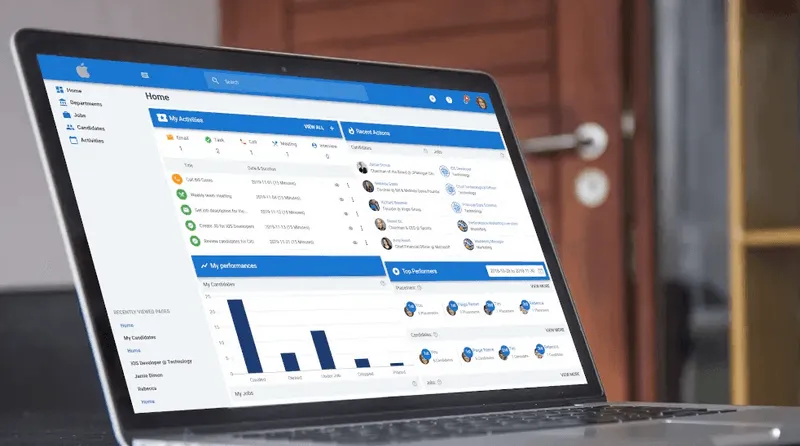
This is where tooling supports the process rather than replacing it. For example, Manatal’s Candidate Sourcing workflow allows teams to import candidate profiles from LinkedIn and GitHub directly into the ATS. You can also use the AI Candidate Enrichment tool, which adds contact details to each profile during import. The process removes manual spreadsheets and duplicate entries. Your team can keep records consistent and reduce data loss while candidates move through the hiring process faster.
{{cta}}
Measuring Outcomes in Sourcing vs. Recruiting
Clear role separation enables clearer measurement. Sourcing vs recruiting should not share the same success metrics.
Sourcing KPIs focus on pipeline health and engagement:
- Outreach-to-reply conversion rate
- Pipeline growth over time
- Source of hire
- Candidate engagement rate
Recruiting KPIs measure efficiency and hiring success:
- Time to fill (between 35 and 50 days) [2]
- Offer acceptance rate
- Interview-to-hire ratio
- Quality of hire
When these metrics are tracked independently but reviewed together, teams can diagnose whether delays originate in sourcing reach or recruiting execution.
Conclusion
A clear separation between sourcing and recruiting improves speed, accountability, and candidate experience. Sourcing builds and qualifies talent pipelines. Recruiting evaluates, selects, and closes. Each function succeeds when ownership is defined, data flows cleanly, and feedback is continuous.
Technology supports both roles by reducing administrative friction, but results depend on structure and discipline. Teams that align sourcing vs recruiting through clear handoffs, distinct KPIs, and consistent workflows fill roles faster and build stronger long-term talent pipelines.
Frequently Asked Questions
Q: What tools and technologies do sourcers typically use?
A: Sourcers rely on tools like applicant tracking systems (ATS), such as Manatal, to manage hiring workflows, and platforms like LinkedIn Recruiter to search for and connect with candidates. Sourcing tools help them find passive talent across multiple channels, while email automation platforms streamline candidate communication.
Q: How do sourcers and recruiters collaborate effectively?
A: Sourcers and recruiters collaborate by dividing their responsibilities. Sourcers focus on identifying and attracting potential candidates. Recruiters handle interviews and negotiate offers. They use shared tools, such as ATS platforms, to support their tasks. Regular check-ins and feedback maintain open communication. This process ensures sourcers align with job requirements. Recruiters provide insights into candidate suitability. This collaboration results in an efficient, seamless hiring process.
Q: What trends are shaping the future of sourcing and recruiting?
A: Trends like data analytics are optimizing hiring, while strong employer branding is key to attracting talent. The rise of remote work broadens talent pools, diversity initiatives shape strategies, and AI tools enhance candidate discovery. These shifts are making sourcing and recruiting more data-driven, inclusive, and candidate-focused in the years ahead.
Citations
.webp)







.webp)

.webp)


.webp)


