





Organizations can no longer afford to react only after vacancies occur. This reactive HR approach disrupts productivity and limits growth. The solution is Strategic Workforce Planning (SWP), a proactive strategy aligning talent with business goals. SWP ensures the right skills are in the right roles at the right time and cost, supporting long-term goals. This guide explains how to become a strategic HR partner, anticipate talent needs, and avoid disruptions. You'll learn a 5-step framework to forecast demands, identify skill gaps, and create strategies, using tools and practices to build a resilient, future-ready workforce.
Operational vs. Strategic Workforce Planning: Key Differences
While both are vital to human capital management, they serve different masters.
- Operational Planning: Focuses on the here and now. It involves immediate staffing, shift scheduling, and resource allocation to maintain daily output.
- Strategic Workforce Planning: A forward-looking process (typically 12–36 months) that aligns an organization’s long-term business goals with its future talent needs.
The 5-Step Strategic Workforce Planning Process
Implementing effective strategic workforce planning requires a structured, phased approach. This 5-step process provides a clear framework for analyzing current capabilities, forecasting future needs, and developing actionable strategies to bridge any identified talent gaps. This is the engine that drives an effective workforce planning strategy.
Step 1. Follow the money to identify growth priorities
Before looking at resumes, look at the bank account. Review your company’s latest financial goals to identify which departments are getting "Growth” money (new projects) and which are getting "Maintenance” money (just keeping the lights on).
- How to do it: Schedule a 30-minute coffee with a contact in Finance. Ask them: "If we had to cut 10% of our project budget tomorrow, which three initiatives are 'untouchable'?" The answer tells you where the "Growth Money" is actually living.
- Your action: Create a Project Priority Tracker. List every project and tag it as Growth or Maintenance based on that Finance intel.
Step 2. Map high performers to high-value projects
Now that you know where the money is going, look at where your people are currently sitting. Match your top performers to the projects from Step 1 to see if your best talent is "trapped" in departments that are losing funding.
- How to do it: According to Bain & Company, on average, 15% of an organizations workforce are identified as high-performing "A-Players.”[1] Identify them and look at their calendars or timesheets for the last two weeks. If a high performer is spending 80% of their time on a project you tagged as "Maintenance" or "Low Priority" in Step 1, they are in the "Stagnation Trap."[2]
- Your action: Build a Talent-to-Value Map. Use a simple spreadsheet: Name | Current Project | Project Priority. Highlight anyone where a High Performer = Low Priority Project.
Step 3. Verify every hire with a budget reality check
With your current talent mapped, determine exactly who you need for those "High Investment" projects over the next 12 months. This is a list of roles that have an approved budget to be hired.
- How to do it: When a manager asks for a new hire, don't ask for a job description yet. Ask for the Budget Code. If they don’t have one, tell them the role is "Strategic Demand" (Future) rather than "Funded Demand" (Now).
- Your action: Implement a "Paid-For" Filter. Update your hiring intake form to require a confirmed budget line. This stops HR from chasing "ghost roles" that won't ever get a signature.
Step 4. Bridge talent gaps using the most efficient method
Compare your current supply (Step 2) with your future demand (Step 3). Instead of defaulting to external recruitment, evaluate the most efficient way to close the gap:
- Build: Upskill "At-Risk" high performers from maintenance roles into growth roles.
- Buy: Launch an external search via Manatal for specialized skills not found in-house.
- Borrow: Use freelancers or contractors for short-term project spikes (3–6 months).
- Bot: Deploy AI and automation to handle repetitive, low-value tasks.
Step 5. Sync with Finance monthly to pivot resources
Finally, keep the plan alive by syncing with Finance every 30 days. If a project’s budget is cut mid-year, you must instantly stop hiring and "pivot" those people back into the cycle at Step 1.
- How to do it: Host a monthly "Agility Sync" with Finance to check if any project budgets have changed. If a project’s funding is cut mid-quarter, you must immediately reallocate those recruiters and employees to higher-priority areas.
- Your action: Update a Visual Pivot Board (Excel or Spreadsheet) monthly. Create columns for Active, On-Hold, and Completed. When a project loses its "Growth" status in Step 1, drag all related talent tasks to "On-Hold" immediately.
How Manatal Enables Strategic Workforce Execution
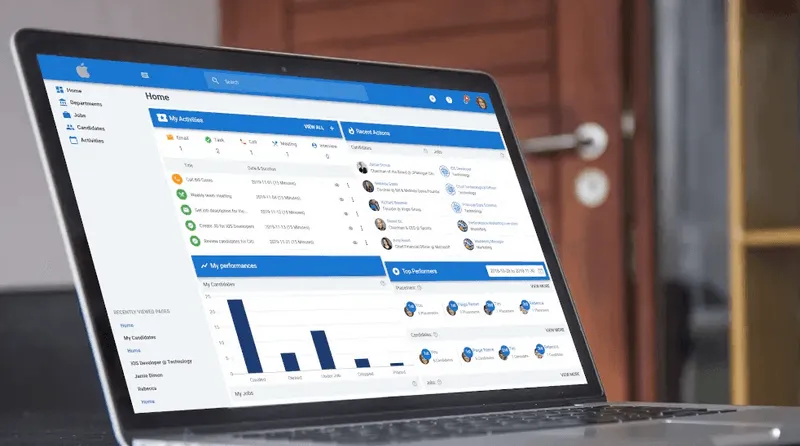
Strategic planning identifies the "what," but Manatal executes the "how." Manatal bridges the gap between planning and hiring by transforming your "Buy" requirements into active, AI-driven pipelines.
- AI Recommendations: Instead of starting from scratch, Manatal’s AI instantly scans your existing database to match internal or past candidates with the specific skills identified in your Gap Analysis.
- Global Search & Social Enrichment: For "Buy" strategies, Manatal’s Chrome Extension allows you to source top-tier talent across LinkedIn and other platforms, enriching profiles automatically to ensure a data-driven match.
- Customizable Analytics: Monitor "Time to Hire" and "Source Quality" in real-time to ensure your recruitment engine is keeping pace with your strategic milestones.
{{cta}}
Choosing the Right Gap-Closing Strategy
This framework, integrated into Step 4, promotes cost-effective decisions over default hiring. Use the table below to evaluate options based on your gaps.
Prioritize based on urgency, cost, and long-term fit and always tying back to your Project Priority Tracker.
Key Benefits of Strategic Workforce Planning (SWP)
Strategic Workforce Planning (SWP) is a high-stakes business strategy that safeguards an organization’s bottom line. For executives, it is the difference between a proactive growth engine and a reactive, expensive hiring crisis.
- Operational Agility: SWP allows the business to pivot instantly when market conditions shift. Organizations need to forecast skill needs ahead of time to reskill their workforce to meet new technological demands rather than falling behind competitors.
- Talent Retention and Loyalty: Employees are more likely to stay when they see a clear path for growth. According to Gallup, investing in internal development addresses the fact that a minority of workers feel their employers adequately support their career advancement, giving your firm a massive retention advantage.[4]
- Data-Driven Decision Making: SWP provides leadership with a clear view of the "people cost" and risks associated with new ventures, such as market expansions or product launches. This ensures business plans are not just ambitious, but actually achievable with current or planned headcount.
Essential Tools and Technologies for SWP Success
A cohesive tech stack is non-negotiable for seamless execution. The table outlines core categories and their SWP roles.
For tailored recommendations, check our guide to the top 5 workforce planning tools.
Effective SWP Practices
Refine your approach with these recruiter-tested guidelines:
- Business-First Alignment: Tie every role to funded objectives. Reject requests without clear ROI links.
- Skills Over Titles: Assess competencies (e.g., AI literacy) to future-proof against disruptions.
- Cross-Functional Collaboration: Engage finance and IT from day one for budget and tech-aligned insights.
- Metrics-Driven Decisions: Base plans on data like turnover rates, not intuition.
- Scenario Planning: Model optimistic and pessimistic futures to build resilience.
- Internal Mobility Priority: Default to "Build" for cost and retention gains.
- Agile Reviews: Update plans monthly, treating them as dynamic rather than annual artifacts.
Conclusion
Strategic Workforce Planning has evolved from a discretionary HR task into a fundamental business imperative for navigating today's complex market. Organizations shift from reactive fire-fighting to a data-driven strategy when they adopt this proactive 5-step framework. This process involves analyzing talent supply, forecasting demand, and utilizing the "Buy, Build, Borrow, Bot" model to ensure the right talent is in place at the right cost. Embracing these best practices leads to tangible rewards such as enhanced financial performance, greater organizational agility, and a resilient workforce poised to seize tomorrow’s opportunities.
Frequently Asked Questions
Q: What are the 5 key elements of workforce planning?
A: The five key elements are Strategic Direction, which aligns workforce goals with business objectives; Supply Analysis, which audits current staff capabilities; Demand Forecasting, which forecasts future talent needs; Gap Analysis, which identifies discrepancies between current and future states; and Solution Implementation, which involves executing strategies like hiring or upskilling to bridge those gaps.
Q: What are the 5 R’s of workforce planning?
A: The 5 R’s framework ensures organizational efficiency by focusing on the Right Shape (optimal hierarchy), the Right Size (appropriate headcount), the Right Skills (alignment of competencies), the Right Resilience (adaptability to change), and the Right Cost (balancing labor expenses with budget constraints and ROI).
Q: What is the difference between HR planning and workforce planning?
A: HR planning is primarily operational and short-term, focusing on immediate administrative needs such as annual recruitment, payroll, and internal policy management. Conversely, workforce planning is strategic and long-term, analyzing external market trends and multi-year business goals to build a talent pipeline that supports future organizational growth and sustainability.
Q: What skills are needed for workforce planning?
A: Success in this field requires Data Literacy to interpret complex HR metrics and predictive analytics, Strategic Thinking to align talent with business shifts, Financial Acumen to manage labor budgets, and Stakeholder Management to influence executive decision-making. Additionally, proficiency in Change Management is essential to guide the organization through the transitions identified during the planning process.
Citations
.webp)






.webp)

.webp)


.webp)


