

By 2030, the global shortage of skilled workers could exceed 85 million people, according to Korn Ferry. [1] To navigate this scarcity, organizations should rely on an effective recruitment portal to find and secure top talent. Some use it to describe public job boards for advertising roles, while others use it to refer to private Applicant Tracking Systems (ATS) used to manage candidates behind the scenes. This guide covers both solutions and shows how they work together to streamline your hiring.
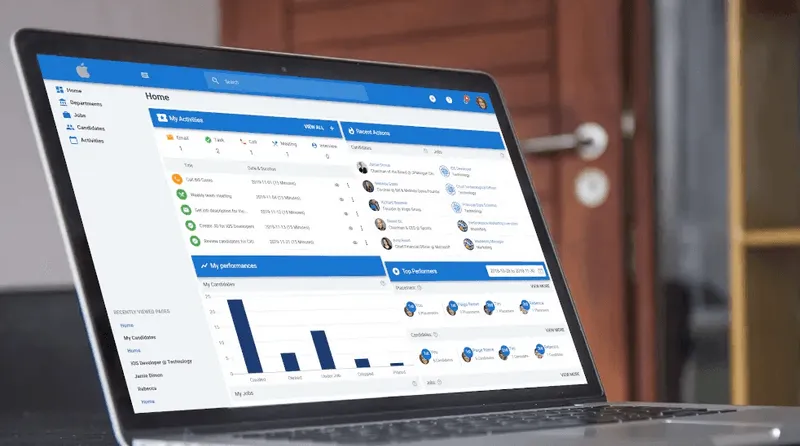
What Is a Recruiter Portal?
A recruiter portal is a web-based platform that recruiters log into to post jobs, search resumes, message candidates, and manage the hiring pipeline in one place. It can be a single job board, a recruiter's own branded career page, or a full applicant tracking system that ties them all together.
Types of Recruiter Portals
There are more than three categories, so here they are as short summaries rather than a table:
- External job boards give you rented reach on platforms like LinkedIn and Indeed, where you pay for visibility but never own the audience.
- ATS and recruitment software are the owned system of record where every candidate is stored, tracked, and moved through your pipeline.
- The company career page is your own inbound application portal, hosted on your domain and under your control.
- Candidate and employee portals let applicants and staff check their own status and browse internal openings without emailing your team.
- Client and guest portals let agencies share shortlists with clients for review and feedback inside one workspace.
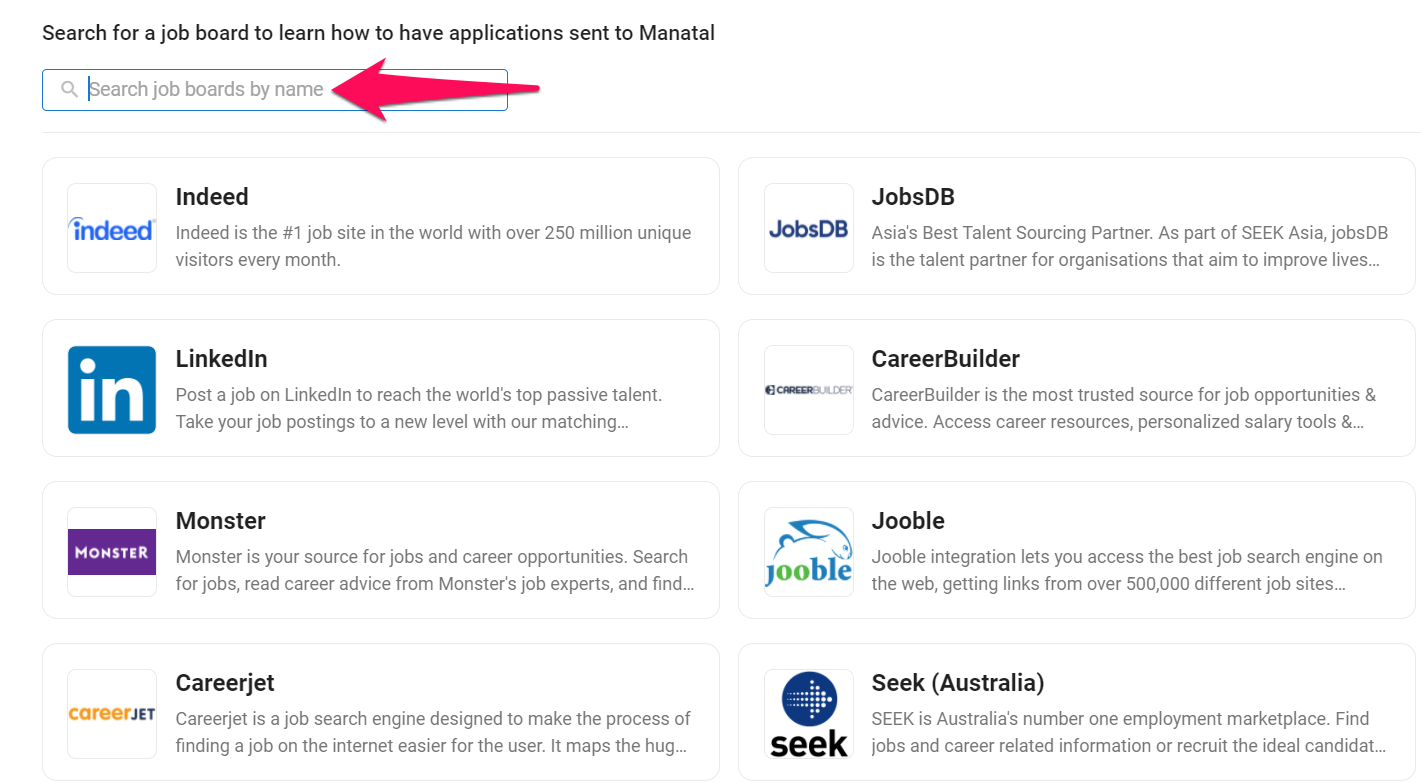
In Canada, online job boards were the most common recruitment method in 2024, used for 79% of job vacancies, up from 67% in 2015, according to Indeed Hiring Lab. [2] Managing multiple recruiter portals individually can be challenging when done individually. Manatal's job board connection pulls applications from boards like Indeed, LinkedIn, and Monster straight into the ATS. Each applicant is added automatically to the job they applied for.

{{cta}}
Recruiter Portals to Consider in 2026
The right portal depends on the role, so treat this as a starting mix rather than a ranking. For broad reach in the US, LinkedIn and Indeed are two of the most widely used general portals.

LinkedIn lets eligible employers post one free job at a time. Free posts can remain available for up to 30 days but are typically paused after 14 days and may also be paused once they reach LinkedIn's applicant limit. Employers can promote jobs using a daily or total budget, with charges based on eligible clicks or views depending on the job-posting setup.
Read more: How Much Is LinkedIn Recruiter in 2026?
Indeed

Indeed offers free job posting options, with Sponsored Jobs available for employers seeking additional visibility. Sponsored budgets start at $5 per day or $150 per month, although recommended budgets vary by factors such as job title, location, and job description. Employers are charged when candidates click the job or click to start an application.
Read more: How to Post a Job on Indeed
Monster

Monster currently offers Monster+ hiring plans, including pay-as-you-go options with average daily budgets of $18, $27, or $35. Monster+ Pro costs $299 per month and includes job promotion, resume search, and collaboration features. Pricing and available options may vary.
FlexJobs

FlexJobs focuses on remote, hybrid, part-time, freelance, and flexible work. Employers can use FlexJobs to reach candidates looking specifically for flexible work arrangements. FlexJobs reviews job listings before adding them to its database, and its employer terms require posted opportunities to include a flexible work element.
Dice

Dice is a technology-focused hiring platform for recruiting IT, engineering, AI, and other technology professionals. Its current pricing lists a single job slot at $399 for 30 days. Its Starter plan starts at $649 per month, or $549 per month with annual billing, and includes three job slots and 250 candidate views per month. Dice also provides access to a technology-focused resume database. Employers can search candidates using filters such as skills, location, compensation, and other criteria.
Wellfound

Wellfound is designed for startup hiring and currently offers unlimited job postings for free through Wellfound Jobs. The free plan includes applicant management and access to a pool of 10 million+ opted-in startup candidates. For more advanced sourcing, Wellfound Reach costs $135 per seat per month and provides AI sourcing and outreach tools. Wellfound also offers Autopilot at $500 per month per role, plus a 10% fee on successful hires.
Crunchboard

Crunchboard is a technology-focused job board associated with the TechCrunch audience. Current U.S. Department of Labor guidance describes CrunchBoard as reaching an audience of more than 12 million readers per month [3], with jobs distributed through the TechCrunch network, newsletters, and social channels.
TechFetch

TechFetch is a technology-focused recruiting platform that provides access to a resume database and candidate-matching tools. Employers can search resumes using technology skills and location criteria and save searches for future use. The platform has offered a 7-day employer trial that allows recruiters to search up to 100 resumes. Current official pricing should be confirmed directly with TechFetch.
Built In

Built In focuses on technology and startup hiring. Its employer packages include job postings, employer profiles, analytics, and tools for engaging candidates. Current packages include Basic, Core, and Enterprise, with pricing presented through its employer sales process rather than as a simple public per-post rate. Built In also offers a Candidate Viewer that allows employers to re-engage candidates who have researched the company and started an application but did not complete it. Employers can access candidate information when the candidate has granted permission through the application process.
WeWorkRemotely

We Work Remotely is a remote job board. A standard job listing currently costs $299 for 30 days. Employers can purchase optional upgrades to increase the visibility of their postings. We Work Remotely also distributes job postings through its partner network, including the Google Jobs Network and more than 20 niche job sites.
Beyond the general boards, free and niche options cover specific needs. For a full list of no-cost boards, see our guide to the best free job posting sites in the USA.
How to Choose the Right Recruiter Portal
Weigh these criteria against how you actually hire:
- Candidate reach: check whether a portal's audience matches your roles and industry, not just its raw size.
- Data control: confirm how candidate data is stored, accessed, exported, and retained, especially when using external job boards or recruiting platforms.
- Integration: prefer portals that multipost and sync with your ATS so data flows without manual copying.
- Pricing: match the pricing model, whether free, per-post, or subscription, to how often you hire.
- Candidate experience: look for fast applications and clear status updates for applicants.
- Compliance: review how the platform collects, processes, stores, exports, and deletes candidate data, particularly when GDPR, CCPA, or other privacy laws apply.
A niche, industry-specific portal often beats a general one when you hire repeatedly for the same specialized roles.
How to Set Up and Use a Recruiter Portal
Start with a minimal stack: one ATS as the hub (for example, Manatal), one broad job board (LinkedIn or Indeed), and your branded career page. Choose a small, connected stack that covers sourcing, applications, candidate management, and communication without creating unnecessary duplicate workflows.
- Create your ATS account and connect your email and calendar (Gmail, Outlook, or Office 365) so candidate replies and interviews sync to the pipeline.

- Build and publish your branded career page, then add the application-form fields you actually screen on: Add only the application fields needed to evaluate candidates consistently, such as location, work authorization where legally appropriate, and role-specific qualifications.
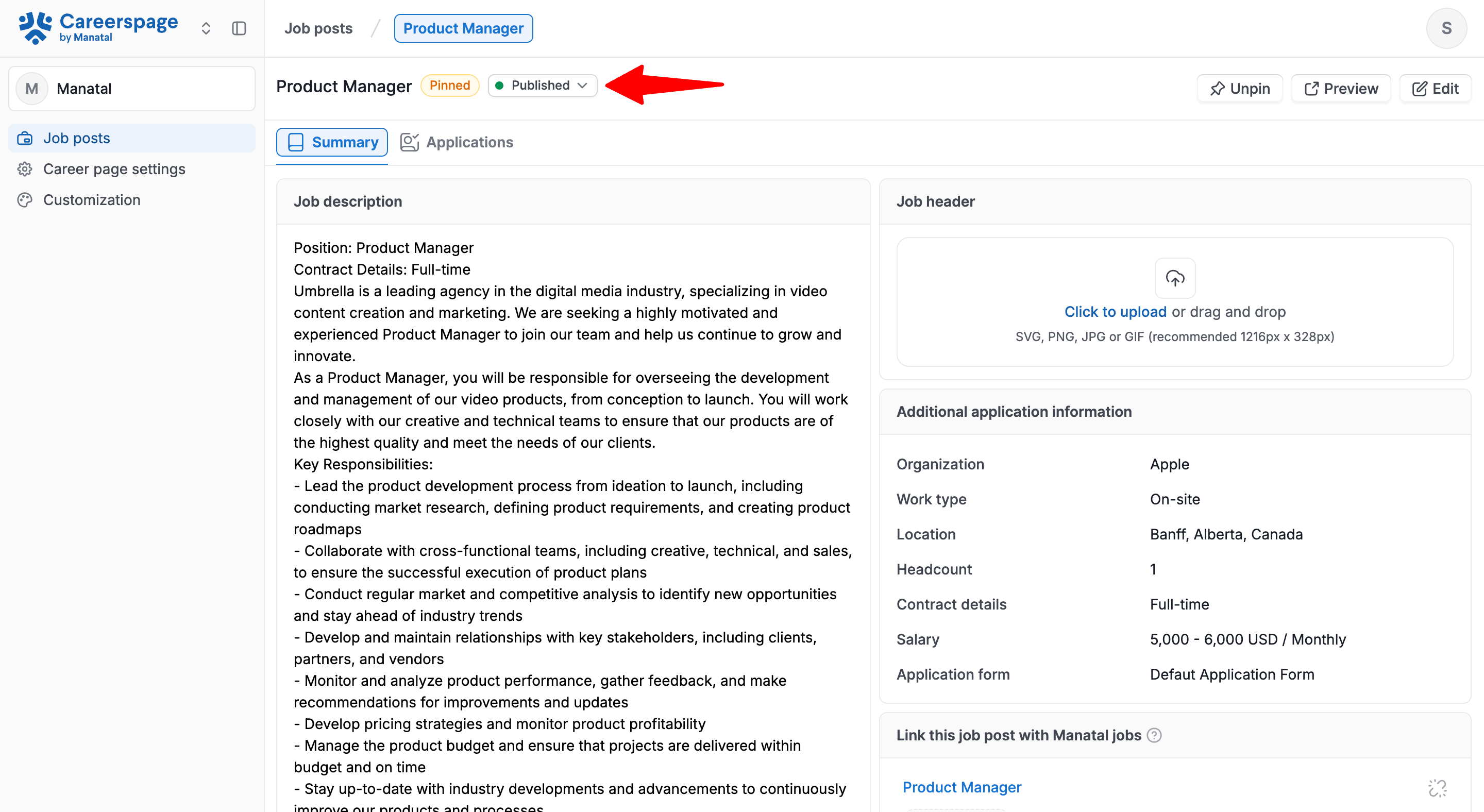
3. Connect and multipost to external job boards directly from your ATS instead of posting on each site manually. Manatal provides an automated job posting process: create your listing once, choose your target platforms, and the system automatically handles formatting, logins, and simultaneous publishing.
- Set up pipeline stages and assign an owner to each one. Keep a person in charge of moving candidates past screening.
- Turn on the Candidate Portal so applicants can access their profiles and view submitted applications.
This mirrors the basic account, posting, proofreading, and resume-search flow most job boards use, but every step feeds one hub. Manatal's candidate sourcing covers free and premium job boards from a single account, so multiposting and resume-search filters stay in one place.
Conclusion
A recruiter portal is only as useful as the system behind it. Use job portals like LinkedIn, Indeed, Monster, FlexJobs, and Dice to source talent and manage them all with Manatal’s simple, customizable ATS. With Manatal, you can post jobs to multiple boards at once, collect applications directly, and let the system sort candidates by role for easy review.
Try Manatal’s 14-day free trial and upgrade your hiring process today.
Frequently Asked Questions
Q: Which recruiter portal do recruiters use the most?
A: There is no single answer, because most recruiters use several. General job boards like LinkedIn and Indeed provide the widest reach, and 68.6% of employers run all or most hiring through boards. The one recruiters return to daily is usually their ATS, where candidates from every portal are tracked.
Q: What is the number one hiring site?
A: For raw reach in the US, LinkedIn and Indeed are among the most widely used, and the best choice depends on the role you hire for. Rather than picking one "number one," route applicants from whichever boards you use into a single system instead of many dashboards.
Q: Is Indeed better than LinkedIn for a recruitment portal?
A: They serve different needs. Indeed, it drives high application volume across most roles, while LinkedIn is stronger for reaching out directly to professional and passive candidates. Many recruiters post to both and compare source quality inside their ATS, such as Manatal, to see which actually delivers hires for a given role.
Q: Are there free recruiter portals?
A: Yes. Several job boards offer organic posting options (Indeed and LinkedIn Basic Jobs among them), and some ATS products offer free tiers or trials. Free postings limit visibility and rarely include resume-database search. Most teams use free reach for volume roles and pay for an ATS once they hire regularly.
Q: How do you track the recruitment process in a recruiter portal?
A: Set up pipeline stages that mirror your process: applied, screened, interviewed, offered, and hired. Move candidates through the stages as they progress, and keep a human owner on each decision stage. Route applicants into one ATS like Manatal to track status and source in a single view, and let a candidate portal show applicants their own status.
Citations: