





While the trend towards prioritizing internal mobility gains traction, the reality is that external hiring remains an indispensable strategy for driving growth, fostering innovation, and acquiring specialized skills that may not exist within the current workforce. Navigating this decision effectively, without compromising company culture, is paramount for sustained organizational success. This comprehensive guide explores the nuances of external hiring versus internal mobility, offering a strategic framework to optimize talent acquisition for your business.
External Hiring Explained
External hiring, fundamentally, is the strategic process of recruiting and bringing in talent from outside the organization's existing employee base. This involves identifying needs, sourcing candidates through various channels, and selecting individuals who possess the requisite skills, experience, and potential to contribute to the business. It's a critical component of any talent strategy, enabling companies to inject new perspectives, fill skill gaps rapidly, and scale operations to meet evolving market demands. This approach is distinct from internal mobility, which focuses on developing and redeploying current employees.
Internal vs. External Hiring
The decision between internal mobility and external hiring often hinges on a strategic comparison of several key factors: speed, cost, cultural fit, and potential for innovation. While both approaches are vital, they serve different strategic purposes.
Internal mobility or internal recruiting offers a significant advantage in employee retention and is often more cost-effective due to reduced recruitment and onboarding expenses. Existing employees possess invaluable institutional knowledge and are already embedded within the company culture. Conversely, external hiring is crucial for introducing diverse skill sets, driving innovation, and rapidly scaling the organization. Accessing a broader talent pool can bring in expertise that has been honed in different environments, potentially leading to breakthroughs and competitive advantages.
Why External Hiring is the Default
External hiring offers compelling benefits that can significantly impact an organization's trajectory. These advantages are particularly pronounced when seeking to drive innovation, fill critical skill gaps, or expand into new markets.
- Fresh Perspectives: External candidates often bring a wealth of experience from diverse industries and organizations. This infusion of new ideas and approaches can break down internal echo chambers, challenge the status quo, and spark innovation. They are less likely to be bound by existing company norms and can introduce novel solutions to persistent problems.
- Larger Talent Pool: The external talent pool is virtually limitless, offering access to specialized skills and expertise that may not be present, or readily available, within the current workforce.
- Speed to Competence: In situations demanding immediate impact, hiring a senior expert externally can be far more efficient than training an existing employee.
- Diversity and Inclusion: External hiring is a powerful lever for enhancing diversity across the organization. By casting a wider net, businesses can attract candidates from varied backgrounds, cultures, and life experiences.
Where to Find External Talent
Effectively sourcing external talent requires a multi-faceted approach, leveraging various channels to reach a broad and qualified audience. Casting a wide net for external talent usually means logging into multiple platforms to post jobs and check applications, which can fragment your data.
- Job Boards and Online Platforms: Industry-specific and general job boards like Indeed, LinkedIn, and Glassdoor are primary channels for advertising openings. These platforms allow for widespread reach to active job seekers.
- Social Media Recruiting: Professional networking sites and social media platforms are invaluable for targeted outreach. LinkedIn, in particular, allows recruiters to connect directly with potential candidates, both active and passive, and to build employer branding.
- Recruitment Agencies: For specialized or senior roles, partnering with recruitment agencies can provide access to their curated talent pools and expertise in headhunting. These agencies often have extensive networks and a deep understanding of specific industries.
- Talent Pools and Passive Candidates: Building and nurturing talent pools of individuals who may not be actively looking but would be a good fit for future roles is a proactive strategy. This involves engaging with potential candidates through networking, content, and employer branding initiatives.
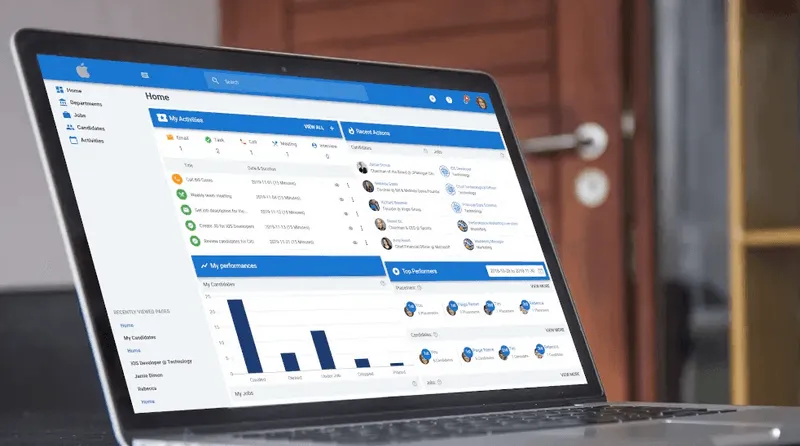
Manatal’s Candidate Sourcing feature combines two distinct external hiring capabilities. First, the Sourcing Hub provides access to a large external talent database, allowing recruiters to actively search, filter, and import external profiles directly into Manatal rather than relying solely on inbound applicants. Separately, Manatal supports external job board multiposting by letting recruiters create a single job ad and distribute it across platforms like LinkedIn, Indeed, and Monster, with all applicants consolidated into one pipeline. AI Candidate Enrichment then automatically scores and ranks both sourced and inbound candidates against the job description, reducing screening time while keeping external hiring data centralized.
{{cta}}
5-Step External Hiring Process
A structured external hiring process is crucial for ensuring efficiency, fairness, and the selection of the best-fit candidates for your organization.
- Identifying the Gap (Job Analysis): Begin by thoroughly understanding the specific needs, required skills, and desired outcomes for the role. This foundational step ensures that the hiring objectives are clearly defined and aligned with overall business strategy.
- Sourcing & Posting (Multi-channel Approach): Employ a diverse range of sourcing channels, as discussed previously, to reach a wide and qualified talent pool. Craft compelling job descriptions that accurately reflect the role and attract suitable external candidates.
- Screening & Assessments: Implement a rigorous screening process, utilizing resume reviews, pre-employment assessments, and initial interviews to evaluate candidates' skills, experience, and potential alignment with the role's requirements.
- The Interview (Focus on Culture Add, Not Just Fit): During the interview stages, move beyond simply assessing "culture fit" to evaluating "culture add." This involves understanding how a candidate's unique background and perspectives can enrich the existing company culture rather than simply conform to it. Behavioral and situational interviews are effective here.
- Onboarding (Crucial for External Hires): A well-structured onboarding program is critical for the success of external hires. This phase should focus on integrating the new employee into the team, clarifying expectations, providing necessary training, and familiarizing them with the organization's culture, processes, and tools. Effective onboarding accelerates productivity and fosters long-term engagement.
For a deeper look at how to design, measure, and continuously improve your recruitment workflow, see our guide to building a scalable recruitment process.
Challenges of External Hiring
While external hiring offers significant advantages, organizations must be mindful of potential challenges. The recruitment process itself can be administratively heavy, involving managing numerous applications from various sources. Externally recruited talent often comes with higher initial costs, including recruitment fees, relocation expenses, and potentially higher salary expectations, compared to internal moves. Furthermore, there can be a longer ramp-up time for external hires to become fully productive and integrated into the company culture. The risk of poor cultural fit, which can lead to disengagement or turnover, is also a significant consideration. Externally sourced employees might also require more structured training to align with internal systems and processes.
Advantages of Internal Mobility
Internal mobility, the practice of moving employees to different roles within the same organization, whether through promotion, lateral moves, or project assignments, is a cornerstone of effective talent management. It offers a compelling alternative or complement to external hiring, yielding significant benefits.
- Boosting Morale and Retention: Employees who see a future within the company are more likely to be committed and stay longer. In fact, employees who make an internal move have a 75% chance of staying with the company after two years, compared with 56% for those who have not.[1] Globally, 44% of core skills are expected to be disrupted by 2028 due to AI and automation,[2] making internal reskilling and upskilling through mobility essential.
- Leveraging Institutional Knowledge: This inherent knowledge dramatically reduces the learning curve and speeds up integration, enabling them to become productive team members much faster than external hires. Organizations that lead on internal hiring practices report 53% longer employee tenures.[3]
- Cost-Effectiveness: The primary investment lies in training and development. Employees at companies with high internal mobility stay 60% longer than those at companies with low internal mobility.[4]
- Developing Future Leaders: When organizations identify high-potential employees and provide them with diverse experiences and challenges, they can cultivate a pipeline of talent ready to step into leadership roles.
Challenges of Internal Mobility
While internal mobility offers many advantages, it's not without its hurdles. A primary concern is the potential for limited diversity of thought if the organization relies solely on internal candidates. Without a deliberate strategy, skill gaps might persist if existing employees lack the necessary competencies and cannot be adequately trained. Internal promotion processes can sometimes lead to resentment or competition if not managed transparently. There's also the risk of promoting individuals who are technically proficient but may not possess the leadership or management skills required for the new role. Addressing these challenges requires a deliberate focus on clear development frameworks, transparent communication, and a balanced approach that may still incorporate external hiring when necessary.
Building a Seamless Talent Ecosystem
The most effective talent strategy rarely involves an "either/or" choice between external hiring and internal mobility. Instead, it’s about creating a dynamic and integrated talent ecosystem that leverages the strengths of both approaches to achieve overarching business goals. Leadership plays a pivotal role in championing this dual strategy, fostering a culture that values both internal growth and the strategic infusion of external talent.
- When to Prioritize Internal Mobility: Opt for internal candidates when they already possess the basic skills needed and demonstrate a genuine fit for the role. It is also an excellent way to retain talent by providing career growth opportunities and rewarding loyalty. Furthermore, it suits jobs that can be mastered with training and skillset development.
- When to Prioritize External Hiring: External hiring is critical for roles that demand immediate impact, drive innovation through new perspectives, or when rapid scaling is required. It also plays a vital role in enhancing diversity and bringing in best practices from outside the organization.
- Creating a Hybrid Approach: Actively promoting internal career paths while simultaneously maintaining a robust external recruitment engine. For example, an organization might promote an internal candidate to a mid-level role, while simultaneously hiring externally for a senior leadership position that requires specialized external experience. This approach ensures that the organization benefits from the stability and knowledge of its internal talent while also staying agile and innovative through external recruitment. Leadership must communicate this strategy clearly to prevent internal friction and demonstrate that both paths are valued.
Conclusion
Deciding when to use external hiring versus internal mobility is critical for organizational growth. Internal mobility enhances loyalty and retention, while external hiring brings fresh perspectives and specialized skills. With significant skill disruptions expected due to AI and automation, organizations must balance upskilling internal talent with acquiring external expertise. A proactive talent strategy that integrates both approaches helps maintain a competitive and innovative workforce, ensuring long-term success.
Frequently Asked Questions
Q: How does external hiring impact company culture?
A: Bringing in new employees from diverse backgrounds can positively impact company culture by introducing fresh ideas and perspectives. However, it may also present challenges as these new hires adapt to the existing company culture and vice versa. It's crucial for organizations to have a strong onboarding process and foster an inclusive environment that facilitates the integration of new employees while respecting and preserving the existing cultural dynamics.
Q: What are the challenges associated with external hiring?
A: One of the main challenges of external hiring is identifying the right candidate who not only brings the required skills and experience but also aligns with the company's culture and values. The process can be time-consuming and costly, involving advertisement, recruitment agencies, background checks, and interviews. Additionally, there's always a risk of the new hire not meeting performance expectations or leaving the company shortly after joining, which can disrupt team dynamics and waste resources.
Q: How can companies attract the best external candidates?
A: To attract top external talent, companies should build a strong employer brand that highlights their mission, values, and what sets them apart as a great workplace. Competitive compensation packages, opportunities for career growth, and a clear demonstration of supportive and inclusive workplace policies are also key draws for potential candidates. Effective use of social media, career fairs, and partnerships with educational institutions can also broaden the reach to prospective employees.
Q: Are there any legal considerations in external hiring?
A: Yes, external hiring involves several legal considerations. These can include adhering to anti-discrimination laws, ensuring fair recruitment practices, and complying with employment regulations in the jurisdictions where the company operates. Companies must carefully handle personal data gathered during the recruitment process to align with privacy laws such as the General Data Protection Regulation (GDPR) in Europe.
Citations
.webp)







.webp)

.webp)


.webp)


