





You have sourced the perfect candidate. The hiring manager is excited. You have spent weeks coordinating interviews and debriefs. You send the contract, expecting a quick "yes," but instead, you get a rejection. That is the specific, expensive pain of a low offer acceptance rate. In 2026, when candidates have more access to salary data and competitive leverage than ever before, tracking this metric is non-negotiable. This guide covers how to calculate your Offer Acceptance Rate (OAR), where you stand in relation to the offer acceptance rate benchmark, and how to utilize data to close more candidates.
Offer Acceptance Rate vs. Interview-to-Offer Rate
Many talent acquisition teams use these terms interchangeably, but they measure two completely different parts of your recruitment funnel. Confusing them can lead to fixing the wrong problem.
The Interview-to-Offer Rate measures your pipeline quality. It is the percentage of interviewed candidates who receive an offer.
The Offer Acceptance Rate measures your closing ability. It assumes the candidate was good enough to hire, but you failed to secure them. This is the metric we are focusing on today.
How to Calculate Offer Acceptance Rate
The offer acceptance rate formula is simple, but you need to be consistent with the time period (monthly, quarterly, or annually).
Formula: (Number of Accepted Offers / Total Number of Offers Extended) x 100 = OAR %
Example: If you extended 50 offers in Q1 and 40 candidates signed the contract, your calculation looks like this: (40 / 50) x 100 = 80%
This 80% figure is your baseline. It tells you that for every 10 hires you want to achieve, you need to extend offers to 12.5 candidates, losing 2.5 to competitors, counter-offers, or internal hesitation.
What Is a Good Offer Acceptance Rate in 2026?
Is 80% good? It depends. Context is everything in recruitment analytics. When evaluating offer acceptance rates, benchmarks should be treated as directional guidelines, not fixed targets. What qualifies as “excellent” or “concerning” depends heavily on role type, market competitiveness, and how standardized the job and compensation structure are.
- 90% (Excellent): A high benchmark based on SHRM’s framing of strong performance.[1]
- 80% - 90% (Good): Typical average range in employer benchmarking.[1]
- <80% (Warning Zone): Something is broken. It could be salary, speed, or a bad candidate experience.[2]
Industry nuances matter deeply here. For example, high-volume manufacturing roles often see higher acceptance rates (around 91%) because the requirements and pay are standardized. Conversely, niche tech roles or software engineering positions often hover around 81% or lower.[3] These candidates typically juggle multiple offers simultaneously, making the offer acceptance rate harder to maintain.
Turn Data into Strategy with Manatal
Most recruiters track OAR in a spreadsheet. The problem with spreadsheets is that they are reactive. You usually realize your acceptance rate is tanking at the end of the quarter, when it’s too late to fix it.
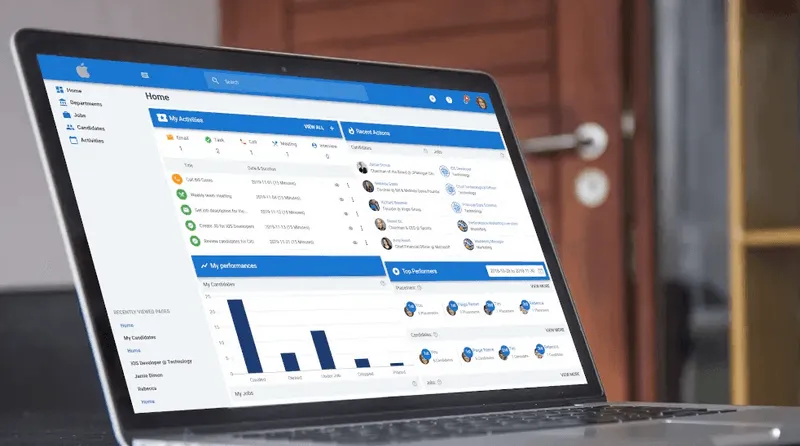
Manatal’s Reports & Analytics feature eliminates this lag by tracking OAR in real time and placing it alongside other critical talent acquisition metrics that influence hiring outcomes.
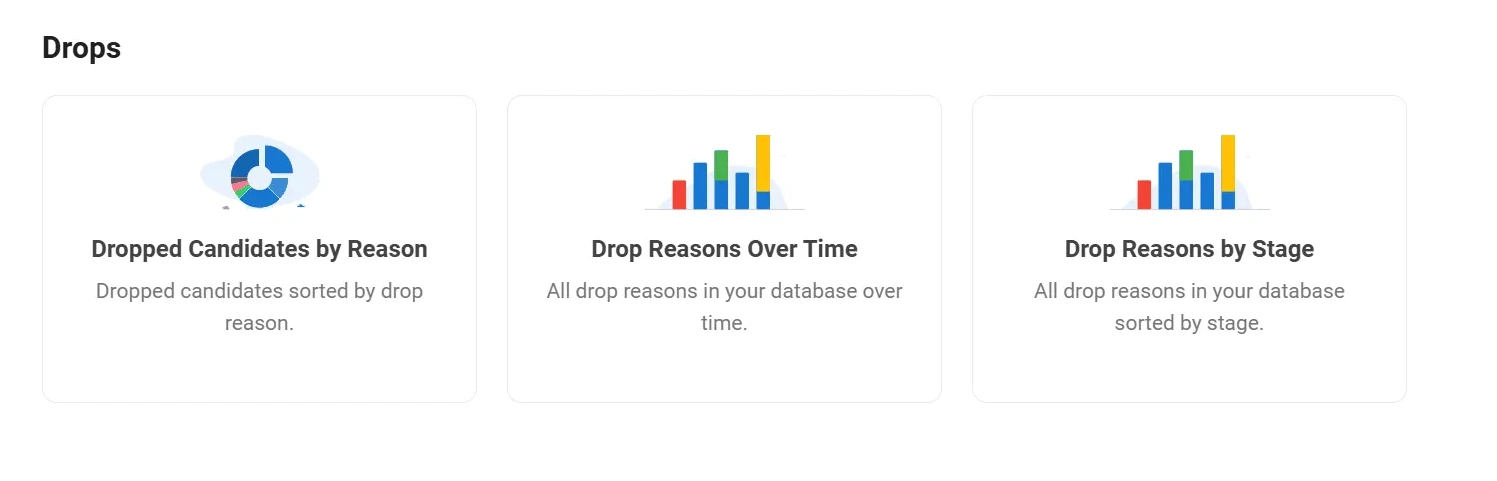
When a candidate declines, you can select Drop Reasons to log specific reasons, such as salary, remote work policy, a competitor's offer, or relocation issues. This turns a generic "no" into actionable intelligence.
- The Scenario: You notice your OAR dropped to 75% this month. A quick glance at your Manatal dashboard shows that 80% of those rejections were tagged "Salary expectations."
- The Fix: You now have hard data to show the CFO that your salary bands are out of date with the 2026 market.
Below is the relevant report that you can view over time as well as by stage:
Manatal also streamlines the mechanical side of closing. Using built-in e-signatures and customizable offer templates ensures the contract reaches the candidate’s inbox within minutes of the verbal offer, reducing the friction that leads to "ghosting."
{{cta}}
Why Candidates Reject Offers
A rejection is a "false negative." It is a candidate who liked you, and whom you liked, but the deal fell apart. Usually, this happens for three reasons:
1. The Offer wasn't Competitive (Holistically)
Salary is the obvious culprit. If you are paying under market value, your offer acceptance rate will suffer. Research from Gartner shows 53% candidates cited higher compensation as their main decision driver when accepting an offer.[4]
2. Time Kills Deals
While there is limited public research quantifying exact time thresholds for offer acceptance, SHRM’s 2025 benchmarking data shows that hiring processes are often segmented across multiple stages and can be time-intensive. These extended timelines increase the risk of delays between final interviews and offer delivery, particularly in competitive hiring markets.[5]
3. The "Cold" Close
A Gartner HR survey shows 44% of candidates received multiple offers, and 35% reneged on accepted offers, highlighting that candidates are comparing experiences. In such a market, a mere PDF offer with no human touch can feel impersonal and easily be rejected.[6]
66% of applicants accept offers based on positive experiences during the process.
How to Improve Offer Acceptance Rate
If your OAR is suffering, don't panic. You can usually fix it by tightening up your process. Here are four practical strategies.
1. The "Pre-Closing" Technique
Never extend a formal offer unless you are 99% sure it will be accepted. You should be "pre-closing" the candidate throughout the interview stages.
- Ask early: "If we offered you X amount today, would you accept?"
- Verify intent: "Do you have other interviews in the final stages?"
By the time you send the letter, it should just be a formality, not a surprise reveal.
2. Accelerate the "Last Mile"
The gap between the final interview and the offer letter is the "danger zone." Aim to reduce this to 24-48 hours. Use tools like Manatal to template your offers so you aren't waiting on HR admin work. The faster you get the paper in their hands, the less time they have to reconsider.
3. The "Warm" Offer Call
Before you hit send on the email, get the hiring manager (not just the recruiter) to call the candidate.
- The Script: "We are thrilled to offer you the role. Here is why we think you’re the perfect fit..."This emotional connection makes it significantly harder for a candidate to reject you for a competitor.
4. Audit Your Rejection Data
Use your ATS to analyze why you are losing people. If you are losing people to competitors, check your employer brand. If you are losing them to counter-offers, check your relationship-building during the process. Data removes the guesswork.
The Offer Acceptance Rate Checklist
Before you send your next offer, run it through this quick audit to ensure you are maximizing your chances of a "yes."
Offer Details and Alignment
- Salary alignment confirmed: Offered compensation matches the candidate’s stated expectations from the initial screening, and internal approvals and budget checks are completed.
- Role and level validated: Job title, scope, and seniority match what was discussed.
Timing and Responsiveness
- Offer sent within 24 hours of verbal confirmation, with approvals and signatures completed and no internal bottlenecks.
Format and Accessibility
- Mobile-friendly offer letter that is easy to read on both mobile and desktop.
- E-signature enabled so the candidate can review and sign without printing or downloading.
Candidate Experience
- Hiring manager personal outreach completed to confirm intent and enthusiasm.
- Tone is clear and welcoming, using professional and warm language without unnecessary legal or internal jargon.
Clarity and Transparency
- Compensation breakdown included, clearly explaining base salary, bonus or commission (if applicable), equity or stock (if applicable), and benefits.
- Start date confirmed and aligned with the candidate’s availability.
Next Steps and Follow-Up
- Post-signature steps clearly outlined so the candidate understands onboarding steps, required documents, and first-day expectations.
- Point of contact provided, including a named person and appropriate contact details.
Final Review
- All offer details reviewed for accuracy, including names, dates, numbers, role, and location.
- Offer approved and ready to send.
Even strong candidates can hesitate or disengage if the offer process feels slow, unclear, or impersonal. A structured offer audit helps ensure consistency, professionalism, and a candidate-first experience
Conclusion
Your offer acceptance rate is more than a KPI. It is a mirror reflecting the health of your recruitment team. A low rate suggests wasted effort and misaligned expectations, while a high rate signals a compelling employer brand and an efficient process. Understand your performance benchmark, leverage tools like Manatal to track rejection reasons, and treat the offer stage as a human experience rather than a transaction to secure the talent.
Frequently Asked Questions
Q: Why track the offer acceptance rate by department?
A: The offer acceptance rate varies widely by department. Tech teams often see 75-85% rates, while sales might hit 90%+ from better perks. You should segment data quarterly to reveal hidden issues like engineering budget gaps. This prevents skewed company-wide metrics and guides targeted fixes.
Q: How does offer timing affect acceptance rate?
A: Delays beyond 48 hours post-interview drop rates by 20-30% as candidates accept rival offers. Prompt follow-ups with personalized rationale boost acceptance by signaling urgency and fit. Automate reminders in your ATS to shave days off the process.
Q: What role does salary transparency play in offer acceptance?
A: Upfront pay ranges in job posts lift rates 15-25% by filtering mismatches early, per recent surveys. Candidates rejecting vague offers cite "pay surprise" as top frustration. Balance transparency with flexibility to negotiate perks without inflating base pay.
Citations
.webp)







.webp)

.webp)


.webp)


