





Launching a recruitment agency in Canada in 2026 requires navigating a cooling labor market where population growth now outpaces job creation. Success hinges on mastering strict provincial licensing requirements, such as Ontario’s ESA and Quebec’s CNESST mandates, and securing the required $25,000 irrevocable letter of credit for international operations.
The market for a recruitment agency in Canada is cooling. Job vacancies have returned to pre-pandemic levels. Data from TD Economics shows the unemployment rate has climbed 1.4 percentage points from its recent low. [1] This shift ends the post-pandemic hiring frenzy. Population growth is now outpacing job creation. Agencies cannot function as mere resume filters anymore. Success in 2026 requires deep specialization and mastery of provincial regulations.
The Recruitment Agency Market in Canada
Staffing revenue hit $11.4 billion in 2026. [2] Healthcare shortages continue. Skilled trades lack workers. Agencies are split into domestic and international segments. Domestic placements hold steady. International recruitment surges. Employers use an LMIA to hire foreign workers for gaps in the workforce, such as in nursing. Small agencies lead niches. They place candidates faster in Alberta oil fields than global competitors.
7 Steps to Start a Recruitment Agency in Canada
1. Identify Your Sector
Agencies that try to "do everything" lose to specialists in every sales conversation. Generalist agencies struggle with low margins. Focus on high-demand sectors where candidate scarcity allows for placement fees of 20% to 25%.
The 2026 growth sectors:
- Healthcare: Registered nurses, personal support workers, and medical lab technicians. Ontario's Bill 124 wage cap repeal opened up hospital budgets. Agencies placing RNs in long-term care facilities now see average annual salaries of $89,000–$133,000, with 15-30% commission rates. [3]
- Manufacturing & Skilled Trades: CNC machinists, heavy-duty equipment mechanics, millwrights. Immigration policy prioritizes trades under the Express Entry system. Agencies recruiting for these high-wage positions from overseas typically charge employers placement fees, typically ranging from $1,000 to 20% of the candidate's annual salary.
- Tech (Specialized Only): Avoid recruiting a generalist "software developer." The market is competitive with agencies chasing React developers. Instead, target AI/ML roles or cybersecurity specialists who require security clearance. The clearance verification creates a natural barrier.
Here are the best free tools and data sources for your market research:
Manufacturing & Skilled Trades: CNC machinists, heavy-duty equipment mechanics, millwrights. Immigration policy prioritizes trades under the Express Entry system. Agencies recruiting these high-wage positions from overseas charge employers placement fees ranging from $1,000 to 20% of the candidate's annual salary.
2. Formalize Your Business Structure
Register your corporation at the federal level if you plan to operate in multiple provinces. Register provincially if you only want to serve a specific local market, such as the Greater Toronto Area. Obtain your Business Number (BN) from the Canada Revenue Agency. You will need this for GST/HST filings.
3. Secure Mandatory Licensing
Most recruitment agencies fail because they launch without proper licensing and get shut down by provincial regulators within six months. Licensing is the biggest barrier to entry because it requires significant capital, processing time, and legal documentation that many founders underestimate. Requirements vary significantly by province.
- Ontario: You must hold a license under the Employment Standards Act (ESA). This involves a rigorous background check.
- Quebec: The CNESST requires a specific permit for personnel placement agencies. You cannot operate in Montreal without it.
- International Recruitment: Agencies bringing workers to Canada often need to provide an irrevocable letter of credit. This bond usually totals $25,000. [4] It protects worker wages.
4. Tech Stack & Operations
Canadian agencies face a compliance problem that generic recruitment software doesn't solve. If you experience a data breach involving social insurance numbers or immigration documents, you face fines up to $100,000. Your tech stack must handle both speed and compliance simultaneously.
Your recruitment agency needs three core functions:
- Applicant Tracking: Where you manage candidate pipelines, store resumes, and track interview stages.
- Client Relationship Management (CRM): Where you log client interactions, forecast placement revenue, and manage contracts.
- Compliance Documentation: Where you store work permits, license verifications, and signed agreements with audit trails.
You need a system that handles these three functions. The aim is to save cost and free up your time from repetitive tasks, but juggling between tools with double payment might not be as smooth as you expected. A solution like Manatal combines ATS and Recruitment CRM functionalities into a single platform for $15 USD per month, enabling you to manage the recruitment process and client management without worrying about costs.
{{cta}}
Marketing costs include website domains and social media, with options like hiring designers on Fiverr. Ongoing expenses cover software subscriptions, payroll, taxes, job board postings, LinkedIn premium, and professional association fees. Total setup costs are estimated at CAD 5,000 to CAD 6,000, depending on location, size, and operational model.
5. Calculate Initial Capital and Costs
Recruitment agencies face a cash flow reality: high upfront costs with a 60- to 90-day gap before the first placement fee arrives. You need capital that can sit locked in bonds while you're still prospecting clients and interviewing candidates. Most founders underestimate this lag and run out of money before closing their third placement. The table below shows what you're actually funding during those first three months of zero revenue.
Expect to spend significant capital before seeing your first placement fee.
Option to reduce capital requirements: Start with domestic direct placements only. If you only place permanent employees (no temp or contract workers) and only recruit from within Canada, some provinces allow you to operate without a letter of credit. Verify this with your provincial regulator before assuming it applies.
6. Contracts (PIPEDA Compliance Starts Here)
The Personal Information Protection and Electronic Documents Act (PIPEDA) governs how you store candidate data. Spreadsheets and email inboxes do not meet PIPEDA's "reasonable security safeguards" standard. If you experience a data breach involving candidates' social insurance numbers or immigration documents, you may face fines of up to $100,000.
You need three contract templates:
- Client Service Agreement: Defines your fee structure (percentage of salary or flat fee), payment terms (net 30 days are standard), and the guarantee period (90-120 days of free replacement if the candidate quits or is terminated).
- International Recruitment Agreement: Adds clauses on work permit support, LMIA compliance, and who bears immigration costs if the application fails.
- Candidate Agreement: Outlines what data you collect, how long you retain it, and candidate rights under PIPEDA. This must explicitly state your data storage location and the security measures in place.
The PIPEDA requirement most agencies miss: PIPEDA requires you to delete personal data once it's no longer needed for the purpose for which it was collected. Define your retention policy (typically 2-3 years for inactive candidates) and actually enforce it.
Standard fee structures in 2026:
- Direct hire placements: 15-25% of first-year salary [5]
- Executive search (roles above $100,000): 25-30% of first-year salary [6]
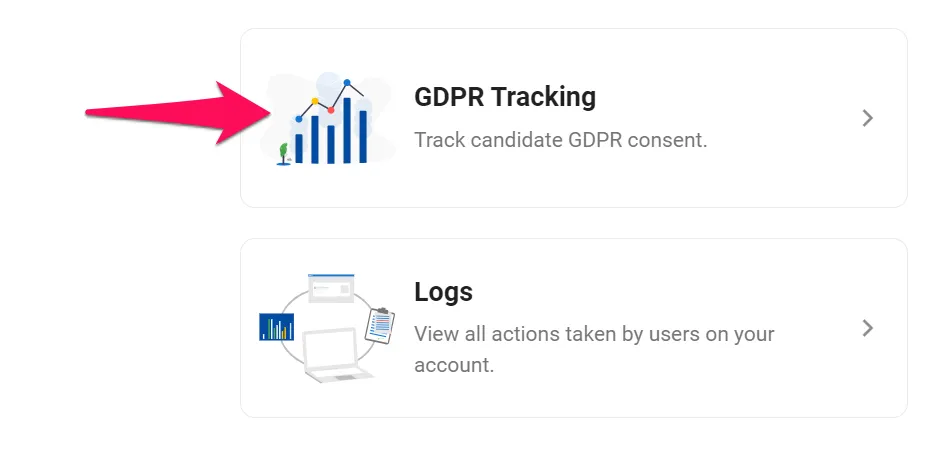
Not only PIPEDA, but a Canadian firm with a single EU applicant must also follow GDPR protocols for that candidate's data. Manatal features a wide range of tools that support compliance with data privacy laws, including GDPR, CCPA, PDPA, and others.
7. Marketing
Successful marketing distinguishes your recruitment agency from Canadian competitors by clearly communicating your value proposition and industry expertise to target clients and candidates.
Effective marketing strategies include:
- Professional website or career page optimized for search engines and mobile devices
- Canadian B2B buyers spend an average of 11 hours per week on LinkedIn (48 hours per month on mobile). Hiring managers use it to vet agencies before taking calls. Your LinkedIn presence is your storefront.
- Content strategy: Post two pieces per week. One should be a specific hiring case study ("How we filled a CNC machinist role in 11 days for a Brampton manufacturer"). The other should be industry-specific data for your niche.
- Outbound prospecting: Message 25-30 decision-makers per week. Target VP-level and above at companies with 50-500 employees. Smaller companies lack internal recruiters. Larger companies have procurement processes that lock out new vendors.
- Referral agreements: Offer 10-15% of placement fees to other agencies for referrals. If you specialize in healthcare and another agency gets a nursing request, they'll send it your way. This works because most agencies refuse to turn away leads, even in niches they can't serve well. Make it easy for them to send you overflow.
- Job boards: Still matter for candidate sourcing, but they're cost sinks for client acquisition. Employers who post on job boards want to hire directly. They view agencies as a last resort. Focus job board spending on Indeed and LinkedIn Jobs. Skip niche boards unless you're in a highly specialized vertical (e.g., VetJobs for veterinary recruitment
Recruitment Agency to Canada: The Foreign Worker Opportunity
The "Recruitment to Canada" model is the most profitable segment of the industry right now. It involves sourcing talent from outside the country. You must understand the LMIA process. Employers pay a premium to agencies that can manage the paperwork and find qualified newcomers.
Do not attempt this without a licensed immigration consultant (RCIC) on your team or as a partner. Operating without one is a legal risk.
Canadian Agency Launch Checklist
Work through this list sequentially. The license application takes 4-8 weeks, so submit it as soon as possible after business registration. The letter of credit requires a meeting with your bank's commercial lending team. Book that meeting before you need the letter to avoid delays.
Most agencies get stuck between items three and four. The capital requirement hits harder than expected. If you're bootstrapping, consider starting with direct-hire placements only (no letter of credit required) and expanding into temp or international placements once you've reached $30,000 in revenue.The agencies that survive year one stick to a single niche and refuse to succumb to feature creep. You're not building a recruiting empire in month six. You're proving you can reliably place 3-4 candidates per month in a single vertical. Scale comes after you've nailed the fundamentals.
Conclusion
The Canadian recruitment market is not for the disorganized. Provincial governments will continue to increase oversight on temporary help agencies. Only firms that invest in proper licensing and specialized software will survive the next two years.
Frequently Asked Questions
Q: What skills are essential for successfully running a recruitment agency?
A: Running a recruitment agency successfully demands a mix of key skills. Strong communication skills are vital for fostering relationships with clients and candidates, ensuring clarity and trust in every interaction. Organizational skills are equally important for juggling multiple tasks, meeting deadlines, and keeping operations running smoothly. Additionally, a deep understanding of the industry and the ability to stay current with trends and best practices enable agency leaders to effectively match the right talent with the right opportunities.
Q: What metrics should I track to measure the success of my recruitment agency in Canada?
A: To gauge the success of a recruitment agency in Canada, focus on key metrics like the number of placements made, the average time to fill positions, and client satisfaction ratings, which reflect operational efficiency and service quality. Financial indicators such as revenue growth and profit margins offer insight into the agency’s economic health. Tracking the retention rate of placed candidates is also crucial, as it measures the long-term success of matches and client-candidate fit.
Q: What are the benefits of focusing on a niche market for a recruitment agency?
A: Concentrating on a niche market allows a recruitment agency to build specialized expertise and establish a strong reputation within a specific industry. This focus often leads to higher-quality candidate placements and greater client satisfaction due to tailored solutions. Moreover, a niche strategy sets the agency apart from competitors, potentially enabling it to charge premium fees and cultivate lasting client relationships based on trust and proven results.
Q: How do recruitment agencies in Canada adapt to changing labor market trends?
A: Recruitment agencies in Canada stay ahead of labor market shifts by keeping abreast of industry developments and refining their strategies as needed. This might mean branching into emerging sectors, adding services like workforce planning, or adopting technology to enhance efficiency. Flexibility is key; agencies maintain adaptable workforces and respond swiftly to fluctuations in demand, ensuring they remain relevant and competitive in an ever-evolving market.
Q: What are the ongoing costs associated with running a recruitment agency?
A: Running a recruitment agency involves several ongoing expenses, including office rent, utilities, and staff salaries, which form the backbone of daily operations. Marketing and advertising costs are essential for attracting clients and candidates, while subscriptions to technology and software, such as applicant tracking systems, streamline processes. Agencies also invest in professional development and training to keep their teams skilled and compliant with industry standards.
Citation:
.webp)








.webp)

.webp)


.webp)


