





The average cost per hire in the U.S. remains significant, with SHRM’s 2025 benchmarking reporting an average cost of $5,475 for non-executive hires [1], and hiring times averaging 63.5 days, impacting revenue due to prolonged vacancies. [2] When positions stay open this long, it often signals a deeper issue with how roles are sourced. This explains why most employers struggle to find skilled candidates, with reactive hiring proving expensive. Successful organizations fill roles quickly by adopting a proactive and structured talent acquisition process. This guide outlines how to develop this strategy and structure teams to ensure robust hiring practices that withstand labor market fluctuations.
What is the Talent Acquisition Process?
To understand the strategic potential of your people function, you must first define the core distinction between recruitment and talent acquisition.
- The talent acquisition process is a strategic blueprint for identifying, attracting, and onboarding individuals who drive long-term business success.
- Traditional recruitment often focuses on filling immediate vacancies as they arise. It is typically reactive and transactional.
HR teams can transform from reactive hiring functions into strategic partners that build future workforce capability. The key lies in treating talent acquisition as a major investment rather than a cost center.
The 5-Step Guide to the Talent Acquisition Process
Building a sustainable operation requires structural depth. This five-step pipeline replaces reactive talent sourcing with a structured, data-driven process.
Step 1: Job Requisition and Role Scoping
A well-defined job requisition is fundamental for successful hiring, as misalignment leads to high turnover and repeated recruitment.
- Hold intake meetings: Require hiring managers to complete a structured intake meeting before opening a requisition. Define the business problem, 90-day outcomes, market compensation, and strict deal-breakers.
- Remove degree requirements: Strip out unnecessary degree filters to expand your candidate pool. According to NACE’s Job Outlook 2026 survey, 70% of surveyed employers reported using skills-based hiring practices, particularly during screening and interviewing. [3]
- Write clear descriptions: Use plain language to describe the actual work instead of outlining an imaginary ideal person.
Step 2: Sourcing and Employer Brand Development
While relying only on active applicants limits your hiring options, active sourcing expands the talent pool. It allows you to engage high-performing passive candidates who aren't actively checking job boards.
- Define your Employer Value Proposition (EVP): Clearly state what employees get from your company regarding culture, growth, and work substance. A strong EVP can reduce employee turnover, attract top talent, and drive employee engagement and productivity. [4]
- Simplify employee referrals: Announce open roles internally every two weeks and keep the bonus payout structure simple. Some recruiting benchmarks report that employee referrals can reduce hiring time compared with traditional applicant sources, with several studies citing improvements of around 55%. [5]
- Execute outbound sourcing: Use Boolean search and LinkedIn Recruiter to find passive talent. Recruiters can use the Manatal People-Match Chrome extension to source and add candidates from LinkedIn, Indeed, GitHub, and SEEK directly to their lists without leaving the page.
{{cta}}
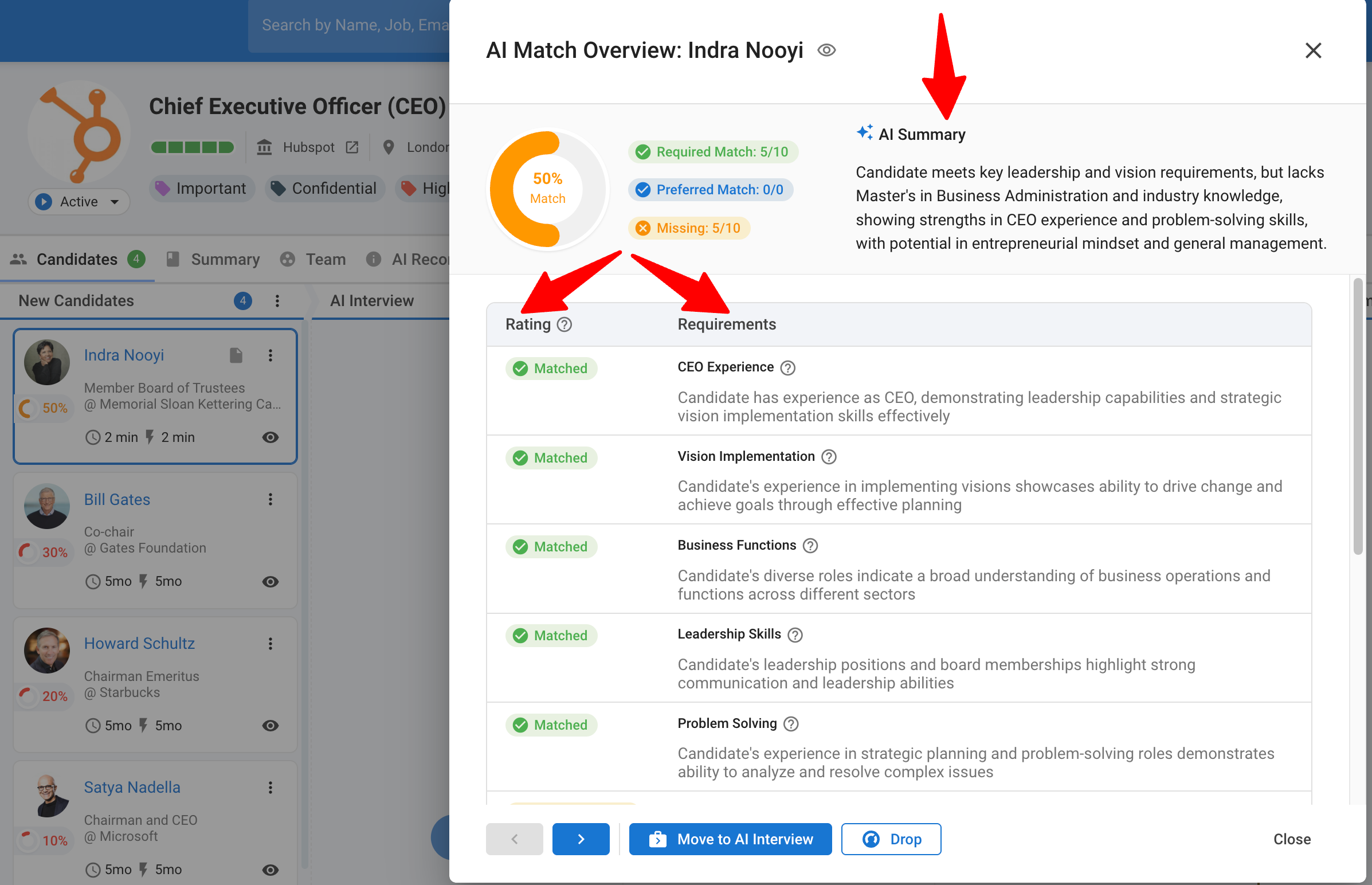
Step 3: Candidate Screening and Skill-Based Assessment
Traditional CVs have limited ability to predict job performance because they often emphasize credentials and presentation rather than demonstrated job-related capabilities. [6] More objective assessments, such as work samples and structured evaluations, tend to provide stronger evidence of candidate potential.
- Design a two-stage screening process: Filter candidates efficiently by implementing a binary initial screen (checking basic prerequisites like salary alignment and core availability), followed immediately by a role-specific work sample test or a job-related simulation. This ensures only candidates with verified capabilities progress to the expensive, time-consuming panel interview stages.
- Audit AI resume screening tools: Conduct quarterly bias audits on your automated Applicant Tracking System (ATS) by extracting a random sample of 100 rejected and accepted profiles. Calculate the selection rate across demographic cohorts to ensure compliance with the "four-fifths rule" (i.e., the selection rate for any group should be at least 80% of the highest group's rate), thereby mitigating algorithmic discrimination.
Step 4: Interview and Candidate Experience
Candidate experience strongly influences employer perception. Research commonly cited in recruitment studies indicates that many candidates view the hiring process as a reflection of how a company treats employees. [7] A slow and disorganized interview process can lead top-tier professionals to seek opportunities with competitors.
- Establish communication SLAs: Schedule interviews within 48 hours of screening clearance. Deliver interview feedback within five business days, and send official offer letters within 24 hours of a verbal acceptance.
- Use structured panel interviews: Assign specific tracking roles to panel members, such as technical skills, behavioral competencies, or culture.
- Use a recruiting scorecard: Implement a structured interview matrix where every candidate for a specific role is asked identical, situational questions. Evaluate responses using a standardized scorecard (e.g., a 1-to-5 rating scale) with explicitly defined rubrics for each competency, ensuring objectiveness and eliminating gut-feeling bias during comparison.
- Score candidates independently: Write down individual scores before entering a team debrief to eliminate groupthink.

Step 5: Offer Management and Close
A rejected offer is a complete operational failure that resets your entire timeline, making data-backed positioning and swift execution essential to closing the deal.
- Utilize market data: Research the 25th, 50th, and 75th percentile compensation for your market before extending an offer. Recruiting teams can cross-reference these benchmarks with industry platforms such as Levels.fyi, LinkedIn Salary, and Glassdoor Salary to verify the numbers.
- Negotiate flexibly: Focus on the total compensation package when candidates counter your offer. Address gaps with base salary increases, additional paid time off, remote work options, or accelerated review cycles.
- Maintain active contact: Stay in close communication during the critical window between the verbal offer and the signed contract to mitigate the risk of counteroffers.
Building a High-Performance Talent Acquisition Team
Most TA teams are structured for volume, not quality. Understanding the role architecture of a high-performing team is the starting point for fixing that.
- Talent Acquisition Manager or Director: Owns the talent acquisition process, the metrics, and the relationship with business leadership. This role should be in quarterly workforce planning meetings with finance and department heads. If your TA leader is not in those conversations, your hiring pipeline will always be reactive.
- Sourcers: Specialized in building passive talent pipelines. Sourcers should not own requisitions. Their output is a qualified, pre-engaged candidate list. In markets with chronic talent shortages, sourcers are the highest-leverage hire a TA team can make.
- Recruiters: Own the candidate experience from first contact through offer close. Recruiter-to-open-requisition ratios vary by role complexity, but a sustainable load for technical or specialized roles is typically 12-15 open reqs per recruiter. Above 20, quality degrades.
- TA Coordinators: Handle scheduling, logistics, and candidate communication. Coordinators free recruiters from administrative work that consumes 40% of a recruiter's week in teams without them.
- Recruiting Operations or Analytics Lead: Owns the ATS, reporting infrastructure, and process improvement. Every TA team with more than 10 people needs someone in this role. Without clean data, you cannot measure what is working.
For teams operating below full headcount in any of these areas, technology fills the gap. Automated scheduling tools, AI candidate scoring, and integrated sourcing platforms reduce the per-recruiter administrative load enough to maintain hiring quality with fewer resources.
Designing a Sustainable Talent Acquisition Strategy
A talent acquisition strategy is a set of operational decisions that compound over time. Organizations build resilient workforces by shifting focus from short-term administration to long-term value creation.
Cost Optimization Through Pipeline Development
External recruitment agencies can create significant hiring costs when organizations lack internal sourcing capabilities. Recruitment agency fees commonly range from approximately 15% to 25% of a candidate’s first-year salary, depending on the role, market, and agreement structure. [8]
- Invest in proactive sourcing: Allocate consistent recruiter time to build relationships with passive candidates for recurring or critical roles.
- Track source-of-hire data: Measure which channels produce successful hires and use the data to optimize recruitment spending.
Skills-Based Hiring as a Long-Term Workforce Strategy
Credential-based filtering narrows your candidate pool by eliminating professionals who have the skills but lack a specific piece of paper. The World Economic Forum found that employers expect significant workforce transformation by 2030, with nearly 40% of required job skills expected to change, driven by technology, economic shifts, and changing business needs. [9]
- Audit job descriptions annually: Remove any automated filters or experience-year requirements that do not directly predict job performance.
- Deploy objective assessments: Replace rigid degree filters with skills assessments, portfolio reviews, or structured competency questions.
Diversity, Equity, and Inclusion as a Business Priority
Diverse teams produce superior business outcomes because they introduce varied analytical perspectives. McKinsey’s analysis shows that organizations in the top quartile for gender diversity on executive teams are 39% more likely to outperform on profitability. Ethnic diversity yields a 39% financial advantage. [10]
- Analyze demographic drop-off points: Track candidate progression at each funnel stage to locate exactly where non-homogeneous applicants exit your pipeline.
- Use standardized rubrics: Implement structured interviews to reduce hiring bias effectively.
Ethical AI Adoption in Talent Acquisition Process
Organizations using AI tools for recruitment should implement governance practices to ensure fairness, transparency, and accountability. The EU AI Act classifies certain AI systems used in employment and recruitment decisions as high-risk, requiring stronger controls around risk management, transparency, and oversight. [11]
- Maintain human oversight: Keep a human reviewer at every stage where AI software recommends candidate progression.
- Utilize explainable AI tools: Deploy systems like Manatal’s AI Candidate Scoring and Recommendations alongside the People-Match Chrome extension. These tools provide transparent ranking criteria across 10+ platforms, enabling a three-person team to safely manage an enterprise-grade outbound pipeline.
Measuring What Actually Matters
Traditional metrics like time-to-fill and cost-per-hire only measure operational inputs. High-performing teams focus entirely on business outcomes.
- Track Quality-of-Hire: Measure new-hire performance ratings at the 6- and 12-month marks to evaluate screening accuracy.
- Monitor Offer Acceptance Rate: Maintain a target above 85% to ensure your compensation models and candidate experience remain competitive.
- Evaluate Source-of-Hire by Quality: Invest your budget in the sourcing channels that produce your top-performing employees, rather than those that merely drive high application volume.
- Survey Hiring Managers: Collect satisfaction data 30 days post-hire to align recruitment efforts with department expectations.
Conclusion
Adopting a structured talent acquisition process helps organizations secure top talent while controlling costs. HR leaders build resilient operations through standardized evaluations, defined team roles, and ethical sourcing technologies. Investing in talent acquisition as a core business function aligns hiring practices with long-term corporate growth.
Try Manatal free for 14 days and build your first structured TA pipeline.
Frequently Asked Questions
Q: What are the key stages involved in a modern talent acquisition strategy and process?
A: A talent acquisition strategy and process includes job scoping, candidate sourcing, skill-based screening, structured interviews, and offer management. Teams can optimize this pipeline with Manatal to efficiently source passive talent.
Q: How should a high-performance talent acquisition team be structured?
A: A robust talent acquisition team divides labor among specialized roles. This includes strategy managers, logistics coordinators, and recruiters who use Manatal AI tools to manage candidates without administrative delays.
Q: How does a skills-based talent acquisition process protect an organization against labor market fluctuations?
A: An objective talent acquisition process eliminates rigid degree requirements and replaces them with skills assessments. This expands the candidate pool and focuses on measurable capabilities instead of legacy credentials.
Q: What is the financial benefit of developing a long-term talent acquisition strategy?
A: A proactive talent acquisition strategy minimizes expensive staffing agency fees. Internal teams build reliable candidate pipelines through dedicated weekly outreach, which eliminates third-party dependence and lowers cost per hire.
Citations:
.webp)







.webp)

.webp)


.webp)


