





In SaaS recruitment, standard hiring playbooks break down because they overlook role-specific demands. Applying the same evaluation to an Account Executive and a backend engineer weakens quality of hire and slows delivery. At the same time, recruiters face a constrained talent pool across cloud-native engineering, Product-Led Growth, and proven quota attainment, while top candidates move quickly. Many growth-stage companies also lack leverage on base salary, so communicating equity, runway, and upside clearly becomes part of the hiring process itself.
8 SaaS Recruitment Strategies to Hire Top Talent Faster
Solving these friction points requires more than one-size-fits-all hiring tactics. SaaS hiring needs a model built for speed, specialization, and technical depth. The strategies below address those needs directly and give recruiters a more reliable path to hiring top SaaS talent.
Strategy 1: Cap the Interview Process at Three Stages
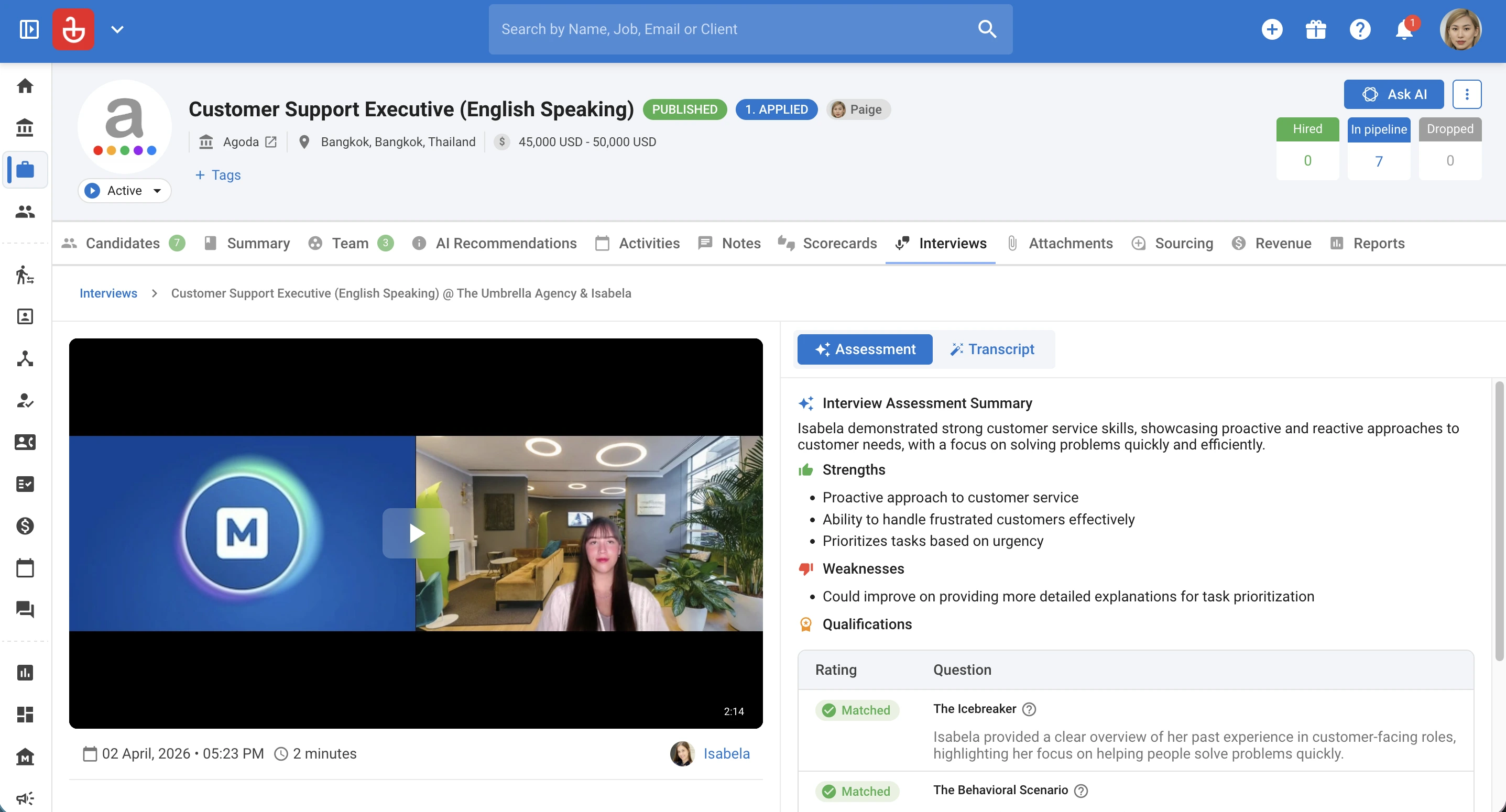
Long interview processes drain candidate interest and slow hiring momentum. To keep the signal high without adding unnecessary layers, structure your workflow into a strict three-stage recruitment pipeline. Automate stage transitions, standardize feedback, and use Manatal’s AI Interviewer to generate job-specific interview questions and scorecards that keep the process consistent and moving.
A simple structure works best when each stage has a clear purpose:
- Stage 1: 30-Minute Screen: Confirm baseline qualifications, motivation, and role fit. Use this interview questions template to keep the discussion structured and consistent.
- Stage 2: Technical or Role Assessment: Run a 60- to 90-minute live evaluation that reflects the actual job, such as coding for engineers or a mock discovery call for sales. Use this guide on implementing effective candidate assessments to choose methods that reveal real capability without creating unnecessary drag.
- Stage 3: 45-Minute Culture and Leadership Review: Confirm values alignment with hiring managers or client stakeholders. Use a collaboration workflow to centralize feedback and avoid scattered decision-making.
Strategy 2: Screen for SaaS DNA, Not Just Technical Credentials

A strong resume does not always translate into SaaS success. For SaaS recruitment, use Sourcing Hub to search beyond your immediate network and surface candidates who fit the pace and demands of a SaaS environment. With access to over 700 million profiles, you can narrow searches by skills, location, and background to build a stronger starting pool for SaaS recruitment.
To screen for agility, look for evidence that the candidate can operate in fast-moving, ambiguous environments:
- Diverse Evaluation Methods: Move beyond resumes by using different recruitment assessment methods, such as GitHub review for engineers or scenario-based exercises for commercial roles.
- Data-Driven Shortlisting: Use Manatal’s AI Candidate Profile Enrichment to surface publicly available social profile signals and validate a candidate’s current role, company details, and verified accounts before moving them forward in the pipeline. The feature only shows matches at 70%+ confidence, so it works best as a shortlisting aid rather than a standalone decision-maker.
Strategy 3: Build Role-Specific Pipelines
SaaS recruitment works better when each role follows its own workflow. Go-to-market and engineering positions usually call for different signals, assessments, and decision criteria.
- GTM Talent (AEs, CSMs): Prioritize hard metrics over general experience. Ask for quota attainment, retention outcomes, expansion results, or time-to-value improvements. Source through specialized integrations and relevant communities where commercial operators spend time.
- Technical Talent (Engineering, Product): Focus on scalability, shipping velocity, and problem-solving depth. Review project complexity, system ownership, and product delivery experience. Use social media enrichment to validate technical depth and surface relevant public signals.
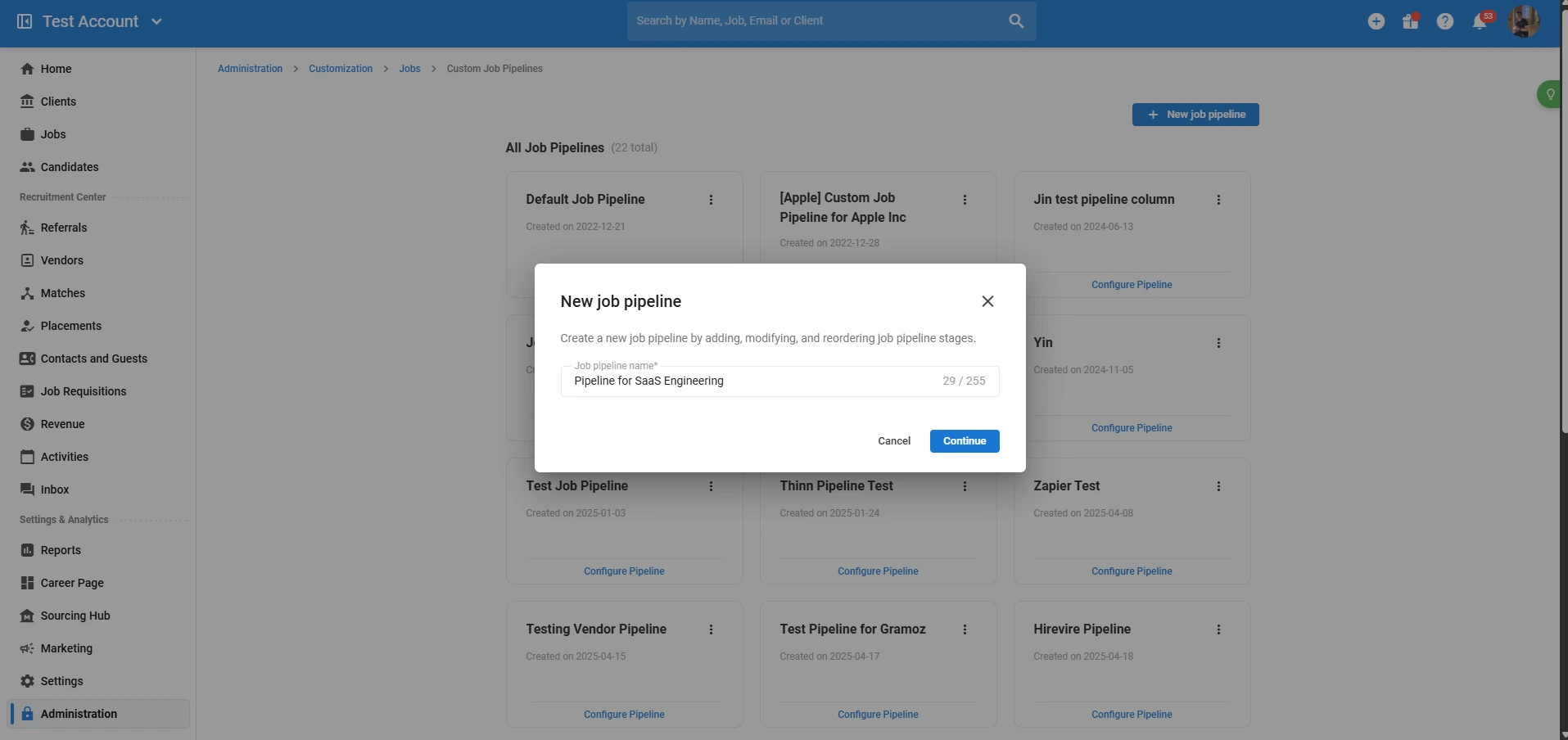
In Manatal, separate job pipelines for each department or client help keep the hiring process aligned with the role itself.
{{cta}}
Strategy 4: Train Recruiters to Sell Equity and Vision
Top candidates compare more than base salary. They compare upside, trajectory, leadership, and the quality of the problem they will solve. If recruiters cannot explain equity and growth clearly, the company will lose candidates to larger brands with louder compensation packages.
Build a simple “Equity and Growth Playbook” so your team can present the opportunity in a consistent way:
- Financial Transparency: Create a Candidate Investor Deck in Notion that explains runway, ARR growth, and the company’s current stage in plain language. Use tools like Visible.vc or Abacum to pull in real-time metrics where appropriate.
- Trajectory-Led Selling: Show how the business has grown, what happens if that growth continues, and why joining now creates more upside than waiting. Keep the explanation practical, not speculative.
- Strategic Market Timing: Draft a Mission Memo using the Amazon Working Backwards framework. Define the market gap, the company’s advantage, and the specific role the candidate would play in the next phase of growth.
Strategy 5: Use Product Details to Strengthen Job Descriptions and Outreach
Strong candidates evaluate the work, not just the title. That means job descriptions need to read like a real blueprint for the role. Name the exact stack, the operating environment, and the first six months of work so candidates can quickly decide whether the opportunity fits.
Use this structure to make the role tangible:
- Tech Stack Specificity: List the actual tools, frameworks, and platforms the team uses.
- Operational Transparency: Explain how decisions are made and whether engineers or product teams interact directly with customers.
- Problem-First Roadmap: Replace vague language like “build scalable services” with concrete work such as “extract the billing service from our monolith.”
Apply the same logic to outbound sourcing on LinkedIn or GitHub. Messages that lead with a real technical challenge or product problem are usually stronger than messages that begin with a generic job title. The goal is to help the candidate evaluate the work, not just the company.
- Hook with Complexity: Open with the problem the team is solving.
- Contextual Outreach: Frame the message around the challenge and the expertise needed to solve it.
- Decision-Ready Data: Include enough stack and scope detail for the candidate to assess the opportunity immediately.
Strategy 6: Replace Degree Requirements with Role-Based Assessments
Once you have the right candidate pool, use practical assessments to surface high-capacity talent that may not have followed a traditional path. In SaaS hiring, actual performance is usually a better predictor than educational background. Early-stage, asynchronous assessments can widen the pool and give you a more reliable signal before the second interview.
Use role-specific filters that reflect the actual job:
- Engineering: A 90-minute take-home task based on real work, such as an API integration, evaluated for clarity and error handling.
- Sales: A 20-minute mock discovery call based on a brief shared in advance to test qualification, structure, and objection handling.
- Customer Success: A written case study that diagnoses engagement decline and outlines a 90-day response plan.
Strategy 7: Source Where SaaS Talent Actually Spends Time
Generic job boards are useful for volume, but they are rarely the best source of high-signal SaaS candidates. Passive talent tends to spend time in niche communities built around craft, learning, and peer exchange. Those spaces often produce better conversations than cold outreach alone.
Prioritize channels where practitioners are already active:
- Engineering: Search GitHub for contributors in relevant open-source projects or review Stack Overflow histories to identify specific expertise.
- Go-To-Market: Build presence in communities like RevGenius or Pavilion before reaching out directly.
- Product: Source from Slack groups, Product Hunt, or newsletters and communities where product professionals actively discuss shipping, discovery, and strategy.
Use Boolean searches on LinkedIn as a starting point, not the entire sourcing strategy. The best outreach usually references a specific contribution, discussion, or project rather than a generic title pitch.
Strategy 8: Use Recruitment Technology That Matches Your Hiring Complexity
For SaaS recruitment at scale, manual admin slows recruiters down and creates avoidable friction in the hiring process. A modern recruitment stack reduces that load and gives hiring teams more time for candidate engagement, qualification, and decision-making.
A strong SaaS hiring workflow should include:
- Automated Parsing and Scoring: Rank applications against role requirements so top matches surface early.
- Profile Enrichment: Pull public data to infer adjacent skills and fill in gaps in the candidate profile.
- Candidate Rediscovery: Revisit strong candidates from previous searches instead of starting over every time.
- Communication Automation: Trigger updates, reminders, and next-step messages automatically to reduce drop-off.
Tagging strong final-round candidates for future follow-up keeps your pipeline warm and reduces the need to restart sourcing from zero. This turns recruitment into a repeatable system instead of a manual task list.
Conclusion
SaaS recruitment works best when it runs as a system, not a series of disconnected interviews. Speed-to-offer improves when the process is built around role-specific pipelines, practical scorecards, and recruiters who can explain the opportunity clearly. The highest-friction problems usually show up first in slow interview loops, generic sourcing, or vague job descriptions. Fix those first.
From there, niche community sourcing, structured assessments, and transparent role design make it easier to attract and close candidates who can actually operate in a SaaS environment. Manatal’s 14-day free trial gives teams immediate access to AI ranking, enrichment, rediscovery, and automation features that support that workflow.
Frequently Asked Questions
Q: How can SaaS recruitment teams shorten the hiring process without lowering quality?
A: Use a three-stage process: a short screen, a role-specific assessment, and a final culture or leadership review. In SaaS recruitment, speed improves when each stage has a clear purpose. Manatal’s AI Interviewer supports asynchronous video screening, while custom job pipeline stages keep the workflow structured.
Q: What should recruiters look for in SaaS recruitment when screening candidates?
A: In SaaS recruitment, focus on ownership, adaptability, and the ability to operate in fast-moving environments. Past experience in SaaS helps, but evidence of execution and problem-solving is more reliable.
Q: How does Manatal support SaaS recruitment sourcing efforts?
A: For SaaS recruitment, use Sourcing Hub to search beyond your existing network. It provides access to over 700 million candidates and allows filtering by skills and location to build a targeted pipeline.
Q: How can SaaS recruitment teams validate candidates faster before moving them forward?
A: In SaaS recruitment, speed matters at the top of the funnel. Use AI Candidate Profile Enrichment to pull public social profile signals into the candidate profile. This helps confirm current role, company details, and verified accounts before progressing candidates.
Q: Why should SaaS recruitment pipelines differ between GTM and engineering roles?
A: SaaS recruitment requires role-specific evaluation. GTM roles rely on revenue and retention metrics, while engineering roles depend on technical depth and delivery. Manatal’s custom job pipeline stages allow teams to tailor workflows accordingly.
.webp)







.webp)

.webp)


.webp)


