


Standard hiring workflows break at volume. An ATS built for 30 hires a month becomes a liability when 1,200 applications hit in 72 hours. Most teams respond by doing more of what they already do. That is the wrong answer. This guide covers the operational mechanics of mass hiring strategies for recruiters managing 200 to 1,000+ hires in a compressed timeframe.
Why Do Recruiters Need Mass Hiring Strategies?
Mass recruitment means filling a high number of roles within a compressed timeframe. Efficiency in mass recruitment isn't about working faster. It's about redesigning the process so that scale doesn't require a proportional increase in your recruiting team's headcount.
The technology to run a 500-hire campaign with a three-person recruiting team exists today. The question is whether your current process is built to use it. If it isn't, fix that first.
Mass Hiring Strategies for Operational Velocity
1. The Pre-Work: Standardization Before Sourcing
Before you post a single job ad or run a single Boolean search, you need to define your knockout criteria. A knockout criterion is a non-negotiable requirement that automatically disqualifies a candidate. For example, if the position requires working weekends, candidates who reply "no” in the screener are out. It is about protecting your team's time. If you receive 1,000 applications and 40% fail a basic requirement, you've just saved 400 manual reviews.
{{cta}}
2. Source at Scale
Posting to a single job board with a spray-and-pray mindset is a losing strategy in mass hiring. Successful operations use programmatic job advertising, which manages your budget across hundreds of job sites simultaneously and reallocates ad spend to platforms that deliver the most qualified candidates.
3. Kill the Screening Bottleneck
This is the part that kills most high-volume hiring campaigns. One thousand applicants means one thousand resumes to evaluate. At four minutes per resume, that is 67 hours of reading. Per recruiter. For one role. That is nearly a full work week spent on a single task that produces no hires.
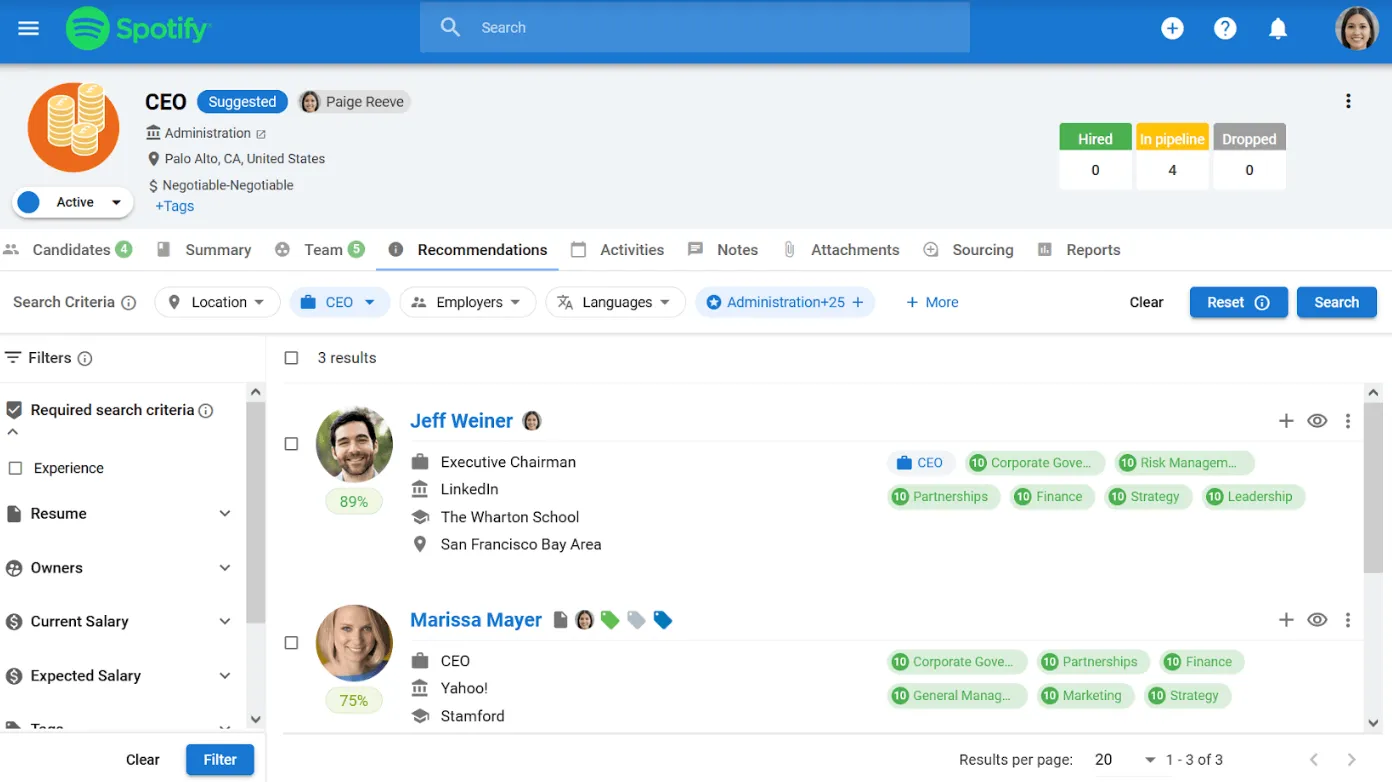
ATS platforms like Manatal address this through AI-recommended candidate scoring. The system parses every resume as it arrives and assigns a numerical score based on your job description criteria. You do not open every PDF. You log in and see the top 10% has already surfaced. From there, you use bulk actions. Select the top 50 candidates. Trigger a mass invitation to a screening call or pre-recorded assessment. Move in one action
4. Large-Scale Interview Process
Individual hour-long interviews are the primary cause of hiring delays in high-volume operations. They do not scale, and running them at volume is a structural mistake.
Transition to Asynchronous Video Interviews (AVI) or Group Assessment Days. With AVIs, candidates record their answers to preset questions at their own pace. A recruiter reviews a five-minute recording in under 60 seconds. That ratio means vetting 50 people in the time it previously took to interview five.
Manatal provides an AI-interviewer-powered asynchronous video interview (AVI) feature designed to streamline the early-stage screening process.
.webp)
5. The Four-Week Campaign Timeline
Efficiency in mass recruitment is measured by pipeline velocity. Treat each intake cycle as a sprint with defined outputs, not an open-ended process.
Most HR leaders fail this model because they prioritize candidate experience through manual touches that actually slow the process, leading to increased candidate drop-off as timelines stretch. A fast "no" is better than a slow "maybe." Candidates who are genuinely interested in the role will tolerate an efficient process. Candidates who disappear after a two-week delay were never going to sign the offer anyway.
Conclusion
The quality of mass hiring strategies will become a competitive differentiator faster than most organizations expect. As labor markets tighten in high-demand sectors, the companies that can move a candidate from application to offer in 8 days rather than 22 will win the talent. The ones still doing individual resume reviews and one-at-a-time interview scheduling will lose candidates to competitors who have automated the friction out of their funnel.
The technologies to run a 500-hire campaign with a three-person recruiting team exist today. The question is whether your current operations are designed to leverage them efficiently. If that isn’t the case, fix it first.
Frequently Asked Questions
Q: What are mass hiring strategies?
A: Mass hiring strategies are structured approaches and scalable processes used to recruit large numbers of candidates quickly, often for rapid expansion, seasonal demand, or new project launches.
Q: When should a company use mass hiring strategies?
A: Organizations typically use mass hiring strategies during business expansion, country launches, launching new products, handling seasonal peaks, or fulfilling large project-based staffing needs.
Q: What tools are commonly used in mass hiring strategies?
A: Common tools include Applicant Tracking Systems (ATS), AI-powered resume screening, recruitment automation software, online assessment platforms, and bulk communication tools to manage high candidate volumes efficiently.
Q: How can companies maintain quality during mass hiring?
A: Quality can be maintained by defining clear job criteria, using structured screening methods, implementing standardized assessments, and leveraging data analytics to evaluate candidate performance and fit.
Q: What are the main challenges of mass hiring strategies?
A: Key challenges include managing high application volumes, maintaining candidate experience, ensuring consistent evaluation, reducing time-to-hire, and preventing recruiter burnout.
.webp)







.webp)

.webp)


.webp)


