





According to Capterra’s 2025 HR Software Trends report, 44% of HR leaders identify hiring skilled professionals as one of their top HR challenges.[1] Early automation handled basic data entry, but it was not built to scale complex sourcing or multi-stage candidate screening, leaving talent acquisition teams with high-volume administrative bottlenecks. Deploying agentic AI in HR can reduce this issue by replacing rigid, task-based tools with more flexible workflows that support candidate discovery and evaluation. This guide highlights selected tools for talent discovery and includes a health check to help keep your system accurate.
Agentic AI Tools for Recruitment
The tools below are grouped by primary function so you can match each tool to the specific stage of your hiring pipeline that needs the most help.
AI-Powered Screening and Interviewing Tools
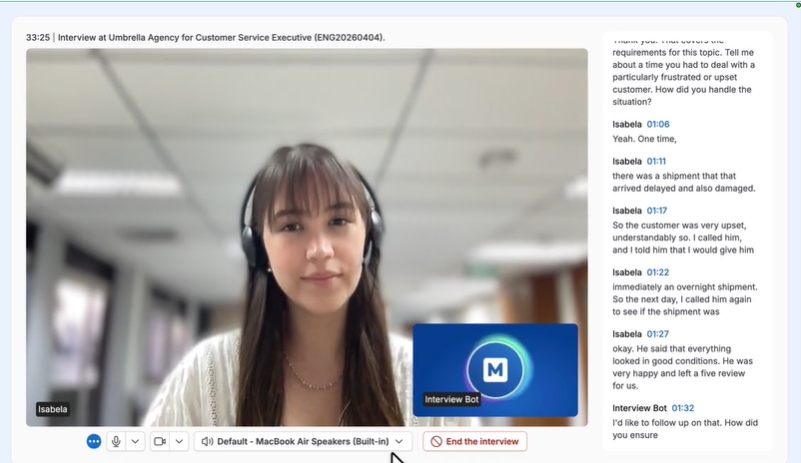
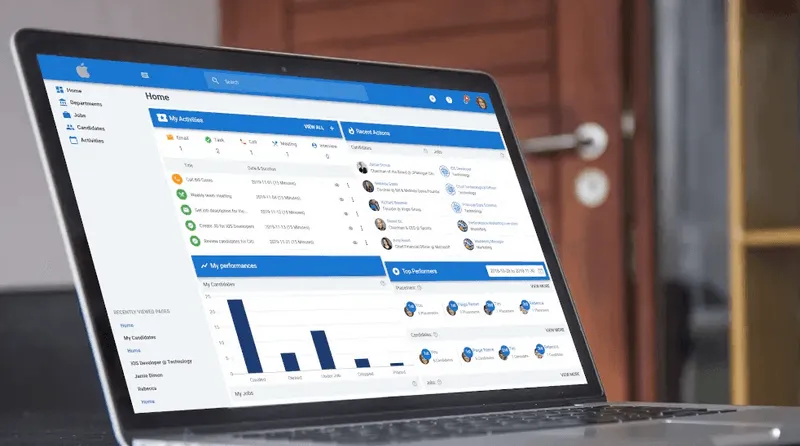
Manatal AI Interviewer allows users to deploy autonomous, structured screening interviews across multiple languages. Users can collect text or voice responses from candidates at any time, after which the system automatically scores and ranks these responses against specific job requirements to highlight top matches.
Pricing: Included with Manatal plans starting at $15/user/month (Professional). 14-day free trial available.
AI Sourcing and Talent Intelligence Tools
Manatal MCP Server allows users to connect their live applicant tracking database directly to external AI platforms like ChatGPT, Claude, and Gemini. Users can query their candidate pipeline using natural language, summarize candidate profiles, and create or manage notes from their preferred AI interface without switching platforms.
Pricing: The MCP Server is currently available to Enterprise Plus users at no additional cost; Professional and Enterprise users need to upgrade.
{{cta}}
Eightfold Talent Intelligence
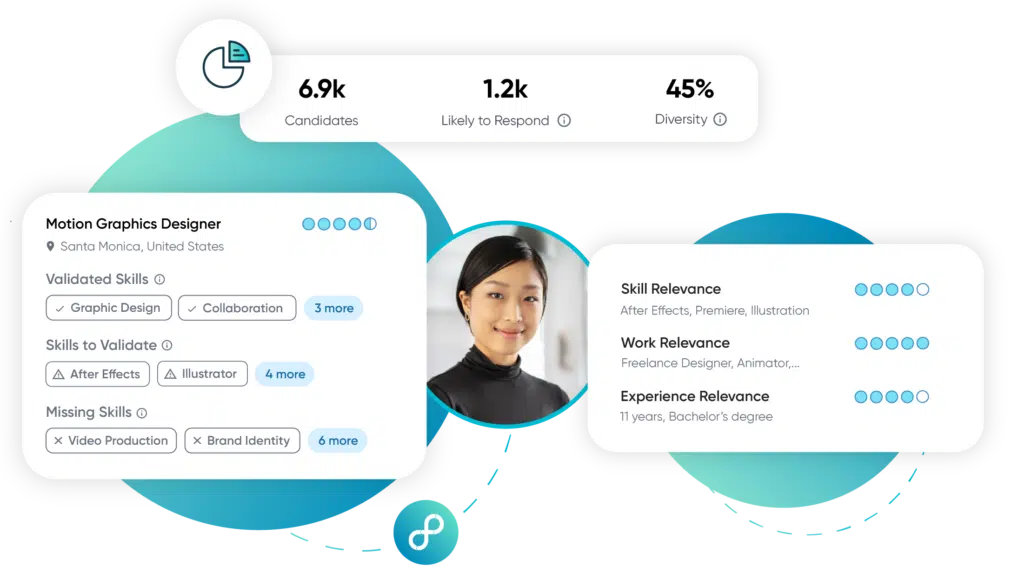
The platform matches internal and external candidates to open roles based on assessed skills and career trajectories instead of strict keyword matching. It maps workforce capabilities to organize internal mobility, anonymizes demographic profile data to limit screening bias, and benchmarks existing talent pipelines against current market availability.
Pricing: Contact their sales representatives.
End-to-End Recruitment Platforms
Phenom

This platform deploys Phenom X+ AI Agents to automate multi-stage recruitment pipelines. These autonomous digital workers, including the Sourcing Agent, Candidate Concierge Agent, and Scheduling Agent, interact directly with candidates to provide application status updates, coordinate interviews, and score applicant suitability while reducing manual administrative inputs.
Pricing: Phenom directs buyers to request pricing.
Conversational AI and Candidate Engagement Tools
Humanly
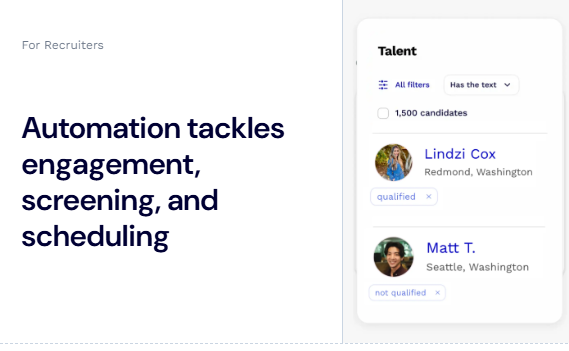
Humanly handles high-volume inbound pipelines by routing initial applicant screening and interview coordination through a conversational AI chat agent over SMS and web channels. For subsequent evaluation stages, the platform utilizes Humanly Voice, an AI interview assistant that records live virtual meetings, generates structured summary notes, and tracks dialogue metrics to support standardized candidate evaluation.
Pricing: Sign up for a demo call.
SeekOut
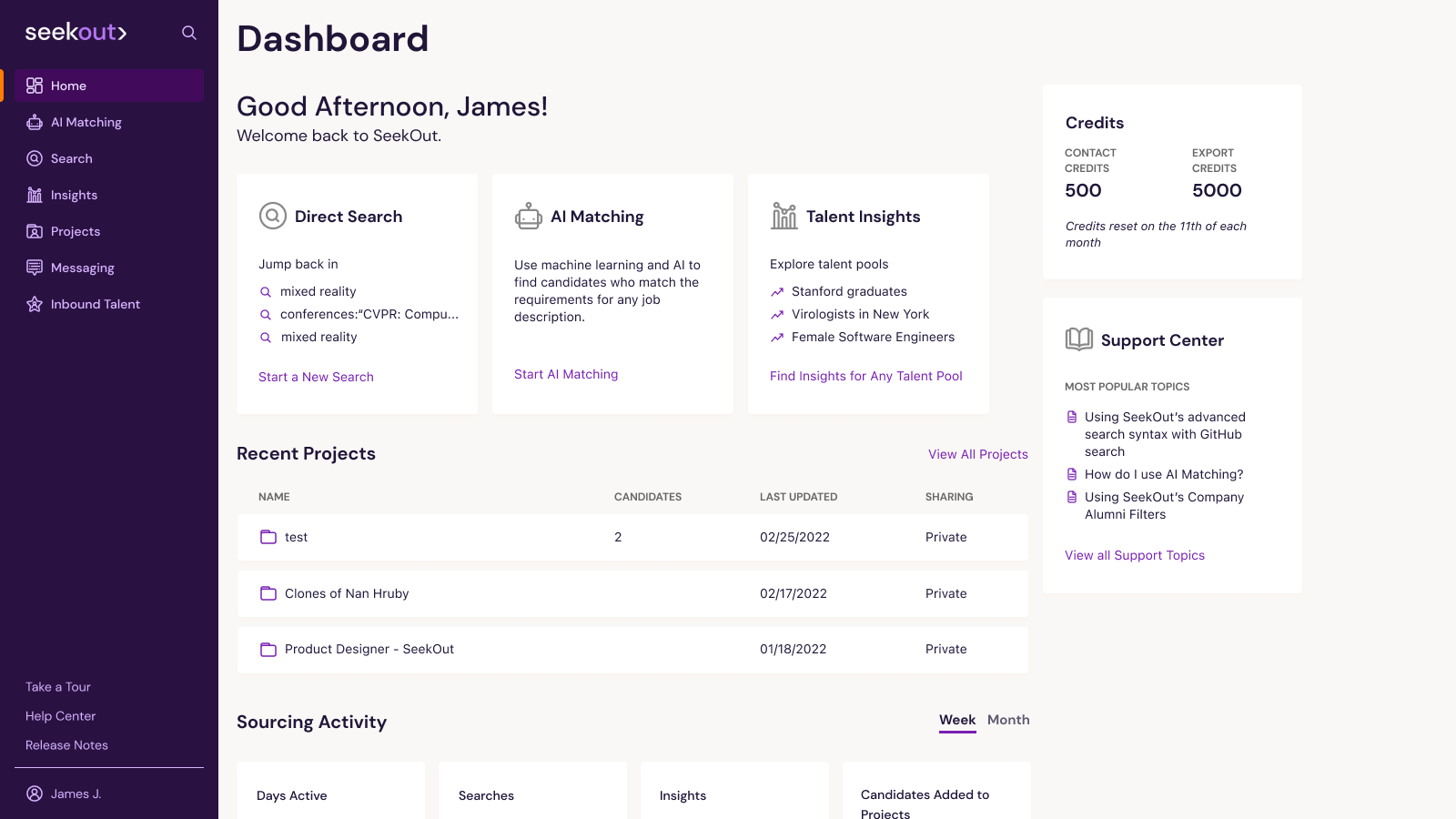
SeekOut accesses an aggregated database of public records using the SeekOut Spot agentic framework. This architecture coordinates six specialized AI agents, including the Rubric Creator, Candidate Finder, Profile Analyst, and Outreach Author, to construct structured evaluation criteria, scan public and applicant tracking system (ATS) data, analyze specific developer signals for technical candidates, and execute targeted email outreach campaigns.
Pricing: SeekOut Recruit starts at $833/month.
The Recruiter’s Agentic AI Health Check
When you deploy autonomous AI, your role shifts from hands-on recruiter to AI manager. Use this checklist to monitor your agentic tools and ensure they are functioning exactly as intended.
1. Verify Human-in-the-Loop Stop Points
- The Goal: Ensure the AI doesn't overstep its boundaries.
- What to check: Test the exact moments your agent is supposed to hand off to a human. It can handle sourcing, screening, and scheduling, but a human should review high-stakes steps such as culture assessment and final offer decisions.
2. Run Weekly Communication and Data Audits
- The Goal: Catch data hygiene issues before they scale.
- What to check: Review a random sample of agent-generated candidate emails and ATS updates every week. If your job descriptions or internal data are outdated, the AI will confidently propagate those errors. Ensure its tone remains compliant, professional, and on-brand.
3. Spot-Check for Decision Drift
- The Goal: Keep the AI’s decision-making aligned with your hiring goals.
- What to check: Review the "why" behind recent candidate rejections. Unlike rigid automation, agentic systems can change behavior when prompts, tools, models, or workflows are updated. Make sure it hasn't drifted from your core skill criteria or accidentally introduced rogue biases that clash with your diversity initiatives.
4. Tighten API and Data-Access Guardrails
- The Goal: Prevent unauthorized data overwrites.
- What to check: Review the agent's system permissions. Implement strict, role-based access control. The agent needs to operate smoothly, but its ability to "write" or "edit" master data in your ATS/HRIS should be tightly restricted to its specific task domain.
5. Calculate Your "Fix-It" Ratio
- The Goal: Measure actual ROI and efficiency.
- What to check: Track how many hours your team spends correcting the AI's work. If recruiters are constantly rewriting AI emails or fixing broken schedules, the tool is failing. Use this metric to decide when to refine your system prompts or expand data connectivity via platforms like the Model Context Protocol (MCP).
Conclusion
Your role changes the moment you adopt agentic AI in HR. You transition from a manual recruiter to a systems supervisor who manages autonomous software. Because these agents execute tasks independently, your strategic direction is the only thing that keeps the technology aligned with corporate goals. Routine audits prevent errors and protect your brand reputation. Use these tools to expand your team's capacity, but always maintain the human oversight that guarantees true talent acquisition success.
Frequently Asked Questions
Q: What is agentic AI and how is it applied in HR?
A: Agentic AI refers to software systems that can plan, call tools, and execute multi-step workflows toward a goal with limited step-by-step human intervention. Unlike traditional rule-based automation, agentic systems are designed to handle more open-ended tasks and changing contexts. In human resources, this technology operates across the entire employee lifecycle to handle complex tasks like cross-referencing candidate data, managing personalized onboarding schedules, and resolving multi-tiered employee support requests. Connecting directly to your core applicant tracking systems and human capital management data allows these agents to eliminate repetitive administrative overhead and free teams to manage overall talent strategy rather than individual transactions.
Q: How can agentic AI improve recruitment processes in HR?
A: Agentic AI can reduce the operational bottlenecks associated with manual sourcing, resume screening, and interview coordination. Instead of requiring a recruiter to manually search databases and draft outreach emails, autonomous agents scan talent networks, identify ideal candidate profiles, and initiate personalized engagement sequences independently. In high-volume hiring environments, platforms like Manatal use this technology effectively through specialized AI interviewers that screen candidates globally around the clock and automatically score responses against specific role requirements. This automation can shorten time-to-hire and free recruiters to focus on later-stage interviews and closing candidates.
Q: What are the ethical considerations of using agentic AI in HR?
A: The primary ethical considerations of using agentic AI in HR revolve around algorithmic bias, data privacy, and a lack of procedural transparency. Because these autonomous models train on historical employment records, they can inadvertently learn and scale past systemic prejudices, leading to discriminatory outcomes in screening or performance evaluations. Additionally, continuous workforce monitoring and the collection of candidate data raise significant compliance issues under global regulations like the GDPR and the EU AI Act. Mitigating these risks requires organizations to establish a strict human-in-the-loop framework, implement routine bias audits, and choose transparent AI platforms that log the reasoning behind every automated decision.
Q: How does agentic AI impact employee performance management?
A: Agentic AI transforms performance management from a subjective, annualized review into a continuous, data-driven optimization process. These systems can integrate with workflow tools to analyze productivity metrics, track goal completion, and surface possible indicators of burnout or disengagement. Managers receive automatically generated performance summaries and tailored recommendations for career development paths, which removes personal bias from the evaluation process. While this setup ensures that high performers receive recognition and struggling employees get proactive coaching, organizations must ensure that the metrics tracked by the AI are transparently communicated to maintain workforce trust.
Q: Can agentic AI help in creating a more inclusive workplace?
A: Agentic AI can foster a more inclusive workplace by systematically removing human bias from the initial stages of talent acquisition and talent management. Configuring these autonomous agents with diversity guardrails can help blind candidate resumes, audit job descriptions for gendered language, and source talent based on verified skill adjacencies rather than pedigree or keyword overlap. Modern talent platforms leverage these capabilities to surface underrepresented passive candidates and identify internal mobility opportunities for existing employees who might otherwise be overlooked. However, the system only remains inclusive if human supervisors regularly audit the agent's decision-making patterns to confirm it has not drifted from equity goals.
Citation
.webp)






.webp)

.webp)


.webp)


