





If you're an HR director, a head of talent acquisition, or an agency owner, you've seen this play out: a promising candidate drops off because feedback took too long. A recruiter spends half their day copying data between systems. A compliance audit reveals gaps that no one caught because everything lived in spreadsheets. This guide is written for the people responsible for fixing that, not IT, not a consultant. You. It walks through why digital transformation in recruitment matters, which technologies actually move the needle, and most importantly, who on your team does what at each stage of the process.
What is Digital Transformation in Recruitment?
Digital transformation in recruitment deeply integrates digital technology throughout the hiring process, changing how organizations function and engage with candidates. Unlike mere digitization, which sometimes revolves around just converting a resume to a PDF, transformation uses AI to analyze and screen resumes against job requirements, identifying top talent. It's about using technology to enable intelligent actions and create new value in recruitment.
Why It Matters and What It's Costing You Right Now
Fragmented email threads, duplicate data entry, and manual compliance checks aren't just inconveniences; they slow down hiring, increase error rates, hurt the candidate experience, and create legal exposure. And in a tight talent market, slow hiring means losing candidates to competitors who move faster.
For leaders, digital transformation in recruitment offers clear advantages.
- Speed: Workflow automation cuts manual coordination and shortens time-to-hire, especially for high-volume or specialized roles.
- Quality: AI-assisted screening and structured evaluation criteria reduce inconsistency in early-stage decisions.
- Experience: Faster feedback, clearer communication, and transparent processes improve how candidates see your brand and how recruiters feel about their jobs.
- Cost: Consolidating tools reduces overlap and redundant effort, lowering cost-per-hire over time.
Key Tech For Recruitment Digital Transformation
A digital transformation investment can’t serve your goals unless you have the right tech stack. Below are some of the tools you should have in your stack in order to truly transform and upgrade your recruitment operations:
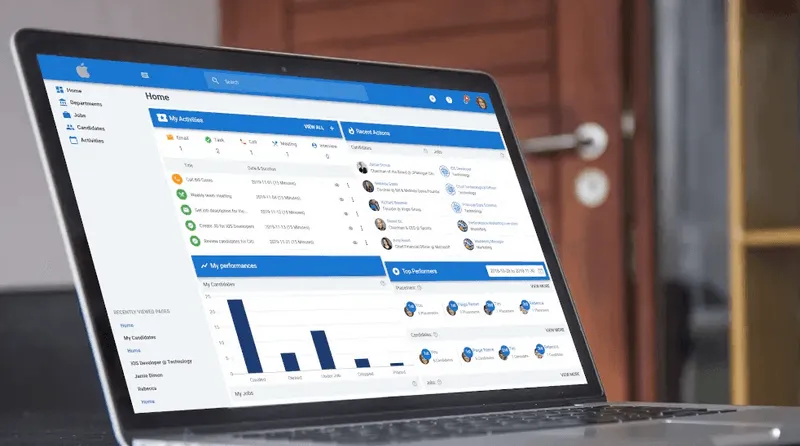
- Applicant Tracking System (ATS): The ATS functions as the platform of record for candidates, jobs, communications, and hiring decisions. You need to choose a comprehensive Applicant Tracking System (ATS) for your digital core. Manatal provides an all-in-one solution that uses its Manatal AI for candidate matching and automates data entry, replacing multiple tools. This approach avoids fragmented systems that stall progress.
{{cta}}
- AI and machine learning: AI is commonly applied to resume parsing, candidate matching, and ranking based on job requirements. In Manatal, for example, AI candidate enrichment enhances candidate profiles while AI recommendation surfaces relevant matches, helping recruiters focus on qualified applicants rather than manually filtering large volumes of resumes.
- Recruitment CRM: For recruitment agencies, Manatal's Recruitment CRM centralizes everything client-related, including lead and client management, email communication and collaboration, placement tracking, and revenue reporting. Instead of juggling spreadsheets and separate inboxes, agency owners get a single place to run the business side of recruiting.
- Pipeline automation and integrations: These replace repetitive tasks such as administrative data entry, status updates, and notifications. Native integrations ensure candidate data flows consistently between recruitment tools, communication platforms, and reporting systems.
Digital Readiness Checklist
Before building the roadmap, establish your baseline. Have your recruitment team answer these five questions honestly. Every 'yes' confirms that manual processes are costing you money. Every 'no' is a signal you are further along than you think or that this area is already automated.
Score yourself: if you answered 'yes' to three or more, your organization is operating with significant process debt. The five-step roadmap below is your remediation plan.
5 Steps to Execute Your Recruitment Digital Transformation
Embarking on a digital transformation journey for recruitment requires a structured approach. Below are the five steps recruitment leaders and digital transformation professionals can execute:
Step 1: Build a Friction Log (The Audit)
Most audits fail because you ask recruiters to complain in a meeting, only for nothing to change. Instead, build a lightweight, always-on capture system that continuously flows data over 30 days.
At the end of the 30 days, you'll have a ranked backlog of your biggest bottlenecks, with estimated time costs attached. That's what drives the next step.
Step 2: Choose Your Tools Based on the Data (Tech Selection)
Your friction log identified your biggest problems. Now use those pain points as the primary filter when evaluating new tools.
Step 3: Set Up an Auto-Purge (Data Migration)
Do not migrate your old data as-is. Stale records in a new system produce stale results. Build a self-cleaning filter first so only relevant candidates reach the next stage.
Step 4: Manage Change, Not Just Technology
Technology alone doesn't transform a recruitment team. The most common reason digital transformation stalls isn't the tool. It's that recruiters weren't involved in choosing it and don't trust it.
Involve your team in the evaluation process from Step 2 onward. Run hands-on pilots before full rollout. Create a short internal guide to new workflows so questions don't bottleneck to the same person. And communicate clearly: what's changing, when, and what's in it for them.
Step 5: Measure, Then Optimize
Once your new stack is live, define the metrics that matter: time-to-fill, time-to-hire, cost-per-hire, offer acceptance rate, and source quality. Review them on a set cadence, at least once a month. The point of a modern ATS is that you can pull these reports directly, without exporting to Excel. If a number isn't moving, trace it back. Is the bottleneck in screening? Scheduling? Offer turnaround? The data tells you where to look next.
Overcoming Common Challenges
Challenge 1: Resistance to Change
Many recruiters are accustomed to traditional, manual processes, which can lead to resistance when new technologies are introduced.
Solution: To address this, initiate clear communication that highlights the benefits of digital transformation. Actively involve the recruitment team in both the technology selection and implementation phases to foster ownership and acceptance. Furthermore, offer comprehensive training and robust support to ease the transition and encourage adoption of new tools.
Challenge 2: Data Privacy Concerns
With stringent regulations such as GDPR and CCPA, data privacy is a critical issue that can create apprehension about adopting new technologies.
Solution: Ensure that any chosen technologies and processes comply with these regulations. This involves not only selecting vendors who prioritize data privacy but also reinforcing internal policies to maintain compliance and protect candidate information.
Challenge 3: Ecosystem Fatigue
Recruitment teams often experience "integration fatigue" from managing multiple, disparate platforms and systems, leading to inefficiency and frustration.
Solution: To mitigate this challenge, prioritize selecting integrated solutions or API-friendly ones. Comprehensive applicant tracking systems can streamline processes and create a seamless, coherent technology ecosystem, reducing the complexities of managing disconnected systems and enhancing overall efficiency.
Conclusion
Digital transformation in recruitment isn't a one-time project. The technology keeps evolving, and so do the roles you're hiring for. But the foundation is the same: understand where your process breaks down, choose tools that solve the right problems, clean your data before you migrate it, bring your team along, and measure what actually matters.
Start with the readiness checklist. Run the friction log. Let the data tell you what to fix first.
Frequently Asked Questions (FAQs)
Q: What is the difference between digitization and digital transformation in recruitment?
A: Digitization is the process of converting physical or manual data into a digital format, such as scanning a paper resume into a PDF. Digital transformation is a deeper strategic shift in which technology, such as AI, is used to fundamentally change how you operate, for example, by using machine learning to automatically match candidates to job descriptions.
Q: How does digital transformation improve the candidate experience?
A: It eliminates communication gaps by automating feedback, providing clear status updates, and enabling seamless scheduling. This creates a transparent and professional process that respects the candidate's time and enhances the employer's brand.
Q: What is a "friction log," and why is it important?
A: A friction log is a tool used during the audit phase to identify specific bottlenecks in the hiring process. By having recruiters document exactly which tasks are repetitive or annoying, leadership can use data (often analyzed by AI) to prioritize which processes to automate first.
Q: Why is "change management" considered a crucial step in implementation?
A: Technology alone cannot transform a department; the team must adopt it. Change management involves clear communication of benefits, hands-on training, and the creation of searchable "wikis" or guides to help recruiters overcome the learning curve and reduce resistance to new workflows.
Q: How does a centralized ATS help with "integration fatigue"?
A: Integration fatigue happens when recruiters have to juggle too many disconnected tools. A comprehensive, API-first ATS serves as a single "operating system" that integrates with email, job boards, and CRMs, reducing the need for multiple logins and manual data syncing across platforms.
.webp)







.webp)

.webp)


.webp)


