

Recruitment has moved well beyond paper applications and manual hiring workflows. E-recruitment moves that entire process online, from the first job posting to the signed offer letter. This shift is reflected in the growing adoption of AI in recruiting. LinkedIn's 2025 The Future of Recruiting report found that 37% of recruiting organizations were actively integrating or experimenting with generative AI, up from 27% a year earlier. [1] This guide explains what e-recruitment is, where it helps, where it falls short, and how to set it up.
What Is E-Recruitment?
E-recruitment, also called online recruitment or digital recruiting, is the use of internet channels and software to source, screen, and hire candidates. It replaces manual, paper-based steps with digital ones across the whole hiring funnel.
Most e-recruitment setups combine five elements:
- Online job postings on job boards and career sites
- Digital applications submitted through online forms
- An applicant tracking system (ATS) that stores and organizes candidates
- Virtual interviews over video
- Automated or AI-assisted screening and matching
E-Recruitment vs. Traditional Recruitment
Types and Methods of E-Recruitment
E-recruitment covers several methods, and most teams use a few together:
- Job boards such as Indeed and LinkedIn for posting roles and collecting applications
- Company career pages where candidates apply directly through the organization's website
- Social media recruiting and sourcing through professional networks like LinkedIn
- ATS-driven sourcing that pulls applicants into one searchable database
- Video interviewing for remote first-round conversations
- Online assessments that test skills before the interview stage
- AI-resume screening that parses resumes and scores candidates against job requirements
How to Set Up E-Recruitment
Step 1: Set Up Your Online Front Door
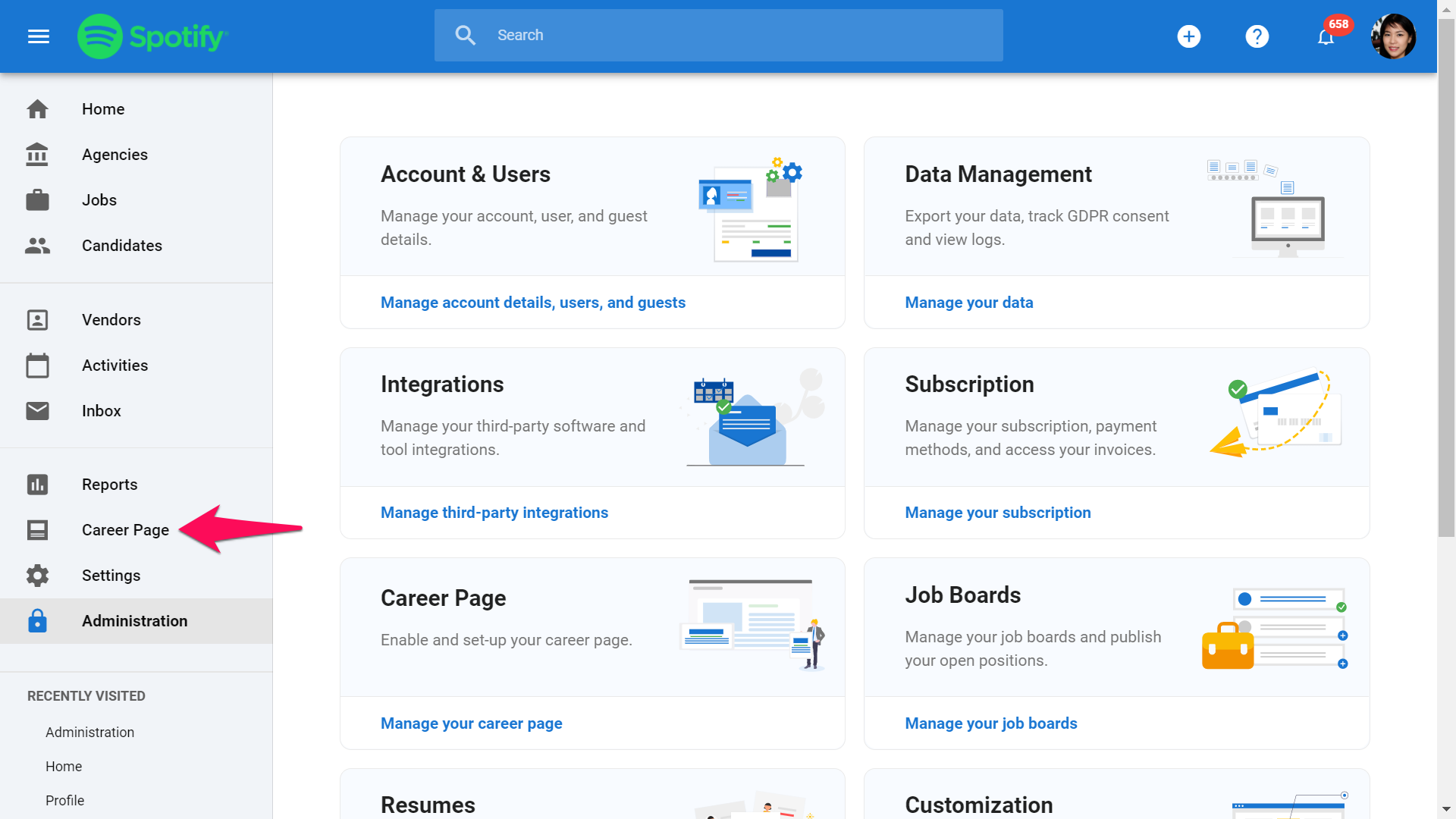
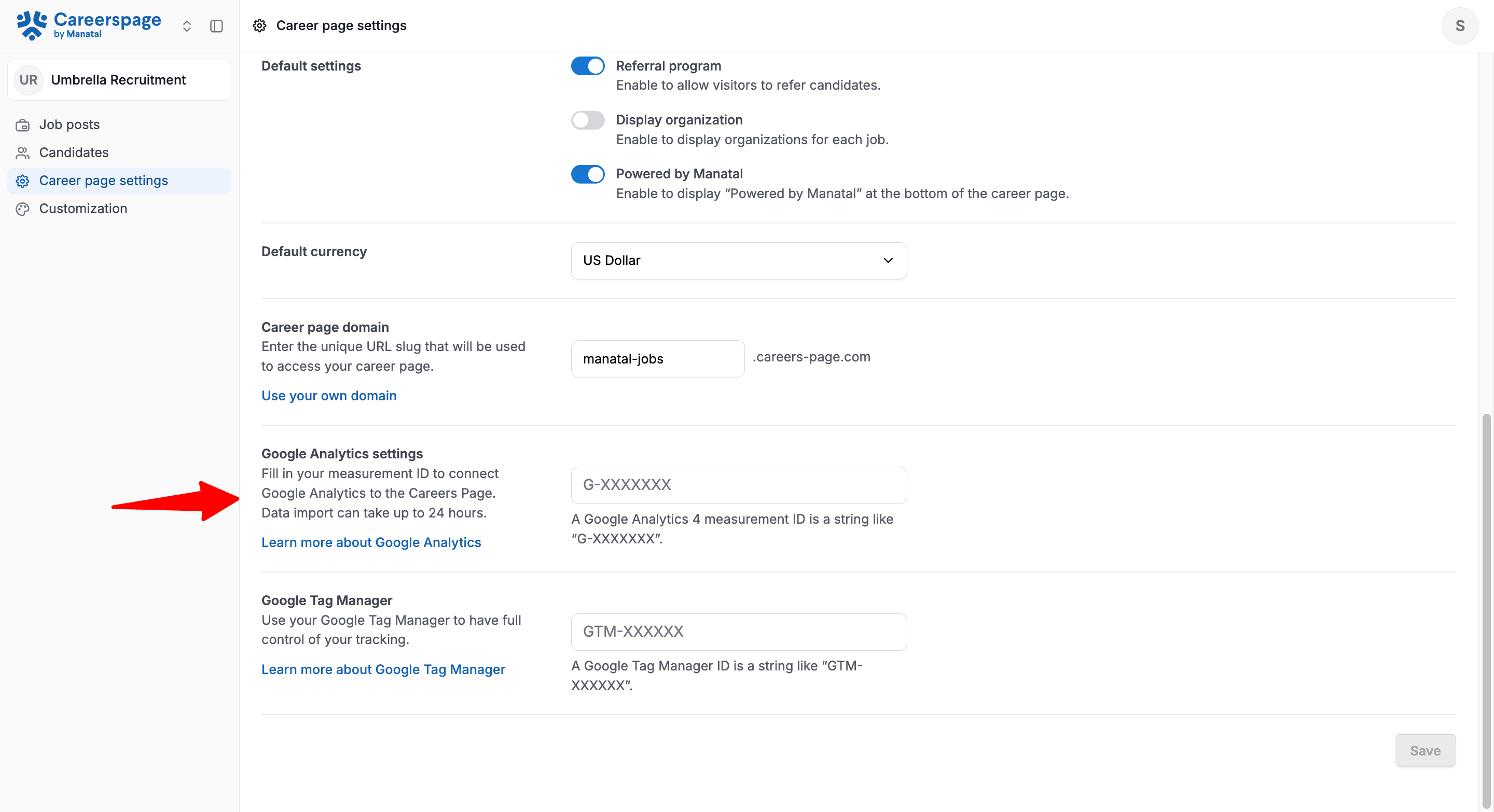
A centralized, branded career page builds candidate trust and ensures all application data lands directly in a structured database rather than being lost in chaotic email threads. Configure a branded career page using Manatal's Career Page settings. You can use a hosted career page or integrate it directly into your main company website.
- Activate Career Page: From the side menu, open Career Page, then select Career Page settings.
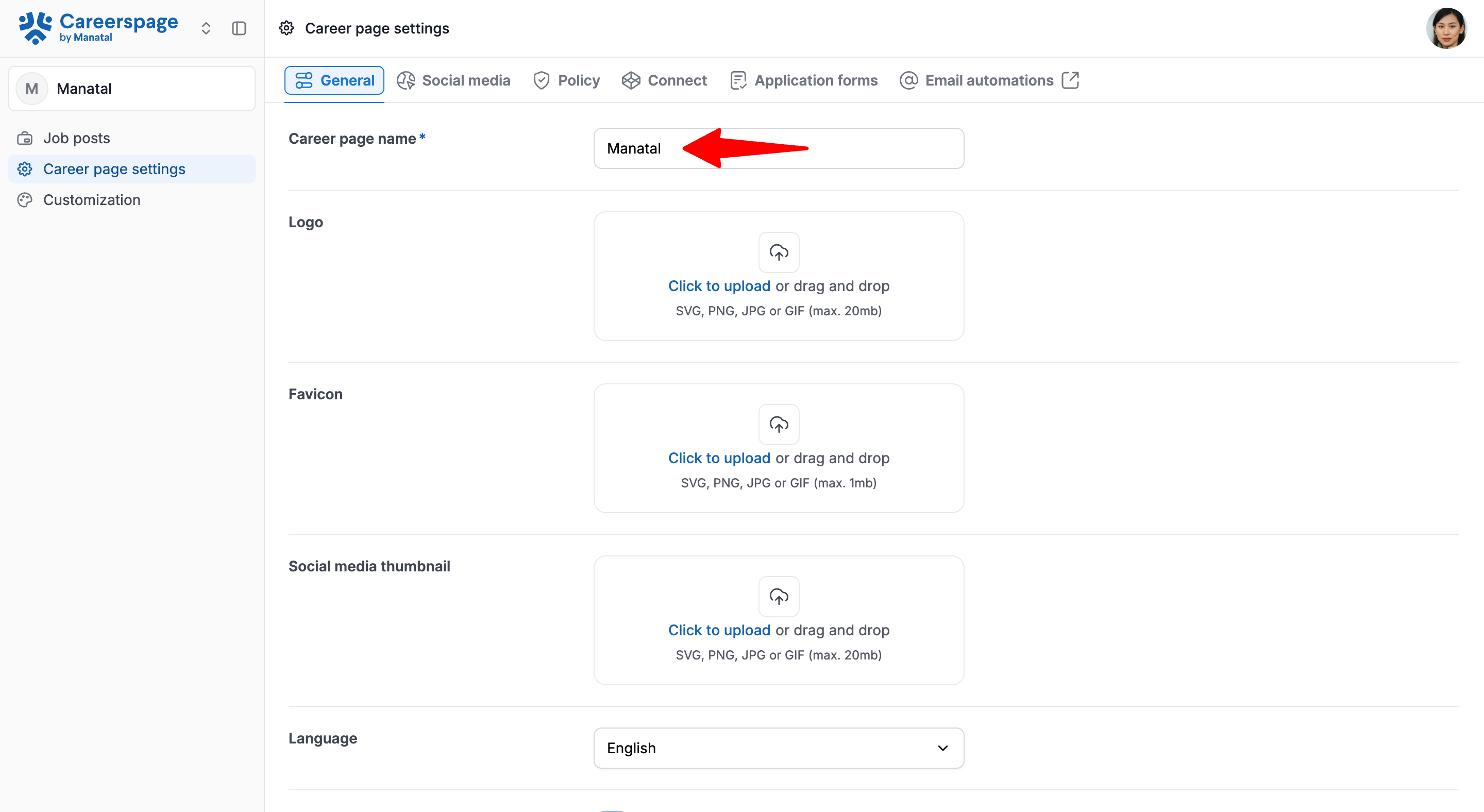
- General Settings: Enter your career page name, upload your logo (recommended 1:1, 3:2, or 1.91:1 ratio) and favicon, configure your domain, and select your default language and currency.
- Social & Contact Details: Add your contact information and social profiles, then enable social media sharing options.
- Policies: Publish your legal terms, conditions, and privacy disclosures.
- Analytics Integration (Optional): Link your Google Analytics (GA4) or Google Tag Manager (GTM) ID under the Connect tab to track conversion rates.
{{cta}}
Step 2: Publish Jobs to Digital Channels
Manually posting job ads site by site wastes valuable time and increases data entry errors across channels.
- How to do it: Use your ATS multiposting capability to push open positions to major global job boards and social networks simultaneously with a single click.
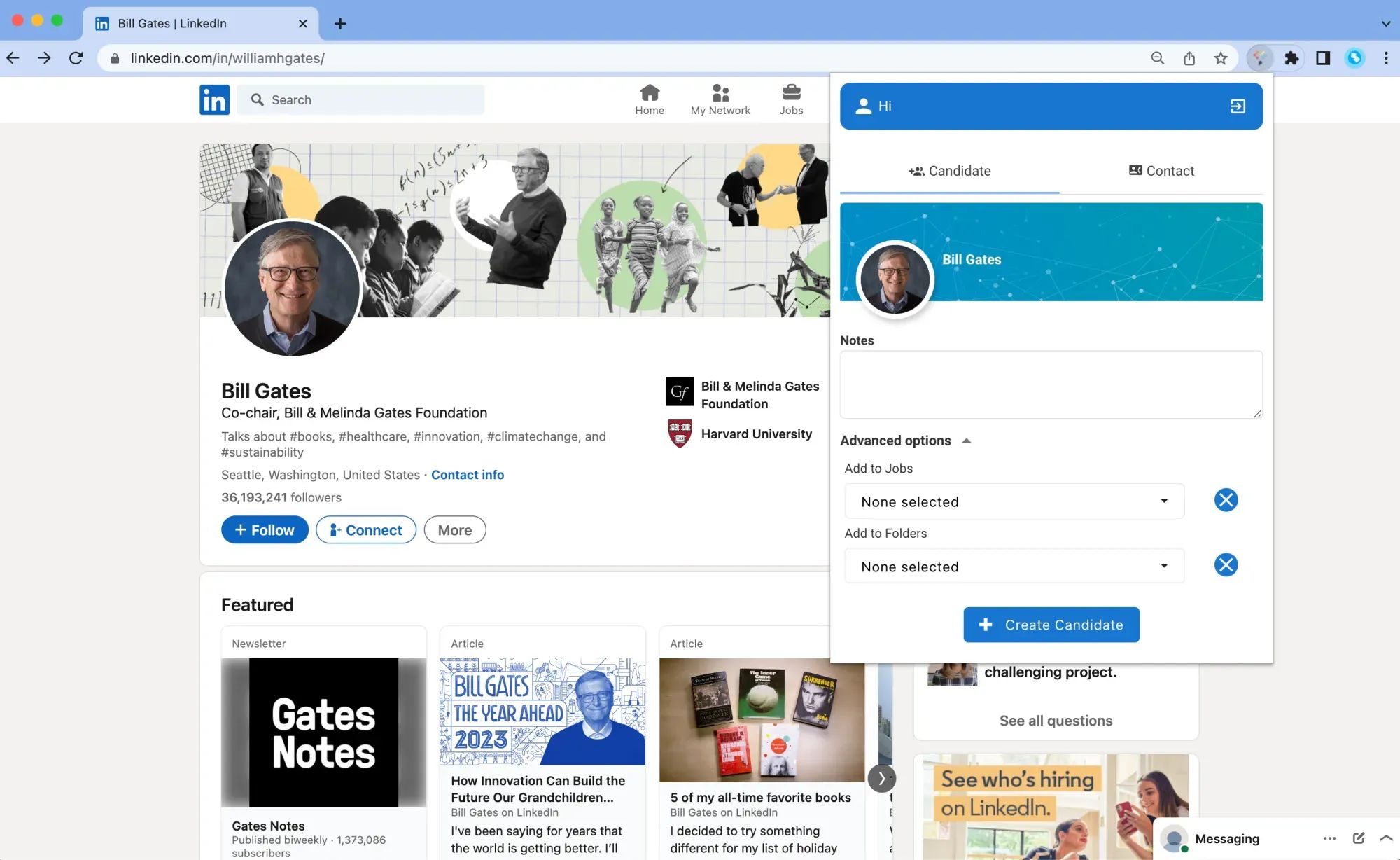
- Additionally, leverage Manatal's Candidate Sourcing feature (such as the Chrome Extension) to proactively discover potential talent across professional networks like LinkedIn, instantly import promising candidate profiles into your hiring pipeline, and automatically check for duplicates.
Step 3: Centralize Applications in One Database
Scattering candidate data across spreadsheets and personal email inboxes creates compliance risks and causes top talent to fall through the cracks. Route every applicant directly into a single ATS pipeline where candidate profiles are automatically created upon submission.
Step 4: Screen and Evaluate Candidates Digitally
Sorting through hundreds of resumes manually slows down time-to-hire and introduces unconscious bias early in the funnel.
- Leverage resume parsing to extract structured candidate information automatically.
- Use AI-assisted recommendations to compare candidates against defined job requirements before making manual shortlisting decisions.
- Send automated pre-employment skills assessments to validate technical capabilities prior to live meetings.
Step 5: Conduct Virtual Interviews
Virtual interviews eliminate scheduling friction and travel barriers, significantly reducing early-stage drop-off rates.
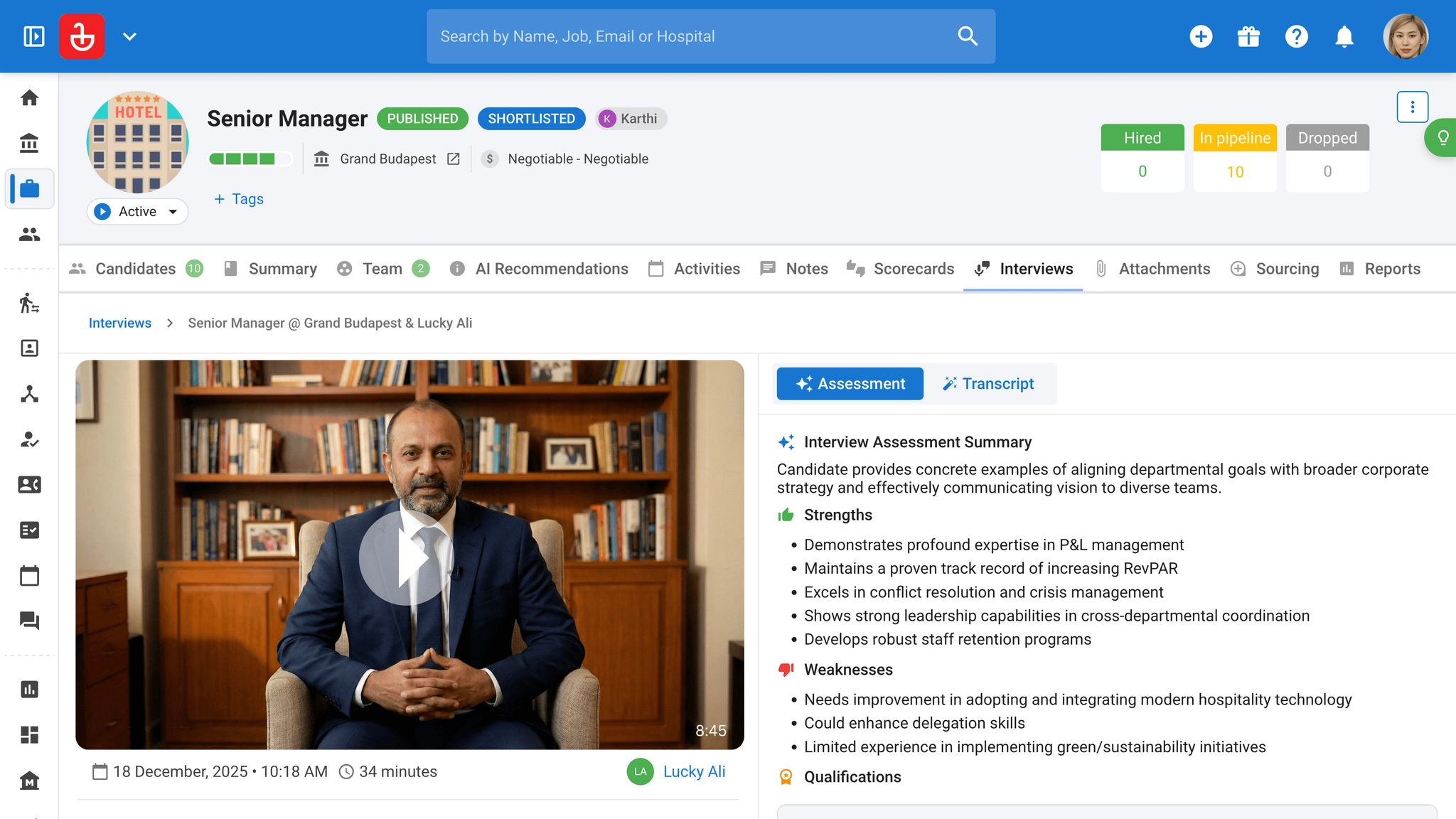
- Leverage advanced tools like Manatal AI Interviewer to conduct preliminary automated video screenings, allowing candidates to complete structured interviews on their own time while AI evaluates key competencies.
- Conduct live screening and panel rounds via integrated video conferencing solutions like Microsoft Teams or Zoom.
- Capture structured interview notes and standardized scorecards directly inside your central hiring platform for collaborative evaluation.
Step 6: Automate Candidate Communication
Candidate "ghosting" and poor communication are the leading drivers of applicant drop-off and negative brand perception. Configure automated status triggers in your platform to inform applicants immediately when they advance to a new stage or if a role has been filled.
Step 7: Send Offers and Transition New Hires Digitally
Paper-based offers delay acceptance and create unnecessary friction during the final hiring stage.
- Generate digital offer letters and dispatch them via secure e-signature services like DocuSign or PandaDoc.
- Once signed, seamlessly transition the new hire's profile from the recruitment platform into your primary HRIS or onboarding system.
Why Connected Recruitment Workflows Matter
Digitizing individual steps in isolation just moves the mess online. Jobs sit on one board, applications in an inbox, notes in a spreadsheet, and interviews on a calendar nobody shares.
The bigger payoff of e-recruitment comes from running the whole funnel as one connected workflow. Candidate data stays in a single system from first click to onboarding. Teams that adopt point tools without a hub often trade paper silos for digital ones.
Advantages Of E-Recruitment
The digital shift is now mainstream. According to SHRM's 2025 Talent Trends report, 43% of organizations reported using AI in HR tasks in 2025, up from 26% in 2024. [2] Investment in AI-enabled talent acquisition is also growing. AIHR, citing The Business Research Company, reports that the AI in the talent acquisition market is projected to reach $1.35 billion in 2025 and $2.67 billion by 2029. [3] e-recruitment improves hiring across several dimensions:
- Wider reach, since a single posting can appear on many job boards and social platforms at once
- Faster hiring, because automated routing and online scheduling cut manual steps
- Lower cost, thanks to free and low-cost digital channels
- Centralized data, with every applicant and resume in one searchable system
- Stronger employer brand: through a branded career site, candidates recognize
Conclusion
E-recruitment works best when digital tools support a connected hiring workflow rather than operating as isolated systems. Start by defining how candidates will discover roles, apply, move through screening and interviews, receive updates, and complete the offer process. An ATS like Manatal can serve as the central system for candidate data, while job boards, career pages, assessments, interview tools, and automation can support specific stages of the process. Human review should remain part of important screening and hiring decisions, particularly when AI is used.
Start a 14-day free trial today.
Frequently Asked Questions
Q: What is e-recruitment in HRM?
A: In HRM, e-recruitment is the digital layer of talent acquisition. HR teams post roles online, collect applications digitally, and track candidates in an ATS such as Manatal. Screening and interviews happen online instead of on paper.
Q: What is an example of e-recruitment?
A: A common example is posting a job to Indeed and LinkedIn from one ATS like Manatal, then collecting applications through a branded career page. From there, teams screen resumes with AI matching and run first-round interviews over video. Social recruiting, online skills tests, and automated status emails are all everyday e-recruitment.
Q: What are the disadvantages of e-recruitment?
A: The main drawbacks are a high volume of unqualified applications, a more impersonal experience, and the risk of biased automated screening. Handling candidate data online also adds privacy and compliance obligations. Clear job criteria, a human check on shortlists, and a secure system keep most of these manageable.
Q: Is e-recruitment the same as an Applicant Tracking System (ATS)?
A: No, e-recruitment is the whole online hiring approach, and an ATS is one tool inside it. The ATS acts as the hub that stores applications, parses resumes, and connects to job boards and career pages. Manatal is one example of an ATS used that way.
Q: How is AI used in e-recruitment?
A: AI mainly speeds up screening and matching. It parses resumes, scores candidates against job requirements, ranks shortlists, and drafts candidate messages. The repetitive sorting is automated so recruiters spend time on interviews and final decisions, which stay with a person.
Q: Do you need an e-recruitment agency or e-recruitment software?
A: They solve different problems. An agency recruits for you and charges a placement fee, while software gives your own team the tools to hire in-house. Most companies building a repeatable process choose software, since it keeps candidate data and hiring control inside the organization.
Citations: