





A 2026 analysis of talent market data indicates that approximately 70% of the global workforce consists of passive candidates, employed professionals who are not actively applying but remain open to the right opportunity. [1] Organizations relying solely on inbound applications are therefore competing for roughly the remaining 30% of active candidates. This guide covers the foundational components of an effective candidate sourcing strategy, a deployable planning framework, and 9 specific tactics with actionable steps recruiters can implement immediately.
What Goes Into a Candidate Sourcing Strategy?

A candidate sourcing strategy is more than a list of job boards or a LinkedIn search cadence. It’s a four-part system. If one piece is missing, your results will be inconsistent.
1. Goal Setting & Metrics
Set numeric baselines before launching any sourcing effort. "We want a 20% response rate on cold outreach within 30 days" is a measurable goal. Focus on:
- Time-to-Fill: How long the role stays open.
- Source of Hire: Which channels actually lead to a signed contract?
- Outreach Conversion Rate: The % of passive candidates who respond to your first message.
2. Budget and Resource Allocation
Stop renewing subscriptions out of habit. Audit your previous quarter's Source of Hire data and shift your budget toward the channels that actually converted.
Pro Tip: Manatal's Reports and Analytics provides a full recruitment metrics dashboard covering source tracking, pipeline conversion, and time-based KPIs. Teams can monitor sourcing channel performance in real time without building manual spreadsheet reports.
.webp)
{{cta}}
3. Recruitment Tools and Data Centralization
Your ATS and CRM must share data. A "near-miss" candidate from a year ago should automatically surface for a new role. Eliminate manual data entry to prevent the loss of high-quality leads.
Manatal's ATS and Recruitment CRM are built on a shared database, which means sourced candidates, past applicants, and active pipeline contacts are all searchable from a single interface. When a role reopens, previous near-miss candidates automatically surface.
4. Bias Reduction and Regulatory Compliance
Unconscious bias in early resume screening is well-documented. A 2024 NBER study (UC Berkeley & University of Chicago) sent over 83,000 fake applications to Fortune 500 firms and found white-sounding names received ~9.5% more callbacks than identical Black-sounding names. [2] Profile anonymization is one of the few proven interventions that measurably reduces this bias.
Apply redaction CV during initial review to remove identifying details before a recruiter evaluates the profile.
The Resource Rule: Candidate Sourcing Strategy Template
Before opening any sourcing tool, document the strategy using this four-part framework. Recruiter teams that skip documentation produce inconsistent results because each search is run differently, depending on who executes it.
- Context: Define the role, the team it sits within, the problem it solves, and the three non-negotiable skills the hire must have on day one. Not the skills you hope they develop in year two.
- Channels: List every channel you will use to source for this role and assign an owner to each. LinkedIn sourcing, internal database, university partners, referral request to hiring manager, niche community boards. Each channel needs a responsible person and a weekly check-in.
- Cadence: Map your outreach sequence. For passive candidates, a three-touch sequence spaced three to five days apart typically outperforms a single message. Define what each touch says and what action it requests.
- Conversion: Define what "success" looks like at each stage. Response to first message. Completion of a 20-minute discovery call. Advancement to a formal interview. Track these conversion points from the start so you know exactly where candidates are dropping off.
9 Candidate Sourcing Strategies to Supercharge Your Pipeline
1. Create Personas Built on Performance Data
The problem: Most hiring managers write job descriptions based on the role they imagine, not the role that actually exists. The result is a requirements list built on assumptions rather than evidence, which targets the wrong candidates from the start.
The tactic: Build personas from existing top-performer data. Talk to the three best people currently in the target role. Ask what skills they use daily, which prior experiences prepared them, and what made the first 90 days difficult. Cross-reference their work histories and look for patterns in where they came from, what credentials they actually use on the job, and what titles they held prior to joining.
Actionable steps:
- Identify two to three current top performers in the role.
- Conduct a 30-minute structured interview with each person using the same set of questions.
- Pull their LinkedIn histories and map common prior companies, titles, and tenure patterns.
- Build the persona from patterns in that data, not from the job description.
- Review and update the persona every six months as the role evolves.
Use this template as the starting format:
Build one persona per role. Do not create a single generic persona and apply it across three different positions.
2. Use an AI Candidate Database
The problem: Manual Boolean search on a single platform is slow and restricted. A recruiter spending two to three hours building a LinkedIn search typically produces a shortlist of 20 candidates, many of whom are inactive or already placed. The process also limits sourcing to a single talent pool, which means the same candidates repeatedly surface across competing companies running identical searches.
The tactic: Use an AI-powered candidate database that searches across a significantly larger pool and ranks matches automatically based on your job requirements. For outbound recruiting many sourcers also rely on a contact database like ZoomInfo to find verified emails and direct dials for passive candidates.
Actionable steps:
- Enter your job requirements and skills criteria into the platform.
- Review AI-ranked candidate matches rather than constructing Boolean strings manually.
- Cross-reference AI results with your internal talent pool; candidates who reached the second round in the past 12 to 18 months are warm prospects worth re-engaging first.
- Export shortlisted candidates directly into your ATS pipeline.
- Track response rates by source to evaluate database quality over time.
Recommended tool: Manatal's Candidate Sourcing Hub provides access to an external database of over 700 million candidates. The AI analyzes job requirements already entered into the system and surfaces the best-fit matches with contact details directly within the ATS. The operational shift is meaningful: a recruiter who previously spent three hours searching now spends 30 minutes reviewing ranked matches and the remaining time on actual candidate engagement.
3. Optimize Job Descriptions for Search Algorithms and for Candidates
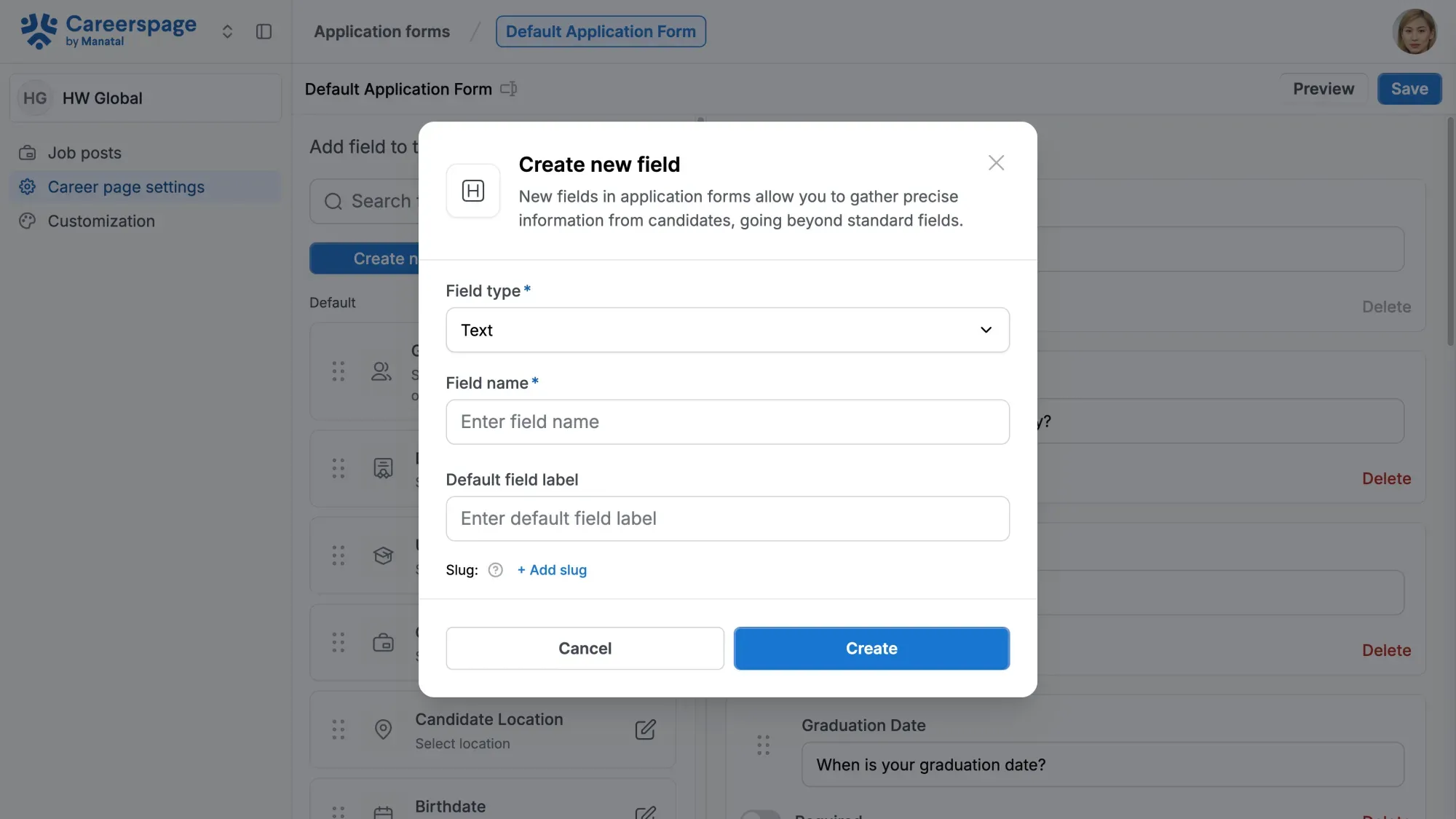
The problem: Job descriptions frequently fail on two fronts simultaneously. They use internal job classifications as titles ("Marketing Specialist II"), which do not match what candidates search for. They also list every skill tangentially related to the role, which can deter qualified candidates who don't meet every listed requirement. Overloaded requirements sections can deter qualified candidates. Studies on application behavior indicate that women tend to be more selective when applying to roles compared to men, which may reduce diversity in the applicant pool if qualifications lists are overly broad [3]
The tactic: Write job descriptions around exact-match titles, separate must-haves from nice-to-haves explicitly, and include salary ranges where organizational policy and local laws allow.
Actionable steps:
- Use the exact job title candidates search for in job boards, not the internal HR classification.
- Lead the responsibilities section with what the person will own in the first 90 days.
- Create two explicit sections in qualifications: "Required" and "Preferred." Move everything non-essential to Preferred.
- Include a salary range. Studies show this increases application rates by 30% or more and, in many cases, attracts 2–3x as many qualified applicants as those without salary details.
- Remove all corporate jargon. Read the description aloud. If a sentence would not make sense to someone outside the company, rewrite it.
Recommended tool: Manatal's Branded Career Page builder allows teams to publish SEO-optimized job postings directly to a hosted careers site and syndicate them to major job boards simultaneously, without re-entering descriptions manually across platforms.
4. Build an Employer Brand Around Career Velocity
The problem: Generic employer branding, office photos, culture slogans, and benefits overviews. does not differentiate a company to passive candidates who are already employed and compensated well. A senior engineer receiving a cold message does not leave a stable role because the destination company has free lunch.
The tactic: Build the Employee Value Proposition (EVP) around the three factors that drive high performers: the rate of career advancement, the quality of the problems they will own, and the company's financial stability. Translate these into specific, published content rather than marketing copy.
Actionable steps:
- Interview five to eight current employees about why they joined and what they would tell a peer considering the company.
- Identify the three most common substantive answers. Build content around those specific answers.
- Publish case studies showing actual career progression. "From individual contributor to team lead in 18 months" is more persuasive than "we invest in our people."
- Have functional leaders post about the technical or strategic problems their teams are solving. Specifics build credibility with passive candidates in a way that HR-authored posts do not.
- Review your Glassdoor and LinkedIn Talent Insights data quarterly. If there are perception gaps between what you publish and what employees report, address the underlying issue rather than adjust the messaging.
5. Reduce Application Friction to Under Three Minutes
The problem: Application abandonment is well-documented. Research from Appcast indicates that longer application processes significantly reduce completion rates, with application rates dropping as the required time exceeds 5 minutes, emphasizing the need to keep the process mobile-friendly and under 3 to 5 minutes where possible.
The tactic: Set a three-minute maximum for the application process. Enforce it by testing your application on a mobile device quarterly.
Actionable steps:
- Audit your current application form. Remove every field that is not used in the initial screening decision.
- Enable one-click apply via LinkedIn or resume parsing so candidates do not re-enter data already in their profile.
- Test the entire application flow on three different mobile devices. Fix any field that requires zoom or horizontal scrolling.
- Add a visible progress indicator, so candidates know how many steps remain.
- Send an automated confirmation within two minutes of submission. Silence after applying is one of the most-cited negative candidate experiences.
Recommended tool: Manatal's Branded Career Page includes a mobile-optimized application builder with instant resume parsing. Applications submitted through the career page feed directly into the ATS pipeline without manual entry.
6. Build Multi-Touch Outreach Sequences for Passive Candidates
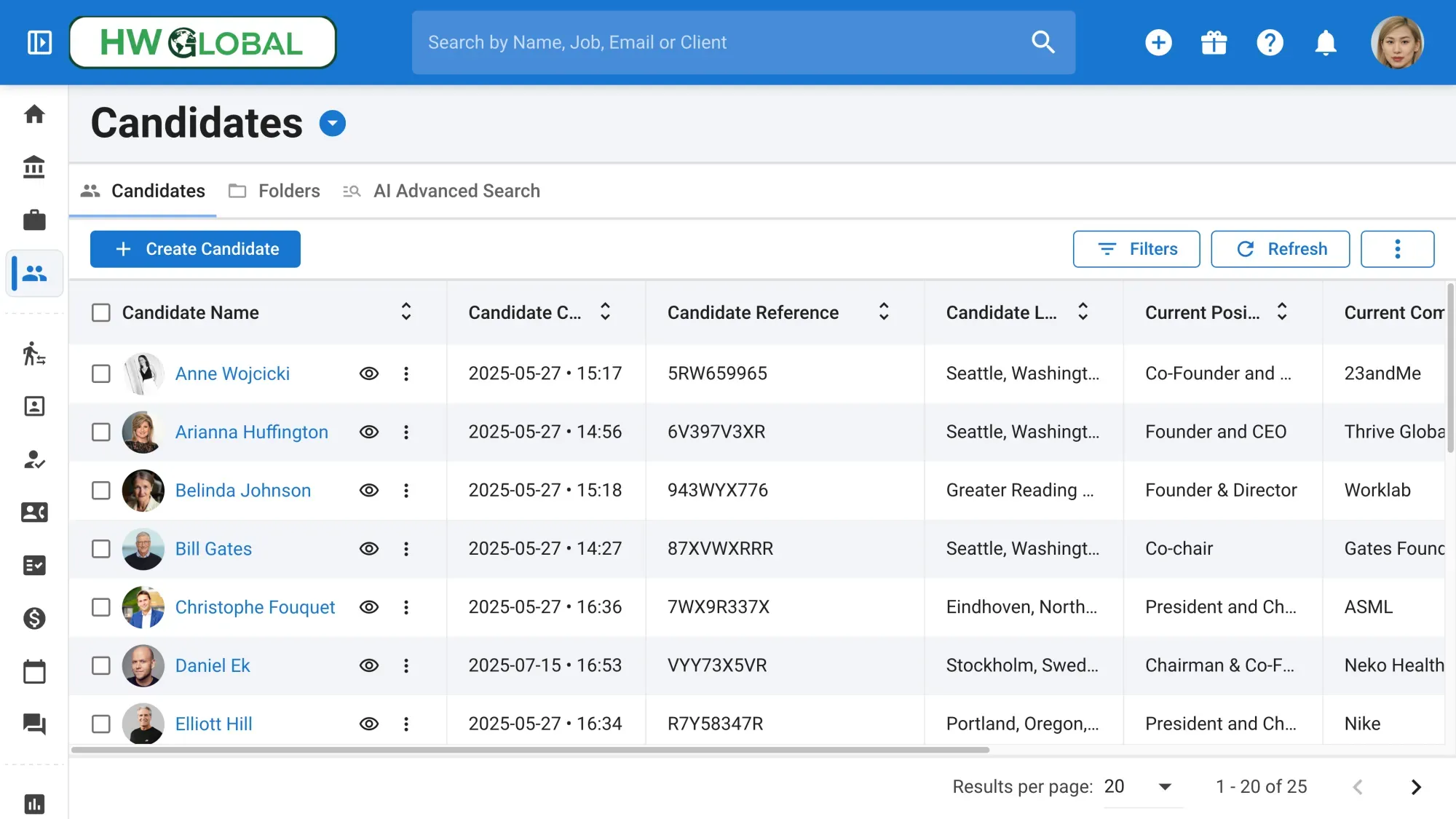
The problem: A single cold message to a passive candidate typically produces a 10–25% response rate at best, depending on the channel and level of personalization. Most recruiting teams either send a single message and stop or send repetitive follow-ups that feel like automated spam. Neither approach builds a consistent pipeline from passive sourcing.
The tactic: Run structured three- to five-touch sequences spaced three to five days apart, with each message serving a different purpose (e.g., an initial personalized hook, a value-add follow-up, and a low-pressure close). Research from sourcing platforms shows that well-structured multi-touch sequences can produce response rates 200–450% higher than single-message outreach, with three-touch sequences often delivering around 3–4x the responses of a one-and-done approach. [4]
Actionable steps:
- First touch: personalized, specific, one clear ask. Reference something specific from the candidate's profile or published work. Request a 20-minute conversation, not a job application.
- Second touch (four days later): add value without resending the job description. A relevant article, a note about a project they mentioned, or a specific observation about their work. The goal is to demonstrate genuine attention.
- Third touch (five days after the second): brief, direct, low-pressure close. Acknowledge their time and leave the door open.
- A/B test subject lines across every campaign. Subject lines that reference the candidate's specific expertise consistently outperform generic "Opportunity at [Company]" subject lines.
- Track response rate by sequence version, by persona, and by channel. Retire templates that perform below 15% after 50 sends.
7. Run Active Sourcing Jams with Hiring Managers
The problem: Passive referral programs with cash bonuses produce occasional results but not a consistent pipeline. Employees do not actively scan their networks for open roles unless prompted. The result is a referral channel that underperforms its potential because it depends on employees remembering to participate.
The tactic: Replace passive referral programs with structured 60-minute sourcing sessions where recruiters work directly with hiring managers to mine their networks in real time.
Actionable steps:
- Book a 60-minute calendar block with the hiring manager and one or two senior team members.
- Open LinkedIn together. Have the hiring manager scroll through first-degree connections while you ask: "Would you hire this person back?" and "Who was the best person you worked with at your last company?"
- Capture every name mentioned directly into the ATS during the session. Do not rely on a follow-up email.
- Follow up with the hiring manager within 48 hours with a list of names captured and ask them to make a personal introduction to the top three.
- Track sourcing jam yield separately from general referrals. Research consistently shows referral hires reach full productivity 50% faster and are retained at higher rates than job board hires.
Recommended tool: Manatal's Collaboration features allow hiring managers to be added as users with scoped access, so they can review and comment on sourced candidates directly within the platform, without requiring recruiters as intermediaries for every interaction.
8. Prioritize Niche Events Over Generalist Career Fairs
The problem: Large career fairs place recruiters in direct competition with every other employer in the room for the same candidates. The signal-to-noise ratio is poor: attendance is high, but meaningful conversations are scarce. The candidates who attend generalist career fairs are, by definition, active job seekers, the 30% of the market is already in contention with every other company posting roles.
The tactic: Identify the three or four niche communities, conferences, or events where target personas are already spending time outside of job searching. Engage as a subject matter contributor, not as a recruiter.
Actionable steps:
- Map where your target personas engage professionally: specific conferences, hackathons, meetups, Slack communities, Discord servers, or professional associations.
- Sponsor a technical track or workshop at a relevant niche conference rather than a general job fair booth.
- Host an intimate event, a leadership breakfast, a technical discussion panel, or a capstone project review with 20 to 40 people rather than 500.
- Send a functional expert from the team, not only a recruiter. Candidates trust conversations with people who do the actual work.
- Capture contact details and notes in your CRM the same day. Relationship value degrades quickly without immediate follow-up.
9. Build Structured Pipelines with Educational Institutions
The problem: Campus recruiting is typically treated as an annual event: a spring career fair, an internship class assembled in March, and limited engagement in between. This produces a one-time talent influx rather than a sustained pipeline. Early-career candidates who graduate without prior exposure to a company are making cold decisions based on brand recognition alone.
The tactic: Build relationships at the departmental level, not the institutional level, starting 12 to 18 months before target graduation dates.
Actionable steps:
- Identify three to five specific departments at target universities that produce graduates with the skills you hire for most frequently.
- Contact department chairs directly. Offer to sponsor a capstone project, guest lecture in a relevant course, or provide a named scholarship for students in the program.
- Have engineers, analysts, or product managers give guest lectures, not HR or talent acquisition. Functional credibility builds faster than recruiting messaging.
- Extend this approach to specialized coding bootcamps and technical training programs. Bootcamp graduates frequently bring professional maturity that traditional new graduates lack.
- Build a structured internship program with a defined project scope and a formal end-of-term review. Interns who receive genuine work and feedback convert to full-time candidates at significantly higher rates than those in administrative roles.
Recommended tool: Manatal's Candidate Database allows teams to tag and segment candidates by source, including educational institution partnerships, so early-career pipelines remain searchable and active even when no role is currently open.
Measuring the Success of Your Sourcing Efforts
Track these three metrics from the start of any sourcing program. They provide different diagnostic signals and are most useful when reviewed together.
- Sourced vs. Applied Ratio. Of the candidates who advanced past the first interview, how many came from proactive outbound sourcing versus inbound applications? A sourced ratio below 30% indicates that outbound efforts are not producing enough qualified pipeline relative to the inbound channel.
- Response Rate. Track this by channel, by message template, and by candidate persona. A 20% response rate on cold outreach to senior engineers is a reasonable benchmark. A 10% rate on similar outreach signals either a targeting or messaging problem. Know the expected range for each persona so performance can be evaluated accurately.
- Time in Pipeline. Sourced candidates who have been pre-qualified before outreach should advance faster than cold inbound applicants. Measure the average days from first contact to offer for sourced candidates versus applied candidates. If sourced candidates are not moving faster, the qualification criteria at the sourcing stage need to be tightened.
Conclusion
Most, if not all, of the tips above are greatly enhanced when organizations use the latest HR technologies. If your goal is to supercharge your candidate sourcing strategies, applying the tips above will work best once you've standardized processes, eliminated waste, and invested in digitalization where possible. Otherwise, the organizations that choose to continue “dragging their feet” are likely to get left behind.
Frequently Asked Questions
Q: What is the difference between candidate sourcing and recruiting?
A: Sourcing is the front end of recruiting. It focuses on identifying and contacting potential candidates, particularly passive candidates who are not actively applying. Recruiting is the broader process that follows, covering interviews, assessments, offers, and onboarding. Strong candidate sourcing strategies feed the top of that funnel with better-quality prospects before formal recruiting begins.
Q: How long does it take to build a working candidate sourcing strategy?
A: A basic strategy can be documented and launched within one to two weeks. The four-part framework (Context, Channels, Cadence, Conversion) gives you a deployable structure quickly. Meaningful performance data, however, takes 60 to 90 days to accumulate. Expect the first month to be calibration, not optimization.
Q: What is a good outreach response rate when sourcing candidates?
A: For cold outreach to passive candidates, a 15-25% response rate to a single-touch message is considered average. A well-structured three-touch sequence targeting the right persona can push that to 35-45%. Anything below 10% signals a problem with the target list, the message, or both.
Q: Should small companies invest in candidate sourcing strategies, or is it only for enterprise teams?
A: Sourcing is more critical for small companies, not less. A 10-person team cannot absorb a bad hire the way a 500-person organization can. Proactively building a pipeline of two to three qualified candidates per key role before a vacancy opens gives smaller teams the hiring speed that enterprise companies achieve through sheer volume.
Q: How do candidate sourcing strategies differ by industry?
A: The channels change, but the framework stays the same. Technical roles source well through GitHub activity, hackathons, and coding communities. Finance and legal talent concentrate in professional associations and niche conferences. Creative roles respond to portfolio-based outreach on Behance or Dribbble. The principle across all of them is identical: go where your target candidates already spend their professional attention, then engage them there.
Citation:
.webp)







.webp)

.webp)


.webp)


