





Blue-collar recruitment pipelines suffer from massive candidate dropout due to slow, paper-based application systems and disconnected email communication. Transitioning your sourcing infrastructure to a specialized applicant tracking system allows your HR team to deploy mobile-optimized forms, rapid screening filters, and automated SMS outreach. This guide provides the operational steps to eliminate hiring bottlenecks, maintain strict compliance, and secure top-tier tradespeople ahead of your competition.
Proven Strategies for Hiring Blue-Collar Workers
1. Set Up a 4x10 Schedule
Organizations can change their work schedule from five 8-hour days to four 10-hour days. This setup gives workers a three-day weekend. Businesses with this type of schedule see 10-20% of productivity gains and 8-12% of lower turnover.[10]
- Split your workers into two different teams, so the facility or site stays open and running seven days a week.[11]
- Use the mid-week days off as an incentive for newer staff, while senior workers get Friday through Sunday off.[12]
2. Earned Wage Access (EWA)
EWA, or “same-day pay,” allows workers to receive their salary after their shift ends. Companies offering EWA reported turnover reductions of up to 30% and show retention improvements of 15-25% in high-turnover industries (e.g., retail/warehousing, construction, logistics, and manufacturing) within the first year. Workers also show up more consistently and are less likely to call out sick.[13][14]
- Connect software like DailyPay or Rain directly into your current payroll system for automatic tracking.[14]
- Cap daily withdrawals at 50% of earned net pay to ensure enough funds remain for quarterly taxes and deductions.[15]
3. Hyper-Local Sourcing
Limit your job advertisements to a strict 10 to 15 mile radius around your actual work facility. Blue-collar workers prioritize short travel times because long commutes eat into their hourly wages.
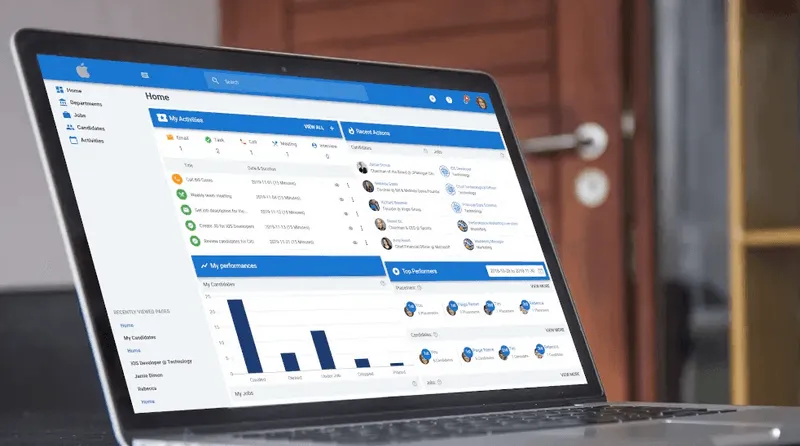
- Use Manatal's Candidate Sourcing feature to post job advertisements directly onto thousands of premium channels. The platform allows recruiters to select specific campaign targets to better reach local audiences.
- Set up digital map borders on social media to display job openings only to people inside nearby zip codes.[16]
- Hang physical hiring posters or banners at local gas stations, hardware stores, and diners where area laborers gather.
{{cta}}
4. Eliminate the Tool and Equipment Tax
Provide all necessary equipment, or issue an immediate voucher for boots, tools, or equipment when they sign the contract. This removes a massive financial barrier for younger workers and trade school graduates.
- Partner with brands like Red Wing or Grainger to buy their products in bulk at discounted prices.
- Create a program where workers can buy specialized personal tools through small, interest-free paycheck deductions over a full year.[17]
- Label all company-issued tools with barcodes to track inventory and prevent theft on the shop floor.
5. Second-Chance Sourcing Pipelines
Partner with local reentry programs and parole offices to hire people with criminal records. According to the Society for Human Resource Management (SHRM), 85% of HR professionals say these workers perform just as well as or better than anyone else.[18] Data from the American Staffing Association shows that these fair-chance programs cut overall employee turnover by up to 70%.[19]
- Coordinate directly with parole officers so your production schedule never conflicts with required court or check-in dates.[20]
- Assign an experienced shop floor worker as a personal mentor to help the new hire adjust during their first 90 days.[20]
Screening for Safety and Compliance
Accelerating your hiring pipeline must not compromise onsite safety. Deploying automated validation protocols during initial application screenings stops uncertified laborers from entering hazardous production environments.
- Automate Compliance & Vetting: Deploy digital validation protocols and integrate background screening tools directly into your applicant tracking system (ATS) to eliminate manual data entry errors and accelerate hiring safely.
- Digitize Credential Tracking: Embed custom document-upload slots into job applications to easily review, verify, and track certification cards (like OSHA or CDLs) and automatically alert managers 60 days before they expire.
- Evaluate Safety Awareness Early: Screen out high-risk applicants by sending digital, scenario-based safety assessments before onsite interviews to ensure candidates prioritize workplace safety.
Conclusion
Optimizing your blue-collar recruitment could get you a steady influx of qualified talent while drastically reducing your reliance on costly staffing agencies. Upgrading to a mobile-optimized, SMS-driven applicant system cuts through traditional administrative delays and prevents high-value tradespeople from abandoning your pipeline. Centralizing your screening filters and background checks inside Manatal removes manual bottlenecks, allowing your HR team to extend compliant offers ahead of competitors. Executing these digital strategies immediately secures your production timelines, protects your field safety standards, and maximizes your operational budget.
Frequently Asked Questions
Q: How do I screen out unqualified blue-collar applicants?
A: Open your applicant tracking system configuration panel to embed mandatory certification questions directly into your initial application form. Setting screening filters inside Manatal can help flag submissions lacking verifiable license numbers, instantly removing compliance-dodging applicants from your review queue.
Q: Is moving away from email necessary for blue-collar recruitment?
A: Relying on email communications can slow your hiring pipeline because many candidates are less responsive to email during shifts. Transitioning your primary mobile outreach to a strategy built around WhatsApp recruiting yields immediate response rates and secures qualified technicians before competitors send an initial message.
Q: What is the most cost-effective way to find local talent without heavy ad spend?
A: Allocate a portion of your recruitment resources to sponsor tools or workshop materials at area technical colleges and high school career centers. Building these direct institutional partnerships secures a recurring roster of entry-level graduates, allowing your business to bypass external staffing fees.
Q: How do I balance speed with thorough background checks?
A: Link your background screening vendor account credentials directly to your central database via API integration. Triggering automated criminal history and drug testing packages after a worker accepts a conditional offer can reduce administrative delay.
Citations
- SHRM
- SHRM
- Pew Research Center
- Blue Collar Apprentice
- INFORMS PubsOnLine Journal Directory
- Econstor
- International Journal of Technology
- Oxford Academic
- Blue Hire Now
- ShiftFlow
- Xenia
- Deltek
- Netchex
- Netchex
- ResearchGate
- Dr. John Sullivan Commuter Analysis
- Grainger Online Management System
- SHRM
- American Staffing Association
- Second Chance Business Coalition Portal
.webp)







.webp)

.webp)


.webp)


