





Hiring for oil and gas roles gets harder each cycle. The pool of qualified engineers, drillers, and field specialists keeps shrinking while projects sanction on tight timelines. This guide covers oil and gas recruitment from the employer's side: why the sector is uniquely difficult, how to run a step-by-step in-house hiring process, where to source scarce talent, how to screen for certifications and compliance, and how to build a talent pipeline that survives the boom-bust cycle.
Oil & Gas Recruitment Challenges
Oil and gas hiring carries structural challenges that generic recruiting advice does not address.
- Talent and skills shortage: The pool of qualified specialists is shrinking relative to demand. According to the International Energy Agency (IEA), growing skills shortages threaten the energy sector's momentum, with energy employment growth expected to moderate to about 1.3% in 2025 amid persistently tight labor markets. This shortage is the primary reason requisitions stay open longer in oil and gas than in most sectors.
- Aging workforce: The oil and gas industry faces a generational turnover often called the "great crew change." The US Census Bureau reports that the US workforce is aging, with utilities among the sectors most likely to have a high share of workers over age 55. The risk here is knowledge transfer, not just headcount replacement.
- Competition from the energy transition: Renewables, data centers, and electrification projects now compete for the same engineering, project management, and skilled-trade profiles that oil and gas operators need. Candidates have more options than a decade ago.
- Boom-bust cyclicality: Hiring spikes when projects sanction and freezes during downturns. Pipelines go cold during a freeze and must be rebuilt under time pressure when activity resumes.
- Safety, compliance, and certification gates: Many oil and gas roles require verified certifications and medicals before mobilization. A strong resume alone does not clear someone to work on a platform or rig.
- Geography and remoteness: Offshore installations, remote onshore fields, and international sites narrow the candidate set. Recruiters must also manage mobility logistics, rotation schedules, and visa requirements.
How to Recruit for the Oil and Gas Industry
Below is an ordered workflow a recruiter can execute almost immediately. The starter stack is simple: an ATS as the system of record, one specialist energy job board (such as Rigzone), and LinkedIn for direct outreach.
- Define the role against the sub-sector and discipline first: Specify upstream, midstream, or downstream. Clarify permanent versus contract. Name the exact discipline: drilling, subsea, HSE, operations and maintenance, or project controls. Vague requisitions are why oil and gas roles mis-hire.
- Write the requirement list around verifiable criteria: List required certifications, years on comparable assets, software proficiencies, and the location or rotation schedule the candidate must accept.
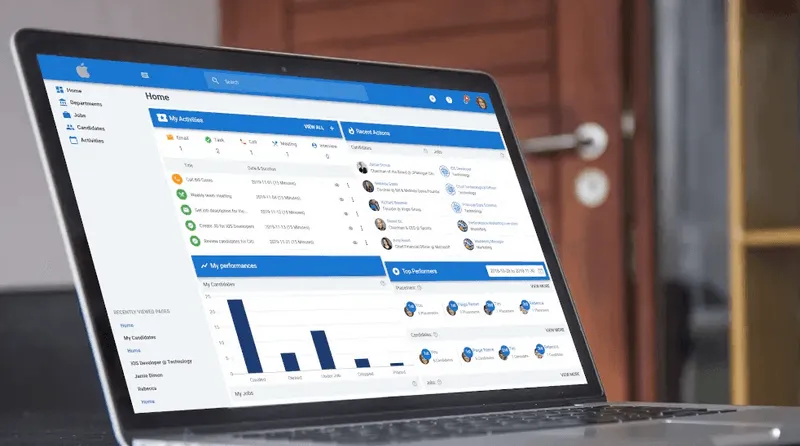
3. Post to the right channels, not all channels: Push the requisition to one or two specialist energy job boards plus your ATS multiposting. Skip generalist-only distribution for niche technical roles. Manatal's Candidate Sourcing lets you post to 2,500+ job boards and social channels from one place, so you control where roles appear without manual reposting.
4. Source proactively for scarce disciplines: For roles that rarely attract inbound applications, such as subsea engineers, MWD/LWD specialists, or senior drilling supervisors, run direct sourcing on LinkedIn. Tools like Manatal's Sourcing Hub (700M+ external profiles) and People-Match AI Chrome extension let you capture candidate profiles directly into the ATS with tags for discipline and availability.
5. Screen for certifications and safety before advancing: Treat this as a gate, not a final-stage check. See the compliance section below for specifics.
6. Run a structured, standardized screen: A scattered talent pool should be evaluated on the same criteria. Capture interview results in the candidate profile so hiring managers can compare shortlist members objectively.
7. Confirm mobility and rotation fit early: Verify visa status, medical clearance, and willingness to rotate or relocate. Late-stage drop-off on offshore or remote roles often happens because these questions were asked too late.
8. Hand off to the hiring manager with an evidence-backed shortlist: Keep the human decision with the manager, but give them the data they need to choose quickly.
{{cta}}
Offshore Oil and Gas Recruitment: What Changes
Offshore oil and gas recruitment layers additional requirements on top of the standard workflow.
- Certification gates unique to offshore: Candidates must hold survival, egress, and safety certifications. Common examples include BOSIET (Basic Offshore Safety Induction and Emergency Training) or OPITO-accredited equivalents. Offshore medical certificates and fitness-for-task clearances are also mandatory. Verify these before moving candidates to interview.
- Rotational schedules: Offshore roles typically operate on weeks-on/weeks-off rotations (such as 2/2 or 3/3). This schedule filters out candidates who cannot commit to extended time away from home. Clarify rotation expectations in the job post.
- Mobilization logistics: Travel, visas, and in-country compliance for international sites add complexity. For some placements, an Employer of Record (EOR) or staffing agency may be the most compliant route for payroll and right-to-work requirements. State this honestly in your process so candidates understand the employment structure.
- Sourcing skews toward direct outreach: Offshore specialists rarely browse generalist job boards. Direct outreach on LinkedIn and postings on specialist offshore boards (such as Energy Jobline) yield better results than waiting for inbound applications.
Where to Source Oil and Gas Talent
Focus on channels where energy-sector candidates actually look for work.
Specialist energy job boards like Rigzone, Energy Jobline, Energy JobSearch, OilandGasJobSearch, and Clean Energy Jobs (US DOE/EERE for crossover roles in renewables and electrification) should be your primary posting targets.
For direct sourcing, LinkedIn and LinkedIn Recruiter work well for named-discipline outreach. Capture profiles into your ATS with discipline and availability tags.
Industry associations and networks also surface passive candidates. State and national oil and gas associations (such as TXOGA or the American Petroleum Institute) offer referrals and events where specialists gather.
Finally, re-engage prior contractors when a project restarts. Candidates who performed well on past rotations are often the fastest hires, and your referral network can extend your reach without posting costs.
Screening and Compliance for Oil and Gas Roles
Oil and gas hiring gates that do not exist in most sectors make screening the biggest differentiator between successful and failed hires.
- Verify certifications and tickets as a hard gate: Safety certifications (such as H2S Alive, IWCF Well Control, or OPITO survival tickets), discipline-specific credentials, and offshore certifications must be confirmed before advancing candidates.
- Confirm medicals and fitness-for-task: Field and offshore roles require medical clearances. Do not wait until offer stage to request these documents.
- Contractor versus permanent compliance: Right-to-work verification, in-country payroll requirements, and mobility compliance differ for contractors and permanent employees. For international placements, flag when an EOR or agency is the compliant path rather than direct hire.
- Standardize evaluation: A globally distributed candidate pool should be judged on the same criteria. Use structured scorecards and capture results in the candidate profile so decisions are defensible and consistent.
Building a Talent Pipeline for Cyclical Hiring
The biggest advantage an in-house team can build over agencies is a persistent, tagged pipeline of pre-qualified specialists.
- Keep an always-on pipeline: Tag candidates by discipline, certification status, availability, and past project experience. When a project sanctions, you can mobilize from a warm bench rather than restarting a cold search under agency-fee pressure.
- Nurture passive candidates between cycles: Track certification expiry dates and send check-in messages before candidates become available. This keeps your employer brand in front of specialists who may not be actively looking.
- Retention basics: With the talent shortage worsening, employee retention matters as much as hiring. Offer competitive, market-benchmarked compensation and clear project or career progression. State these directly in job posts and conversations.
In oil and gas, most teams re-run the same requisitions against the same shrinking pool every cycle and pay agency fees to scramble when a project sanctions.[1][2] The durable fix is a persistent, tagged pipeline of pre-qualified specialists and past contractors held in your own system, so mobilization starts from a warm bench instead of a cold search.[3][4] Owning the pipeline, not renting it each cycle, is what turns a boom-bust hiring problem into a repeatable process.[2][5]
Conclusion
Navigating oil and gas recruitment in an increasingly tight, candidate-scarce market requires moving from reactive hiring to a proactive, system-driven strategy. Standardizing early compliance checks, targeting energy-specific channels, and maintaining an owned, tagged pipeline of pre-qualified talent between project cycles eliminates costly last-minute scrambles and agency dependence. Ultimately, treating recruitment as a persistent, repeatable workflow rather than a seasonal emergency ensures your operations stay fully staffed, compliant, and ready to mobilize the moment a project is sanctioned.
Frequently Asked Questions
Q: What are the best oil and gas recruitment agencies?
A: Top specialist agencies include Airswift, NES Fircroft, Orion Group, TRS Staffing, Brunel, Petroplan, and Spencer Ogden for volume and international compliance. However, in-house hiring often beats agency placement when you have repeatable discipline needs, want long-term contractor relationships, or need to lower cost-per-hire on recurring roles. Internal teams can achieve agency-level efficiency at a fraction of the cost by using Manatal’s Sourcing Hub to access over 700 million candidate profiles and building an owned, tagged talent pipeline directly inside the platform.
Q: How do you recruit for offshore oil and gas roles?
A: Offshore recruitment requires verifying safety and medical certifications (such as BOSIET/OPITO tickets), confirming rotational schedule fit, and managing complex mobilization logistics. Sourcing heavily skews toward proactive direct outreach and specialist offshore job boards. To streamline this workflow, recruiters can use Manatal’s People-Match AI Chrome extension to instantly capture specialist profiles into the ATS and apply custom tags for specific offshore certifications, rotation preferences, and availability status.
Q: Why is it so hard to hire in the oil and gas industry?
A: The IEA reports growing energy skills shortages, while US Census Bureau data highlights an aging workforce with a high proportion of workers over 55. Compounded by competition from the energy transition, boom-bust cyclicality, and strict certification gates, the qualified talent pool is smaller and harder to reach than in most sectors. Teams manage these structural constraints by using an applicant tracking system like Manatal to continuously engage passive talent and maintain a searchable database of past applicants and contractors ready to mobilize when new projects sanction.
Q: What are the best job boards for oil and gas recruitment?
A: Specialist platforms like Rigzone, Energy Jobline, Energy JobSearch, OilandGasJobSearch, and Clean Energy Jobs yield higher signal-to-noise for niche technical roles than generalist sites like Indeed or LinkedIn. Instead of manually posting to each site, recruitment teams can use Manatal’s ATS multiposting feature to distribute requisitions across specialist energy channels and generalist job boards from a single interface.
Q: Which regions have the most oil and gas recruitment demand?
A: Houston and the Texas Gulf Coast represent the largest hiring concentration in North America, while the Middle East (UAE, Saudi Arabia, Qatar) drives heavy demand for international contractors, and Aberdeen serves as the primary hub for North Sea offshore operations. Managing cross-border recruitment across these global hubs is made easier with Manatal's centralized applicant tracking system, which supports multi-location requisition tracking, global compliance alignment, and regional talent pool segmentation.
Citations:
.webp)







.webp)

.webp)


.webp)


