





Outbound sourcing delivers fewer results each year. Cold emails go unanswered. Recruiting marketing fills that gap by attracting candidates before outreach begins. Through content marketing for recruiting and targeted recruiting marketing materials, you shape how candidates see your company before they apply.
This guide gives you a five-step recruiting marketing plan to build a steady pipeline. You will define your audience, choose the right channels, and create recruiting marketing materials that convert attention into applications. Each step includes clear actions your team can apply immediately.
What Is Recruiting Marketing?
Recruiting marketing covers all activities that occur before a candidate applies. Its goal is to attract, engage, and nurture talent so your hiring funnel stays full. Core components include:
- Employer branding: How candidates perceive your culture and values.
- Content marketing: Articles, posts, videos, and social updates that attract and inform candidates.
- Job advertising: Paid or organic campaigns targeting the right talent.
- Career page experience: Job listings, application forms, and company information on your website.
- Candidate nurturing: Ongoing engagement with passive and active candidates.
Recruiters focused on screening and hiring rarely have time to manage brand, content, and channels simultaneously. Recruiting marketing needs a dedicated strategy, assets, and metrics to feed the top of the pipeline continuously.
Building Your Recruiting Marketing Plan: 5 Steps
Step 1: Audit Your Employer Brand
Understand what candidates see when they search for your company.
Employer Brand Audit Checklist

- Read your 20 most recent Glassdoor reviews and note recurring positives and negatives.
- Search your company name with terms like “careers” or “jobs” and review the first page of results.
- Ask recent hires what they knew about your company before applying and where they found it.
- Score your employer brand on visibility, credibility, and differentiation.
The output is a gap list. Your recruiting marketing plan should address these gaps directly.
Step 2: Define Candidate Personas
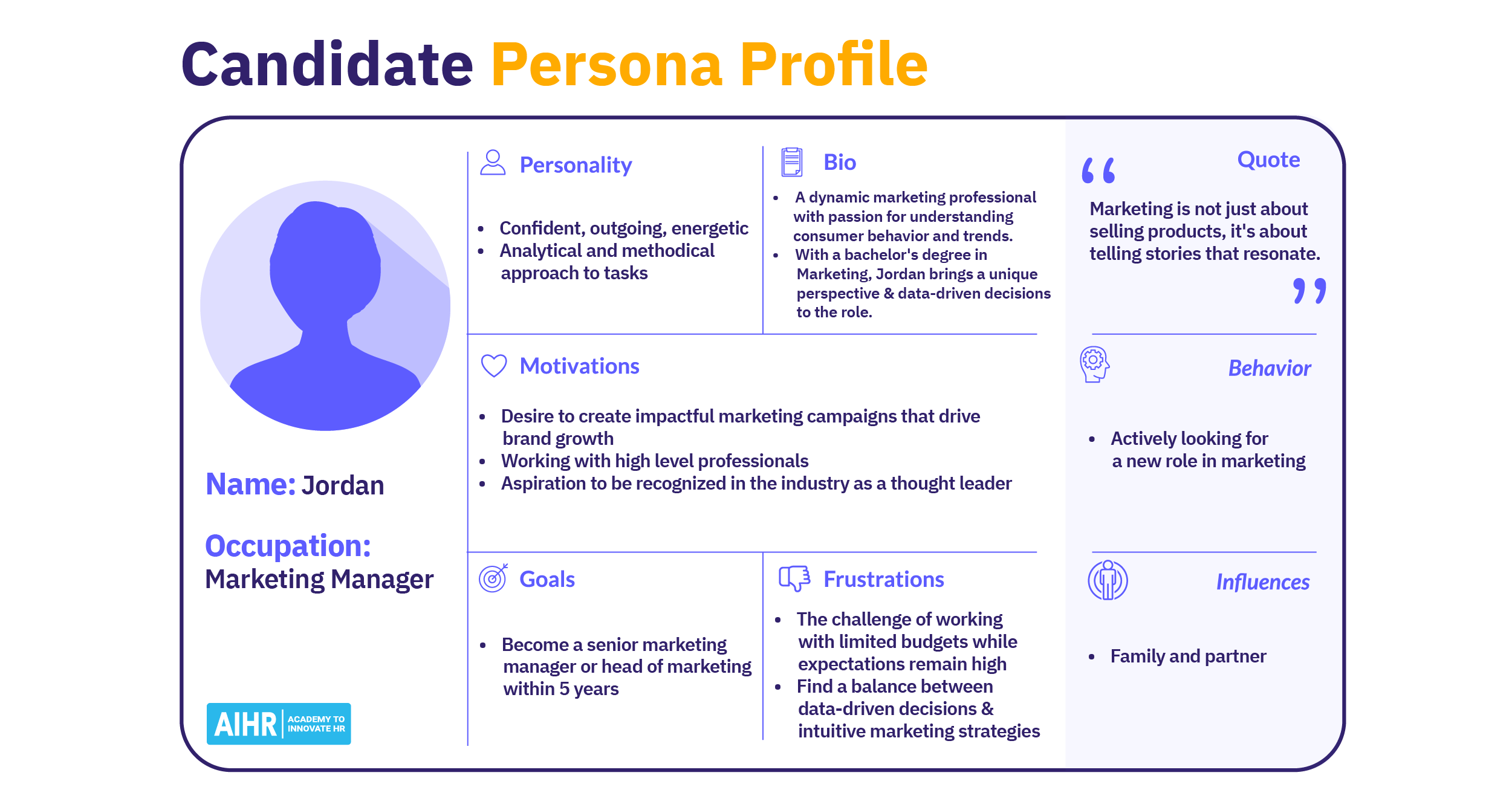
Your messaging should match the candidate type. Define your audience before creating job posts or content.
Candidate Personas
- Passive candidates: Currently employed, not actively searching. Focus on career growth, culture, and long-term opportunities.
- Active candidates: Comparing options. Highlight compensation clarity, role specifics, and what sets your company apart.
How to Create a Simple Profile for Each Persona:
- Role and career stage: Note the job title and level (entry, mid, senior).
- Key motivations: Write 2–3 things that matter most to them, like growth, culture, or salary.
- Preferred content: Decide how they like to consume information (e.g., LinkedIn posts, short videos, job listings).
Example:
- Role: Marketing Specialist
- Career stage: Entry-level
- Motivations: Learning opportunities, company culture
- Content: Instagram reels, employee spotlights
Once you have these profiles, tailor your messaging, job descriptions, and channels for each persona. This ensures your recruiting marketing speaks directly to the right candidates.
Step 3: Select Your Channels

Choose channels based on where your candidates spend time, not what others are using.
- LinkedIn: Primary channel for professional and senior roles; supports organic posts and targeted ads by title, industry, and seniority.
- Short-form video platforms: TikTok and Instagram perform well for younger talent, creative, hospitality, and retail roles. Authentic team content outperforms polished corporate videos.
- Job boards: Candidates actively searching for jobs. Use general job posting sites like Indeed and LinkedIn Jobs and niche boards like Stack Overflow, Dribbble, and Wellfound.
Steps for Selecting Channels
- Assign one primary and one secondary channel per persona.
- Focus on a small number of platforms instead of spreading thin.
- Run job boards for 30 days and track qualified application rates before committing budget.
Step 4: Create Your Recruiting Marketing Materials

Your materials convert attention into applications. Essential items include:
- Branded career page that loads quickly and reflects company culture
- Candidate-focused job descriptions with salary and team context
- Employee spotlight series with at least three examples
- Benefits and culture summary for outreach
- Branded templates for job posts and social updates
Job Description Best Practices
- Remove unnecessary requirements.
- Include a section on what the candidate will accomplish in the first 90 days.
- Provide salary ranges to avoid late-stage misalignment.
Employee Spotlight Guidelines
- Select three employees from different teams or tenure levels.
- Record short clips answering: “What do you work on daily?”, “What surprised you about working here?”, and “What does growth look like in your role?”
- Publish to LinkedIn and your career page.
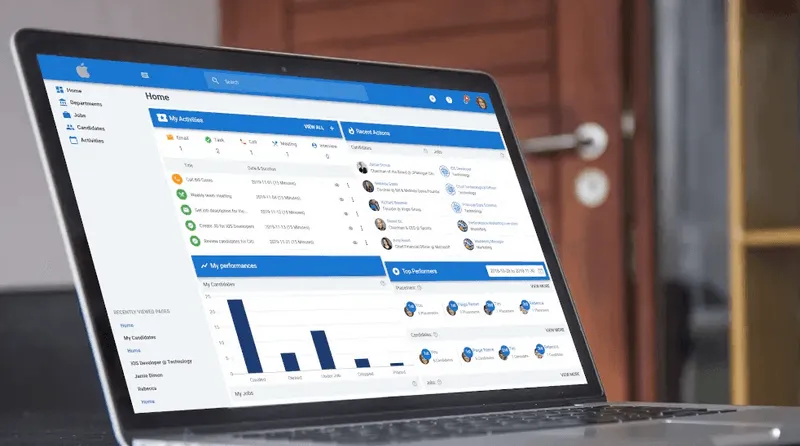
Manatal combines your career page, candidate pipeline, and job distribution in one platform, so spotlights, open roles, and applications live together without developer support.
Step 5: Measure What Matters
Most programs track impressions or follower counts, which do not reflect hiring outcomes. Track these four operational metrics instead:
- Cost per application: Total spend divided by applications received
- Career page conversion rate: Share of visitors who apply
- Qualified application rate: Share of applicants passing initial screening
- Time to first qualified candidate: Speed at which a viable candidate enters your pipeline
Steps for Tracking Metrics
- Add UTM parameters to every shared job link.
- Review your career page conversion monthly.
- Track all four metrics by channel to support a data-driven recruitment approach.
- Reallocate budget quarterly based on qualified application rate, not total volume.
Manatal’s analytics dashboard automatically tracks which sources produce qualified candidates and flags those inflating numbers without improving pipeline quality.
{{cta}}
Categories of Recruiting Marketing Tools
Once you’ve defined your personas and channels, these tools help you execute your recruiting marketing plan efficiently.
Employer Branding and Job Distribution
- Canva: Design branded job posts and social graphics
- Buffer / Hootsuite: Schedule and track posts across multiple platforms
- Programmatic job ad platforms: Distribute job ads automatically across boards based on performance data
- Manatal: Built-in career page lets you publish open roles, employee spotlights, and company info directly in your ATS, while multi-channel distribution shares these listings automatically
This unified approach ensures candidates see a consistent brand message and that your jobs reach the right audience efficiently.
Candidate Management and Outreach
- Manatal: Centralize the entire lifecycle by storing work histories, tracking communication logs, and moving candidates through customizable pipeline stages directly within the platform
- Gem / Leonar: Create automated email sequences and multi-channel outreach to engage passive talent
- hireEZ / Loxo: Access AI-powered sourcing databases to find and store candidate profiles with enriched contact data
- Sense / Paradox: Automate candidate nurturing and re-engagement campaigns for past applicants via SMS and email
- Mailchimp / HubSpot: Execute advanced recruitment marketing campaigns using professional templates and tracking analytics
This centralized system ensures your sourcing data remains actionable and that high-potential candidates stay engaged throughout the hiring journey.
Weekly Recruiting Marketing Content Calendar
Consistency drives results in recruiting marketing. One reliable post per week for six months builds a stronger employer brand presence than a short burst of activity followed by silence.
A simple three-day structure works for most teams.
Monday: Highlight a job opening. Focus on what the role accomplishes in the first 90 days rather than listing requirements.
Wednesday: Share an employee spotlight through a short post or video clip.
Friday: Publish an industry insight relevant to your target candidate audience.
This produces roughly 12 posts per month and covers all three funnel stages.
Batch content production helps maintain consistency. Set aside two to three hours every two weeks to create and schedule the next round of posts. You can adjust the schedule to fit your team and channels.
Conclusion
Following the five-step plan builds a self-sustaining recruiting marketing system. Consistent execution grows your candidate pool, keeping your brand top of mind for those not ready to move immediately. Track your core metrics monthly, review channel performance quarterly, and adjust spending based on qualified application rates, focusing on improving career page conversion before increasing ad spend, as optimizing the bottom of the funnel often drives stronger results than boosting awareness alone.
Frequently Asked Questions
Q: What is the difference between recruiting marketing and recruitment?
A: Recruiting marketing covers everything before the application: employer branding, content, advertising, and career page experience. Recruitment covers screening, interviewing, and hiring after a candidate applies.
Q: How long does it take to see results?
A: Content and channel programs typically show pipeline impact within 90 days. Employer brand improvements take longer because they depend on accumulated candidate experience across many touchpoints.
Q: Which metric should I focus on first?
A: Start with the career page conversion rate. If visitors are not converting into applicants, advertising spend will underperform regardless of how much traffic you drive.
Q: How does Manatal support recruiting marketing specifically?
A: Manatal provides a built-in career page builder, multi-channel job distribution, and a sourcing database with pipeline tracking. Applications from every channel feed into one place, and analytics show which sources produce qualified candidates. You manage the full funnel without adding tools outside your ATS.
.webp)







.webp)

.webp)


.webp)


