


Talent acquisition strategies built on legacy sourcing models and basic keyword matching will fall short as AI adoption, tech sector restructuring, and severe application bottlenecks reshape recruitment priorities. Rising software automation on both sides of the hiring equation, alongside shifting generational dynamics and surging demand for hybrid skills, is creating a complex market for talent acquisition leaders. To maintain a competitive edge, recruitment teams must immediately realign screening frameworks, sourcing channels, and evaluation methods with these new market realities.
4 Core Market Shifts
In our Recruitment Trends Report (August 2026), we have identified four major shifts transforming the talent space:
- U.S. Tech Sector Restructuring: How tech leaders are balancing 140,000 industry job cuts with an unprecedented $800 billion surge in AI infrastructure spending.
- The Early-Career Hiring Crunch: The hidden operational drivers, beyond basic automation, behind a 20% drop in entry-level software positions.
- The "AI vs. AI" Bottleneck: The operational gridlock created as 77% of HR teams using AI screening collide with 74% of candidates deploying AI application tools.
- Surging Demand for Hybrid Expertise: Why employer demand is shifting toward multi-disciplinary talent, driving massive growth in niche skills like AI video generation (+329%).
Let's Take a Closer Look
1. U.S. Tech Sector Restructuring & AI Capital Surge
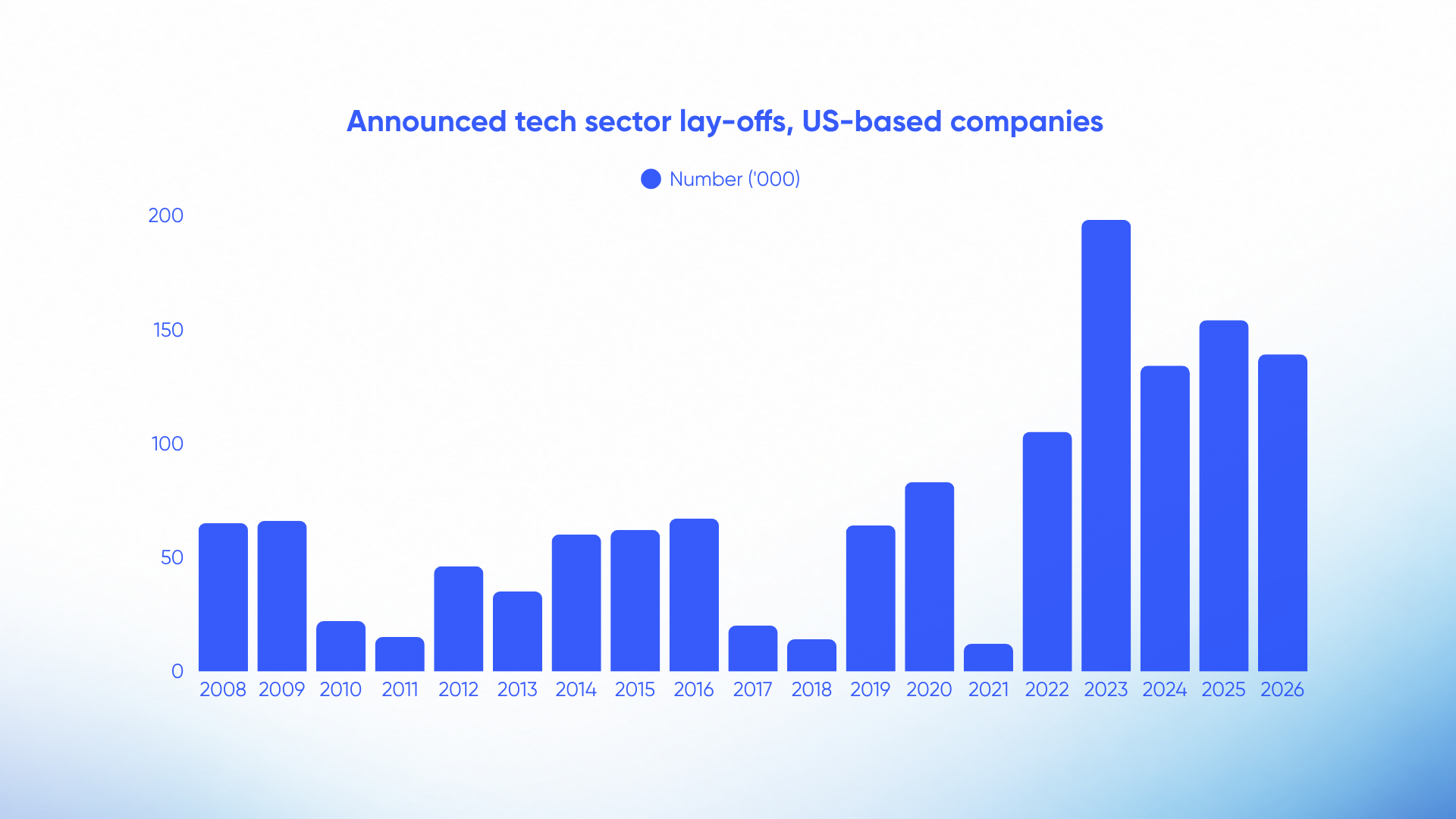
The U.S. technology sector is experiencing major structural reallocation. Throughout 2026, tech companies announced approximately 140,000 job cuts as organizations restructured their workforces. In stark contrast to these layoffs, AI infrastructure investment is expanding at an unprecedented scale, with hyper-scalers like Amazon, Alphabet, Meta, Oracle, and Microsoft expected to deploy $800 billion in capital expenditure this year alone.
This pivot has shifted talent demand away from legacy engineering roles toward specialized AI, infrastructure, and data architecture experts. As tech leaders channel capital into hardware and platform scaling, recruitment teams must re-evaluate how they identify, engage, and reallocate technical talent.
- Action Plan: Transition toward skills-based hiring to evaluate candidate technical proficiency and transferable capabilities rather than relying on legacy job titles. Proactively map and engage specialized talent pools displaced by broader industry restructuring.
- How Manatal Helps: Manatal’s Candidate Sourcing Suite and AI Enrichment Engine enable hiring teams to discover specialized technical talent efficiently. By integrating directly with 2,500+ job boards and automatically enriching candidate profiles with verified public technical data from platforms like GitHub and LinkedIn, recruiters can validate AI infrastructure capabilities instantly.
2. What’s Behind the Young Worker Hiring Crunch
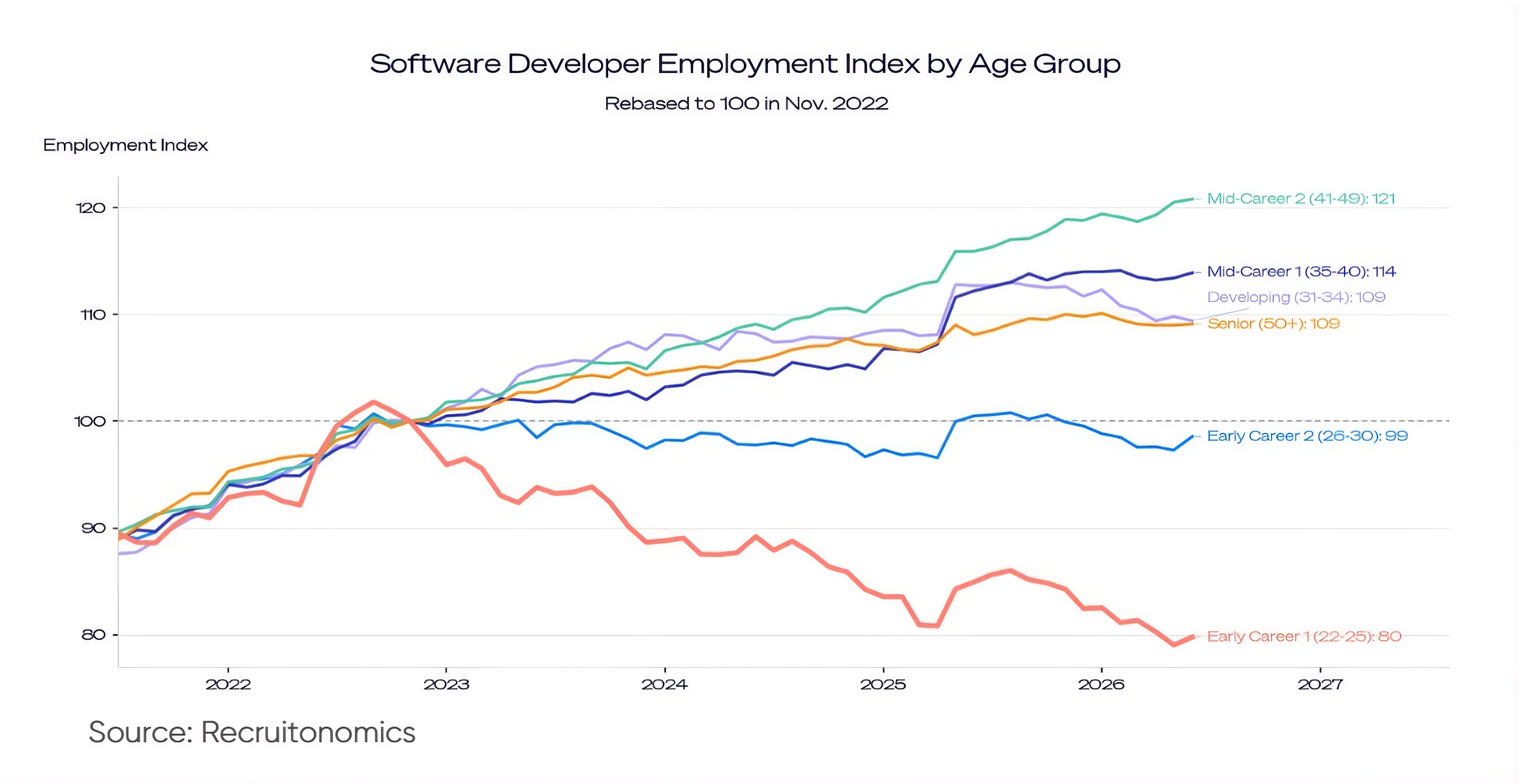
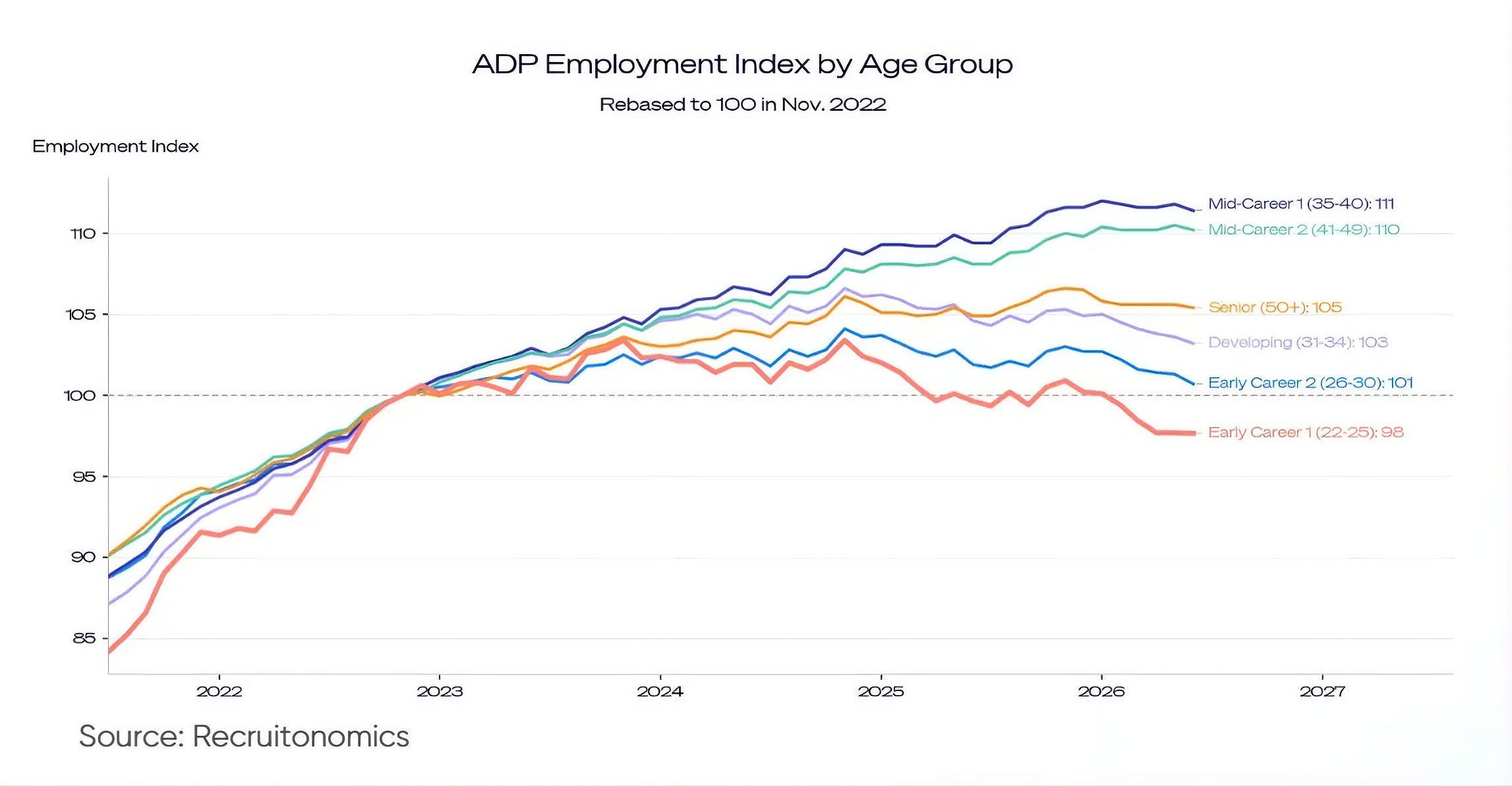
Young jobseekers are facing a sharp contraction in entry-level opportunities as companies increasingly prioritize experienced, mid-career professionals. ADP employment data confirms this growing generational divide: employment for workers aged 22–25 has steadily declined since 2023, while senior employment has remained resilient. The gap is particularly pronounced in software development, where early-career roles dropped 20% while mid-career positions grew 21%.
While automation plays a role, research indicates that remote work arrangements significantly contribute to this shift. Remote environments introduce onboarding, supervision, and mentorship challenges, leading organizations to pull back on junior hiring in favor of self-sufficient mid-tier talent.
- Action Plan: Implement structured, skills-based evaluations and automated screening early in the application process to filter candidate pools based on core technical competencies and problem-solving abilities rather than university brand names.
- How Manatal Helps: Manatal’s Candidate Sourcing Suite and AI Enrichment Engine automatically pull verified technical data from platforms like GitHub and LinkedIn, enabling hiring teams to validate specialized capabilities instantly.
3. Hiring Rat Race: AI Screening vs. AI Applications
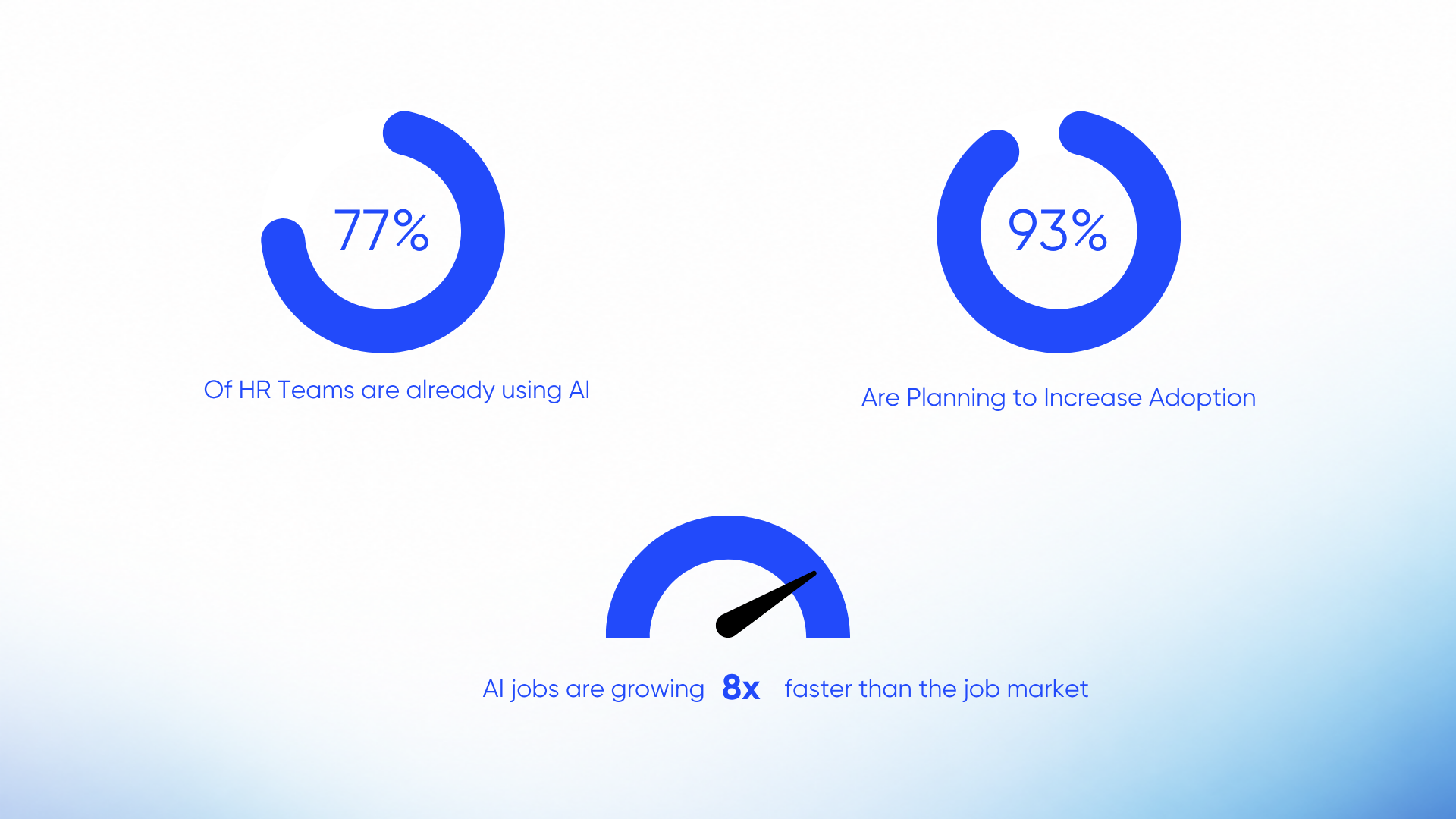
The recruitment pipeline is encountering an unprecedented operational bottleneck. AI-related job postings are growing 8 times faster than the broader job market, reflecting widespread organizational adoption. Today, 77% of HR teams utilize AI in recruitment (with 93% planning expansion), while nearly three-quarters (74%) of jobseekers deploy AI tools to draft resumes and apply for roles.
This automated "bot vs. algorithm" dynamic has inflated application volumes with AI-generated resumes, dragging out candidate evaluation timelines. According to Forbes, 67% of hiring managers report that AI-generated applications complicate recruitment, contributing to a 24% drop in overall hiring rates as companies struggle to isolate genuine candidate intent.
- Action Plan: Balance automated AI screening with structured human-led assessments. Update evaluation criteria to target candidates who display practical AI literacy alongside essential human skills like critical thinking, communication, and adaptability.
- How Manatal Helps: Manatal’s explainable AI candidate scoring and semantic matching evaluate candidates against true job intent rather than simple keyword counts. Transparent, requirement-level score breakdowns eliminate black-box screening bias and allow human recruiters to focus on evaluating high-value soft skills during interviews.
4. The Most In-Demand Skills of 2026
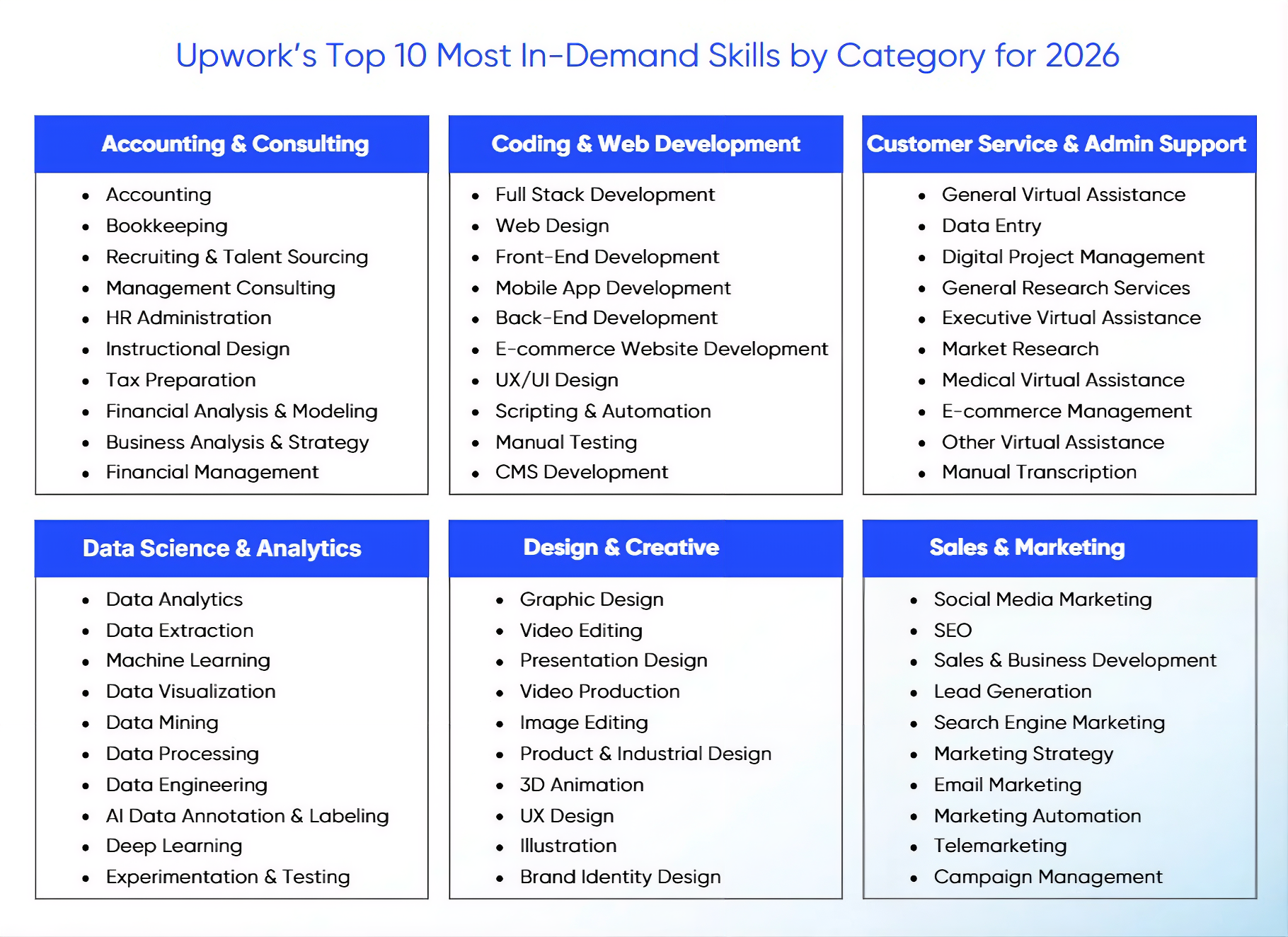
Data from the Upwork Research Institute highlights a massive surge in demand for hybrid talent, with AI-related job postings increasing 109% year-over-year. Employers are seeking professionals who can apply AI capabilities directly within existing technical and business domain frameworks.
Specialized AI skills are seeing explosive growth across technical and creative fields, led by AI video generation (+329%), AI system integration (+178%), AI data annotation (+154%), and AI chatbot development (+71%). Furthermore, 77% of business leaders report increasing their reliance on specialized contract or freelance talent to access these niche skill sets on demand.
- Action Plan: Expand talent acquisition models beyond full-time hiring to incorporate flexible, freelance, and contract talent pipelines. Implement practical work simulations and skills-based assessments to verify actual candidate output quality over resume claims.
- How Manatal Helps: Manatal’s AI Candidate Profile Enrichment automatically aggregates public portfolio data, code repositories, and work samples from over 20 platforms (including GitHub and Medium). This gives talent acquisition teams immediate visibility into verified, specialized capabilities across both full-time and flexible talent pools.
Conclusion
The recruitment space is navigating a fast-moving transition driven by AI integration, structural tech reallocation, and shifting skill demands. To build resilient pipelines in this environment, talent acquisition leaders must move away from generic sourcing models and adopt precise, skills-based hiring frameworks. Download the complete Manatal Monthly HR Trends Report (August 2026) to access complete datasets, industry insights, and strategic frameworks.
.webp)






.webp)

.webp)


.webp)


