





Every spring and fall, employers compete for the same early-career talent, then face hundreds of applications per role once outreach lands. University recruiting is the process that turns that scramble into a repeatable pipeline. This article gives you a program blueprint, a tool-anchored workflow, software selection criteria, and the metrics that show whether the program pays off.
What University Recruiting is
University recruiting is the employer process of sourcing, engaging, and hiring current students and recent graduates for internships and entry-level positions. It runs on an annual cycle tied to the academic calendar and to campus events, both virtual and in person.
Internships and co-ops are the on-ramp. They let employers evaluate students in real work before extending full-time offers, so many programs treat the intern class as their main entry-level pipeline.
Why University Recruiting Matters in 2026
Demand for new-grad talent is climbing. According to the National Association of Colleges and Employers (NACE), employers expect to hire 5.6% more graduates from the Class of 2026.[1] Skills-based hiring for early-career roles keeps rising too: 70% of employers now use it, up from 65% the prior year, according to NACE.[2]
The pipeline pays off because internships convert. Intern-to-full-time conversion hit 63.1% for 2024-25 interns, the highest in five years, with an 88.3% acceptance rate, according to NACE.[3]
NACE also noted that early-career hires from a program also stay longer. More than three-quarters of hires who interned with the employer stay past one year, and more than half stay past five. Hires with no internship experience trail, at under half after one year and about a third after five.[4]
Building a University Recruiting Program
Executing an effective program requires a structured approach to build early-career pipelines. Organizations maximize results by defining headcount and budget targets early, partnering with career centers and faculty, and promoting authentic employer branding through social media and CSR initiatives. Recruiters engage top talent by hosting technical workshops, offering structured internships, organizing company tours, and utilizing alumni as brand ambassadors. For a complete breakdown of these tactics, read our guide on 11 On-Campus Recruiting Tips & Strategies.
University recruiting programs are won or lost at the screening and pipeline stage. A single role can draw hundreds of applications, and teams that can't screen them fairly and fast lose top candidates to quicker competitors.
How to Run University Recruiting
Establishing a standardized university recruiting workflow allows talent teams to execute high-volume campus hiring systematically across multiple institutions. Follow this sequential step-by-step guide to structure your campus recruitment drive from pre-season alignment to post-cycle candidate retention.
Step 1: Pre-Season Campus Planning and Target School Alignment
Launching campus recruitment without clear per-school targets leads to misallocated recruiting budgets and uneven candidate volume. Aligning headcount goals and institutional tiers early keeps hiring teams focused on high-yield talent pools.
How to Run It: Eight to twelve weeks before campus season opens, hold planning sessions with hiring managers to define role headcount and school allocations. Create a target university matrix using an Excel or Notion template categorized by tier (Core Tier 1 vs. Regional Tier 2). Reach out to campus career centers early to establish faculty connections, and register for virtual and in-person fairs on platforms like Handshake, Symplicity, 12twenty, or RippleMatch.
Step 2: Multi-Channel Event Setup and Digital Sourcing
Relying on physical sign-up sheets at career fairs creates data-entry backlogs and leads to lost candidate contact information. Digital landing pages and pre-event outreach ensure candidate data moves directly into structured pipelines.
How to Run It: Two to four weeks prior to events, launch a dedicated campus landing page and generate QR codes linked directly to your application forms. Send targeted pre-event messaging to student clubs, alumni networks, and target majors via campus platform tools. At virtual or in-person events, display QR banners to collect attendee profiles straight into your ATS, automatically tagged by school and role.
Step 3: Automated High-Volume Screening
Screening is where volume breaks most university programs. When a single role pulls hundreds of applications, manual resume reviews create severe bottlenecks and inconsistent scoring across target schools.
How to Run It: Immediately upon application intake, deploy Manatal AI Interviewer to automate first-round screening. Configure 5–10 role-specific screening questions manually or auto-generate them from job descriptions. The tool conducts 24/7 asynchronous video assessments, transcribes responses, and evaluates candidates against preset grading criteria. For technical roles, pair this step with automated skill tests via Codility or HackerEarth, ensuring recruiters review scored shortlists before advancing candidates.
{{cta}}
Step 4: Standardized Finalist Interviews and Live Debriefs
Varying interview criteria between team members causes inconsistent evaluation and introduces hiring bias across candidates from different schools. Standardized scorecards ensure all finalists are measured against identical job requirements.
How to Run It: Create a structured interview scorecard template in your ATS outlining core competencies (e.g., technical problem-solving, team collaboration). Assign specific scorecard sections to each panelist before finalist interviews begin. Hold a mandatory 15-minute hiring manager debrief immediately following interview panels to review objective scores against your benchmark bar before extending an offer.
Step 5: Offer Management and Post-Season Pipeline Retention
Offer delays cause high drop-off rates in competitive campus cycles, while unhired runner-up candidates are often lost to future recruitment drives. Tracking funnel metrics protects your multi-school ROI.
How to Run It: Extend electronic offer letters with strict acceptance windows (e.g., 10 business days) and set up automated weekly check-in emails to maintain candidate engagement through graduation. After the cycle closes, calculate key performance indicators in your ATS, including offer acceptance rates, cost-per-hire per school, and intern-to-full-time conversion. Tag strong non-selects as "Silver Medalists" and move them into automated talent pools for the next hiring season.
How to Measure University Recruiting Success
Measuring campus recruiting metrics by school allows talent teams to identify top-performing channels, eliminate bottlenecks, and reallocate resources for future cycles. Follow this process to set up and track your key performance metrics.
Step 1: Set Up Source Tracking for Applications
Before launching your campaign, configure unique tracking links or dedicated application forms for each target school within your ATS. This allows you to automatically group incoming applications by university and measure total applicant volume per target institution.
Step 2: Track Stage Pass-Through Rates Across the Pipeline
Once candidates begin moving through your hiring workflow, run pipeline conversion reports in your ATS to monitor how applicants advance from initial screening to final interviews. Compare these stage-by-stage pass-through rates across target institutions to identify screening bottlenecks or abnormal candidate drop-offs.
Step 3: Calculate Offer Acceptance and Renege Rates
As offers are extended, track accepted versus declined offers using your e-signature platform (such as DocuSign) integrated with your recruitment system. Record specific decline or renege reasons in candidate profiles to evaluate compensation competitiveness, candidate experience, and offer timelines.
Step 4: Audit Pipeline Diversity at Every Stage
During and after the interview process, generate demographic reporting in your ATS to review diversity metrics across each phase of the hiring funnel. Ensure representation remains balanced from initial application through final offer extension rather than dropping off in later rounds.
Step 5: Measure Intern-to-Full-Time Conversion Rates
At the conclusion of your internship program, export cohort data to your HRIS (such as BambooHR or Workday) or a spreadsheet like Excel or Google Sheets. Divide the total number of accepted full-time offers by the total number of eligible interns to calculate your overall pipeline conversion ROI.
Step 6: Evaluate Early-Career Quality of Hire
At 90 days and 6 months post-onboarding, collect manager performance scores using performance management tools, such as Lattice or Culture Amp. Compare the ramp speed and performance ratings of entry-level hires against your initial assessment criteria to validate screening accuracy.
Step 7: Calculate Total Cost per Hire per School
After all hiring data is finalized, log all program expenses, including career fair registration fees, travel expenses, and platform costs, into spreadsheet software or an analytics dashboard like Tableau. Divide total expenditure per school by the total hires made from that institution to determine institutional cost efficiency.
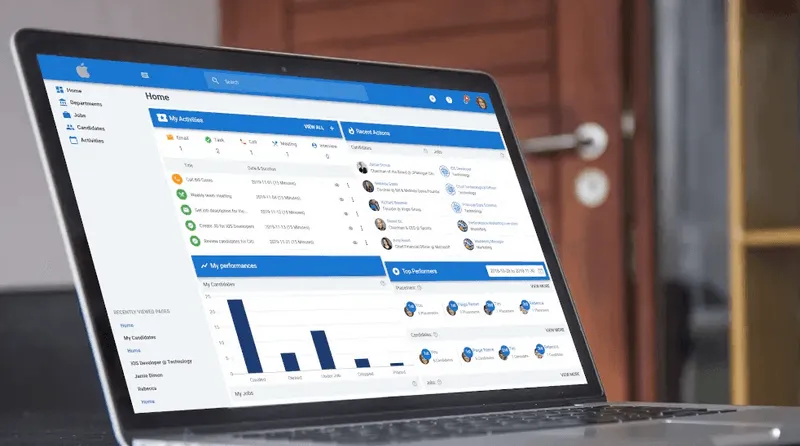
Use Manatal’s Reports and Analytics tool to evaluate candidate sources and identify top-performing universities. Track pipeline stages over time to eliminate application bottlenecks and calculate campaign ROI. Additionally, six-hour data updates allow recruiters to make real-time adjustments mid-campaign to maximize offer acceptance rates and optimize student sourcing.
Conclusion
University recruiting rewards employers who treat it as a repeatable program, not a one-week event. Build a target-school list, run a consistent workflow, screen fairly at volume, and measure the funnel by school. Do that, and your intern class becomes your most reliable entry-level pipeline.
Manatal runs your campus hiring program end to end: branded student landing pages, high-volume AI screening, customizable pipelines, and per-school analytics. It is priced for teams of any size, so a small recruiting team can give every applicant a fast, fair first step. Start for Free and set up your first campus pipeline today.
Frequently Asked Questions
Q: When does the university recruiting season start?
A: Most programs run two cycles. The main one starts in late summer and fall, tied to the return to campus, when employers fill internships and next-year entry-level roles. A growing share of hiring now happens in spring, reaching students who missed fall events or decided later.
Q: How can a small or mid-size company compete with big brands?
A: Focus beats reach. Pick two or three schools where your roles and relationships are strongest, and compete on speed and candidate experience rather than brand awareness. An all-in-one ATS like Manatal with built-in screening lets a small team give every applicant a fast, fair first step.
Citations
.webp)







.webp)

.webp)


.webp)


