




Most teams treat diversity as a values statement on a careers page. Real workforce diversity management is an operating discipline with a pipeline, metrics, and daily practices. When that discipline is missing, the budget goes to training and policy, while sourcing and screening stay subjective, so representation never moves.
What Is Workforce Diversity Management?
Workforce diversity management involves practices for building, supporting, and retaining a workforce with varied backgrounds, characteristics, experiences, and perspectives. People often ask what workplace diversity is; the short answer is that it is a mix of people and perspectives, made visible and managed on purpose. The phrases 'workplace diversity' and 'diversity in the workplace' are commonly used to describe the presence of differences among people in a workforce.
Diversity, inclusion, and equity are not interchangeable. Diversity is who is in the room, inclusion is whether those people can actually contribute, and equity is fair access to opportunity. For the base terminology, see our glossary on diversity, equity, and inclusion (DE&I).
U.S. Legal Guardrails for Workforce Diversity Programs
In the US, workforce diversity programs must comply with Title VII of the Civil Rights Act, which prohibits employment decisions based on protected characteristics like race or sex. The EEOC warns that DEI practices, quotas, or preferences using these traits create severe legal risks. To maintain a legally defensible approach, employers should focus on job-related criteria, broaden candidate pools, use structured evaluation processes, and monitor representation without using protected traits as decision factors. Always consult employment counsel regarding specific diversity practices.
Building a Diverse Workforce Through Hiring
Hiring decisions have a significant influence on workforce representation, particularly at sourcing and screening stages. This is where workforce diversity and talent management meet: the composition of your team is set by who you find and how you evaluate them. Four practices carry most of the weight.
- Write job descriptions around job-related criteria and outcomes, and remove proxies like "culture fit" that narrow the pool without adding signal.
- Widen candidate sourcing beyond default channels so under-represented candidates can find and enter the pipeline.
- Screen every candidate against a fixed scorecard tied to the criteria, not gut feel.
- Evaluate consistently so the same standard applies to everyone.
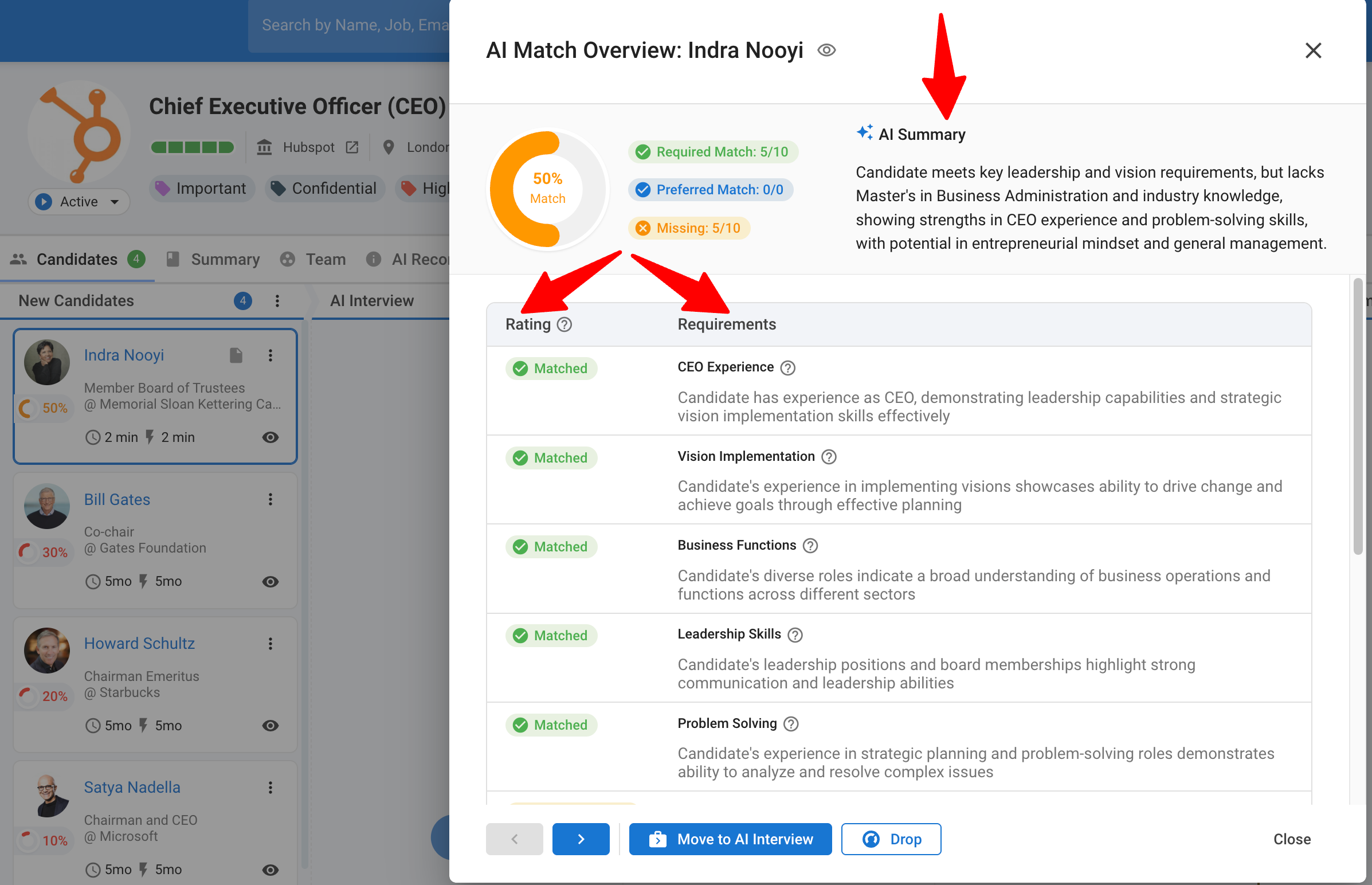
Screening is where an applicant tracking system earns its keep, and Manatal's AI Recommendations ranks candidates based on job requirements and provides match explanations. This can support more consistent, criteria-based candidate review, while recruiters remain responsible for evaluating the recommendations. For the full sourcing playbook, see our guide to diversity recruiting with recruitment technology.
Workforce diversity is decided in the hiring pipeline long before it becomes a culture problem. Make screening criteria-based and evaluation consistent first, then measure funnel pass-through by group. That treats diversity as a talent-operations discipline, not an HR values statement.
How to Manage a Diverse Workforce: A Step-by-Step Workflow
A diverse workforce needs a repeatable process, not one-off initiatives. Below is a specific workflow, plus a starter stack you can adapt to your own tools.
A Starter Stack
- Recruitment software: an application tracking system (ATS) such as Manatal for criteria-based screening and consistent candidate evaluation.
- Inclusion surveys: a platform such as Culture Amp for belonging and inclusion metrics.
- Communication: Slack and Zoom to standardize how distributed, cross-cultural teams work together.
Step 1. Omni-Channel Sourcing (The Foundation of Workforce Diversity)
Relying solely on default recruitment channels leads to homogenous candidate pools. Omni-Channel Sourcing is a prime example of driving workforce diversity in action, actively pushing job openings beyond standard job boards to tap into underrepresented communities, professional diversity associations (e.g., Women in Tech, LGBTQ+ job boards), and varied educational institutions.
- Diverse Network Engagement: Distribute listings across niche platforms, professional associations, and employee referral networks to broaden candidate demographics.
- Inclusive Employer Branding: Highlight diversity, equity, and inclusion (DE&I) commitments on career pages, demonstrating an authentic, welcoming culture.
Step 2. Blind Resume Screening & Objective Evaluation
To mitigate unconscious bias during early-stage reviews, implement blind resume screening techniques that focus purely on merit and capability rather than personal identifiers.
- Anonymized Profile Review: Conceal non-job-related indicators, such as names, photos, age, graduation dates, gender markers, and physical addresses, during the initial screening phase.
- Skill-Based Shortlisting: Evaluate applicants based strictly on verified competencies, practical achievements, and portfolio strength rather than elite university names or former company prestige.
Manatal’s Redaction CV allows you to redact and watermark CVs easily, enabling recruiters to remove sensitive personal information, ensuring an objective, bias-free shortlisting process.


Step 3. Objective Scoring & AI-Powered Matching
The scoring step is where design choices show. Manatal's AI Recommendations is the AI matching and search engine inside its ATS. It reads the job description, extracts the core requirements, and ranks candidates across profiles. Its requirement-level analysis explicitly details where each candidate meets or misses a criterion.
- Evidence-Based Ranking: Evaluating candidates directly against defined job criteria, hiring teams remove subjective guesswork and ensure every profile is scored against the exact same baseline.
- Customizable Parameter Weights: Recruiters can dial up skill requirements while lowering arbitrary education or tenure thresholds, preventing qualified candidates from non-traditional backgrounds from being unfairly filtered out.
{{cta}}
Step 4. Structured Interviews & Balanced Panels
Standardizing the interview process ensures fair treatment across all candidates applying for the same role, eliminating personal reviewer bias.
- Standardized Question Sets: Ask candidates identical, competency-based questions evaluated against a fixed scoring rubric.
- Diverse Interview Panels: Assemble panel members across different teams, genders, and backgrounds to bring balanced perspectives and avoid groupthink.
- Work Sample Assessments: Incorporate brief, practical tasks (e.g., case studies or problem-solving exercises) to measure actual job execution rather than interviewing performance alone.
Step 5. Inclusive Onboarding, Retention & Equal Mobility
Building a diverse workforce extends beyond the offer letter. Onboarding and retention frameworks must support equal growth and belonging for every hire.
- Structured Mentorship: Assign dedicated buddies or mentors to guide new hires through organizational dynamics during their first 30, 60, and 90 days.
- Pulse Surveys & Promotion Audits: Conduct regular inclusion pulse surveys and audit internal mobility data to ensure pay parity and equal promotion velocity across all demographic groups.
Measuring Workforce Diversity: Metrics That Matter
Without measurement, workforce diversity management runs on anecdote. Track a small set of metrics rather than a sprawling dashboard.
- Representation: the mix by level and function, not just company-wide headcount.
- Hiring funnel pass-through: the share of each group advancing at every stage.
- Pay equity: pay differences for comparable roles across groups.
- Retention and turnover: who stays and who leaves, broken out by group.
- Promotion velocity: how quickly people advance, compared across groups.
- Inclusion and belonging: survey scores that show whether people feel able to contribute.
Keep the method simple: baseline each metric, set targets, and review quarterly. The data already lives in your ATS and HRIS reports and your engagement survey tool, so pull from those rather than building something new.
What the Research Says About Diversity
Research on workplace inclusion and belonging points to potential relationships with outcomes such as retention and performance, although the evidence does not establish that diversity programs directly cause these outcomes.
- DEI and retention: 76% of employees surveyed by Catalyst and NYU said they were more likely to stay long-term when their employer continued to support DEI. [1]
- Belonging and performance: BetterUp research found that employees with a strong sense of belonging showed a 56% increase in job performance. [2]
- Belonging and retention: Strong workplace belonging was also associated with a 50% lower risk of turnover. [2]
- Belonging and well-being: Employees with a strong sense of belonging reported 75% fewer sick days. [2]
These findings suggest that creating an inclusive workplace can support important workforce outcomes, while organizations should avoid interpreting the statistics as proof that DEI initiatives directly cause these results.
Common Challenges and How to Handle Them
Building an inclusive workforce often faces operational friction and subtle systemic biases. Navigating these hurdles requires turning high-level goals into everyday, objective practices that overcome resistance and ensure psychological safety for everyone.
- Different communication styles: set shared norms for meetings and written updates so quieter or non-native speakers get equal airtime.
- Unconscious bias in decisions: require a scorecard and a second reviewer at every hiring and promotion gate.
- Resistance to change: tie diversity targets to outcomes managers already own, like retention and time-to-fill.
- Tokenism: measure representation by level, so one visible hire at the top does not mask a thin pipeline below.
Conclusion
Workforce diversity management works when you run it like operations. Define the term, back the case with data, hire against clear criteria, and measure the funnel by group. The teams that move representation fix sourcing and screening first, then manage retention with real metrics. Start there, and the culture work has something concrete to build on.
Manatal is a recruiter-built applicant tracking system that scores candidates against your job criteria, standardizes screening, and centralizes evaluation so your pipeline stays consistent. Start a 14-day free trial and put criteria-based hiring to work.
Frequently Asked Questions
Q: What is an example of workforce diversity management in action?
A: A single team might include a recent graduate and a career changer in their fifties, colleagues of different races, a team member with a disability, and people from diverse backgrounds. Successfully unifying this range of perspectives is the practice of workforce diversity management.
Q: How does workforce diversity management handle the main types of workplace diversity?
A: Effective workforce diversity management addresses three primary categories: internal traits (age, race, gender), external traits (education, background), and organizational traits (job function, location). Systems like Manatal support this management strategy by offering centralized candidate profiles and custom tagging, allowing HR teams to map and track these diverse talent attributes seamlessly across their hiring funnel.
Q: What are the key benefits of workforce diversity management?
A: Strong workforce diversity management drives direct improvements in retention and performance. Employees are more likely to stay when employers support inclusion, and structured DEIB programs are linked to higher team performance and fewer sick days.
Q: How does workforce diversity management align with the four pillars of diversity and inclusion?
A: Workforce diversity management relies on four core pillars: diversity (the mix of people), equity (fair access), inclusion (ability to contribute), and belonging (feeling accepted). Recruitment software like Manatal supports these pillars at the very top of the funnel by ensuring fair access for candidates, transparent evaluation pipelines, and equal opportunity for all applicants.
Q: What are three ways to practice effective workforce diversity management?
A: Three key actions carry most of the weight. First, write objective job criteria and use blind screening to eliminate unconscious bias, which is where Manatal’s AI-recommendation features fit perfectly. Second, run structured interviews with a shared rubric. Third, track demographic hiring and retention metrics so you can act on where people drop off.
Citations:
.webp)






.webp)

.webp)


.webp)


