





Speed matters in staffing, but speed alone is not enough. AI staffing applies machine learning and natural language processing to reduce manual work across the recruitment lifecycle, including sourcing, structuring candidate data, matching profiles to job requirements, and documenting interviews. The goal is not just faster execution, but better hiring decisions, more organized data, and more time for recruiters to focus on evaluation and candidate interaction.
Unlike general-purpose chatbots, AI staffing tools operate directly on candidate records, job requirements, interview data, and sourcing activity within recruitment workflows. An AI staffing agency uses these tools in practice, while AI staffing software provides the underlying capabilities that support the process.
How AI Staffing Works in the Recruitment Workflow
AI staffing is most useful when it supports the full workflow, not just one isolated task. The value comes from how the tools connect, from sourcing to screening to interview documentation.
Sourcing with the People-Match AI Chrome Extension
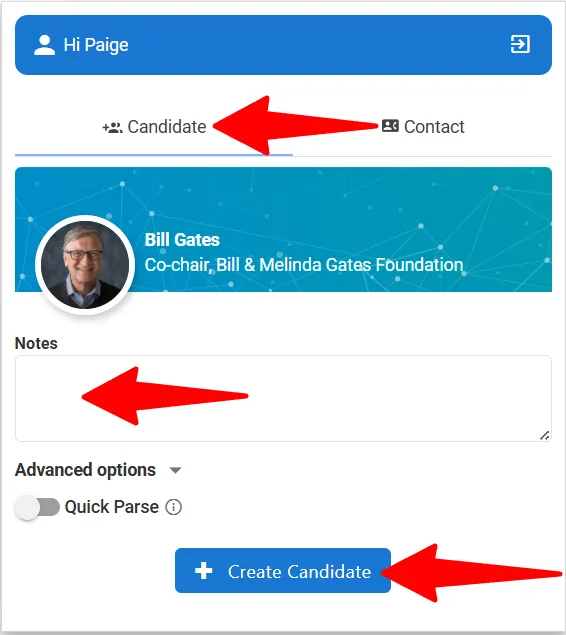
The first area to start using AI tools to speed up workflows is with sourcing. You can capture publicly available candidate profile data from professional platforms such as LinkedIn and Indeed. Then, parse it into structured candidate records using the People match AI Extension from Manatal. Open a LinkedIn profile, launch the extension, and map key details such as work experience, skills, and education into standardized fields easily.
Resume Parsing for Structured Candidate Data
The next step is turning incoming resumes into structured data your team can actually use. Instead of reviewing raw documents, you can upload resumes and convert them into standardized candidate profiles using Manatal’s resume parsing. The system extracts work history, education, skills, and certifications, so every profile follows the same format. This becomes especially useful when hiring across regions, since multilingual parsing keeps records consistent regardless of language, which improves how candidates are searched and matched later.
AI Candidate Recommendations for Job-to-Candidate Matching
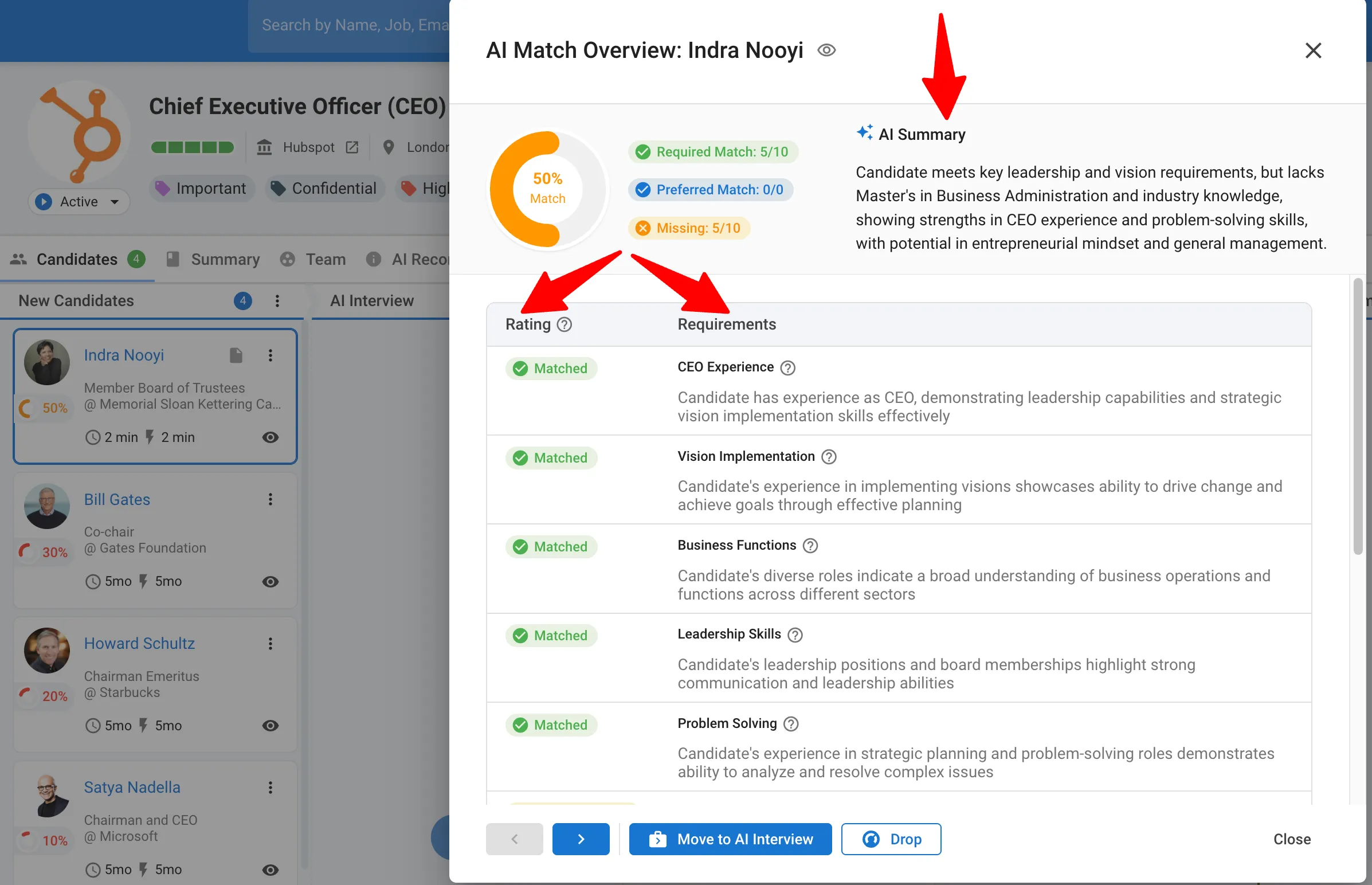
Once your data is structured, you can move into matching candidates to open roles more efficiently. Rather than manually screening each profile, you can define job criteria or let the system extract requirements directly from the job description. From there, you review a ranked list of candidates based on how well they fit the role. Each recommendation includes a clear explanation, so you can understand why someone appears in the shortlist. If the results are off, adjust required or preferred criteria and re-rank instantly. This keeps the process transparent while still leaving final decisions with your team.
AI Interviewer for Asynchronous Video Interviews
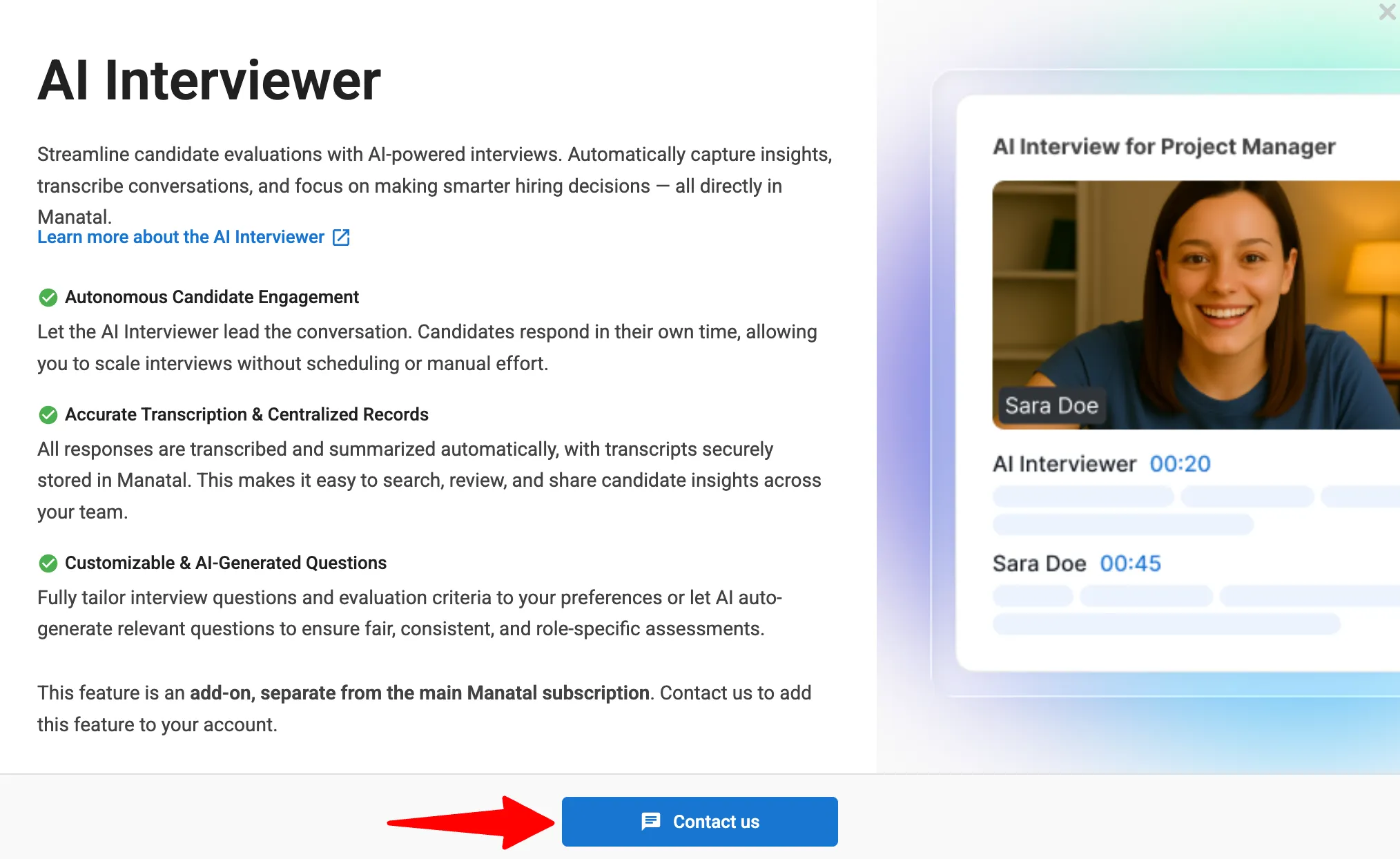
After shortlisting, the next bottleneck is typically initial interviews. Instead of coordinating schedules for every candidate, you can run structured first-round interviews asynchronously. Send candidates a link, define your questions in advance, and collect responses in a consistent format. Because every candidate answers the same set of questions, your team can review and compare responses more objectively before deciding who moves forward to live interviews.
AI Notetaker for Meeting Documentation and Interview Summaries
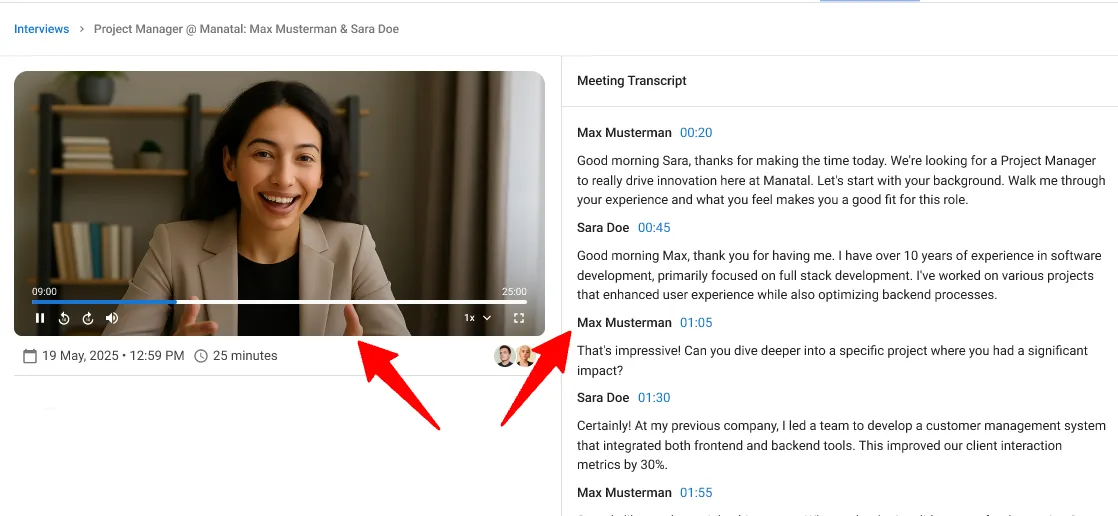
As interviews progress, documentation often becomes inconsistent across interviewers. To address this, you can record conversations and generate structured summaries automatically. Key points, candidate responses, and highlights are captured and stored directly in the candidate profile. This creates a shared record that your team can refer back to, improving alignment without relying on fragmented notes. It’s important to note that this step focuses on documentation, not evaluation, so hiring decisions still rely on human judgment.
AI Copilot and MCP Server
Finally, once all this data is in your system, you can start interacting with it more directly. Instead of manually compiling candidate summaries or interview briefs, you can use natural language prompts to generate them based on existing records. For example, you might request a summary of a candidate’s experience, skills, and past interactions in seconds. This is supported through Manatal’s AI Copilot, with the MCP Server acting as a controlled layer that manages how data is accessed. Outputs are generated from your ATS data and should be reviewed before use, which keeps recruiters in control while reducing repetitive work.
{{cta}}
Benefits and Limitations of AI Staffing
AI staffing improves speed, consistency, and data organization across the hiring process. It supports sourcing, converts resumes into structured records, ranks candidates against job criteria, and documents interviews in a consistent format.
AI also has limits. Outputs depend on data quality, and systems can reflect bias in historical data. Human oversight remains necessary, especially for evaluation, candidate interaction, and final hiring decisions. AI staffing works best as decision support, not decision replacement.
When AI Staffing Works Best
AI staffing works best in high-volume hiring, where recruiters need to review large numbers of candidates in a consistent way. It also fits structured roles, where the same criteria apply across applicants, such as skills, experience, location, and availability. It is less effective in highly unstructured hiring, where judgment depends on context that is harder to standardize.
Data quality matters. If candidate records are incomplete, inconsistent, or duplicated, AI output weakens. Clean, structured data gives you better matching, clearer rankings, and more reliable screening.
How to Choose the Right AI Staffing Technology
You have seen how AI staffing fits into sourcing, matching, interviewing, and documentation. The next step is to evaluate whether a tool supports those workflows in practice, not just in feature lists.
- Workflow fit: Ensure sourcing, matching, interviews, and documentation run end-to-end without friction or workarounds.
- Data quality & integrations: Verify structured parsing, deduplication, and consistent sync with your ATS and tools.
- Explainability & control: Confirm transparent rankings with clear criteria and the ability to adjust or override results.
- Compliance & bias: Check auditability, decision tracking, and processes to monitor and mitigate bias.
- Adoption & cost: Assess ease of use, setup effort, and scalability without adding operational overhead.
Conclusion
AI staffing improves recruitment when it supports the full workflow, from candidate intake and matching to structured interviews and consistent documentation. In Manatal, this includes the People-Match AI Chrome Extension for sourcing, AI Candidate Recommendations for ranking, AI Interviewer for asynchronous screening, AI Notetaker for interview records, and AI Copilot with the MCP Server for working with ATS data. These tools reduce manual steps, improve data consistency, and support decision-making, while recruiters remain responsible for candidate evaluation, relationship management, and final hiring decisions.
Frequently Asked Questions
Q: What is AI staffing?
AI staffing is the use of AI tools to support recruiting tasks such as sourcing, resume parsing, candidate matching, interviewing, and meeting documentation.
Q: What are the limitations of AI staffing?
AI tools depend on data quality and need human oversight. They can also reflect bias if the underlying data or rules are flawed. For that reason, recruiters still need to review recommendations and maintain control of hiring decisions.
Q: How should a team evaluate AI staffing software?
Look at workflow fit, integration quality, explainability, compliance safeguards, and ease of adoption. The best tool is one that fits your process, not one that adds complexity to it.
.webp)






.webp)

.webp)


.webp)


