





Data from Obscan shows that 97.8% of Fortune 500 companies use an ATS. [1] Corporate talent acquisition leaders no longer choose an enterprise applicant tracking system based on basic features. You are choosing an information architecture. [2] The decision requires balancing user adoption against corporate data compliance. This guide ranks the best enterprise ATS for 2026 and provides an evaluation framework for budget owners.
What are Enterprise Applicant Tracking Systems?
An enterprise applicant tracking system handles massive operational scale. This means supporting thousands of concurrent job requisitions and complex multi-level approval chains. Enterprise systems typically support SAML or OpenID Connect for single sign-on (SSO), along with SCIM for automated user provisioning, custom role permissions, and audit-ready reporting. They require a robust compliance infrastructure to meet global legal requirements and must maintain bidirectional sync with your core human capital management (HCM) systems.
Enterprise ATS Comparison
Based on insights gathered from industry platforms including G2, SelectSoftware Reviews, and softwarereviews.com [3][4][5], we scored each platform on these criteria: depth of AI matching and AI resume screening, workflow configurability, compliance coverage, analytics maturity, security certification, and total cost of ownership.
7 Enterprise Applicant Tracking Systems for 2026
1. Manatal
.png)
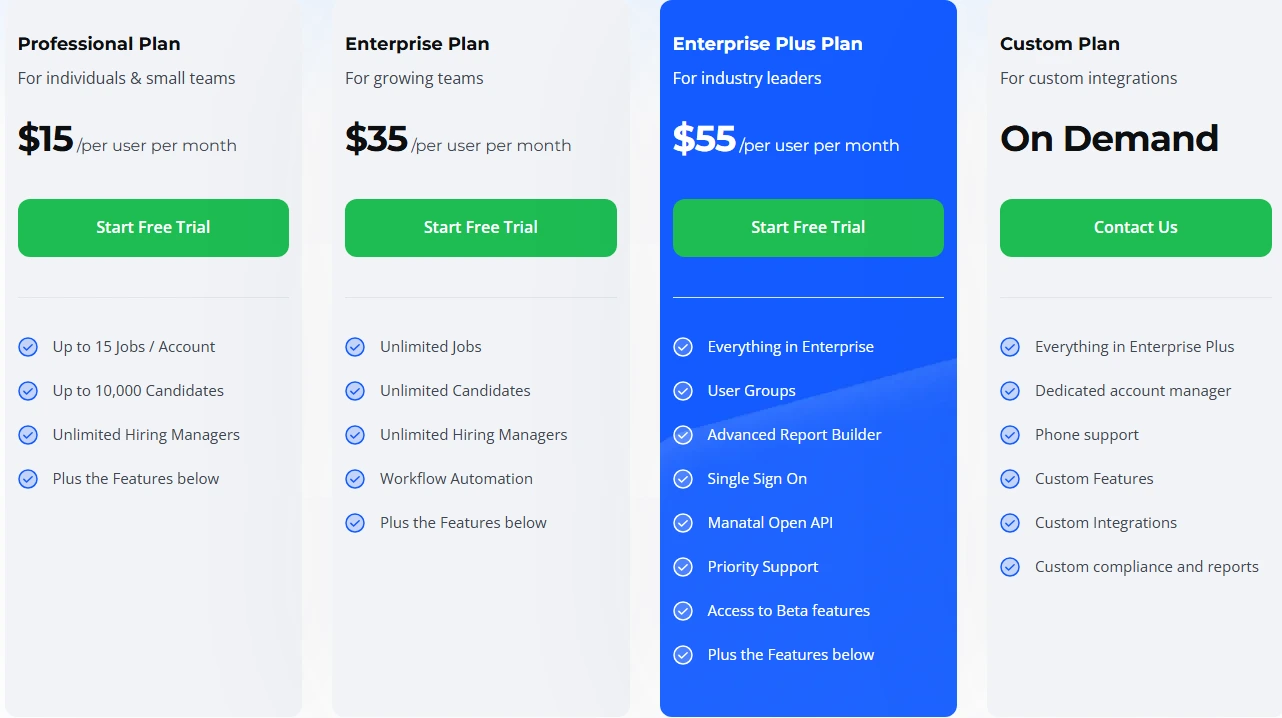
Manatal is an application tracking system designed to streamline high-volume recruitment workflows. Enterprise teams keep their candidate data flowing to external payroll, analytics, and HRIS tools using the Manatal Open API and Zapier integrations. This pipeline runs on an infrastructure protected by SOC 2 Type 2 security, providing enterprise security controls.
- Key Capabilities: Recruiters use Manatal AI engine to instantly score and match candidates against high-volume talent pools, an integrated recruitment CRM for managing internal hiring managers, and customizable pipeline tracking.
{{cta}}
2. Workday Recruiting
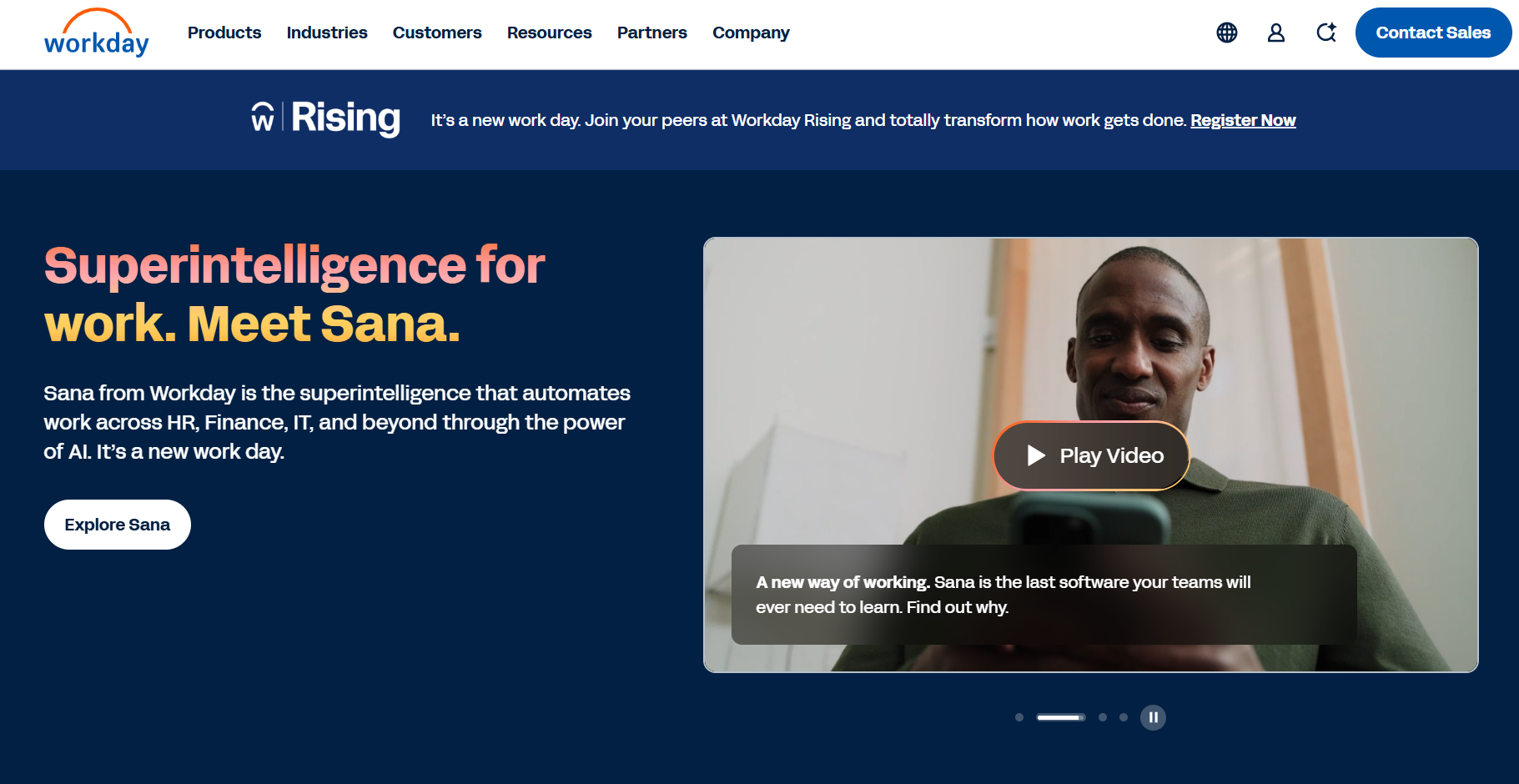
Workday Recruiting is part of the Workday human capital management platform. It manages recruiting alongside employee data within a shared system and includes enterprise features such as organizational hierarchies, internal mobility, configurable approval workflows, and centralized reporting.
3. SAP SuccessFactors Recruiting
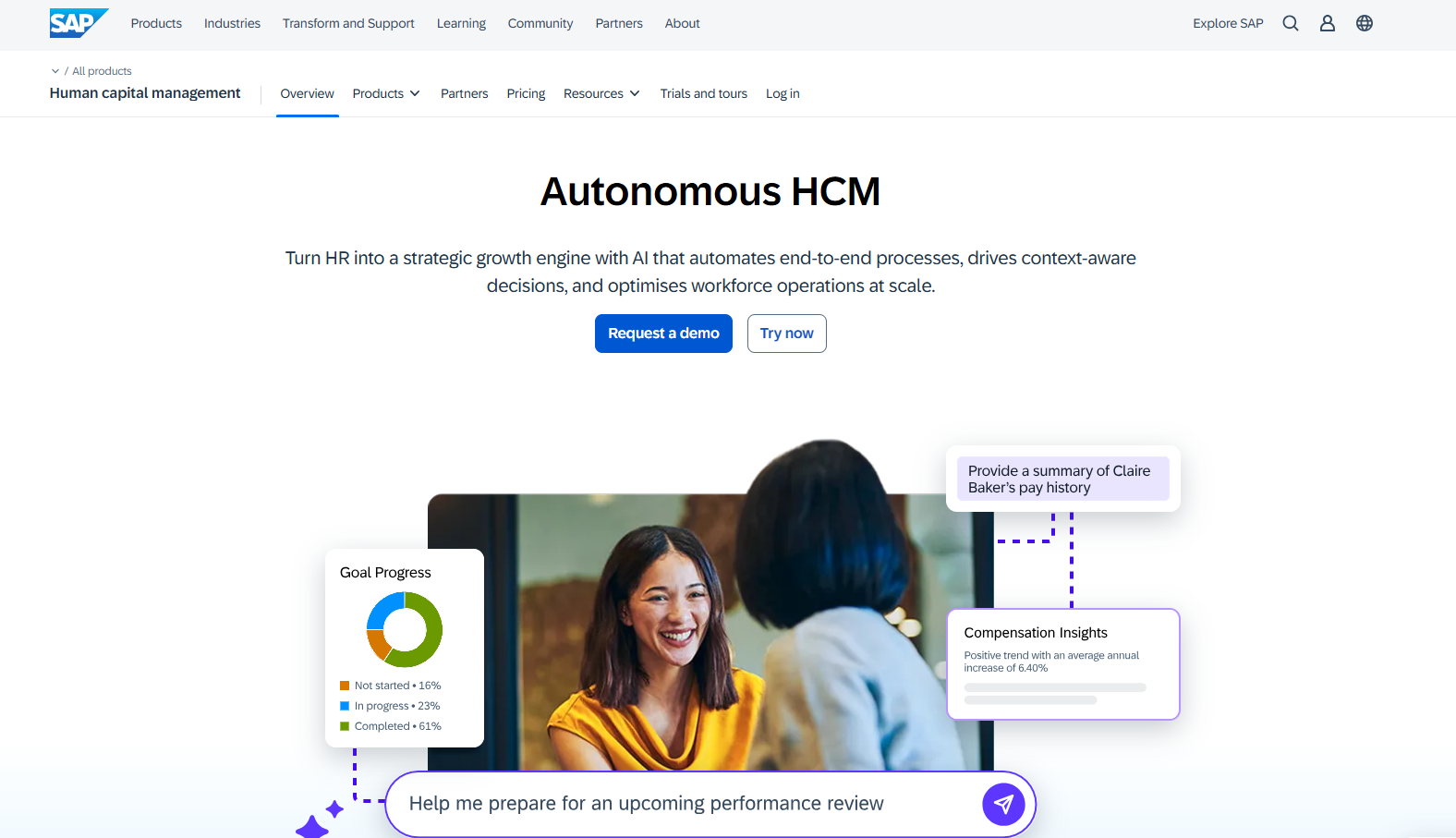
SAP SuccessFactors Recruiting supports recruitment across multiple countries, business entities, and organizational structures. Enterprise features include configurable approval workflows, localized recruiting processes, role-based permissions, and integration with other SAP SuccessFactors modules.
4. Oracle Recruiting Cloud (ORC)

Oracle Recruiting Cloud is part of Oracle Fusion Cloud HCM and provides applicant tracking, recruitment management, and internal career development tools. Enterprise capabilities include role-based security, audit logging, configurable workflows, reporting, and integration across Oracle Cloud applications.
5. Avature
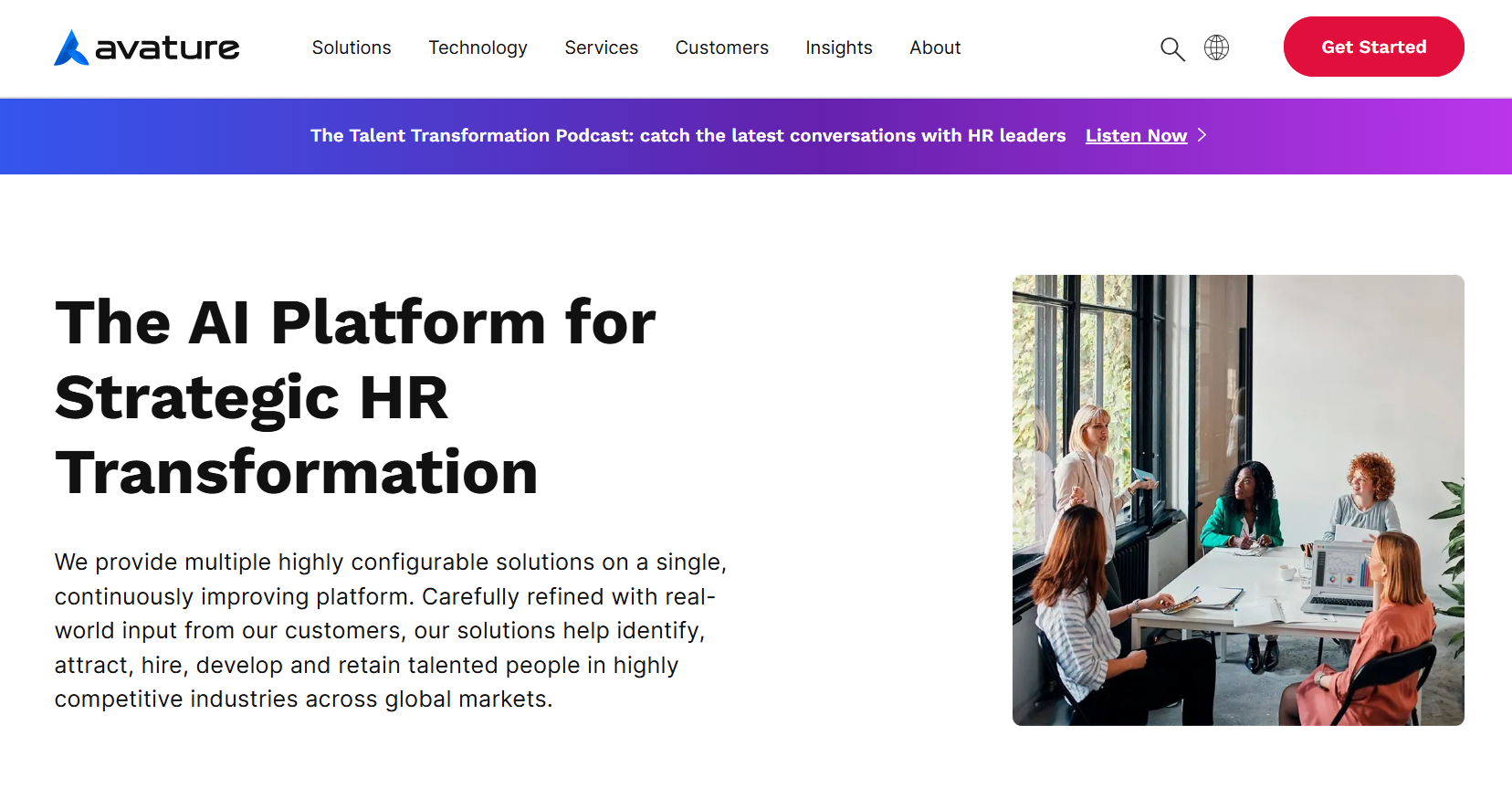
Avature combines applicant tracking with candidate relationship management in a configurable platform. Enterprise features include customizable workflows, multi-brand career sites, business unit separation, configurable data models, and API-based integrations with external systems.
6. Phenom
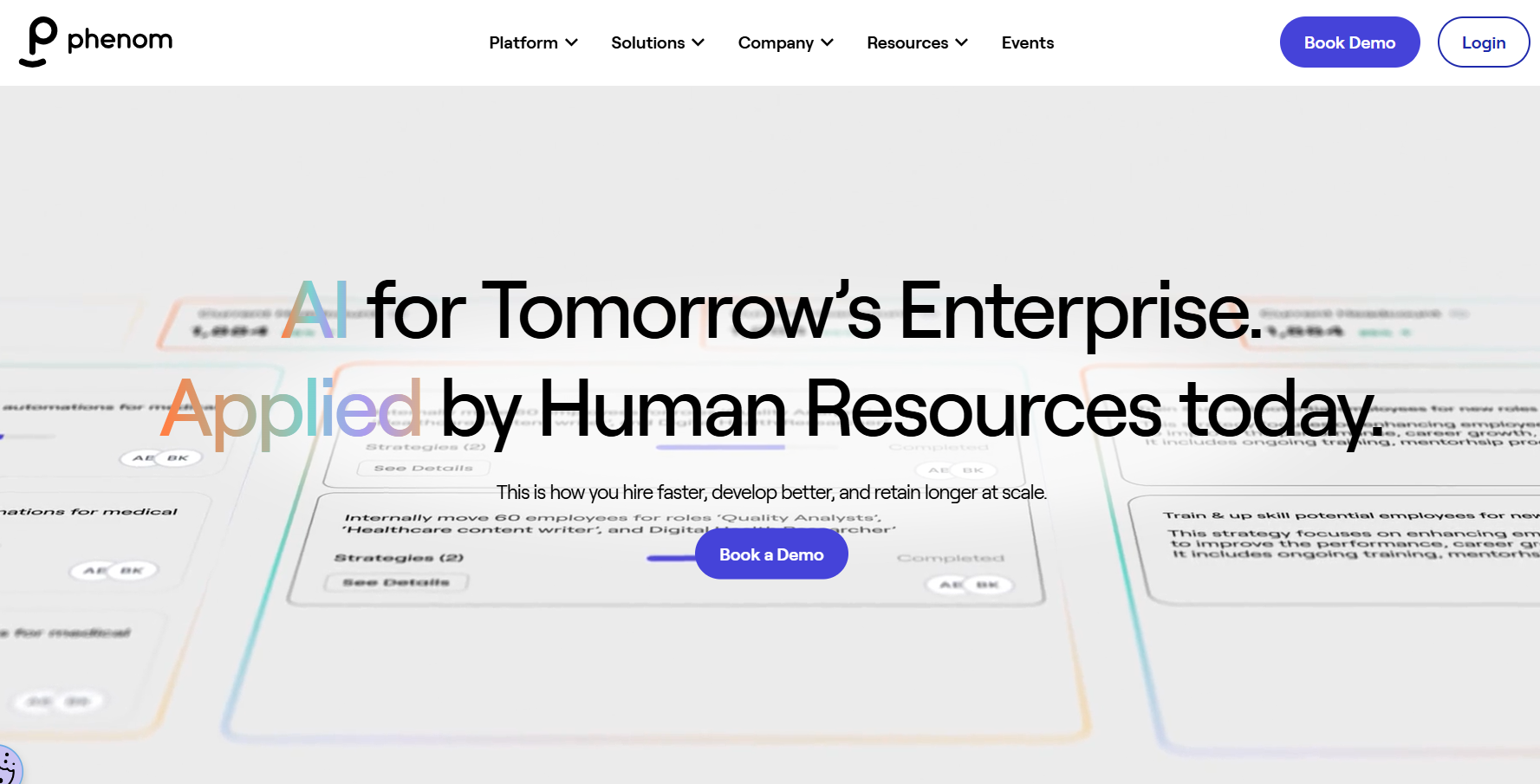
Phenom is a talent experience platform that includes applicant tracking. Enterprise capabilities include configurable career sites, AI-assisted search and matching, workflow automation, analytics, and integrations with HR and applicant tracking systems.
10. Darwinbox
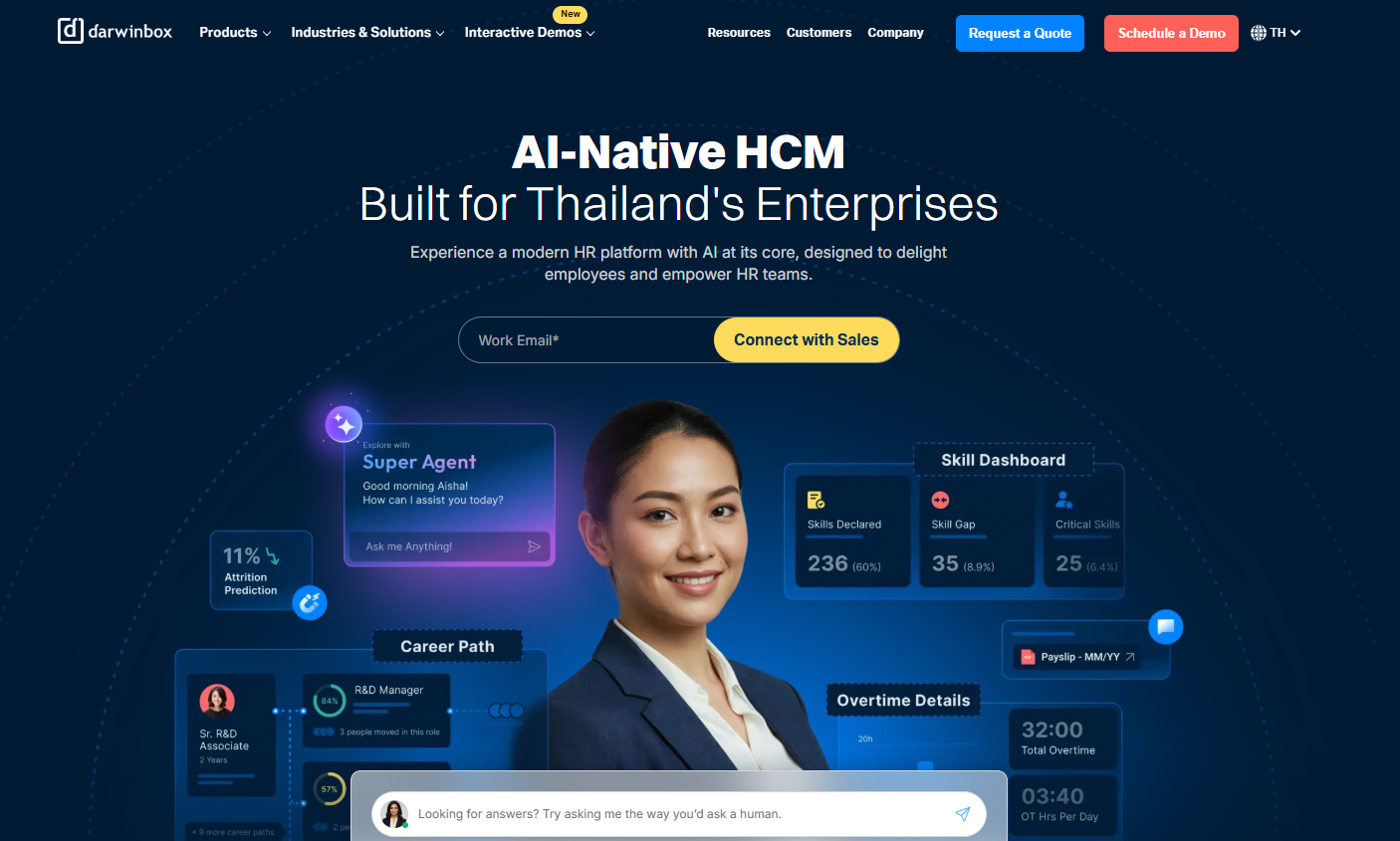
Darwinbox is a human capital management platform that includes applicant tracking as part of its HR solution. Enterprise features include multi-country HR support, configurable recruitment workflows, role-based access controls, localized compliance options, and integration with other HR modules.
Standalone ATS vs. HCM-Embedded Recruitment
Choosing an architecture is the most important decision in enterprise hiring technology.
- Standalone platforms prioritize user adoption and recruiting speed. They offer optimized workflows that help recruiters review applications quickly. The trade-off is integration maintenance. You must connect the platform to your core HR system using APIs.
- HCM-embedded systems place your recruitment data directly inside your main employee database. This creates a clean data flow from applicant to new hire. The trade-off is user adoption. These modules are often built as extensions of database software; some organizations report lower recruiter adoption because these modules prioritize broader HR processes over recruiting workflows.
How to Choose and Roll Out an Enterprise ATS
Deploying an enterprise applicant tracking system requires a structured rollout process that aligns with your corporate operations. Executing this specific sequence ensures high user adoption and protects data integrity across the organization:
- Form a selection panel: Include your chief people officer, procurement managers, security leads, and at least one high-volume hiring manager. Document your exact hiring volumes, compliance requirements, and mandatory HRIS connections.
- Make the Architecture Decision First: Determine whether a standalone platform or an HCM-embedded system fits your technical strategy. These criteria filter your vendor list before you book software demonstrations.
- Validate Integration Capabilities: Ask vendors to provide a live demonstration of bidirectional data syncing with your exact HRIS and payroll setup. Verify security certifications such as SOC 2 Type II or ISO 27001, depending on the vendor, and single sign-on support.
- Run a Controlled Pilot: Test the top platform using a single, high-volume business unit for thirty days. Measure actual recruiter processing times and system adoption rates before signing a global contract.
- Build a Migration Plan: Map out how you will export legacy candidate records, preserve historical compliance logs, and train your team on the new workflows.
Conclusion
What separates enterprises that hire well from those burning through budget is whether the platform fits their actual architectural decisions, not whose demo had the best AI narration. Selecting the right enterprise applicant tracking system ensures your talent acquisition team moves fast enough to win top candidates while keeping corporate data secure.
Frequently Asked Questions
Q: What are the best enterprise applicant tracking systems in 2026?
A: Manatal, Greenhouse, iCIMS, Workday Recruiting, SAP SuccessFactors Recruiting, Oracle Recruiting Cloud, Avature, Lever, Phenom, and Darwinbox lead the enterprise field, split between standalone recruiting-first platforms and modules embedded inside a broader HCM suite.
Q: How much does an enterprise applicant tracking system cost per year?
A: Enterprise applicant tracking system investments generally range from $30,000 to more than $120,000 annually. [6] Pricing varies by seat count, requisition volume, and architecture. Standalone platforms often price per seat with transparent tiers, while HCM-embedded modules get bundled into a larger suite contract that's harder to isolate. Always request a fully loaded first-year number that includes implementation and migration, not just the base subscription.
Q: What ATS features matter most for high-volume enterprise hiring?
A: AI-driven screening that can process thousands of applicants per requisition, configurable multi-level approval workflows, OFCCP and EEO-ready audit reporting, and bidirectional HRIS or payroll sync.
Q: How do I choose the right applicant tracking system for an enterprise?
A: Decide your architecture first, standalone or HCM-embedded, based on whether your real pain point is recruiting capability or data fragmentation. Then shortlist against compliance, integration, AI depth, and total cost of ownership, and validate every integration claim with a reference customer before you sign.
Citations:
.webp)







.webp)

.webp)


.webp)


