





Healthcare staffing is one of the fastest-growing segments in the recruitment industry. It is driven by an aging population and a projected 1.9 million annual healthcare job openings.[1] But while a multi-billion-dollar market creates massive opportunity,[2] navigating state licensing, heavy credentialing burdens, and brutal 30- to 90-day cash flow delays keeps most newcomers from succeeding. If you want to know how to start a healthcare staffing agency without running out of capital, this guide skips the fluff and delivers the exact execution details you need, from legal registration to your first placed worker.
Is a Healthcare Staffing Agency Worth Starting?
The short answer is yes. If you can navigate the operational hurdles. High demand and strong margins make it lucrative, but strict compliance and cash flow pressures filter out unprepared founders quickly.
Here is what makes the model worth pursuing, alongside the honest challenges you will face:
- Sustained Demand: Hospitals and clinics face ongoing clinician shortages, relying heavily on outside agencies to fill critical shifts their internal teams cannot.
- Strong Margins: Healthcare placements command high bill rates, often yielding 25% to 50% markups above worker pay, outperforming standard generalist staffing firms. See our detailed breakdown on how recruitment fees work in staffing.
- High Compliance Barriers: Strict state licensing, mandatory credentialing, and steep insurance premiums mean your operational setup must be tight from day one.
- Cash Flow Strain: Long facility payment terms force early agencies to rely on cash reserves or costly factoring fees just to cover weekly payroll.
The agencies that thrive are the ones that get their licensing, credentialing, and working capital locked down before taking their first order.
Choose Your Niche and Service Model
Your niche dictates your licensing burden, insurance costs, and capital requirements. Instead of trying to serve everyone, focus on a specific combination of worker types and service models that align with your experience and initial budget.
Common Worker Types
- Nursing Staff: Registered Nurses (RNs), Licensed Practical Nurses (LPNs), and Certified Nursing Assistants (CNAs).
- Allied Health: Physical therapists, respiratory therapists, radiologic techs, and lab technicians.
- Locum Tenens: Physicians filling temporary positions across hospitals and clinics.
Service Models
- Per-Diem Staffing: Fills single shifts or short-term local assignments. Keeps compliance local and initial capital requirements low, though individual shift margins are thinner.
- Travel Nursing: Places nurses on 8- to 26-week contracts. Offers higher bill rates and revenue, but requires multi-state compliance (Nurse Licensure Compact rules), housing logistics, and heavy working capital.
- Permanent Placement: Recruits direct-hire candidates for facilities. Earns a single upfront placement fee without the ongoing weekly payroll burden of contract staffing.
Pro Tip: Start where you have existing relationships. A founder with an ICU background will navigate hospital pain points better than someone chasing high-margin travel contracts in a specialty they don't understand.
What It Costs to Start a Healthcare Staffing Agency
It depends on your service model, but you need more capital than most people expect.
A lean per-diem launch with invoice factoring can start in the $25,000 to $75,000 range.[3] A self-funded agency with enough runway to cover payroll before invoices clear typically requires $150,000 to $210,000 for the first year.[4]
The budget breaks down as follows:
The biggest line item is working capital. You pay your nurses and CNAs weekly. Facilities pay your invoices on net-30 to net-90 terms.[4] That gap has to come out of your reserves. Plan for enough runway to cover four to eight weeks of payroll before your first invoice payment lands.[3]
Invoice factoring can reduce upfront capital needs. Factoring companies advance 80% to 95% of invoice value within 24 to 48 hours in exchange for a fee (typically 2% to 5% of the invoice).[6] This lets you start with less cash but cuts into your margins until you build reserves.
Your Starter Stack and Launch Sequence
If you are mapping out how to start a healthcare staffing agency efficiently, pairing a streamlined launch workflow with the right operational technology is essential to avoid burning capital on manual admin.
Healthcare staffing requires tools that seamlessly connect recruiting, credentialing, placement tracking, and client management:
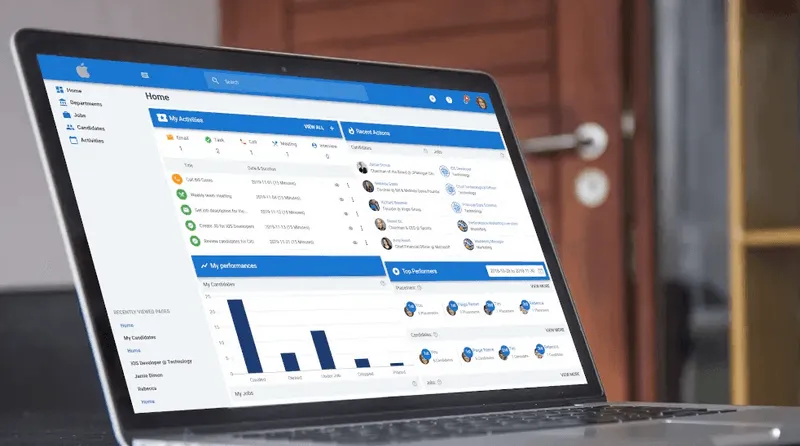
- All-in-One ATS + CRM: Manatal combines ATS and CRM capabilities into a single platform. Instead of juggling separate databases, you can manage facility client pipelines, candidate sourcing, and placement tracking in one connected system.
- Job Distribution: Post jobs across major channels (Indeed, LinkedIn) and niche healthcare boards. Manatal connects directly to 2,500+ job channels to maximize candidate reach automatically.
- Back-Office & Funding: Connect invoice factoring or EOR systems to handle weekly payroll float.
- Compliance Tools: Use integrated background checks and automated software to track credential expiration dates before placements occur.
Follow this ordered launch workflow:
- Pick your niche and service model. Validate local demand and billing rates.
- Register the entity (LLC or corp), get your EIN, and open a business bank account.
- Secure required state staffing or nurse-agency licenses. Confirm state-by-state rules for your service area. Human checkpoint: verify with a compliance service or attorney.
- Bind insurance (general liability, professional liability, workers' comp) at the limits facilities require.
- Stand up your tech. Configure the ATS/CRM pipeline, connect job boards, and set up a branded career page with application forms.
- Build your credentialing workflow: background checks, license verification, immunization and competency records. Store everything in candidate profiles. Human checkpoint: no worker goes to a facility without completed credentialing.
- Solve cash flow. Line up payroll funding or factoring before your first placement so you can pay workers weekly.
- Recruit your first pool of qualified workers. Screen and credential.
- Register as a vendor (VMS/MSP where relevant) and pitch facilities. Sign your first contract with clear rates, terms, and guarantee clauses.
- Place, track onboarding milestones, invoice, and reconcile funding. Human checkpoint: owner reviews margin per placement.
{{cta}}
Register Your Business and Meet Legal Requirements
Understanding how to start a healthcare staffing agency strictly by the book requires far more regulatory oversight than generalist staffing. Missing a single legal step can lead to heavy fines, voided facility contracts, or an immediate shutdown.
Here is the step-by-step checklist to ensure you are compliant from day one:
- Business Formation: Form an LLC for tax flexibility and personal liability protection. If you incorporate out-of-state (e.g., Delaware), register as a foreign entity in every state where you actively operate.
- Tax ID & Banking: Secure a free EIN from the IRS online and open dedicated business bank accounts to separate personal and business funds.
- State-Specific Licensing: Many states require a specific "nurse pool" or healthcare staffing agency license, issued either through the Department of Health or the Department of Labor, depending on the state.
- Nurse Licensure Compact (NLC): Crucial for travel nursing. NLC-licensed nurses can practice in any compact state seamlessly, while non-compact states require individual, state-by-state licensure.
- Legal & Compliance Review: Consult a healthcare compliance attorney before accepting your first order. Operating unlicensed carries severe financial and criminal penalties that far outweigh legal setup costs.
Note: States with strict, explicit agency licensing requirements include California, Florida, Illinois, Louisiana, Maine, Maryland, New Jersey, New York, and Texas. Always verify your state’s current rules before taking on clients.
Get the Right Insurance
Healthcare staffing requires higher insurance coverage than generalist staffing. Facilities won't sign contracts or let your clinicians on-site until you meet their mandatory policy minimums.
Work with a broker specializing in healthcare staffing, as standard business insurance usually excludes staffing risks, to secure these core policies:
- General Liability: Covers third-party bodily injury and property damage. Typical limits run $1 million per occurrence / $2 million aggregate.
- Professional Liability (E&O): Protects your agency against claims from placement mistakes, credentialing errors, or failure to supervise ($1M to $5M in coverage).
- Medical Professional Liability: Covers your agency’s shared vicarious liability if a placed clinician commits malpractice. An important gap standard policies miss.
- Workers’ Compensation: State-mandated insurance for workplace injuries. Expect higher premiums here due to the physical risks healthcare workers face daily.
Note: Major hospital systems often require you to list them as an "additional insured" and may demand $5 million+ in professional liability coverage before approving you as a vendor.
Set Up Credentialing and Onboarding
Sending an unverified worker to a facility creates severe legal and financial liability. Credentialing is the most critical operational hurdle in healthcare staffing, and every single worker must be fully verified before taking a shift.
A complete credentialing workflow requires primary-source verification for:
- Licenses & Certifications: Verify active state licenses directly with issuing boards, along with required certifications (BLS, ACLS, PALS).
- Background & Exclusions: Run criminal background checks, sex offender registry checks, and OIG exclusion list screens.
- Health & Competency: Document drug screens, TB testing, immunization records, competency assessments, and past work references.
To maintain these records smoothly, build your setup around two core priorities:
- Automate Expiration Tracking: Use an ATS built for onboarding to track expiration dates and block non-compliant workers from taking shifts. Platforms like Manatal streamline this by linking candidate profiles, credential milestones, and placement tracking in one place so you are always ready for facility audits.
- Consider Third-Party Accreditation: Earning certification through The Joint Commission or ACHC proves your compliance processes are top-tier. Many major hospital systems will only work with accredited staffing vendors.
Solve Cash Flow with Payroll Funding
Paying clinicians weekly while facilities pay on 30- to 90-day terms creates a massive cash gap. Running out of money to cover payroll while waiting for an invoice to clear will sink a new agency faster than anything else.
To bridge this gap, align your funding strategy before taking your first order:
- Self-Funding: Requires $100,000+ in liquid capital to cover several payroll cycles out-of-pocket until receivables start catching up.
- Invoice Factoring: Advances 80% to 95% of your invoice value within 24–48 hours. The factor collects from the facility and remits the rest minus a fee (typically 2%–5%).
- Employer of Record (EOR): EOR providers take over payroll, taxes, insurance, and back-office funding entirely so you can focus strictly on recruiting.
Trade-Off: Both factoring and EOR models compress your margins, but they reduce startup risk and ensure you never miss payroll.
Build Your Talent Pipeline
Having open facility orders means nothing if you lack credentialed clinicians. To build and maintain a reliable candidate pool, move fast and streamline candidate intake:
- Multi-Channel Sourcing: Recruit via major job boards, healthcare-specific sites, and travel nurse Facebook groups. Make sure your career page is mobile-friendly so nurses can apply from their phones.
- Fast Intake & Credentialing: Collect state license numbers, certifications, and reference contacts on day one so you can start verifying credentials immediately.
- Speed Wins: Qualified candidates have choices. An agency that responds in hours and speeds up onboarding will consistently beat slower competitors.
- Build Trust Early: Highlight clinical backgrounds, guarantee on-time pay, and use early candidate testimonials to show you support clinicians when shifts get tough.
For more detail on building your recruiter brand, see our guide on becoming an independent recruiter.
Land Your First Facility Contracts
With your pipeline and compliance locked down, you need paying clients. Landing hospital systems takes time, so start targeted and reduce friction for buyers:
- Target Smaller Facilities First: Start with surgery centers, skilled nursing facilities, and home health agencies. They have shorter approval cycles than massive hospital networks.
- Get on VMS/MSP Platforms: Apply to Vendor Management Systems used by large health systems to gain access to steady, automated shift orders.
- Pitch Specific Solutions: Skip generic pitches. Offer exact solutions like "We cover ICU night shifts within 48 hours" or "We specialize in OR techs for holiday gaps."
- Offer Trial Placements: Lower a facility's risk by offering your first placement at a reduced markup to demonstrate speed, reliability, and quality.
For more on client acquisition strategies, see our guide on getting clients for a staffing agency.
Conclusion
Learning how to start a healthcare staffing agency successfully comes down to more than filling shifts quickly. Long-term success requires being fully compliant and credential-ready from day one while running a lean, modern operation. The agencies that survive their first year treat facility relationship management, candidate credentialing, and placement tracking as one connected operation, not three separate spreadsheets. Modern ATS and CRM technology is what lets a two-person agency compete with established players on speed and audit-ready compliance without hiring a back office.
The market demand is there. The question is whether you can execute the back-office operations cleanly while building relationships on the sales side. Start a free trial of Manatal to run facility clients, candidate pipelines, and placement tracking in one connected system.
Frequently Asked Questions
Q: How much money do you need to start a healthcare staffing agency?
A: A lean launch with invoice factoring can start in the $25,000 to $75,000 range. A self-funded agency with enough reserves to cover the payroll-to-invoice gap typically requires $150,000 to $210,000 for the first year, with working capital for payroll float being the largest expense.
Q: Is a healthcare staffing agency profitable?
A: Yes, but margins vary. Healthcare placements often command markups of 25% to 50% over what you pay the worker. Early margins get compressed by factoring fees (2% to 5%), insurance premiums, and compliance costs. Profitability improves as you build cash reserves, reduce factoring dependence, and increase placement volume.
Q: How do you get contracts for a healthcare staffing agency?
A: Start with smaller facilities (surgery centers, skilled nursing facilities, critical access hospitals) that are more open to new vendors. Get on VMS/MSP platforms to access health system order flow. Pitch specific pain points and specialties rather than generic staffing. Offer trial placements to reduce facility risk. Build referral relationships. Manatal’s built-in CRM lets you track facility leads, manage client accounts, and link open shift orders directly to your recruiting pipeline in one place.
Q: What licenses do you need to start a healthcare staffing agency?
A: Requirements vary by state. Many states require a specific healthcare staffing agency or "nurse pool" license issued by the Department of Health or Department of Labor. States with explicit requirements include California, Florida, Illinois, Louisiana, Maine, Maryland, New Jersey, New York, and Texas. Verify with your state's licensing agency.
Q: Can you start a healthcare staffing agency with no money or no experience?
A: Limited capital: Yes, with trade-offs. Invoice factoring or an EOR back-office partnership can reduce upfront capital needs, but you trade margin for cash-flow support. No experience: Harder. Healthcare staffing has compliance and credentialing requirements that punish learning on the job. If you are starting lean, leveraging an intuitive ATS like Manatal helps shorten the learning curve by centralizing candidate sourcing, applicant tracking, and placement workflows without needing a massive back-office team.
Q: What are the biggest challenges of running a healthcare staffing agency?
A: The main challenges are cash-flow risk (the gap between paying workers and receiving invoice payments), compliance burden (state licensing, credentialing, and documentation requirements), insurance costs (premiums for healthcare staffing run higher than generalist staffing), and competition (the market has established players with existing facility relationships). You can mitigate compliance and operational risks by using Manatal to automate credential expiration tracking, streamline candidate intake, and ensure no worker takes a shift without completed background and licensing checks.
Citations
.webp)







.webp)

.webp)


.webp)


