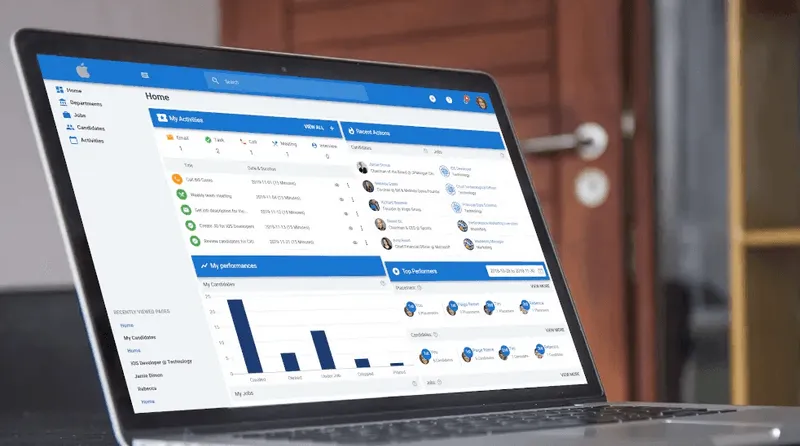


Most staffing firms run on referrals and repeat clients until a key account pauses hiring and the desk goes quiet for a month. Lead generation for staffing companies closes that gap with a steady list of employers who need people now. Staffing Industry Analysts (SIA) reported that US staffing hours rose 10% year over year, and commercial staffing hours rose 12%. Firms with a lead system are best placed to win that work. [1] This guide gives you signal sources, qualification rules, a starter stack, and a weekly workflow.
Where Staffing Leads Come From: Hiring Signals to Track
A hiring signal is an event that tells you an employer will need people soon. Some signals are public, and anyone can track them. Others live only in your agency's records, and those are usually warmer.
External Hiring Signals
- Our working heuristic: a role reposted after 30+ days can signal the employer is struggling to fill it. Indeed, saved searches surface these.
- Funding rounds and expansion news, such as a new site, often lead to batch hiring. Track them with Crunchbase or Google Alerts for volume temp and perm roles.
- SHRM cites expert advice that new managers sort their team in the first 90 days. Sales Navigator lead and account alerts flag saved leads' job or role changes.
- Warehousing, retail, events, and construction hire on a predictable seasonal calendar. As a practical rule, contact them 6-10 weeks before the peak.
- Large employers often buy contingent labor through vendor management systems (VMS) and MSP programs, so the lead is a spot on the supplier list.
Internal Hiring Signals
- A contractor's end date is a chance to extend the assignment, backfill the role, or redeploy the worker to another client.
- A placement that passed probation or its guarantee period shows the client is satisfied. Ask then for the next role or a referral.
- People you placed or interviewed who now manage teams are warm contacts. They already trust your judgment on candidates.
- Clients with no job order in 6+ months are dormant accounts worth reopening. Send a market update or a most placeable candidate (MPC) profile, a short anonymized summary of a strong candidate.
>> The MPC email itself is covered in our recruitment email marketing guide.
Inbound vs Outbound Recruitment Lead Generation
Executing lead generation for staffing companies effectively requires balancing two main approaches, each with a different cost structure and acquisition pace:
- Outbound covers signal-based email, LinkedIn messages, calls to decision-makers, and MPC outreach. It is fast and controllable, but it needs list building and compliance care.
- Inbound covers salary guides, hiring-cost content, a "request talent" form, and local SEO for branch-based firms. It starts slowly but keeps producing leads.
Both directions depend on relevance, because buyers now research suppliers alone before they talk to anyone. In a Gartner survey of 646 B2B buyers released March 9, 2026, 67% said they prefer a rep-free buying experience. Generic pitches are easy to ignore, so outreach tied to a real signal and content that answers hiring questions earn the reply.
How to Qualify Staffing Leads Before You Chase Them
A useful lead qualification framework should assess account fit, commercial value, decision-making authority, hiring urgency, and the likelihood of winning the business. This approach adapts the principles of Microsoft's BANT sales qualification framework, which evaluates Budget, Authority, Need, and Timeline, to the specific requirements of staffing agencies. [2]
Use the following five checks as a practical starting point. Award one point for each statement that is true:
- Niche fit: The role falls within your specialization, and you have relevant placement experience or access to suitable candidates.
- Commercial value: The expected contract headcount or permanent placement fee justifies the time and delivery costs involved.
- Decision-making access: You can identify and reach the person responsible for approving the hiring budget or selecting staffing suppliers.
- Hiring timeline: The client expects to fill the role within the next 90 days.
- Viable terms: Your proposed markup or placement fee falls within the client's acceptable range, and you understand any existing supplier agreements or exclusivity restrictions.
How to interpret the score: The five-point checklist and its thresholds are a proposed operating rule, not a validated industry benchmark. Start with three points as a working threshold, then compare scores against actual outcomes, such as qualified job orders, meetings, and placements. Prioritize leads scoring three or more for this week's outreach, and place lower-scoring accounts into nurture until new information improves their qualification.
Turn Your Placement Data Into a Lead Source
Your existing placement records can reveal opportunities to extend contracts, fill replacement roles, and expand client relationships. The challenge is keeping employment dates and follow-up responsibilities accessible to the whole team rather than relying on individual recruiters to remember them.
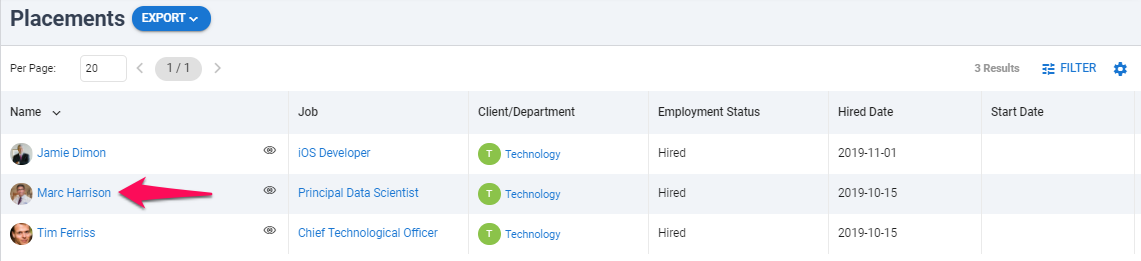
Manatal's Employment Management System supports placement records with start dates, probation end dates, employment end dates, and client or department information. Administrators can also configure custom candidate fields for additional milestones.
Use these records to build a schedule of account-expansion opportunities:
- Upcoming contract end dates: Contact the client before the assignment ends to discuss an extension, replacement, or future staffing requirements.
- Completed probation periods: Review the placement and ask the client about satisfaction, upcoming vacancies, or referrals where appropriate.
- Upcoming guarantee-period expiries: Schedule a review before the guarantee ends to discuss the placement's progress and any concerns.
Guarantee periods and other commercial milestones may need to be recorded in custom fields, depending on your process. These dates are follow-up prompts, not proof that a client is ready to buy. Confirm the client's needs before treating any trigger as a qualified lead.
This approach primarily supports existing-account development. External research and prospecting tools are still needed to identify new accounts.
Implementation: A Starter Stack and Weekly Lead Generation Workflow
Use the workflow below to create a consistent weekly process for staffing lead generation. Start with internal placement and client records, add relevant external buying signals, qualify each account, and review the results every Friday.
Starter Stack
- Manatal: Manage placement milestones, client records, contacts, notes, activities, and the client pipeline. See the recruitment CRM documentation.
- LinkedIn Sales Navigator: Research target accounts and decision-makers, and use saved leads and account alerts to identify relevant changes. See LinkedIn Sales Navigator.
- Google Alerts or company-news sources: Monitor funding announcements, expansions, and other business developments that may indicate potential hiring demand.
- Job boards: Monitor newly published and repeatedly advertised roles in your niche. Treat a repost as a prospecting signal, not proof of an unfilled vacancy or dissatisfaction with the current supplier.
- Email and LinkedIn: Contact prospects using relevant, personalized messages. Record business development activity in Manatal to maintain a shared account history.
Weekly Workflow
1. Pull internal triggers (Monday, about 30 minutes).
Review placements ending within the next 30 days, probation milestones completed in the previous 14 days, and client accounts with no recent job orders. Add relevant accounts to a shared This Week's Leads list.
The 30-day, 14-day, and six-month review windows are suggested operating parameters, not research-established thresholds. Adjust them to suit contract length, probation terms, and your typical client buying cycle.
How to do it with Manatal: Open the Employment Management System to review placement details, including start dates, probation end dates, and employment end dates. Review client records and their associated activities to identify accounts that need follow-up. Use custom candidate fields for additional milestones, such as guarantee expiry, where needed.
{{cta}}
2. Review external signals (Monday).
Check saved leads and account alerts in Sales Navigator, relevant funding or expansion announcements, and newly published or reposted job listings in your niche. Add 10–20 promising accounts to the same list, recording the signal and its source.
The 10–20-account target is a suggested weekly workload, not a universal benchmark. Prioritize signals that connect to a role your agency can realistically fill.
How to do it with Manatal: Create or update client records for suitable prospects in the Recruitment CRM. Add a note identifying the external signal, its source, and the date you found it. This gives your team a record of why the account entered the pipeline. Manatal can organize prospect records, but the external research itself must be conducted through your chosen research tools.
3. Qualify each account.
Score every lead against the five checks above. Record what you know, what remains unconfirmed, and the next action. Prioritize leads scoring three or more while retaining lower-scoring accounts for nurture when there is a plausible future opportunity.
How to do it with Manatal: Use the client pipeline to organize prospects by qualification stage. If your workflow requires additional tracking fields, ask an administrator to configure suitable client fields or pipeline stages where available. For example, track Lead Score, Hiring Timeline, and Next Review Date. Keep the evidence behind each score in the client notes rather than relying on the number alone. See Manage Your Clients.
4. Find the right contact.
Identify the hiring manager, department head, procurement lead, or other stakeholder involved in selecting staffing suppliers. Confirm their responsibilities and contact details before outreach. A senior title alone does not establish budget authority.
How to do it with Manatal: Add the prospect to the relevant client record under Contacts. Store their role and other useful business details, and use the contact profile to access related notes, emails, and activities. Research and verify contact information through your external sources before entering it. See Contact Profiles.
5. Run a human checkpoint.
Before contacting a prospect, have a recruiter or business development lead review the account, verify the signal, and write a relevant opening line. Refer to the specific job listing, business announcement, or upcoming contract review. Avoid implying that a company has an urgent vacancy or a supplier problem unless you have verified it.
How to do it with Manatal: Keep the verified signal and outreach context in the client record so the person sending the message can review them. Use collaborative notes to share account context with teammates. If you use message templates, personalize each message and verify its claims before sending.
6. Send the first touch by Tuesday.
Contact qualified prospects promptly while the signal is relevant. When a live job listing matches your specialization, consider offering an anonymized candidate profile or a short, relevant shortlist if you have suitable candidates and are authorized to share their information. Do not promise candidate availability until it has been confirmed.
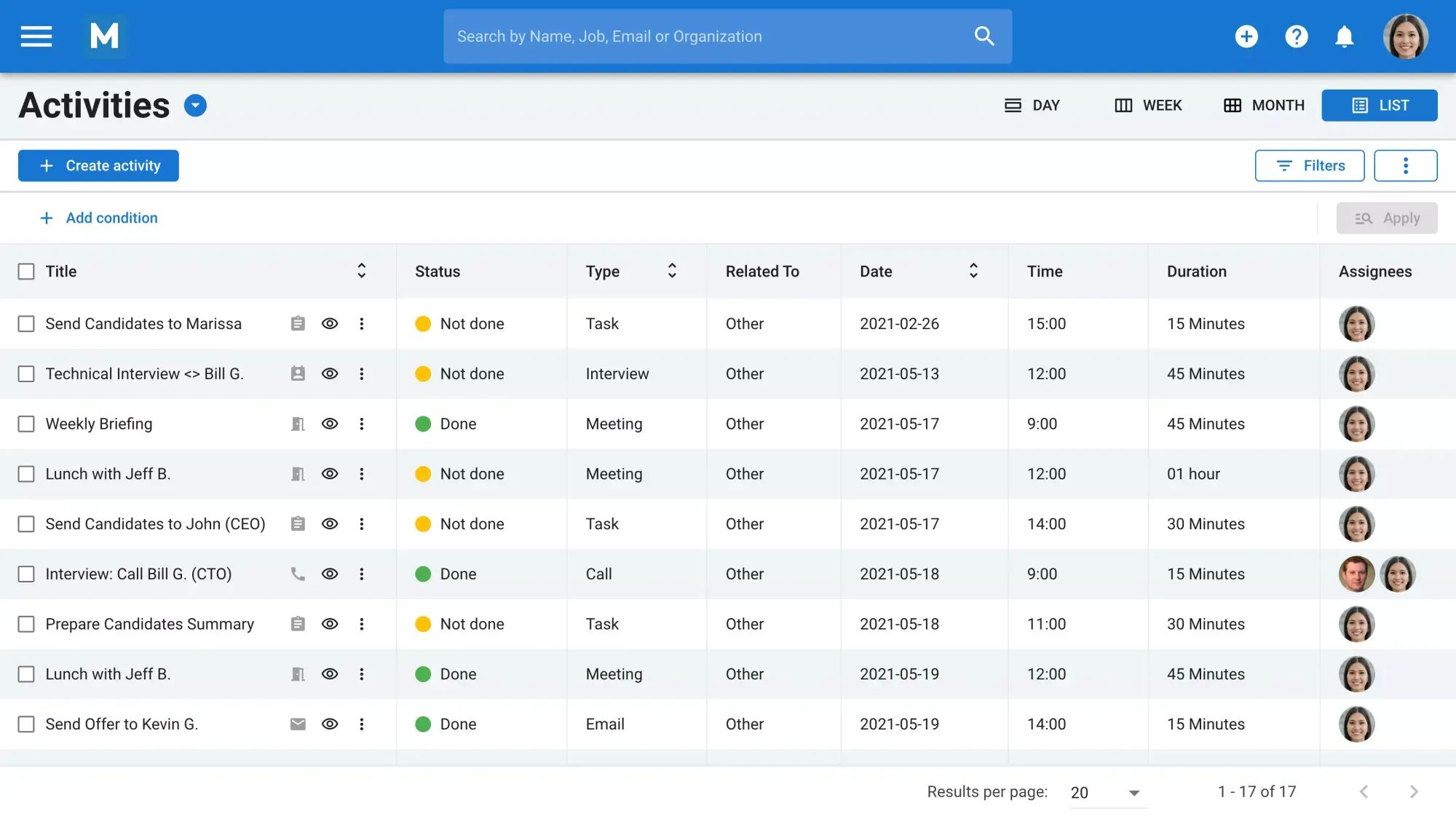
How to do it with Manatal: Use the client's contact profile to access available email communication features, or use your usual email and LinkedIn channels. Where email is handled outside Manatal, record the outreach as an activity on the relevant client or contact record. This keeps the outreach history accessible to the team.
7. Log every touch and follow up.
Record the outreach date, channel, signal, response, and next action. Follow one consistent follow-up cadence, adapting it when a prospect responds, declines, or asks to be contacted later. Use the recruitment business development guide for additional outreach guidance.
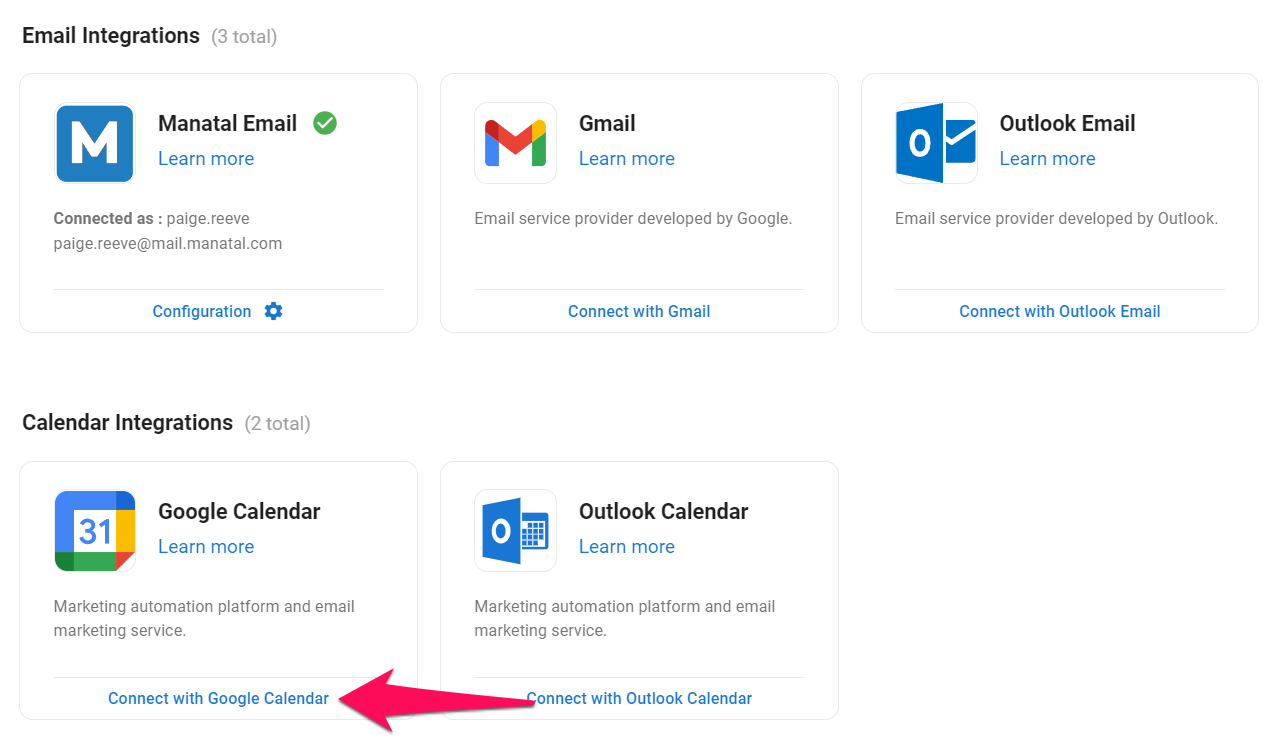
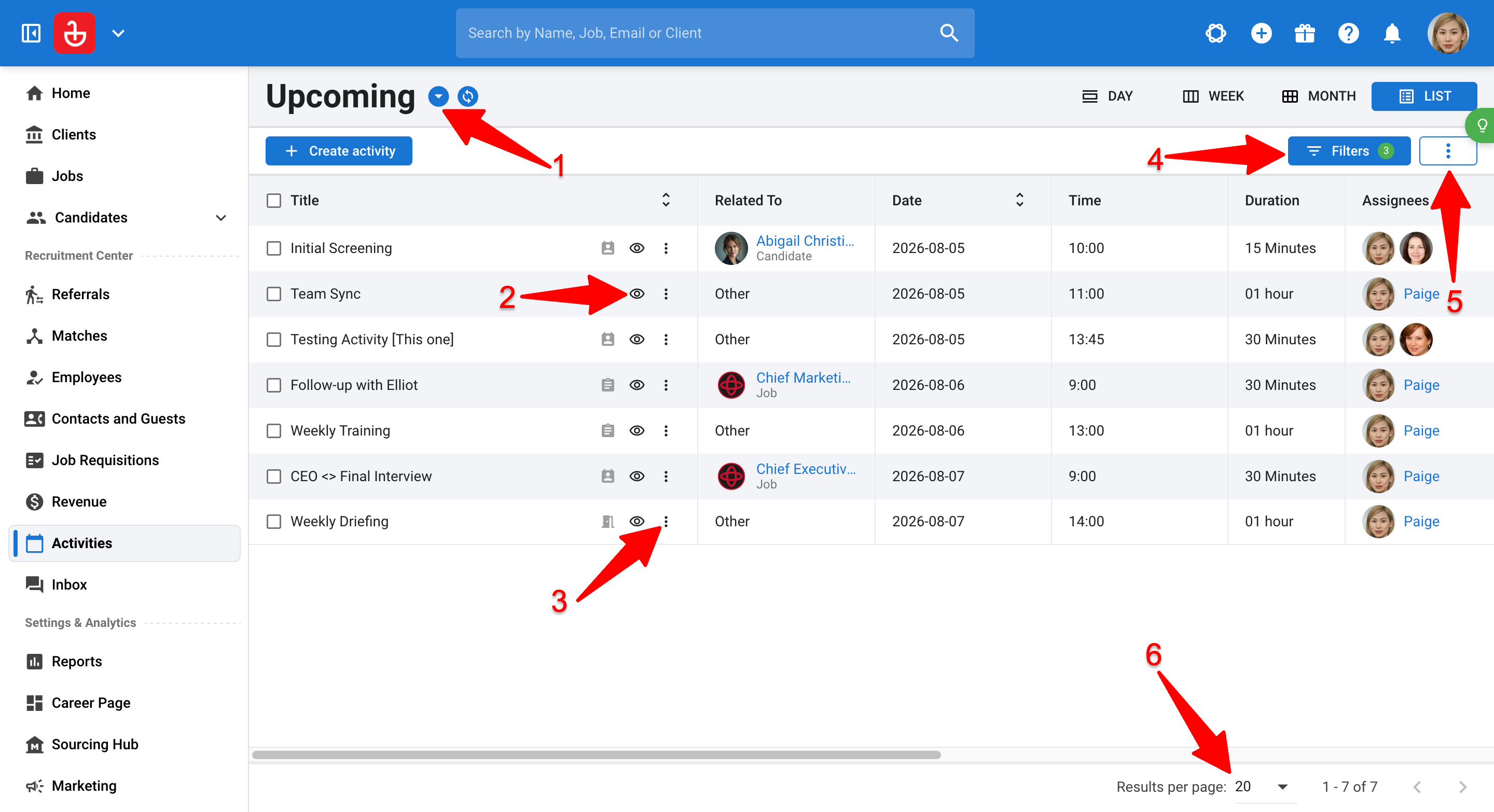
How to do it with Manatal: Create activities linked to the relevant client or contact, assign follow-up tasks to the responsible teammate, and record important responses in notes. Manatal's Activities page also supports calendar integrations with Google Calendar, Outlook Live, and Microsoft 365. See the Activities guide.
8. Review results on Friday (about 15 minutes).
Track qualified leads, replies, meetings booked, confirmed job orders, and placements by lead source. Compare internal triggers with external signals to see which sources produce meaningful commercial outcomes. Review the quality of the leads as well as their volume.
Four weeks without results can be a useful prompt to investigate a source, but it is not a universal cutoff. Consider your sales cycle, sample size, and the value of each opportunity before dropping a channel.
How to do it with Manatal: Review the client pipeline and available reports to monitor prospect stages and commercial activity. Manatal's Recruitment CRM also includes revenue-tracking functionality for placements. For a source-by-source lead-generation review, maintain a consistent lead-source field and export or consolidate the relevant records if your current reporting setup does not expose the required metrics directly. See Manatal's Recruitment CRM and Track Revenue.
Lead Generation Companies for Recruitment Agencies: Buy, Build, or Blend
Once the workflow runs, you have a baseline to compare against outside help. Lead generation for recruitment agencies comes in three forms:
- Building in-house gives you the most control and the lowest cost per lead over time, but it needs someone's time every week.
- Buying recruitment lead data tools or contact-finding tools speeds up list building, but you still qualify leads and write the outreach.
- Outsourcing to a lead generation agency is fast to start, but it can be expensive and generic unless you brief them well.
A blend often works best: keep internal signals and the human checkpoint in-house, and buy data or outside help for external list building. Before signing with any outsourced lead generation agency, work out your in-house cost per qualified meeting. Ask agencies to price per qualified meeting, not per lead, and outsource only if they beat your number on the same definition of "qualified."
Conclusion
A structured lead generation for staffing companies strategy built on verified hiring signals, internal placement milestones, and strict qualification rules protects your firm against unexpected market dips. Running this process through a unified platform like Manatal Recruitment CRM provides your business development team with the exact framework required to convert cold prospects into long-term accounts.
Start for Free with Manatal today.
Frequently Asked Questions
Q: How much should a staffing company pay for lead generation?
A: Pricing models vary across monthly retainers, per-lead pricing, and pay-per-qualified-meeting structures. Staffing firms generally achieve the highest ROI with performance-based pricing where compensation is tied directly to booked discovery calls with verified decision-makers who meet pre-agreed qualification criteria.
Q: What is the 80/20 rule in recruiting?
A: The 80/20 rule in staffing means that roughly 80% of an agency's total revenue often originates from 20% of its active client accounts. Maintaining a structured lead generation program ensures your agency continuously diversifies its revenue base rather than over-relying on a handful of key clients.
Q: What is the 5-minute rule for leads?
A: The 5-minute rule suggests responding to incoming sales leads within five minutes of submission to maximize conversion rates. In the staffing industry, establishing an SLA that guarantees a personalized response within the same business day ensures inbound inquiries are addressed while the prospective client's hiring need is urgent.
Q: Can you generate staffing leads for free?
A: Yes. Sustainable lead generation for staffing companies doesn't always require extra ad spend. You can source prospective accounts for free by leveraging candidate and placement data already sitting in your ATS such as Manatal, setting up Google Alerts for company funding, conducting saved searches on public job boards, and tracking client job changes.
Q: Is it worth hiring a lead generation agency for a recruitment firm?
A: Hiring an external lead generation agency makes sense if your internal team lacks the bandwidth to handle systematic prospecting. Before committing, negotiate contracts that include clear exit terms and mandate that all prospective account data and communication logs are owned by your firm and stored in your own CRM.
Citations: