





With time-to-fill averaging 44 days [1] and mid-level hiring costs reaching up to $7,000, the stakes for talent acquisition have never been higher. Beyond these initial costs, the financial impact of a mis-hire can escalate from $14,900 for frontline staff to over $240,000 for executives [2]. Strategic recruiting addresses these challenges by repositioning talent acquisition from a reactive function to a key revenue driver and nurturing pipelines today for the skills needed 18 months down the line, well before a vacancy even exists.
What is Strategic Recruiting?
Strategic recruiting means aligning your talent acquisition with business objectives rather than immediate vacancy needs. The shift shows up in your metrics. Companies with proactive talent pipelines reduce time-to-hire by 30-50% because they don't start from scratch when a role opens. [3] They've already identified passive candidates, nurtured relationships, and pre-qualified skill sets.
The Core Elements of a Strategic Recruiting Plan
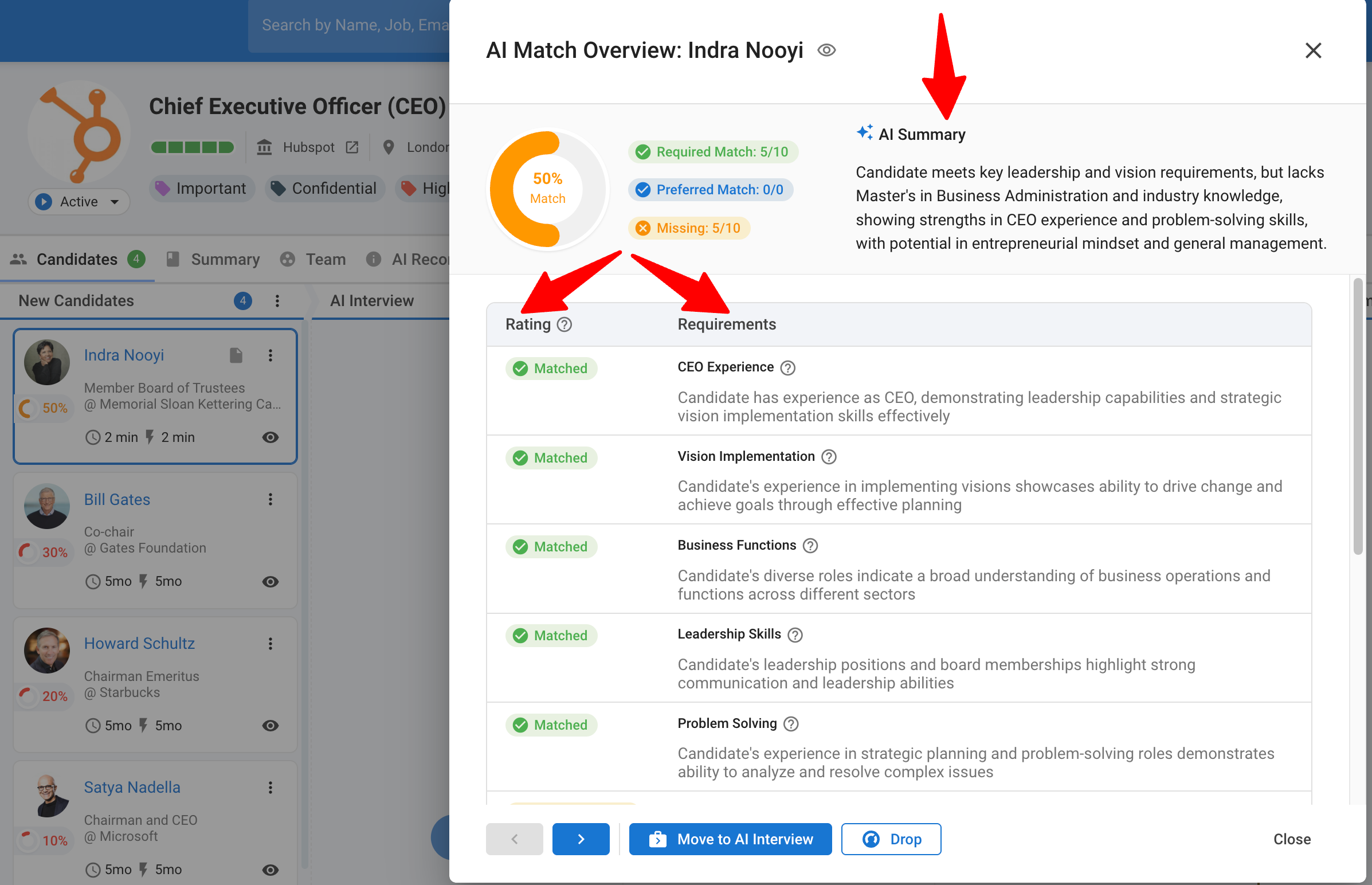
Manatal’s AI recommendation engine matches top candidates to skills gaps for strategic recruiting.
Pro Tip: Perform this exercise with your CFO and CRO, not just HR. If recruiting is not in those rooms during annual planning, your function will always remain reactive.
Skills Gap Analysis
A staggering 77% of employers struggle to find the right talent for open roles. [4] High-performing companies consistently overcome this challenge by conducting a formal skills gap analysis. This crucial step involves a proactive internal audit, where you collaborate with department heads to meticulously compare your current workforce's capabilities against the skills projected to be necessary in the next 18 months.
When external hiring becomes a necessity, deepen your collaboration with department heads by posing strategic questions: "If you could only add one capability to your team this year, what would it be?" and "What does a person with that capability look like on paper?"
Pro Tip: Leverage technology to truly operationalize your skills gap analysis. Manatal’s AI Recommendation engine instantly scans your existing database to match the best candidates against identified skill needs, significantly streamlining your talent search efforts.
{{cta}}
Employer Brand and Sourcing Strategy
Your employer brand is distinct from your company's marketing brand. It's the answer to a crucial question candidates ask themselves: "Would I want to work there?" Discerning candidates with options actively research potential employers, checking platforms like Glassdoor, reviewing your careers page, and observing engagement on your company's LinkedIn profile.
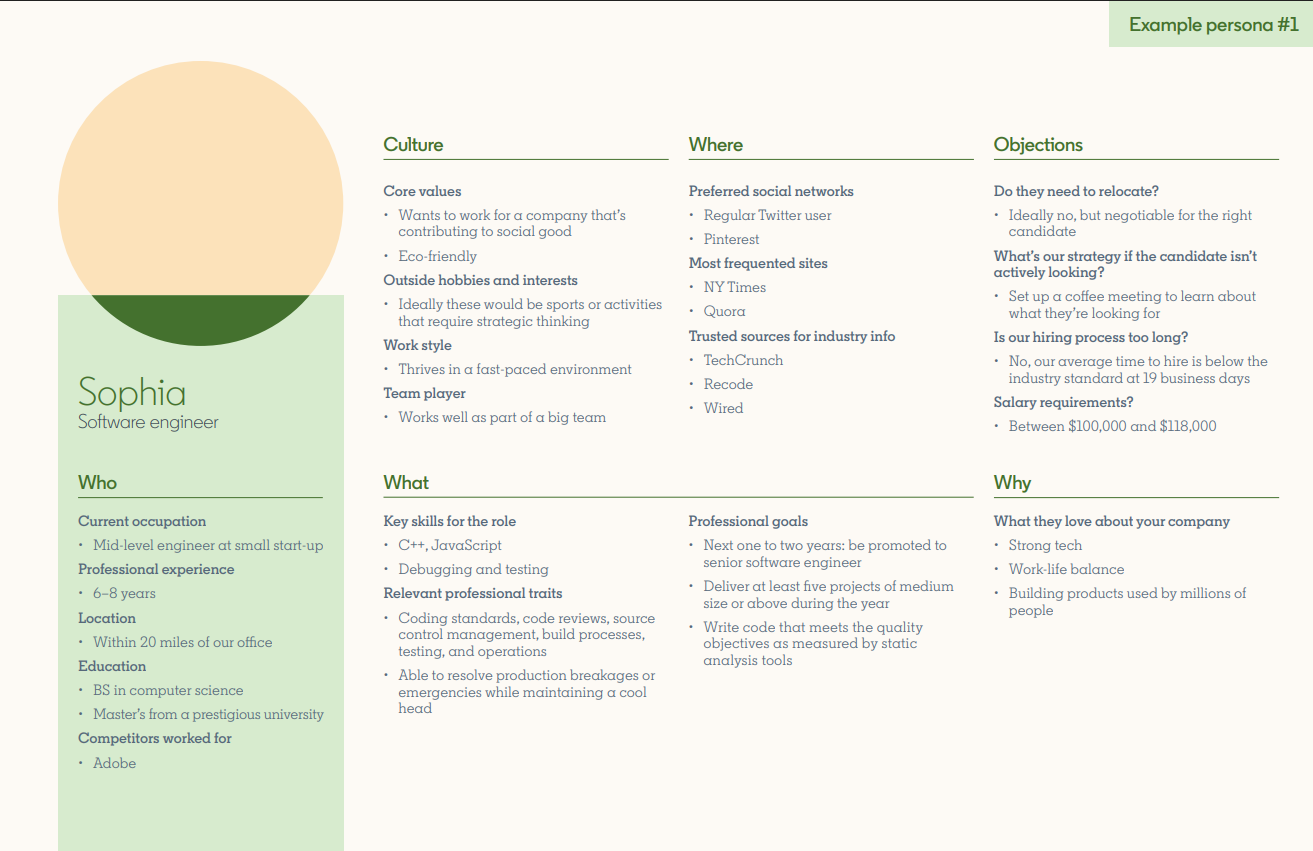
To effectively recruit top-tier talent, you must create a "Candidate Persona". This persona helps you identify what your target audience reads and what benefits they truly value. With this insight, you can consistently nurture your employer brand across those preferred channels, establishing a compelling presence well before specific roles become vacant.
Define your channel allocation by role type. Pick two or three channels where your target candidates actually spend time and dominate them. For instance:
- Fintech: Own Hacker News and Stack Overflow Careers rather than just LinkedIn.
- Healthcare: Be active on Health eCareers or state health care job boards instead of generic Indeed listings.
Pro Tip: With Manatal’s Candidate Sourcing Tool, you can post to thousands of free and premium job boards globally with a single click and use the Chrome Extension to source candidates directly from LinkedIn or specialized platforms, funneling them straight into your strategic pipeline.
Compliance and Budget
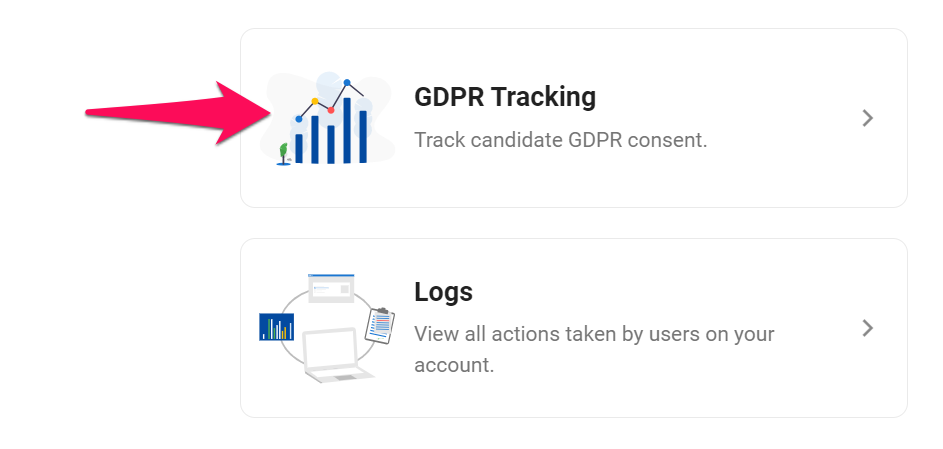
Build compliance into the plan before it becomes a legal problem. EEO data collection, GDPR-compliant candidate data handling if you source internationally, and structured interview scoring to defend against claims of inconsistent evaluation standards. These are not optional. If you source internationally, data privacy is paramount. Manatal ensures GDPR-compliant candidate data handling, providing built-in tools to manage consent and keep your strategic expansion legally sound across borders.
On Budgeting: A comprehensive cost calculation builds executive confidence. Break your budget into three main buckets:
When developing a comprehensive recruiting budget, it's crucial to account for a range of expenditures. These typically include external sourcing costs, such as job board subscriptions and recruitment agency fees, as well as investments in your essential HR tech stack, covering tools like Applicant Tracking Systems and assessment platforms. Furthermore, the significant, often undercounted, cost of internal recruiter time must be factored in, as their dedicated efforts represent a substantial organizational investment.
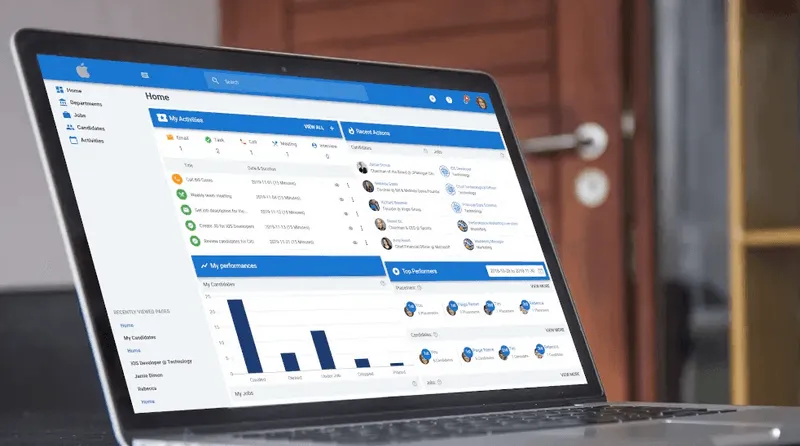
Pro Tip: To firmly establish strategic recruiting as a predictable engine for business growth, robust data tracking is essential. By monitoring key metrics, such as candidate by source, you can effectively evaluate your strategies and demonstrate their impact. Manatal’s reports and analytics feature provides these crucial insights, enabling you to deliver data-driven reports to leadership that prove the tangible value and predictable outcomes of your talent acquisition efforts.

The 2026 Strategic Recruiting Plan Template
To help you operationalize these core elements, we’ve developed the Strategic Recruiting Plan Template. It’s designed to bridge the gap between long-term business goals and immediate execution. Copy the text directly into your planning documents. Modify the placeholders to fit your organization.
Section 1: Executive Summary & Business Goals
Plan Owner: [Name, Title]
Plan Period: Q1 2026 through Q4 2026
Last Updated: [Date]
Total New Headcount Target: [X roles]
Total Replacement Headcount Target: [Y roles, based on projected attrition rate of X%]
Section 2: Workforce & Skills Gap Analysis
Before you post a single job, audit what you already have.
Current Workforce Snapshot:
Skills Gap Inventory (complete this with department heads):
Run this exercise with every department head. Their input is not optional. HR does not know what a principal engineer's day-to-day skills requirements look like in 2026 without talking to the engineering director.
Section 3: Hiring Targets (Roles, Timeline, Budget)
Total Annual Recruiting Budget: [$X]
Many organizations make the critical error of narrowly focusing their budget tracking solely on sourcing costs, overlooking the equally significant investments in their tech stack and internal recruiter time. This incomplete approach inevitably distorts cost-per-hire calculations, preventing a clear understanding of true recruitment expenditure and hindering effective strategic financial planning.
Section 4: Sourcing & Employer Brand Strategy
Channel Allocation by Role Type:
Section 5: KPIs & Success Metrics
If you are not measuring quality of hire, start immediately. It is the single most predictive metric for whether your recruiting function actually works. Time-to-fill tells you how fast you hired. Quality of Hire tells you whether it mattered. Track these monthly and report them to leadership quarterly.
While planning templates offer a solid foundation, their effectiveness rapidly diminishes if they remain isolated in static documents. Such isolated files inevitably lead to siloed data, impeding efforts to attract and secure top talent. True strategic recruiting demands a dynamic, integrated system. Leveraging tools like Manatal ATS, organizations can transcend the limitations of static spreadsheets and build a truly dynamic, highly efficient, and legally compliant hiring process.
Conclusion
The transition to strategic recruiting is no longer optional for companies looking to thrive in a competitive market. Moving away from "order-taking" toward a proactive, aligned partnership with business leadership ensures that talent acquisition supports revenue rather than draining it. With the steps above, you would essentially be able to build a funnel of candidates that fit your company's specific requirements, so you have top-tier talent available when you’re ready to hire.
Frequently Asked Questions
Q: What is strategic recruiting compared to traditional hiring?
A: Traditional hiring is reactive, focusing on filling a seat only when it becomes vacant. Conversely, strategic recruiting is defined by its proactive nature, in which recruiters build relationships with passive candidates and analyze future business needs long before a job opening exists.
Q: What role does technology play in a strategic recruiting plan?
A: A strategic recruiting plan relies on technology like AI-driven ATS platforms such as Manatal to operationalize data. These tools help match candidates to identified skills gaps instantly and ensure that candidate data management remains compliant with international laws like GDPR.
Q: How can strategic recruiting impact a company's bottom line?
A: By focusing on strategic recruiting, companies significantly lower the financial risks associated with mis-hires and long vacancies. Reducing time-to-fill and improving the quality of hire ensures that the workforce is consistently capable of executing revenue-generating projects.
Q: Why should a strategic recruiting plan include a skills gap analysis?
A: A strategic recruiting plan must include a skills gap analysis to ensure the company is hiring for future capabilities rather than just replacing past roles. This involves auditing current staff and consulting with department heads to determine which specialized hard skills will be needed to reach the company's 18-month objectives.
Citations:
.webp)







.webp)

.webp)


.webp)


