





Recruiters can lose top candidates because of slow offer approvals, manual data entry between siloed tools, and limited visibility into how talent moves from the ATS to onboarding. Talent management systems are supposed to solve these bottlenecks, but picking the wrong platform often just swaps one disconnected mess for a more expensive one. This guide cuts through the noise: you’ll get a breakdown of core modules, a realistic look at integrated suites versus best-of-breed tools, and a rollout plan designed to keep your recruiting team moving without breaking your HRIS or payroll.
Talent Management Systems vs. HCM vs. HRIS
The three categories overlap, which can lead organizations to pay for overlapping capabilities. This table keeps the distinction tight.
For a more comprehensive comparison, see our guides to HCM, talent management, and HRIS.
Core Modules of a Talent Management System
A talent management system is a set of connected modules along the employee lifecycle. Each one owns a specific job.
- Talent acquisition and recruiting bring sourcing, an applicant tracking system, and AI-assisted candidate screening into one pipeline.
- Onboarding turns a signed offer into a productive start date by tracking documents, milestones, and probation timelines.
- Performance management runs reviews, continuous feedback, and goals or OKRs so managers and employees stay aligned.
- Learning and development supports upskilling and career pathing so people grow inside the company rather than leaving to grow.
- Compensation management structures pay, merit increases, and equity so rewards stay consistent and defensible.
- Succession planning identifies future leaders and builds bench strength for roles you cannot afford to leave open.
- Engagement and retention analytics track sentiment and turnover risk so you can act before people quit.
Many talent management systems provide stronger capabilities for performance and learning than for recruiting and sourcing. Buyers can solve this by pairing their core HR suite with a specialized applicant tracking system like Manatal, a recruiter-built solution with customizable pipelines, AI matching, and Open API integrations to sync with broader HRIS and payroll tools. Combining a dedicated recruitment tool with an enterprise suite ensures complete coverage across the entire employee lifecycle without sacrificing hiring performance.
{{cta}}
Best Talent Management Systems in 2026 (Grouped by Fit)
There is no single best tool, only the best fit for your tier and priorities. Pricing models vary and may be charged per employee, per user, per contractor, or through custom enterprise contracts.
Enterprise Suites
SAP SuccessFactors

Description: A cloud-based enterprise HCM suite designed to manage core HR, global payroll, and talent processes (applicant tracking, onboarding, performance reviews, learning management, and succession planning). It is structured to handle complex international workforce structures and regulatory compliance requirements for large organizations.
Pricing details: Starting from $4.66/user/month.
Workday HCM
.jpg)
Description: An enterprise HR architecture that unifies core workforce data, talent acquisition, performance management, learning, and financial management within a unified data model. It focuses on enterprise-level workforce planning, organizational modeling, and executive analytics.
Pricing details: Organizations need to request either a free trial or a quote.
Oracle Cloud HCM
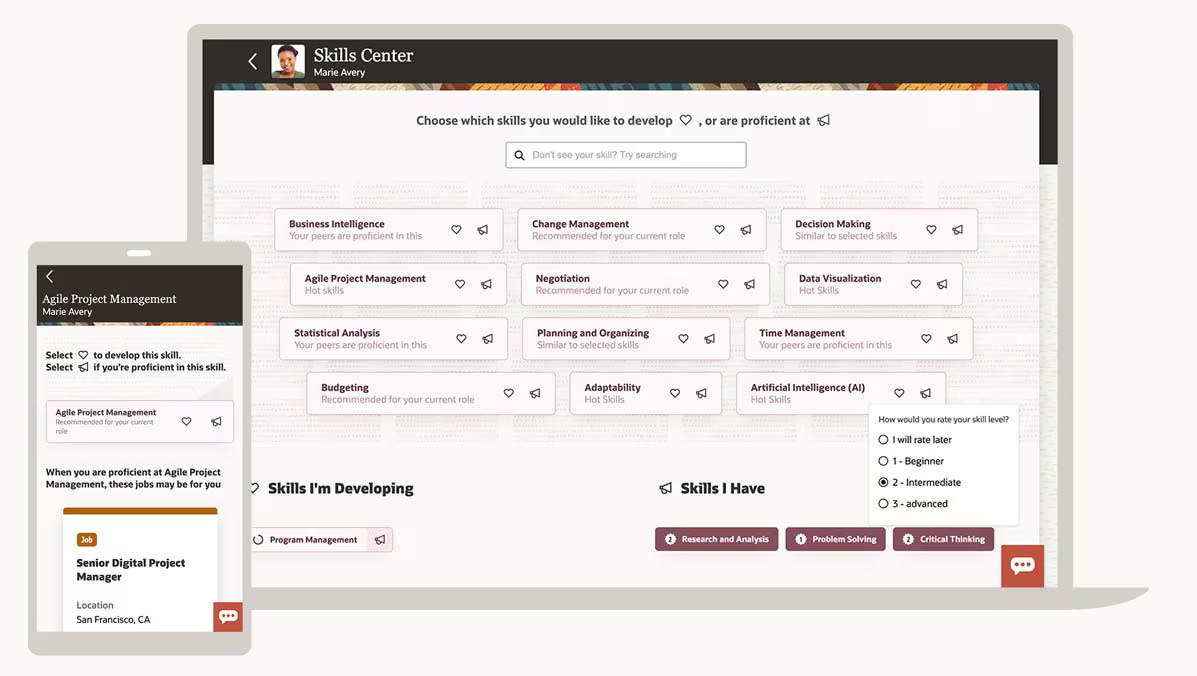
Description: A global HR platform that connects talent acquisition, performance, learning, succession, and payroll with Oracle’s Enterprise Resource Planning (ERP) and finance systems. It supports complex workforce structures, global payroll capabilities directly or through regional payroll offerings and integrations, and multi-entity governance.
Pricing details: Custom sales quote required.
Cornerstone OnDemand

Description: An enterprise talent development suite focused on learning management (LMS), compliance tracking, continuous skill development, and career pathway planning. It integrates performance evaluation and succession planning tools into its core learning framework.
Pricing details: Custom enterprise quotes required.
Dayforce (formerly Ceridian)
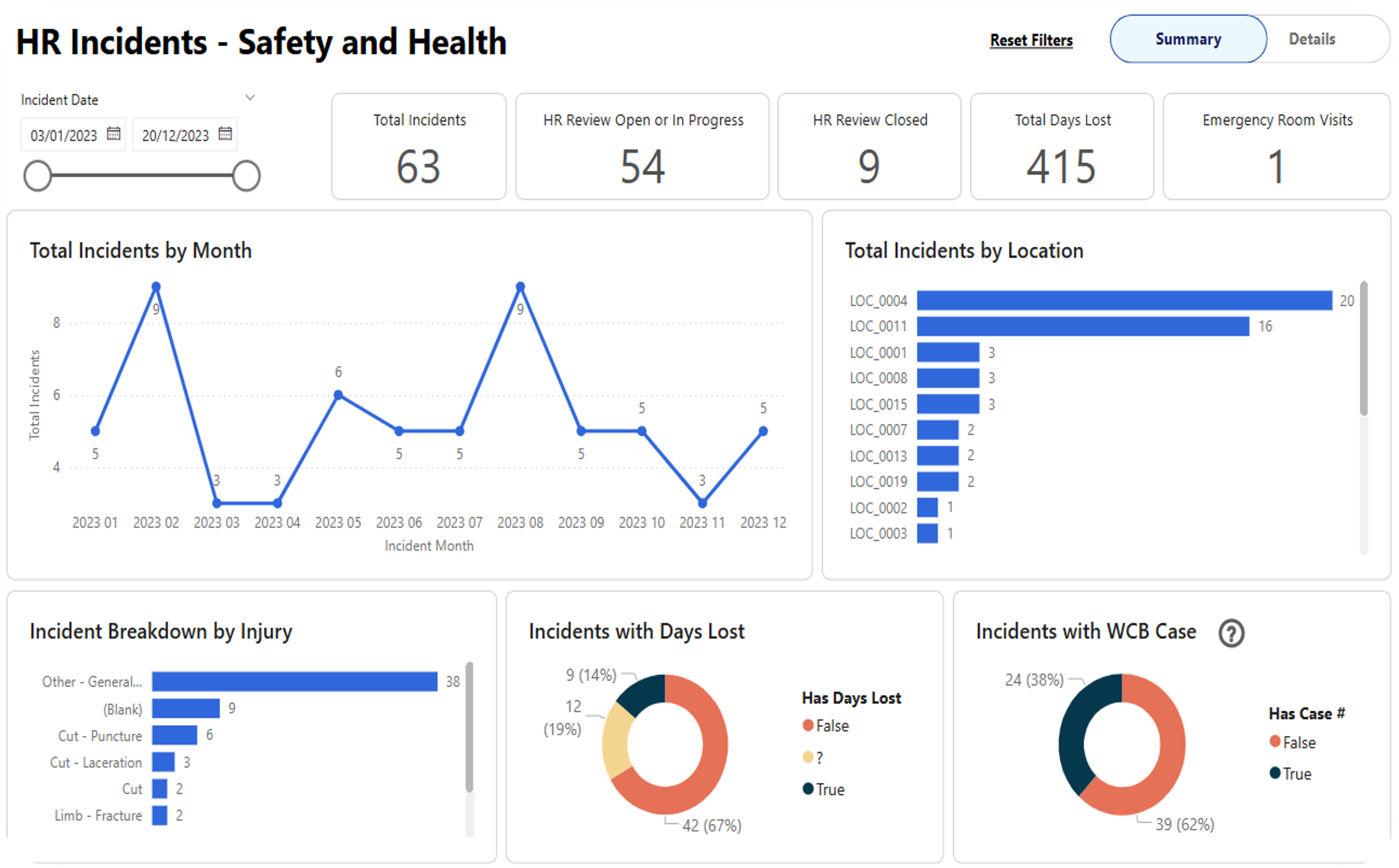
Description: An integrated HCM system built on a single continuous payroll and HR database. It combines talent acquisition, employee onboarding, performance management, and workforce management with real-time payroll calculations on one underlying employee record.
Pricing details: Custom sales quotes required.
Mid-Market Full-Lifecycle Platforms
ClearCompany
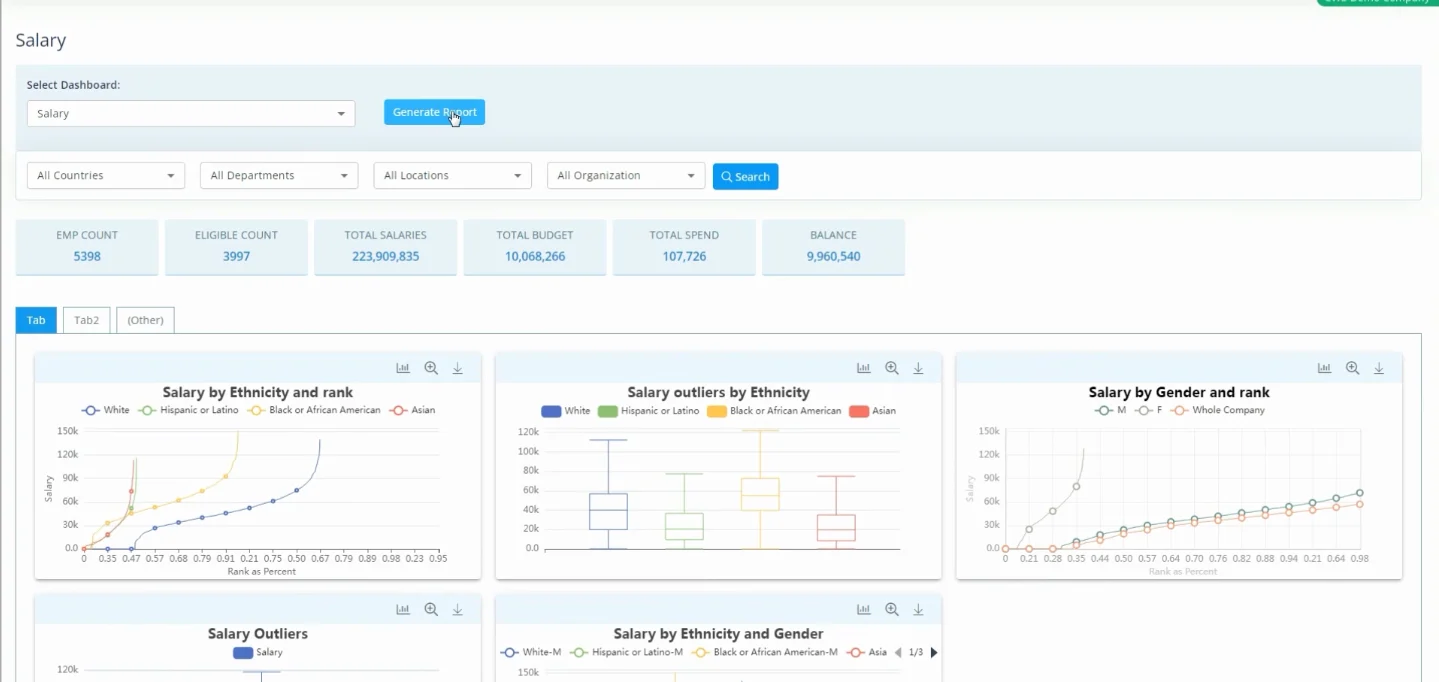
Description: A talent management suite built for growing organizations, combining candidate sourcing, ATS, onboarding workflows, goal tracking, performance management, and employee feedback surveys into one continuous platform.
Pricing details: Custom annual contracts based on overall company size and module selection.
Paylocity
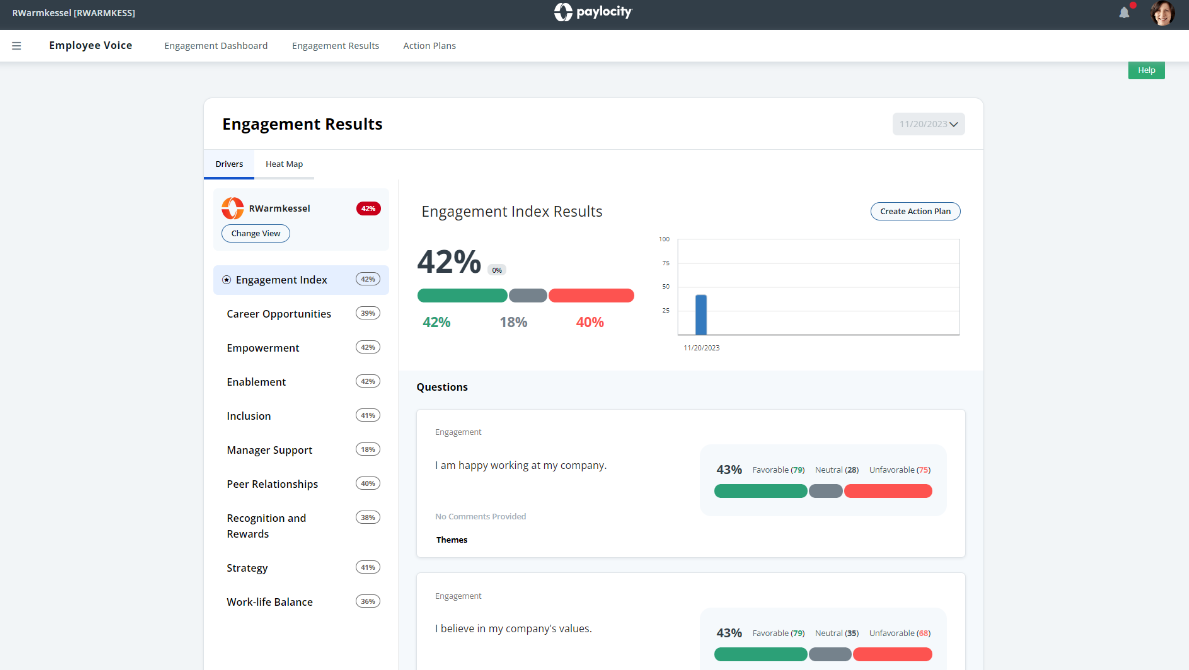
Description: A mid-market HR and payroll platform that includes built-in talent management functionality, such as applicant tracking, onboarding, peer recognition, performance appraisals, and learning management.
Pricing details: Custom pricing based on the company size, selected products, and support needs.
Paycom

Description: A single-database HR and payroll platform offering applicant tracking, onboarding, performance management, and time tracking. It emphasizes employee self-service data management and direct payroll submission capabilities.
Pricing details: Custom quotes based on the tools that an organization needs.
BambooHR
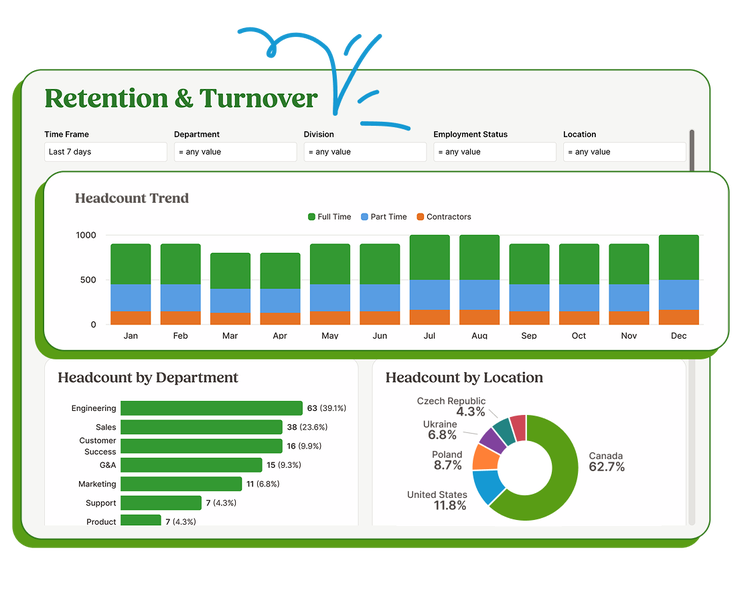
Description: An HR administrative platform designed for small to mid-sized businesses, covering employee records, built-in applicant tracking, structured onboarding, time tracking, and performance management cycles.
Pricing details: Starts from $10/employee/month.
GoCo (part of Intuit)
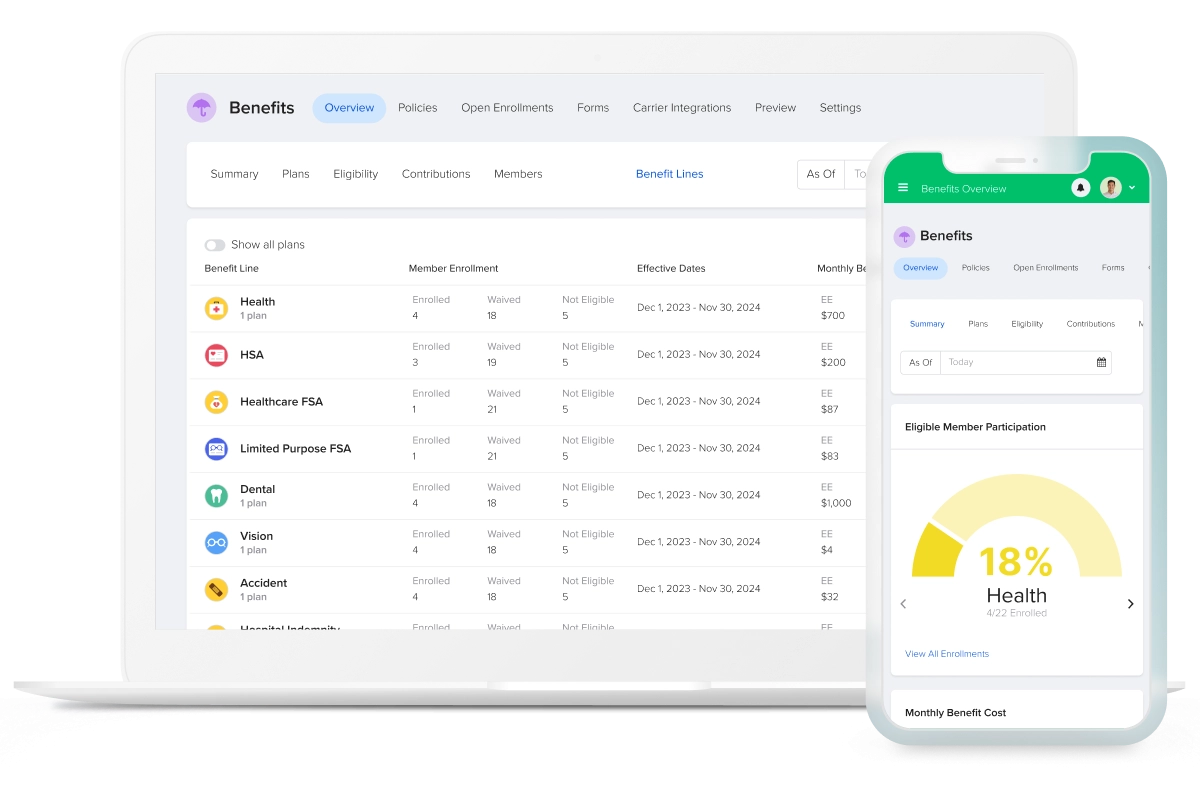
Description: A flexible HRIS tailored for mid-market and small business HR teams to automate new-hire onboarding, benefits enrollment, time tracking, payroll integration, and customizable performance reviews.
Pricing details: Starting from $44/month.
Performance and Engagement-Led
Lattice
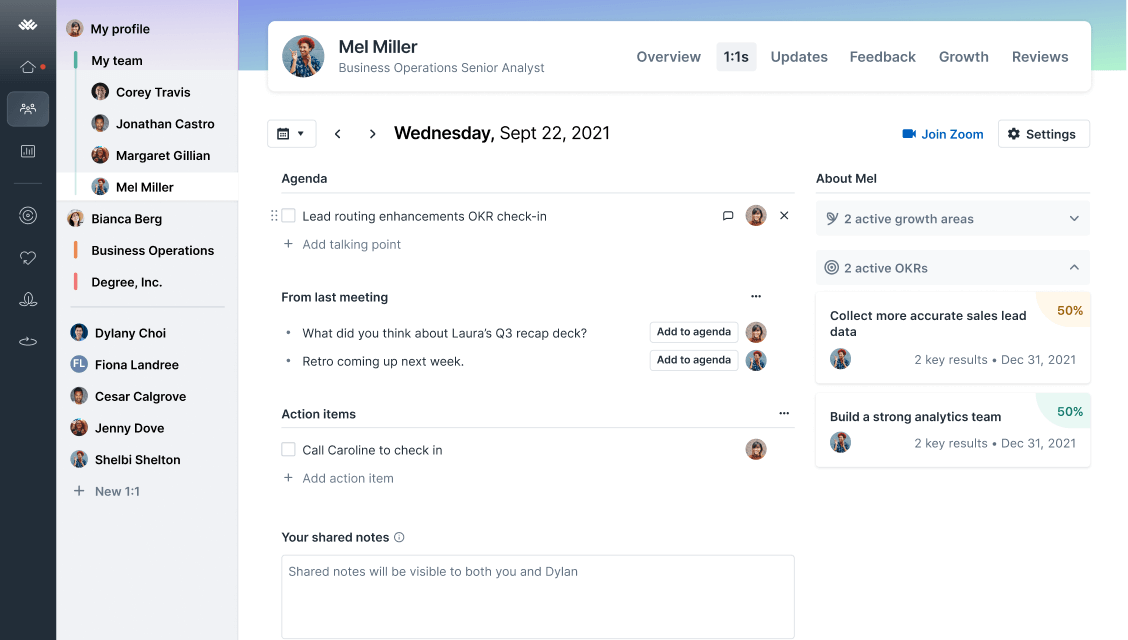
Description: A dedicated people management platform that combines 360-degree performance reviews, goal setting (OKRs), continuous feedback, compensation management, and employee engagement surveys.
Pricing details: Starts from $13/seat/month.
Culture Amp
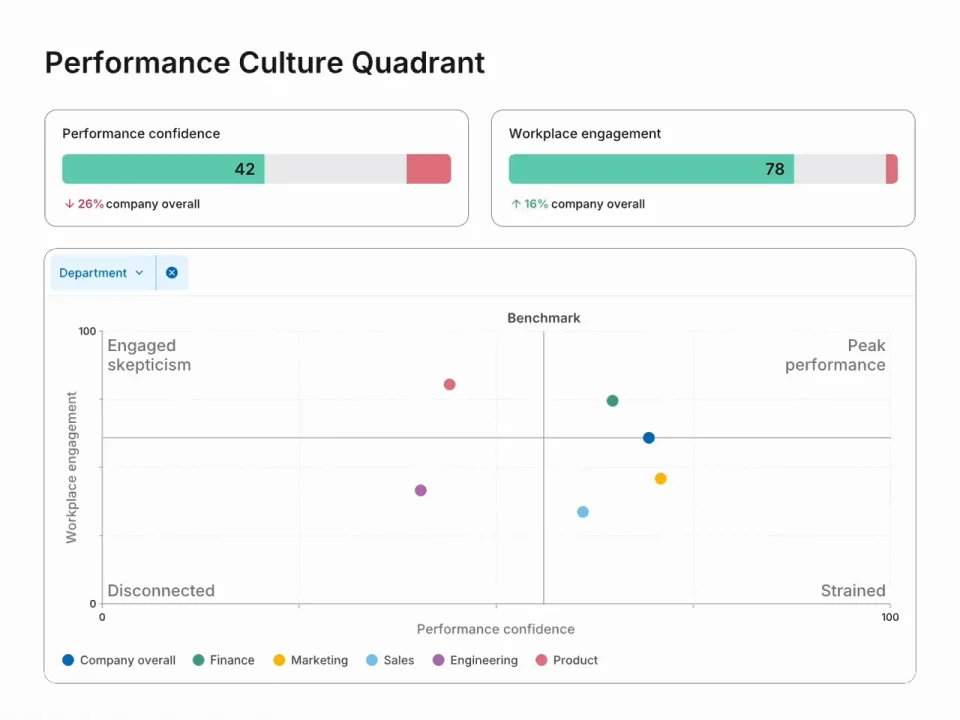
Description: An employee experience platform focused on engagement assessments, pulse surveys, exit/onboarding analytics, continuous performance management, and manager development tools.
Pricing details: Custom pricing based on the company’s size, tools, and needs.
PerformYard
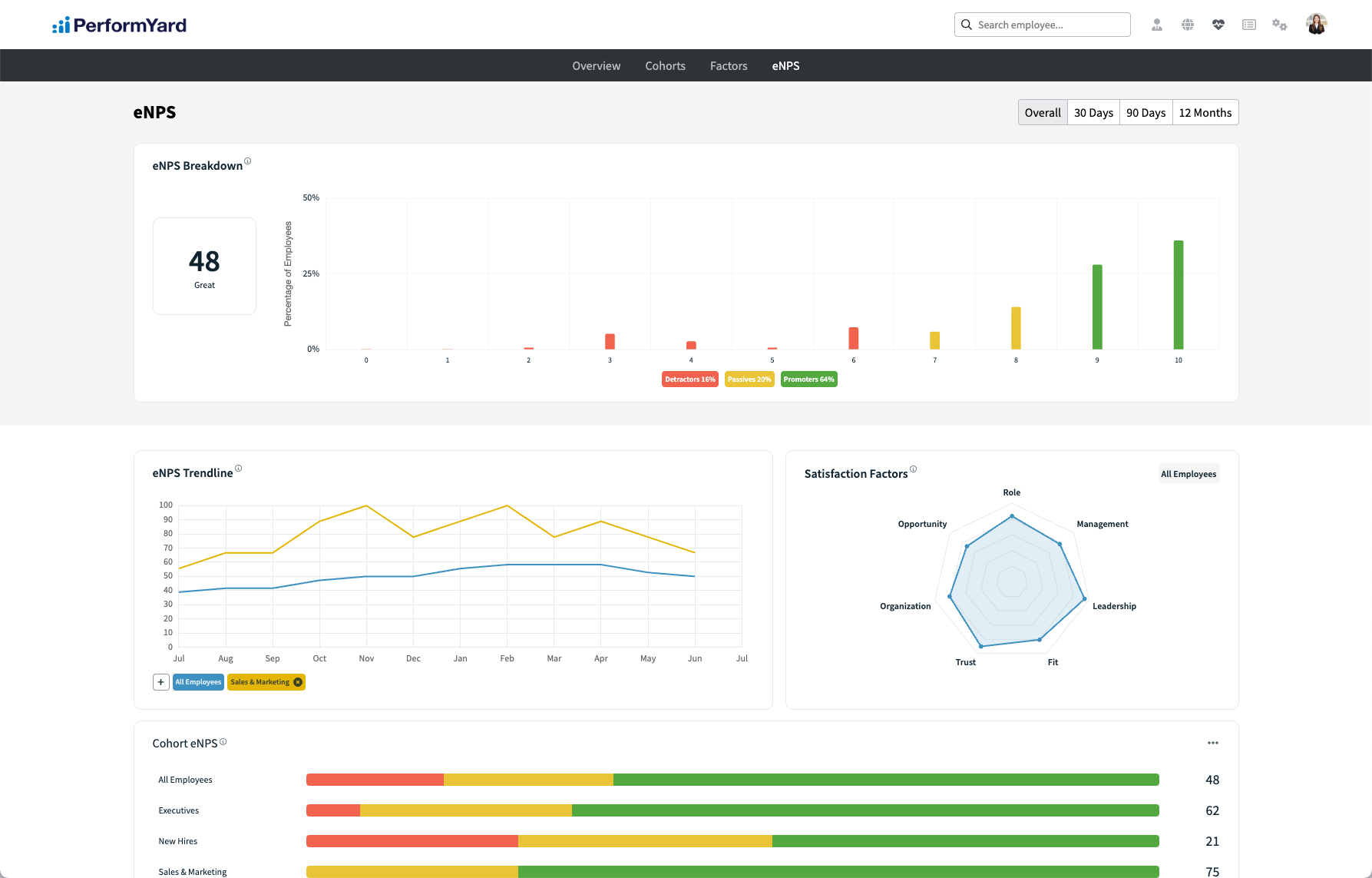
Description: A specialized performance management system designed for custom evaluation cycles, 360-degree feedback, continuous check-ins, goal tracking, and performance rating analytics.
Pricing details: Starts between $5-10/person/month.
Betterworks
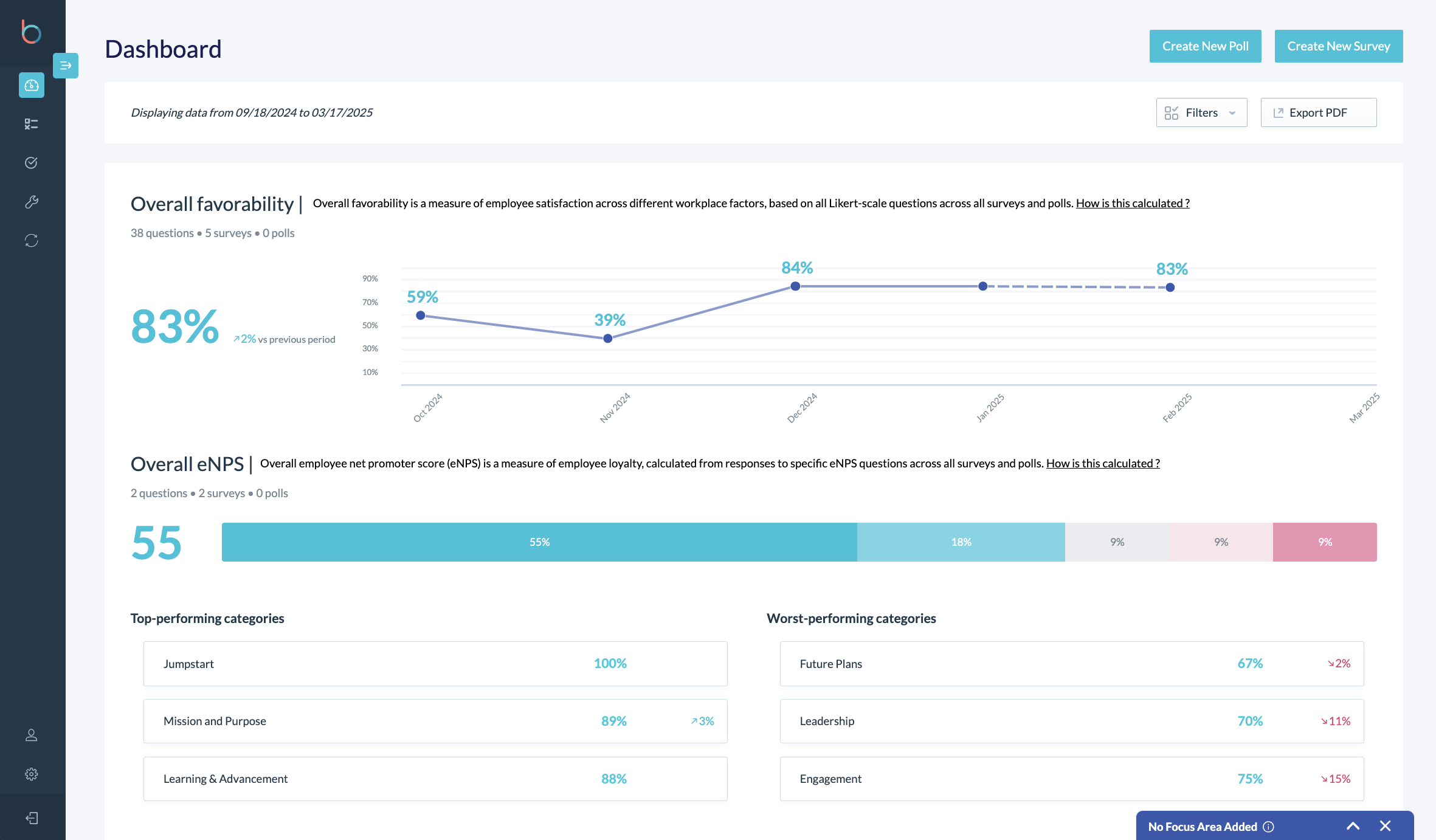
Description: An enterprise performance software platform focused on continuous performance management, objective and key result (OKR) alignment, peer feedback, 1:1 manager frameworks, and calibration tools.
Pricing details: Starts from $8/user/month
Sloneek
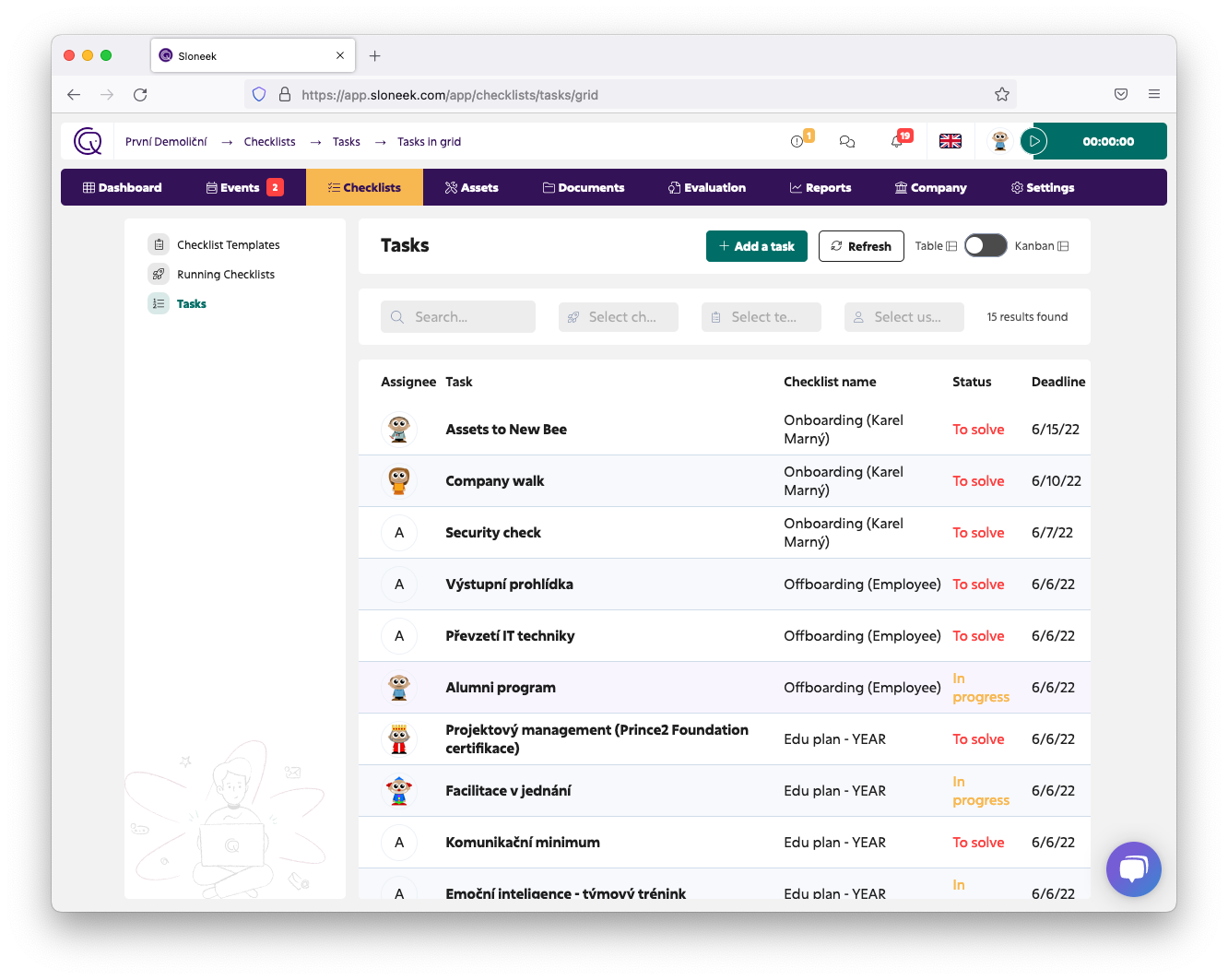
Description: A cloud HR system designed for European SMBs, combining core employee administration, time tracking, absence management, document signing, and performance reviews in compliance with EU regulations.
Pricing details: Contact their sales team to get a custom quote.
Global Workforce and EOR-Adjacent
Deel
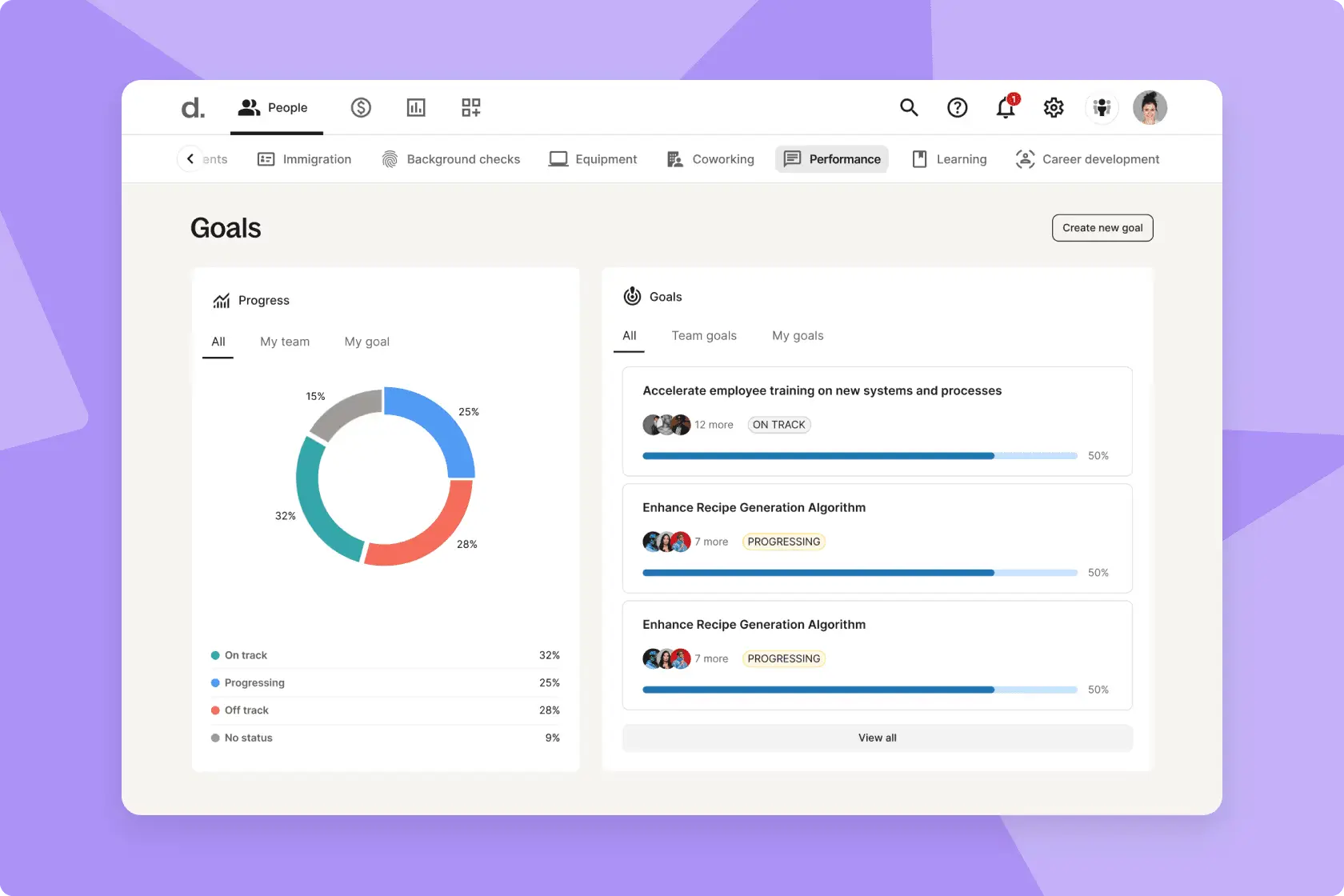
Description: A global compliance, payroll, and workforce management platform that enables companies to hire, pay, and manage international contractors and full-time employees via local Employer of Record (EOR) legal entities.
Pricing details: Transparent flat-rate pricing: $49/month per contractor; $599/month per EOR employee. Global payroll for owned legal entities requires custom sales quotes.
RemoFirst
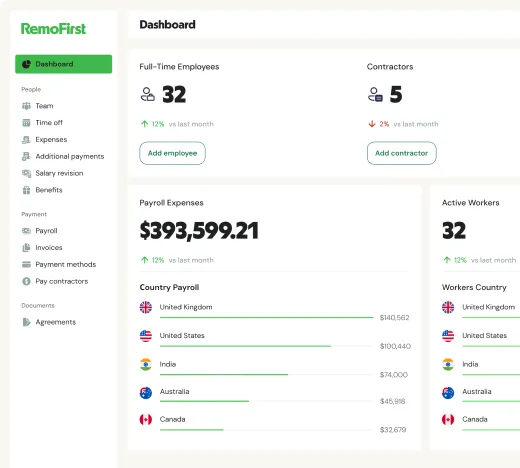
Description: A global Employer of Record platform that allows companies to legally hire, onboard, pay, and provide localized benefits to international employees and contractors across 150+ countries without setting up local business entities.
Pricing details: Published rates start at $25/month per contractor and $199/month per EOR employee.
Specialist Point Solutions
MentorcliQ
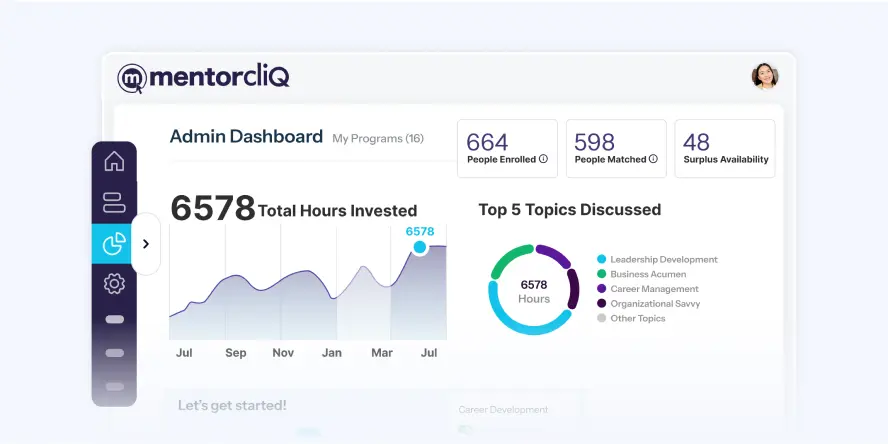
Description: A point solution designed to design, match, launch, track, and measure structured employee mentoring, coaching, and peer development programs within organizations.
Pricing details: Custom pricing where organizations need to book a demo with the vendor.
If you are earlier in your stack, our guides to HR software and the HRIS cover the adjacent categories.
Conclusion
The decision path is short. Map your lifecycle gaps, choose between one suite and best-of-breed specialists, verify integrations before features, pilot on one team, and expand by module. Protect the front of the lifecycle, because a talent management system only performs as well as the talent it brings in.
Frequently Asked Questions
Q: What is an example of a talent management system?
A: Enterprise platforms such as Workday and SAP SuccessFactors provide workforce management and payroll capabilities, though payroll availability varies by region and deployment. Mid-market solutions like BambooHR manage core HR records, while tools like Lattice focus on performance reviews. For talent acquisition, teams often connect these platforms with a specialized recruiting system like Manatal to manage candidate pipelines.
Q: How much does a talent management system cost?
A: Costs depend on company size, module selection, and contract length. Performance and mid-market HR platforms usually range from $5 to $25 per user per month, while enterprise suites require custom annual quotes. Specialized systems like Manatal offer fixed per-recruiter plans starting at $15 per user per month, making candidate tracking costs predictable.
Q: Do small businesses need a full talent management system?
A: Many small businesses do not initially require a full talent management suite. Early-stage teams usually save money by pairing a basic HR system with a dedicated recruitment tool like Manatal to manage candidate pipelines. This setup covers hiring and core recordkeeping without the high cost of enterprise performance or succession tools.
Q: How is a talent management system different from an HCM or HRIS?
A: An HRIS manages core employee records and payroll, while an HCM typically extends an HRIS with talent management, workforce planning, and other HR capabilities. A talent management system focuses on employee development, including hiring, performance reviews, and learning. Organizations often connect a central HRIS with a specialist tool like Manatal to manage talent acquisition within their overall software setup.
.webp)






.webp)

.webp)


.webp)


