


According to SHRM's latest recruiting benchmarking research (2025–2026 data), the average time-to-fill across organizations is approximately 42 days, with an average cost per hire of $4,800. [1][2] Most of that inefficiency comes from fragmented tools, job boards that don't talk to each other, pipelines managed across inboxes, and a lack of a single source of truth. This guide cuts straight to the comparison, then covers what to verify before you commit to the hiring platform.
Job Boards vs. Hiring Platform
The two categories are frequently confused, but they serve different functions in a recruitment workflow.
- A job board (Indeed, LinkedIn, or ZipRecruiter) is a candidate distribution channel; its job ends when someone submits an application.
- A hiring platform or ATS handles everything after: parsing resumes, scoring applicants, moving candidates through pipeline stages, coordinating hiring manager feedback, and measuring source attribution.
Job boards are where you find candidates. Hiring platforms are how you actually hire them.
Hiring Platform Comparison Table
Use this as a starting reference. Pricing changes frequently, so verify directly with each vendor before any purchase decision.
The Core Problem: Disjointed HR Tech Stacks
Most recruiting teams add job boards one account at a time, with no centralized system to manage incoming applications. The result: duplicate candidate profiles, lost source attribution, and untracked spend. The fix is to consolidate job distribution and application capture into a single platform before optimizing individual channels. Manatal's Free Job Posting distributes a job opening to 2,500+ free and premium job boards globally from a single interface; every application lands in a unified pipeline, duplicates are flagged automatically, and source attribution is tracked per placement.
{{cta}}
How to Evaluate Hiring Management Software
1. Map Workflow Bottlenecks Before Evaluating Any Tool
Recruiters typically evaluate software based on feature lists rather than the specific stages in their process where hiring breaks down. A team with a 50-day time-to-fill may attribute the delay to sourcing when the actual bottleneck is hiring manager feedback that takes 10 days per stage. Purchasing a sourcing-heavy tool solves the wrong problem. Before opening any vendor's website, map the current workflow and answer one question:
- At which stage do candidates most frequently drop off or become unresponsive?
- Where do requisitions stall for more than 72 hours?
- Which step requires a single person's manual involvement to proceed?
The answers define which features are non-negotiable and which are nice-to-haves.
Manatal addresses the hiring manager bottleneck directly. Manatal's collaboration and team management feature allows unlimited hiring managers to access candidate profiles, leave structured feedback, and move applicants through pipeline stages without needing a paid seat.
2. Calculate Total Cost of Ownership
ATS pricing pages show subscription costs but omit implementation fees, which for enterprise-tier solutions commonly range from $10,000 to $75,000 or more. [3] Data migration from legacy systems or spreadsheets also routinely takes three weeks longer than vendors estimate. Build a 12-month total cost-of-ownership model that includes setup, migration, training, and feature add-ons, then calculate the ROI offset.
Manatal's pricing is transparent with no hidden implementation fees. Setup takes approximately 15 minutes, and data migration via CSV or JSON is included at all plan tiers.
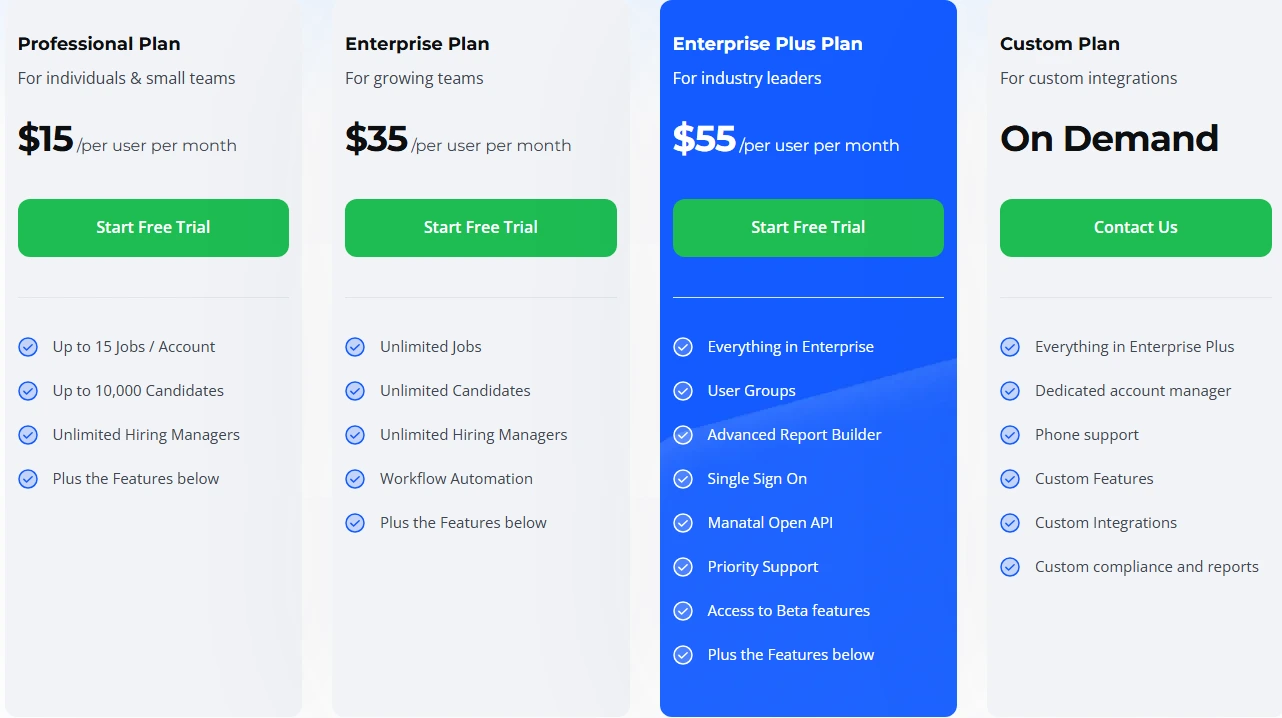
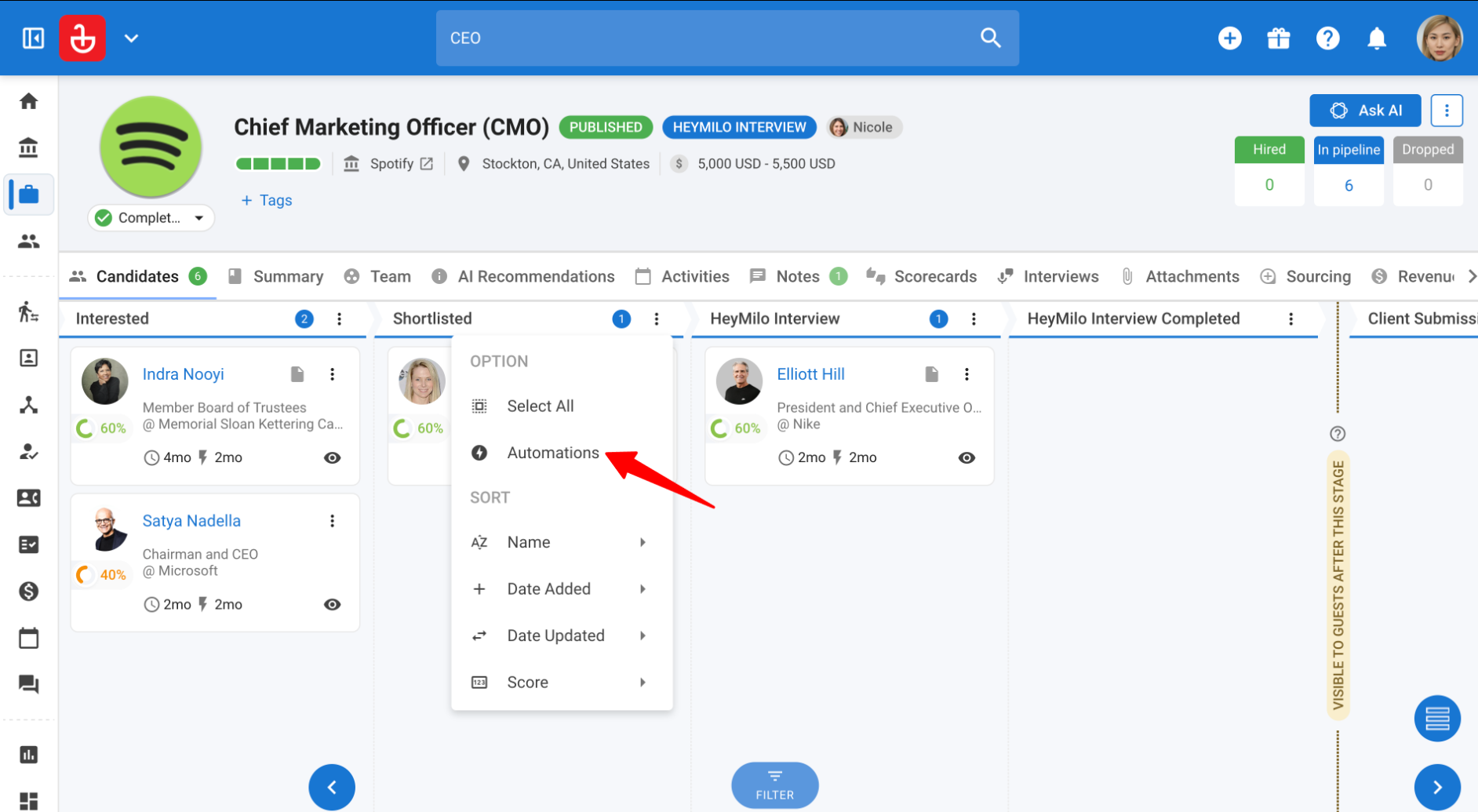
For teams that need workflow automation, that feature is unlocked on the enterprise plan ($35/user/month), and the ROI calculation above applies directly: Manatal's workflow automations save an estimated 4 to 6 hours per recruiter per week on status updates, email triggers, and pipeline transitions.
3. Verify Compliance Coverage Before Signing Anything
Hiring platforms handle personal data across GDPR (EU), CCPA (California), and PDPA (Thailand/Southeast Asia). GDPR fines can reach €20 million or 4% of annual global turnover. Before any trial, require three documents from every vendor: their SOC II Type 2 audit report, their GDPR data processing agreement, and documentation of right-to-erasure workflows. If a vendor cannot produce all three immediately, do not proceed.
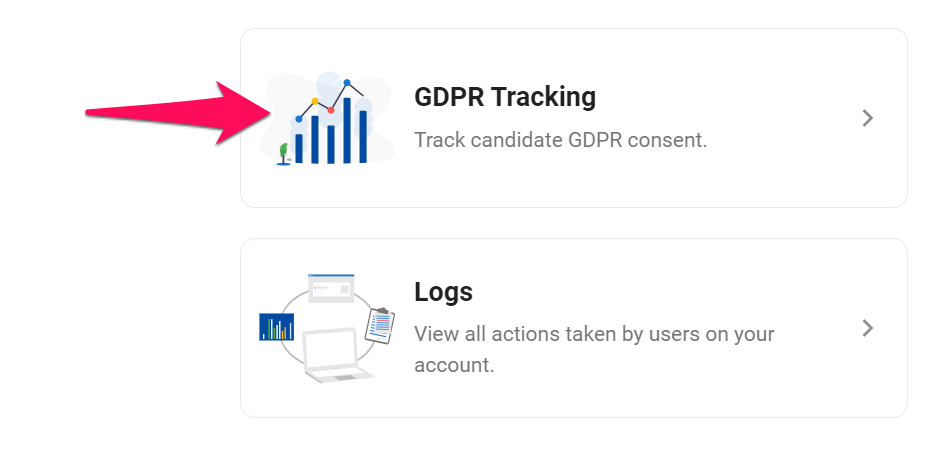
Manatal holds SOC 2 Type 2 certification and natively supports compliance with GDPR, CCPA, and PDPA. Candidate consent is captured at the application stage. Data retention periods are configurable by jurisdiction. Right-to-erasure workflows are built into the platform, not managed via a support ticket. These features are available on all paid plans.
4. Test Integration Depth, Not Integration Count
A shallow integration that exports CSV once daily means a candidate status change in your ATS doesn't update your HRIS, calendar invites stay unconfirmed, and your team is still entering data in two places. During each trial, specifically test the following integrations: email client (two-way sync), calendar (automatic invite generation on stage changes), video conferencing (Zoom or Teams link generation without leaving the ATS), and your HRIS or payroll system.
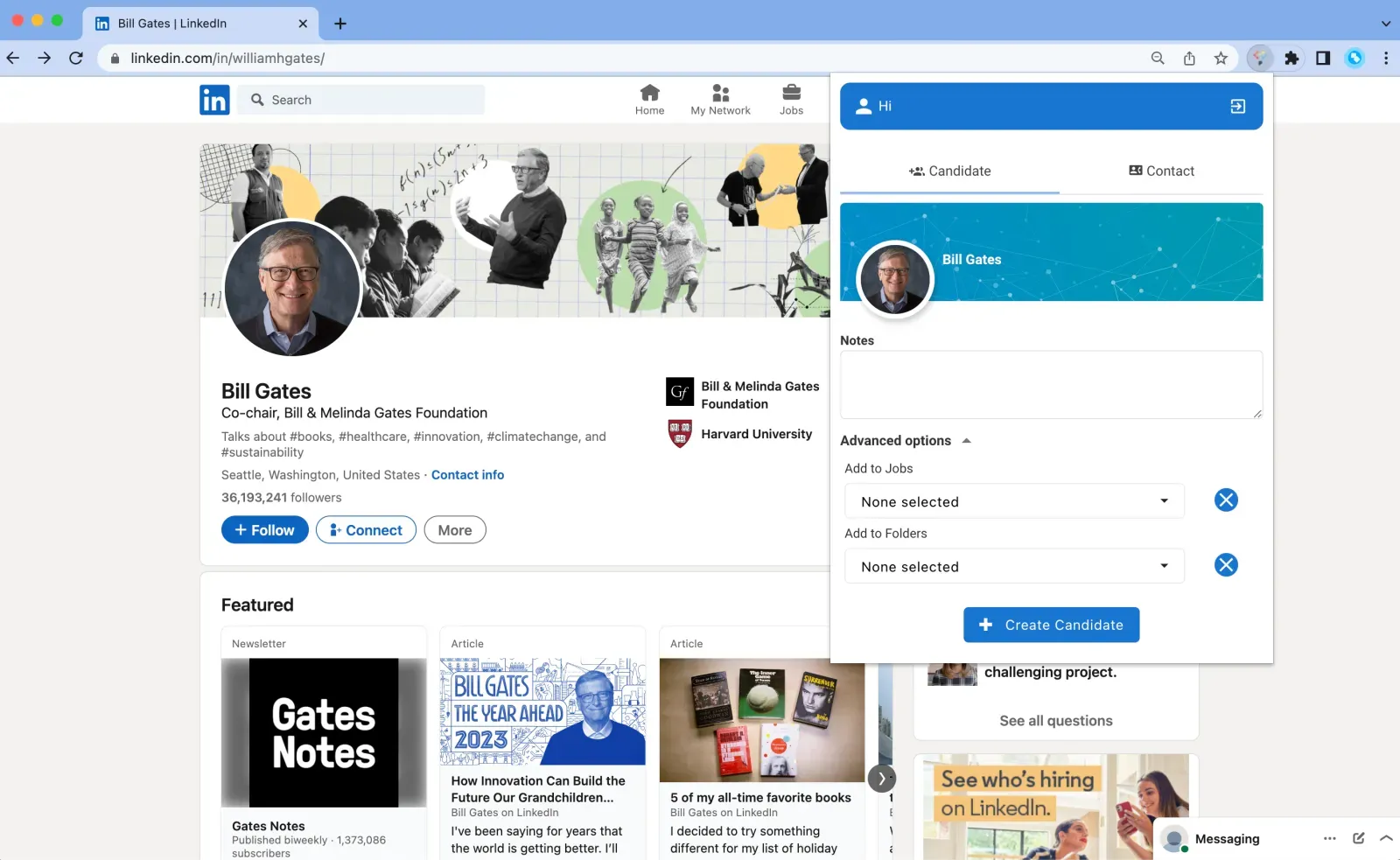
Manatal integrates natively with Gmail and Outlook (two-way sync), Google Calendar and Microsoft 365 Calendar, Zoom, Microsoft Teams, and Zapier for custom HRIS connections. The People-Match Chrome extension enables one-click candidate import from LinkedIn directly into the Manatal pipeline.
5. Screen Candidates at Scale Before Filling the Pipeline
Recruiters spend an average of about 7.4 seconds per resume [4], which means qualification decisions at high volume are effectively random. Use AI resume parsing and candidate scoring at the point of application receipt, before any human review. Configure the scoring model against the specific job description, set a threshold score to auto-advance candidates, and review only those above the threshold.
Manatal's AI recommendation engine scores every incoming application against the job description criteria, ranking candidates before a recruiter opens a single profile. The AI is trained on the specific role, not a generic database.
.png)
The 2026 Hiring Platform Evaluation Checklist
Use this to score any vendor before you commit. Each criterion should get a pass, partial, or fail rating from your team.
Candidate Sourcing
- Posts to 500+ job boards simultaneously from one interface
- Supports LinkedIn, Indeed, ZipRecruiter, and regional boards natively
- Includes a branded or company career page builder with custom application forms
- Tracks source attribution per hire (not just per application)
Resume & Application Management
- AI resume parsing with 95%+ field accuracy
- Automatic duplicate candidate detection and merging
- Candidate enrichment from LinkedIn and social profiles
- Bulk import from existing databases without data loss
Pipeline & Workflow Management
- Configurable pipeline stages per job or client
- Automated stage progression triggers (e.g., move to interview after assessment score threshold)
- Collaborative review with structured feedback forms, not open text fields
- Hiring manager access with permission controls
CRM & Client Management (For Agencies)
- Dedicated client contact database separate from candidate database
- Placement tracking and revenue attribution per client
- Activity logs for all recruiter-client interactions
- Custom reporting by client or account
Compliance & Data Privacy
- GDPR consent capture at the application stage
- Right-to-erasure request workflows
- Configurable data retention periods by geography
- SOC II Type 2 certification (request documentation)
- Audit trail for all data access and modifications
Integrations
- Two-way sync with Google Workspace and Microsoft 365
- Native video interviewing or direct integration with Zoom/Teams
- API access with documented endpoints for custom builds
- Webhook support for real-time data pushes to your HRIS
Reporting & Analytics
- Time-to-fill by role, recruiter, and source
- Cost-per-hire calculation with job board spend attribution
- Recruiter productivity metrics (calls, emails, submittals, placements)
- Offer acceptance rate tracking
Pricing & Support
- No per-feature upsells for core ATS functionality
- 24/5 or 24/7 live support (not only documentation)
- Free data migration from the current platform
- No long-term lock-in on base subscription
Conclusion
The next wave of hiring management software will not add more features. It will eliminate the recruiter's role in routine decisions entirely. Platforms already score, filter, and schedule autonomously. The recruiters who survive the next five years are the ones who use these tools to handle 3x the volume today, not the ones who resist them to protect the way things have always been done.See Manatal's full feature set and start a 14-day free trial.
Frequently Asked Questions
Q: How do hiring platforms improve candidate engagement?
A: Candidate engagement drops when communication goes silent. A well-configured ATS with automated pipeline triggers sends status updates at every stage transition without recruiter intervention. Candidates who receive updates at each stage are 38% less likely to withdraw before an offer. The mechanism is simple: configure automated emails that fire when a candidate moves from "Applied" to "Screening" to "Interview Scheduled." It takes 20 minutes to set up and runs indefinitely.
Q: What challenges should you expect when adopting a new platform?
A: The biggest one is data migration, not software training. Moving candidate records from a legacy ATS or shared spreadsheet into a new system takes longer than vendors advertise. Build in three to four weeks for data cleaning before import. The second challenge is hiring manager adoption. Recruiters adopt new tools quickly because their workflow depends on it. Hiring managers do not. Solve this by requiring all feedback to flow through the platform from week one, with no email exceptions.
Q: How do hiring platforms support data-driven recruitment?
A: Recruiters who track source-of-hire data consistently reduce their job board spend by an average of 22% within two quarters because they stop paying for boards that produce zero placements. A centralized ATS exposes this data automatically. You will see that two boards drive 80% of your hires. Cut the rest. Reallocate the budget to the channels that convert.
Q: How do small and mid-sized agencies benefit from hiring management software?
A: A four-person recruiting team using a proper ATS can manage the same candidate volume as an eight-person team using email and spreadsheets. The math is direct: automated resume parsing saves 3 minutes per application. At 200 applications per month, that is 10 hours of admin work eliminated monthly per recruiter. Over a year, that is 120 hours per person that goes into actual recruiting instead of data entry.
Q: What should you watch for in AI features specifically?
A: Ignore any vendor that cannot tell you exactly how their AI scores candidates. Ask for the specific data inputs, the weighting logic, and whether the model was trained on their own placement data or a generic dataset. AI matching tools built on generic data will surface technically qualified candidates who are consistently rejected in your market segment. Demand a 90-day performance review clause in any contract where you can assess match quality before full commitment.
Citations:
.png)


.webp)

.webp)

.webp)


.png)


