





Hiring managers often waste months searching for a myth. They pass over talented, 80% qualified people because they are waiting for a "unicorn candidate” who doesn't need a single day of training. This obsession kills productivity. You aren't just looking for a good hire. You are looking for a miracle. This guide defines the unicorn candidate meaning, explains why they are so rare, and provides the exact strategies you need to hire them.
Unicorn Candidate Meaning
A unicorn candidate is a job seeker who possesses an unusually rare combination of skills, domain expertise, cultural fit, and relevant experience that makes them a near-perfect match for a specific, often complex role.
Do not confuse a unicorn with a "purple squirrel." A unicorn is a high-performer who actually exists. A purple squirrel is a recruiter's fantasy.
Key Traits of a Unicorn Employee
This checklist helps you recognize a unicorn candidate the moment their resume hits your desk. If you don't use a structured framework to audit skills, you risk rejecting a non-traditional candidate who possesses exactly the multidisciplinary power your company needs.
- Multidisciplinary skill depth: Unicorns go deep in more than one discipline. The developer has also managed client relationships. The data scientist who can explain model outputs to a board without jargon. The gap they fill is the one your team has been working around for months.
- Comfort with ambiguity: A unicorn has operated in environments where the rulebook did not exist yet. This matters most at Series A and Series B companies, where someone who has done the same job five times will simply do it again.
- Cultural contribution, not just cultural fit: Unicorns bring a perspective, network, or methodology that the team cannot generate internally. In interviews, listen for moments when they changed a team's direction without being asked to.
- Influence without the title: Ask them to walk you through a project where they had no formal authority but still drove an outcome. The answer tells you more about their actual capability than any credential on their resume.
How to Find (and Hire) Unicorn Candidates
Unicorns are not browsing job boards. They are employed, performing well, and not thinking about your open role. Every step below is built around that reality.
Source passively and relentlessly
- Map target companies and build a pipeline now, not when the seat is empty
- Follow people who speak at conferences, publish thought leadership, or contribute to open-source projects. Those are signals of mastery that a resume rarely captures
- Manatal's candidate sourcing lets you pull candidates directly from LinkedIn and 2,500+ job boards into one pipeline, so your talent pool is already populated before urgency kicks in
Tools: Manatal Candidate Sourcing, LinkedIn Recruiter, GitHub
{{cta}}
2. Audit your employer brand before outreach
- Check your Glassdoor rating, LinkedIn company page, and leadership team's public profiles
- A unicorn will research you before taking a call. A 3.1 rating ends the conversation before it starts
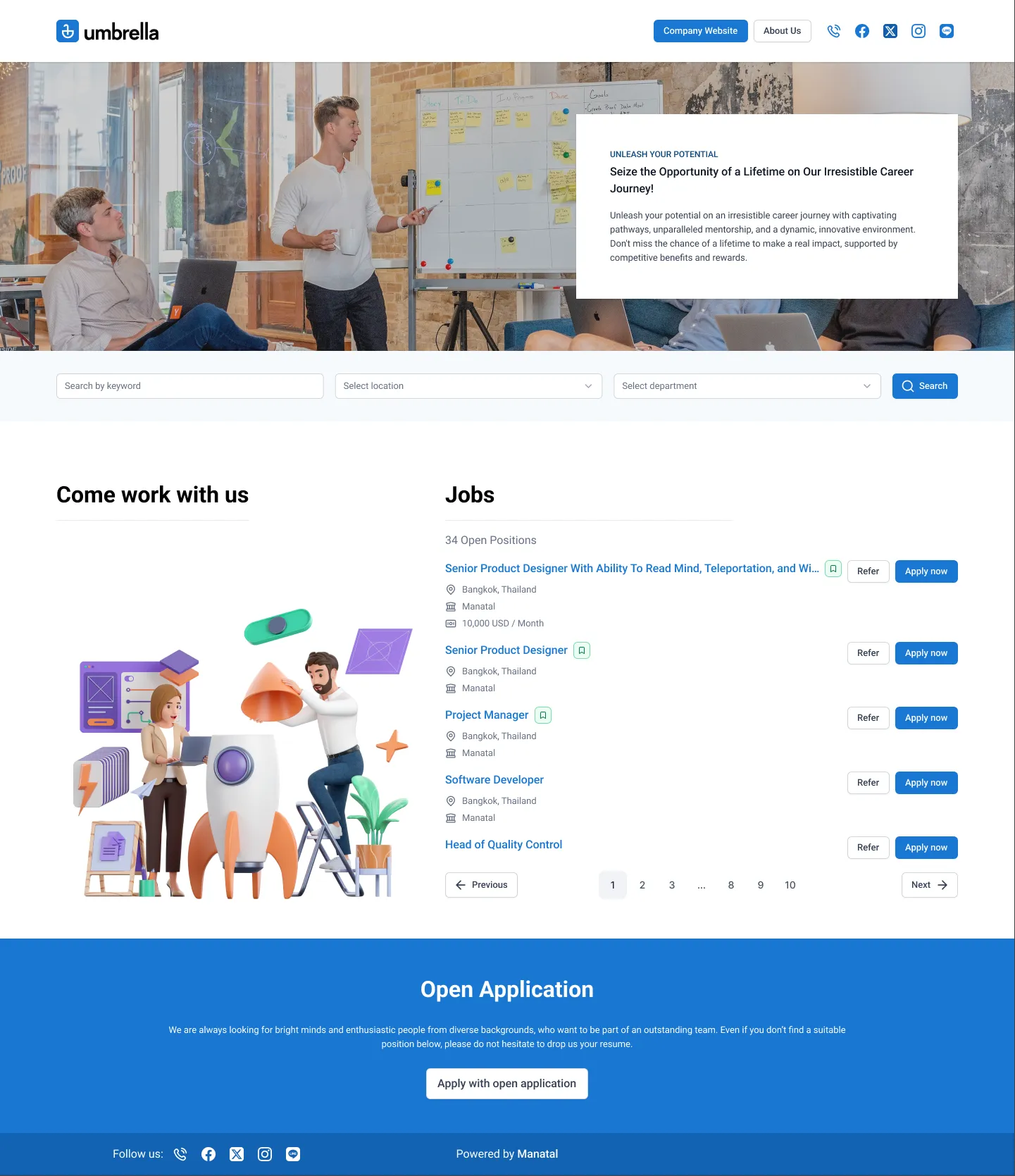
- Manatal offers a native Career Page Builder that integrates directly with your ATS. Your team can build, launch, and update a professional website without developer support
Tools: Glassdoor, LinkedIn, Company Careers Page
3. Apply the 80/20 rule to your requirements
- Hire for 80% of the listed skills and build a 90-day development plan for the rest
- Candidates who meet 100% on paper are often the ones who coast inside a year
- Tools: Internal onboarding doc, performance review framework
4. Widen your sourcing criteria deliberately
- Remove degree requirements where the actual work does not demand them
- A candidate who built the same system at a smaller company is functionally equivalent to one with a brand-name CV
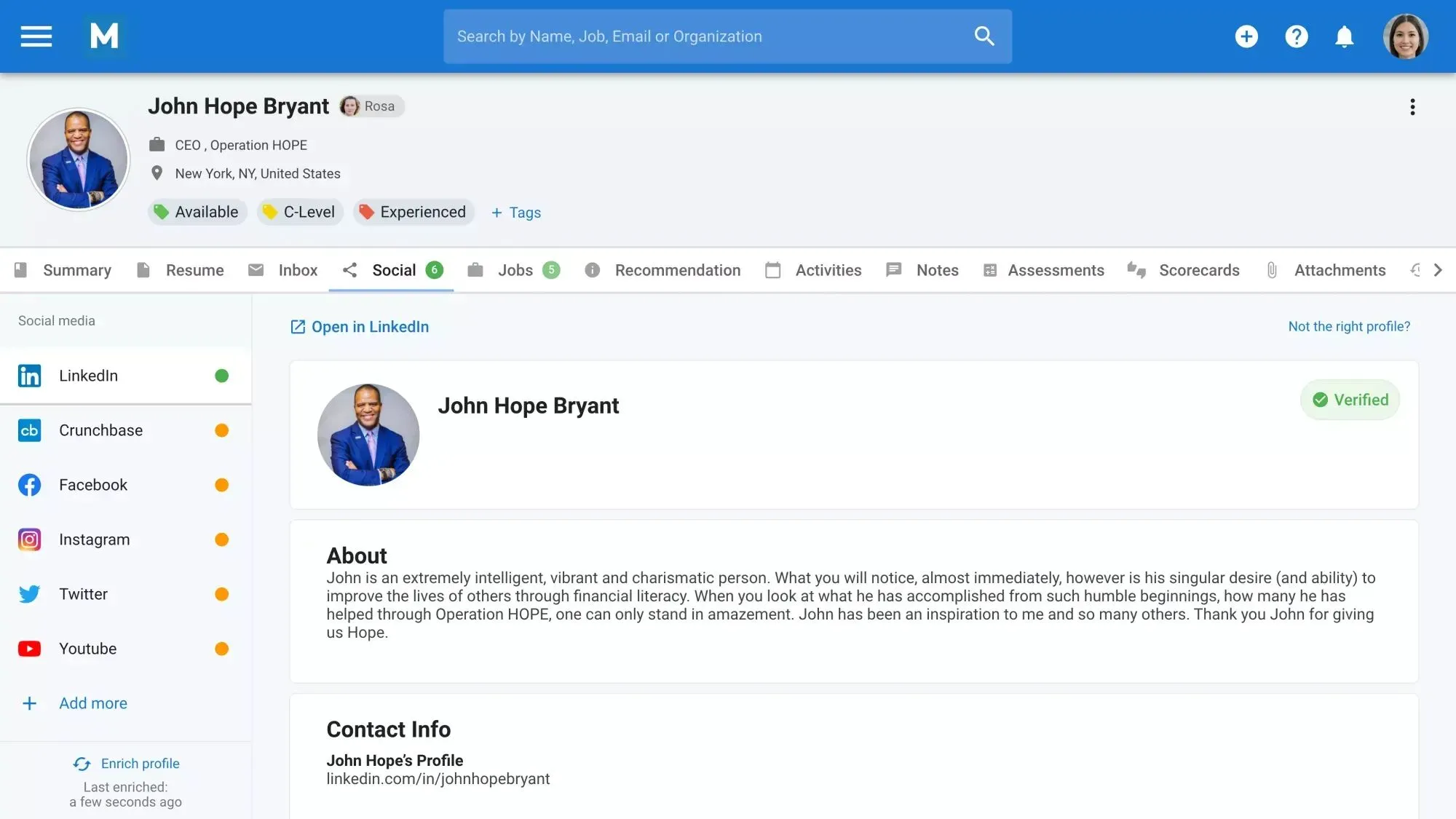
- Manatal's Candidate Enrichment automatically pulls data from LinkedIn and social profiles to build a 360-degree view of what a candidate has actually built, not just what fits on a one-page resume
- Tools: Boolean search strings, Manatal Candidate Enrichment
5. Use AI screening
- Traditional ATS filters based on job titles and exact keywords. Unicorns often have non-linear career paths that fall through those cracks
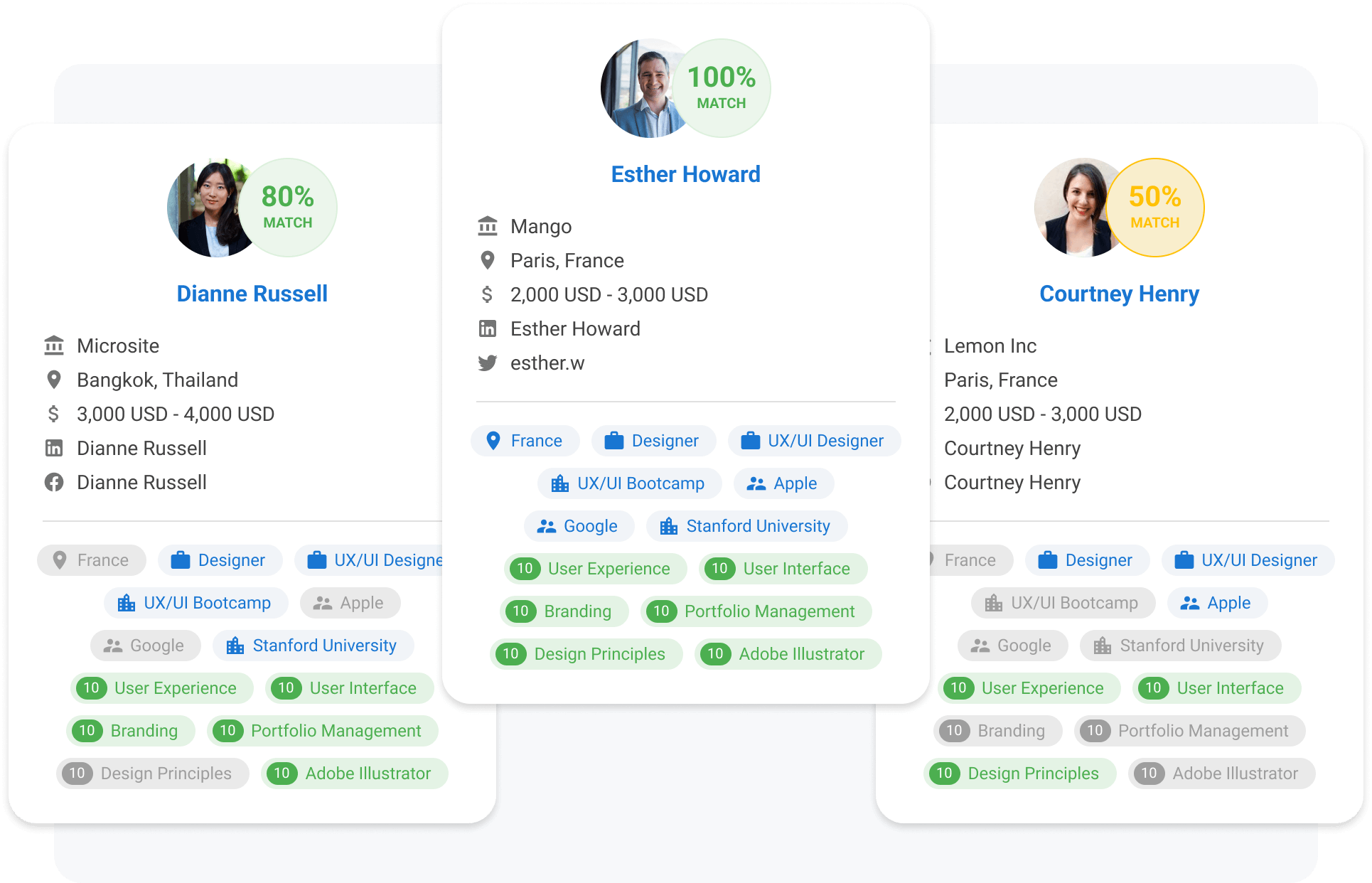
- Manatal's AI recommendations score candidates on semantic match rather than vocabulary overlap. A project manager with cross-functional product experience surfaces for a Product Owner role, even without that exact title
- Tools: Manatal AI Recommendations
Why Manual Screening Misses the Best Candidates
Here is what keyword-based screening actually does. It surfaces candidates who wrote the same words as your job description. It misses the candidate who has spent five years doing the work under a different job title, in a different industry, with a slightly different tool set.
Manatal changes this by using semantic matching. It scores candidates based on their actual capability. It enriches profiles with data from LinkedIn and GitHub. This gives you a full view of their potential.
The practical result is a shorter list of genuinely strong candidates, rather than a long list of keyword matches that a recruiter has to manually filter. Time-to-fill drops. Offer acceptance rates improve. And the candidates who were invisible to traditional screening finally get seen.
The Unicorn Trap: What Chasing Perfection Actually Costs You
Holding a role open for the perfect candidate is not a strategy. It is a cost. According to SHRM’s 2025 Benchmarking Reports, the average cost to fill a nonexecutive open position is $5,475 (while executive positions average $35,879). [1] You pass on a strong candidate because they meet 8 out of 10 requirements. Then another. The seat stays empty; the team absorbs the work and starts looking elsewhere.
Two risks specific to unicorn hires rarely get discussed.
- Retention risk: Unicorns know exactly what they are worth. They are being recruited constantly. LinkedIn InMail hits their inbox weekly. If your compensation package, career trajectory, or culture does not match what they can get elsewhere, they are gone within 18 months. Hiring a unicorn without a recruiting and retention strategy is expensive theater.
- Overspecification risk: Sometimes the unicorn requirement is not real. The hiring manager wants a specific person from a previous company. The job description is written from that person's perspective. The rest of the candidate market never had a fair shot. Recognize this pattern and push back on it.
Conclusion
Unicorn candidates are real. But the bigger problem in most talent acquisition functions is not a shortage of unicorns. It is a sourcing strategy built around waiting and a screening process built around elimination. Fix those two things, and the talent pool looks completely different.
Recruiters who consistently hire exceptional people are no luckier than everyone else. They are more systematic. They source before they need to. They use technology that reads capabilities rather than job titles. They make offers to the 80% candidate, with a plan to close the gap, rather than waiting 6 months for the 100% candidate who does not exist.
Frequently Asked Questions
Q: What is a unicorn candidate vs. a purple squirrel?
A: A unicorn candidate is rare but real. A purple squirrel is a candidate built from an unrealistic job description, one with contradictory or impossible requirements stacked by committee. Understanding what a unicorn candidate is means distinguishing between a genuine talent search and a hiring process chasing someone who does not exist.
Q: What is a unicorn candidate's most important trait?
A: The single most telling trait is the ability to influence without authority. Ask any candidate to walk you through a project where they had no formal title but drove the outcome anyway. That answer reveals more about what a unicorn candidate is in practice than any list of credentials or years of experience on a resume.
Q: What does a unicorn candidate's meaning look like in practice for a recruiter?
A: In practice, a unicorn candidate means someone currently employed, not actively job hunting, and doing work your team needs but cannot generate internally. Recruiters find them through passive sourcing on LinkedIn, industry events, open-source contributions, and published work, not through inbound job board applications.
Q: What is a unicorn candidate worth to a company, and is hunting for one always the right strategy?
A: A genuine unicorn hire can significantly accelerate a team, but the cost of leaving a seat open while searching for one is measurable. According to SHRM, average vacancy costs reach $4,683 per open role, and in senior positions, total losses can equal six to nine months of salary. Understanding what a unicorn candidate is also means knowing when to hire for 80% of the requirements and close the gap through a structured onboarding plan.
Citation:
.webp)








.webp)

.webp)


.webp)


