





Speed decides who hires first in 2026. A mid-sized team hiring 20 roles per quarter spends roughly 17-18 hours per role on admin. Every day that seat is empty, a mid-market company loses an estimated $500 in productivity. That is $22,000 per open role, before you factor in the recruiter hours burned on manual screening. [1] Stop treating your ATS as a digital filing cabinet. The companies winning on talent right now run it as a revenue engine. Here are the applicant tracking system benefits that actually move the needle on financial metrics.
Benefits of using an applicant tracking system
An Applicant Tracking System (ATS) is a digital solution designed to make recruiters' lives easier. As a basic introduction to the system, it helps recruiters filter resumes, select top-qualified candidates, and handle time-consuming manual tasks like documentation. In a nutshell, an ATS provides the tools to manage recruitment operations from sourcing to onboarding. Here's how these powerful systems are transforming the recruitment landscape:
1. Reduce Time-to-Hire Through Workflow Automation
Manual recruiting workflows are a tax on your team's time. Sending rejection emails, scheduling interviews, and chasing feedback from hiring managers. Every one of those tasks can be automated. A well-configured ATS executes them without human input.
The operational impact is not marginal. Organizations that implement ATS workflow automation report a 75% reduction in administrative overhead. [2] If you spend 60% of your week on admin, that is 24 hours recovered per recruiter, per week, that go back into actual candidate relationships.
- Automated candidate status emails eliminate manual follow-up entirely
- Interview scheduling syncs with calendar integrations, cutting scheduling back-and-forth from 3 days to 3 minutes
- Stage triggers auto-move candidates and notifies relevant stakeholders without a single click
{{cta}}
2. Improve Quality of Hire with AI Scoring
Reading 200 resumes manually leads to fatigued decision-making. Research on cognitive load shows that after reviewing roughly 50 resumes in a row, hiring judgment degrades measurably.
Modern ATS platforms solve this with AI candidate scoring. The engine reads every application against your job description and surfaces ranked matches instantly. You spend your time on the top 10%, not the pile.
Manatal's AI recommendation engine is a practical example. The system scores candidates based on skills alignment, experience relevance, and enriched profile data pulled from LinkedIn and other sources. You open your ATS, and the strongest candidates are already at the top. Companies using AI-powered candidate ranking report a 35% improvement in quality-of-hire metrics within the first year, measured by 90-day retention and manager satisfaction scores. [3]

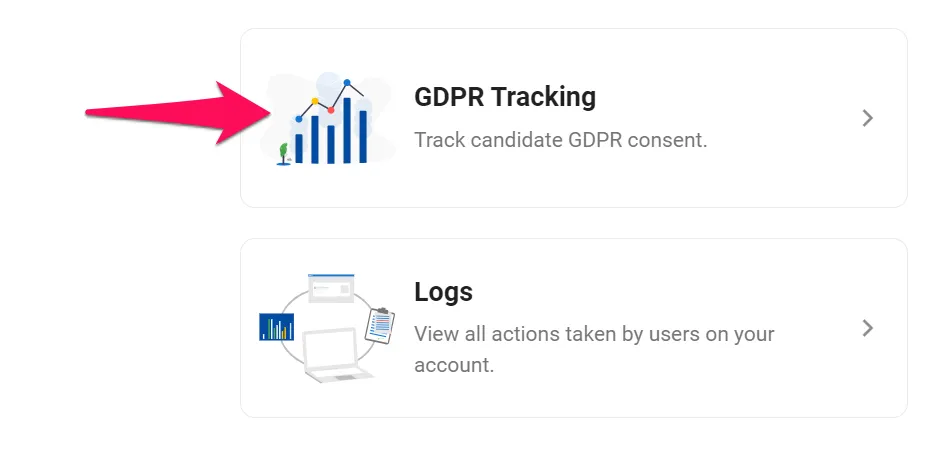
3. Centralized Candidate Data with GDPR Compliance
GDPR and equivalent data protection frameworks require you to know where candidate data lives, who has accessed it, and how long you have held it. You cannot answer those questions from a spreadsheet.
An ATS centralizes all applications in a single auditable system. Access logs track who viewed what and when. Retention policies auto-delete candidate records after defined periods. Consent capture is built into the application flow.
- The average GDPR fine for improper data handling in the employment sector: €2,300,000 [4]
- The cost of an ATS subscription that prevents it start at 15USD/month
4. Multi-Channel Job Posting
Posting a single role to LinkedIn, Indeed, Glassdoor, and three niche job boards manually takes a recruiter 45-90 minutes per role. For an agency handling 20 open roles simultaneously, that is up to 30 hours of posting work per week.
ATS multi-posting distributes a single job listing to all connected boards in one action. Post once, appear everywhere. Teams using this functionality recover those hours immediately and reduce per-application costs by eliminating duplicate premium job board slots.
Manatal's job board integrations enable one-click posting and monitoring across job boards, saving time so you can focus on core recruitment.
5. Collaborative Hiring Stops the Email Chain Problem
Here is what collaborative hiring looks like without an ATS: the recruiter interviews a candidate, then sends a summary email to the hiring manager, who replies four days later with questions, which the hiring manager then forwards to a second stakeholder, who has lost the original resume attachment. The candidate is now on day 11 of radio silence and has accepted another offer.An ATS eliminates the email chain by consolidating all stakeholders into a single candidate record. Scorecards, interview notes, ratings, and approval stages all live in one place. Hiring managers get automated nudges when feedback is overdue. Feedback loops that previously stretched across a week compress to 24 hours.Faster internal feedback is the single biggest lever for reducing time-to-offer. Companies that implement structured ATS scorecards report a 28% decrease in the time between final interview and offer letter.

6. Reduce Cost-Per-Hire
The average cost-per-hire across industries is $4,700, according to SHRM's benchmarking data. For technical and leadership roles, the number is closer to $28,000 when you include agency fees, job board spends, and interviewer time.
An ATS reduces cost-per-hire from multiple directions simultaneously: Multi-posting reduces job board spending, AI screening reduces agency dependency, and faster time-to-fill reduces the cost of the vacant seat. Companies with mature ATS configurations report a 30% reduction in cost-per-hire within the first 12 months. [5]
7. Turn Gut Feel Into Accountable Decisions
Without data, every recruiting decision is a guess dressed up as experience. An ATS generates source effectiveness reports and analytics, stage conversion rates, time-in-stage breakdowns, and offer acceptance rates. You can see exactly where your pipeline leaks.
If LinkedIn is generating 60% of your applications but only 5% of your hires, you areoverpaying for that channel. If candidates are dropping out consistently at the technicalassessment stage, the assessment is the problem, not the talent pool. ATS data tellsyou this.
.webp)
8. Better Candidate Experience, Increases Completion Rates
Over 50% of candidates who have a poor application experience tell others about it, according to the 2024 Talent Board Candidate Experience Benchmark Research. In a market where employer brand directly influences who applies to your roles, a clunky, slow, or silent application process is a competitive disadvantage.
An ATS standardizes communication touchpoints. Candidates receive status updates at every stage. Mobile-optimized application forms reduce drop-off. Automated acknowledgment emails confirm receipt within minutes. These are not luxuries; they are table stakes for attracting top candidates with options.
9. Agency-Specific Revenue Acceleration
Recruitment agencies operate on speed and margin. You are managing candidates across multiple client pipelines simultaneously, and your clients want visibility without you needing to generate manual reports every Friday.
ATS platforms built with agency workflows in mind include client portal access, where hiring managers can view shortlists, leave feedback, and approve candidates directly. The recruitment CRM layer tracks your client relationships, open requirements, and revenue pipeline alongside candidate activity. This eliminates the disconnect between your recruitment activity and your business development effort.
Agencies using integrated ATS-CRM systems report a 35% increase in recruiter productivity without adding headcount, driven purely by reduced admin overhead per placement. [6]
10. Structured Talent Pooling for Future Roles
Every candidate you reject today is a potential hire for a role that does not exist yet. The recruiter who hired the second-place candidate for a role six months ago and then lost touch with them has to start from scratch next time. The recruiter who tagged them as a silver medalist in their ATS sends one email and books an interview this week.
An ATS builds a searchable, tagged talent database with every search you run. Filter by skill, location, previous role, rejection reason, and re-engage people who already know your brand. Companies with mature talent pools fill 15-20% of open roles with candidates from their existing database, at zero sourcing cost. [7]
Conclusion
The benefits of the applicant tracking system covered in this article are not theoretical; they are measurable, compounding, and available right now. Every month you delay implementation is a month your competitors are building talent pipelines, recovering hiring costs, and making better decisions with data you do not have. The question was never whether an ATS pays for itself. It does. The only question is how many hires you are willing to lose before you act.
See how Manatal's ATS performs against your actual hiring. Book a demo today and ask for the ROI calculator with your data in it.
Frequently Asked Questions
Q: What are the main applicant tracking system benefits for small recruiting teams?
A: Even small teams see immediate gains: automated screening, interview scheduling, and candidate communication eliminate hours of manual work without requiring additional staff.
Q: How do applicant tracking system benefits translate into real cost savings?
A: Companies report a 15-30% reduction in cost-per-hire within the first 12 months, primarily by cutting job board spend and reducing dependency on external agencies.
Q: How does AI improve applicant tracking system benefits beyond basic filtering?
A: AI scoring ranks all candidates against your job description instantly, ensuring the strongest matches surface first and eliminating the decision fatigue that comes from reading 200 resumes manually.
Q: How quickly can you expect to see applicant tracking system benefits after implementation?
A: Most teams recover the platform's annual cost within the first 10 hires, solely through cost-per-hire reductions. Workflow efficiency gains are visible within the first month.
Citation:
.webp)







.webp)

.webp)


.webp)


