





According to Virtue Market Research, the recruitment chatbot market is projected to reach approximately $5.41 billion by 2030. [1] The challenge for teams now is selecting the right chatbots for recruiting to integrate with their systems and handle their specific needs. This article will guide you through the mechanics of chatbots for recruiting and help you identify the best chatbots for recruiting to empower your HR team.
What Are Recruiting Chatbots, Actually?
Recruiting chatbots are automated conversational interfaces deployed by companies to manage high volumes of applicants and reduce the administrative workload on human recruiters. While marketed as intelligent assistants, they most commonly act as interactive FAQ pages, automated interview schedulers, or strict gatekeepers.
Instead of a clean "two-generation" evolution, the reality in the wild is a messy mix of two wildly different technologies:
- The Decision-Tree Gatekeepers (The Vats Majority): Most chatbots candidates actually encounter are rigid, rule-based scripts. They don't "understand" natural language. Instead, they force candidates through pre-programmed multiple-choice workflows to ask strict knockout questions (e.g., "Do you require visa sponsorship?" and "Do you have 5+ years of experience?"). If a candidate answers incorrectly, the bot automatically rejects them.
- The Emerging LLM Bots (The Bleeding Edge): Newer systems are integrating large language models (LLMs) and generative AI. While vendors claim these provide "human-like engagement," the reality is mixed. They are better at parsing resumes and answering complex company FAQs, but they can still easily misinterpret nuanced candidate responses, hallucinate information about the role, or create frustrating loops when they encounter a question outside their guardrails.
What They Actually Do in the Wild
Rather than operating just "at the beginning" of the process, these bots are shoehorned into tasks where human recruiters lack the time or bandwidth:
- High-Volume Pre-Screening: Rapidly filtering out unqualified applicants for hourly, retail, or entry-level roles based on binary criteria.
- Calendar Logistics: Ping-ponging between the candidate and the recruiter's calendar to automate the tedious process of scheduling interviews.
- Basic FAQ Deflection: Answering repetitive, low-level questions about company benefits, remote work policies, or application status so human HR teams don't have to.
- Database Nudging: Sending automated text messages or emails to passive candidates in an applicant tracking system (ATS) to see if they are still looking for a job.
Best Chatbots for Recruiting in 2026
Most buying guides fail mid-market teams by suggesting expensive, enterprise-exclusive platforms while ignoring practical needs. These tools offer a different approach, focusing on conversational automation and candidate engagement, and are most effective when connected to recruiting platforms like Manatal.
Mya
Mya uses conversational NLP to support multi-turn candidate interactions. It remains a serviceable option for enterprises that prioritize conversation quality over operational throughput. Since Mya has been acquired by StepStone, you can seamlessly integrate ATS platforms like Manatal with StepStone to further streamline your hiring process.
Landbot
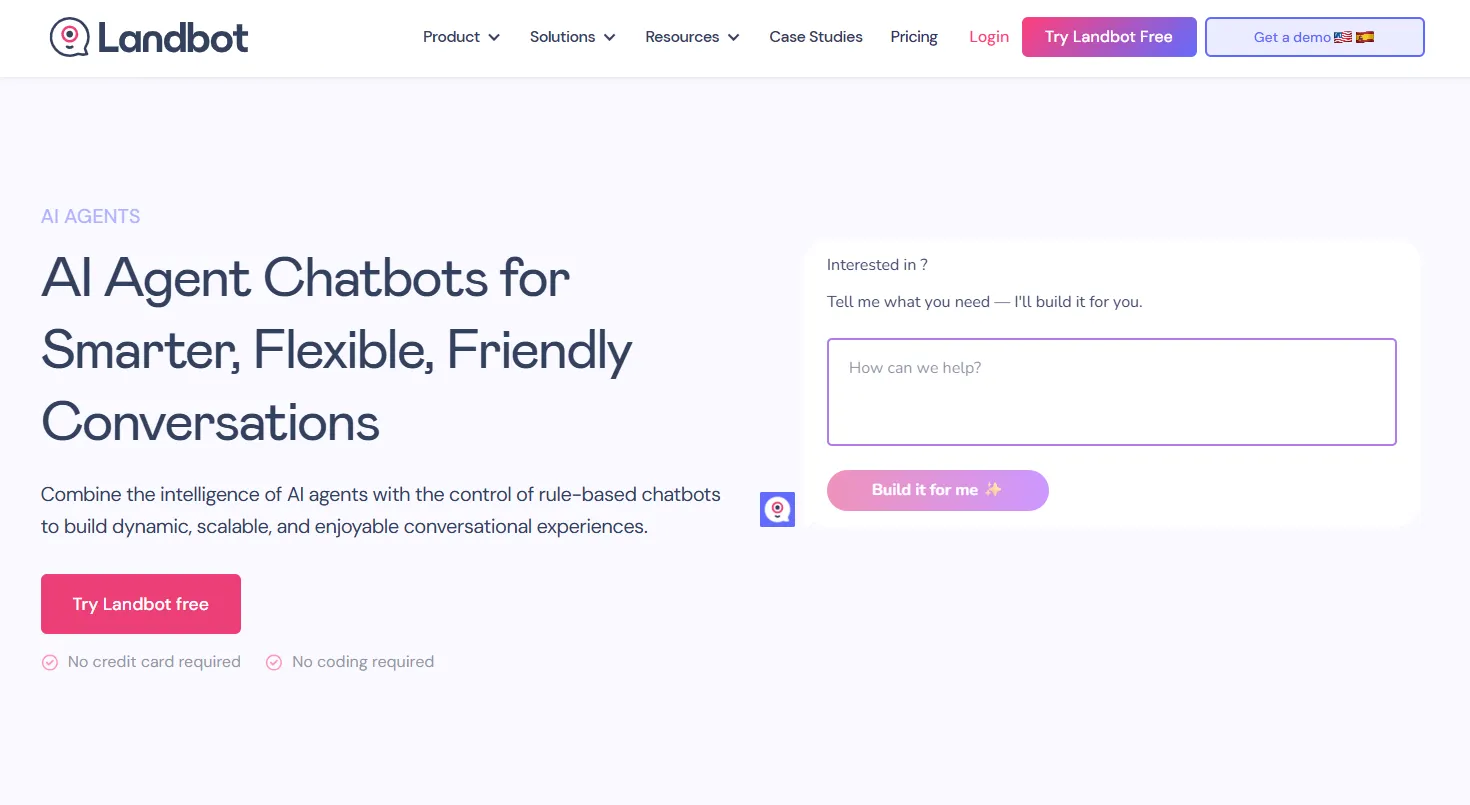
Landbot offers a visual, no-code flow builder for recruiters, facilitating the design of conversation paths through a drag-and-drop interface without developer support. It provides reusable templates and modular blocks for standardizing screening questions across multiple roles. Landbot can be deployed via the WhatsApp Business API, enhancing mobile-first recruitment interactions
Through integrations with Zapier, Landbot can connect to applicant tracking systems such as Manatal. For example, candidate responses collected via a chatbot flow can automatically create or update candidate profiles in the ATS, reducing manual data entry.

{{cta}}
ChatBot.com
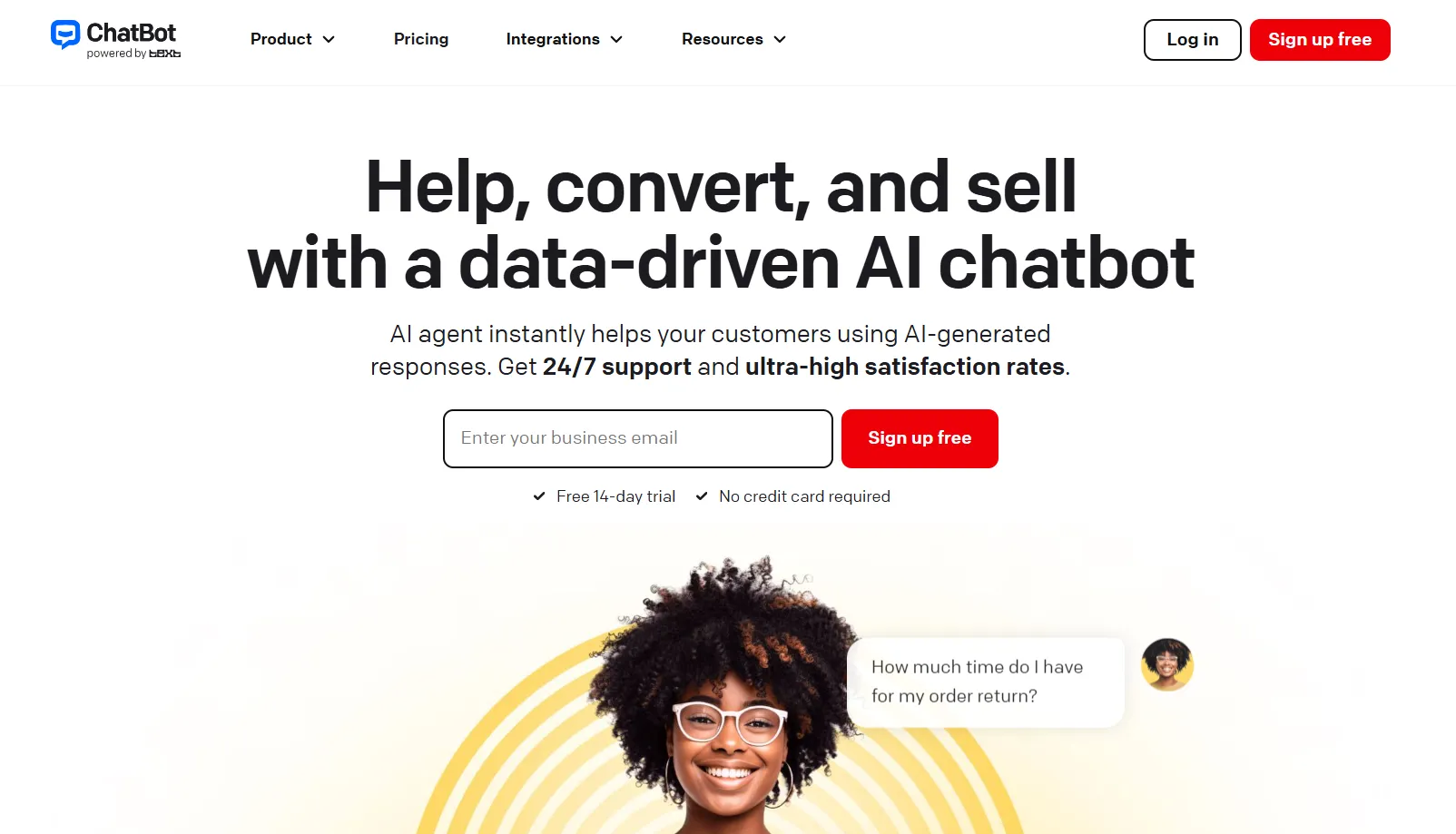
ChatBot.com is a conversational AI platform used by recruiting teams to automate common candidate inquiries on careers pages, allowing questions like salary and remote work eligibility to be answered without recruiter intervention. The platform integrates with Zapier and Manatal to seamlessly create candidate records and notify recruiters via Slack or email when a qualified candidate completes the screening process.
Tidio
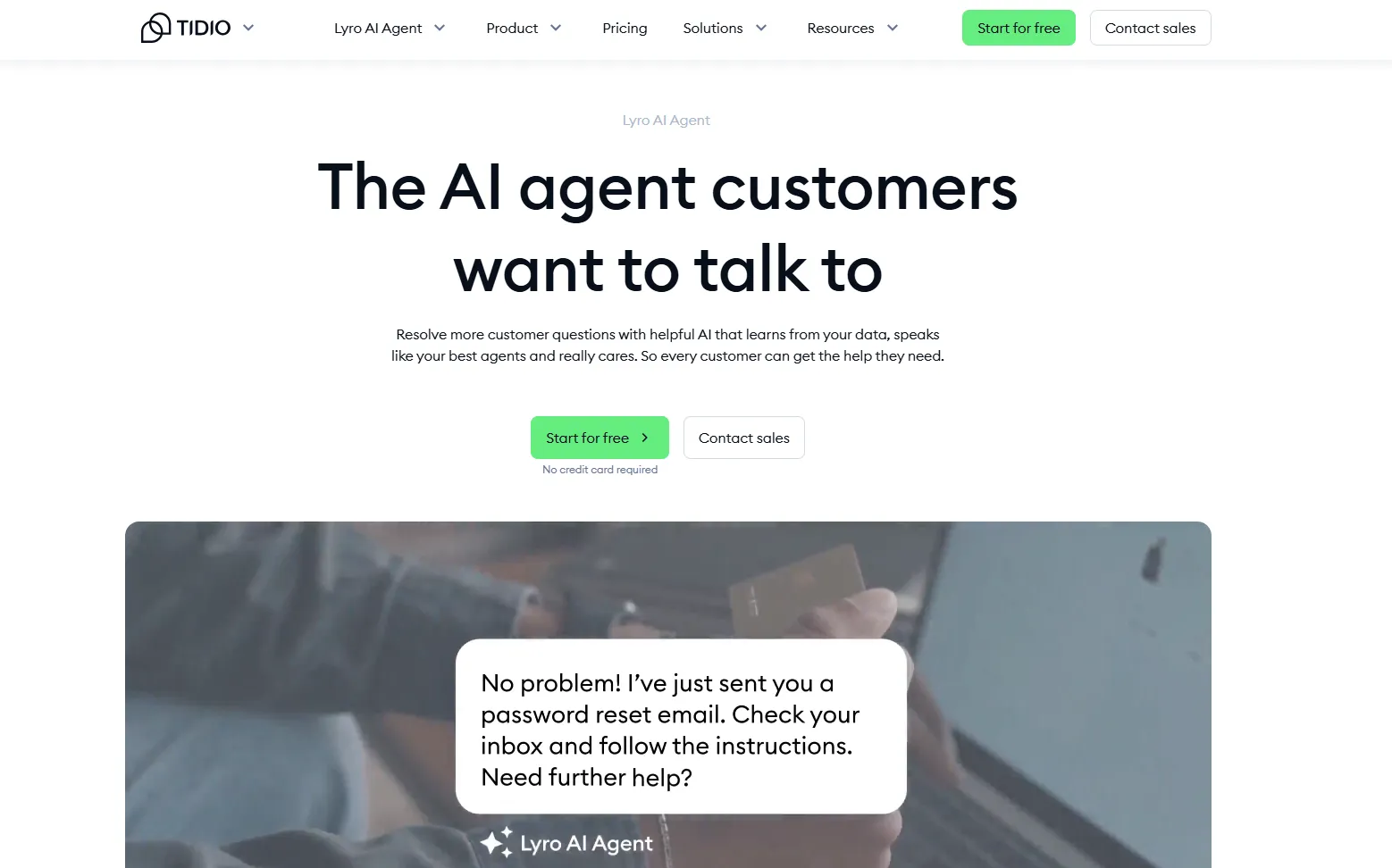
Tidio offers a quick setup for integrating a chatbot on your company's careers page. It requires embedding a script and configuring FAQ responses, with the AI Lyro learning from your existing FAQ content. Tidio's unified inbox centralizes candidate messages from various platforms, allowing recruiters to intervene as needed. Lyro AI effectively manages intent-based inquiries, providing meaningful answers from your knowledge base.
Beyond Recruiting Chatbots
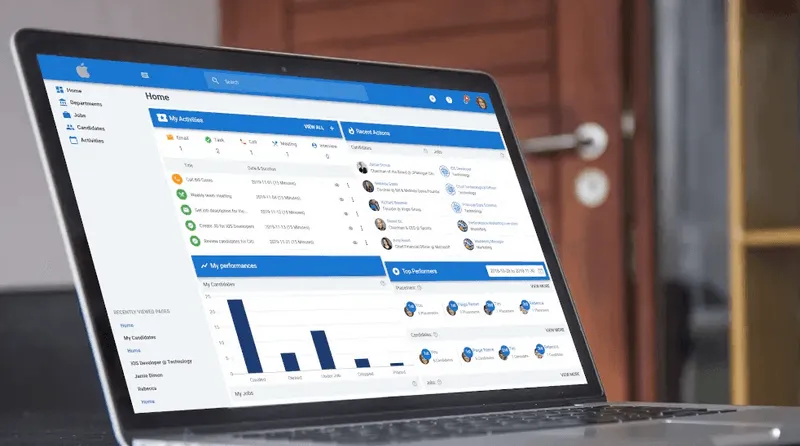
Most chatbot tools do one thing: engage candidates at the top of the funnel. They hand off to your ATS and stop contributing. Manatal takes a different approach. It is an AI-driven ATS that includes an AI interviewer that can handle your candidate screening calls and an MCP integration that allows you to talk to your preferred LLM chat about your recruitment data and candidate database.
AI Interviewer
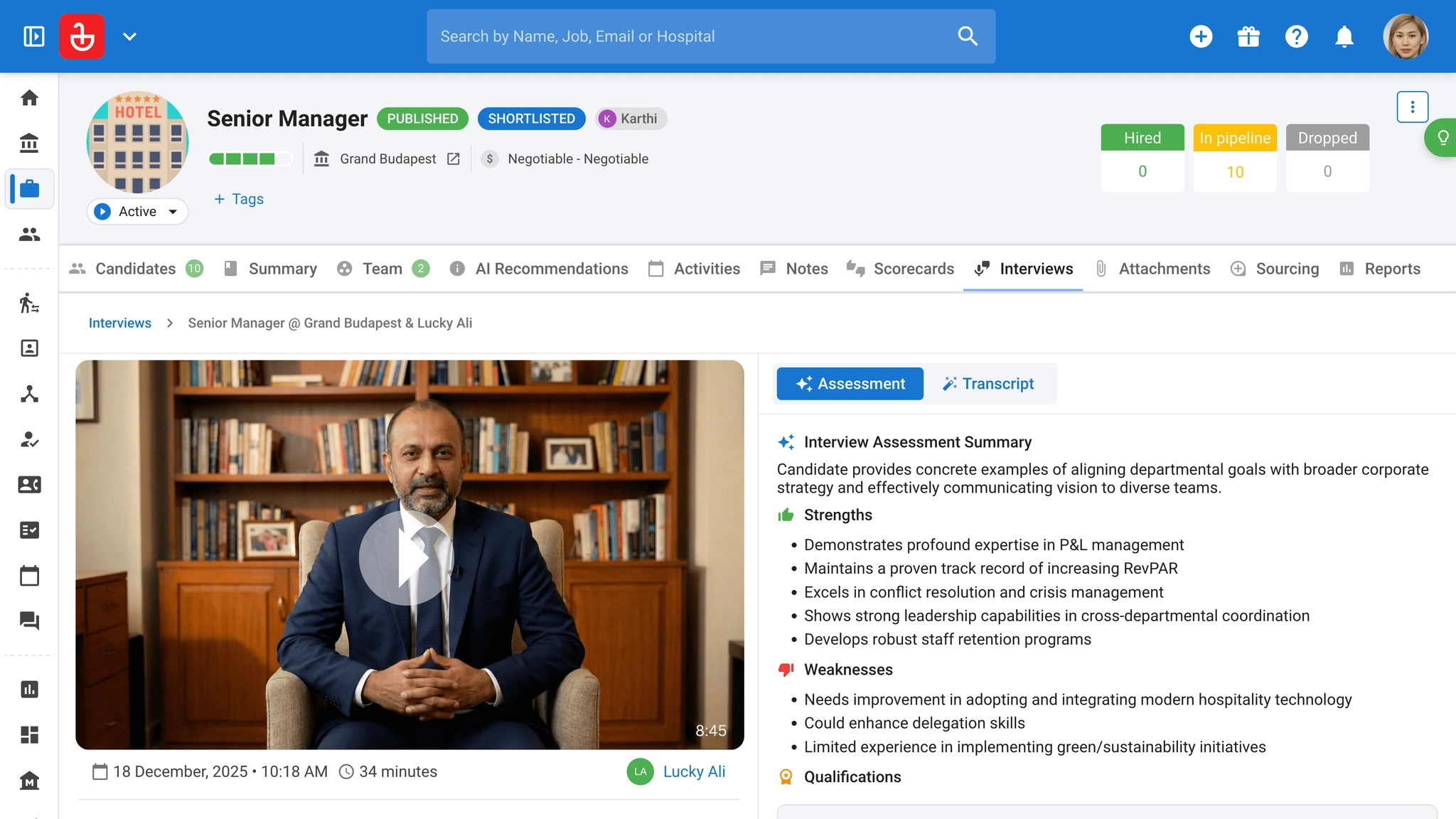
Manatal uses an AI interviewer to act as a 24/7 intelligent agent. It manages early-stage screening through asynchronous video interviews. This removes the need for manual scheduling and coordination.
MCP for LLMs
The system also connects to AI chatbots, such as ChatGPT and Claude, via the Manatal MCP Server. This allows recruiters to query candidates, add notes, and generate instant summaries or outreach messages directly within the chat interface, eliminating the need to switch between platforms.
.webp)
Conclusion
Chatbots for recruiting manage logistical aspects of recruitment, such as providing role details and scheduling interviews, but they cannot replace the nuanced judgment and relational skills of human recruiters. The purpose of AI chatbots is to optimize recruiters' time, allowing them to focus on building relationships and closing candidates. Successful recruitment teams use automation to streamline processes while engaging human recruiters in critical conversations. Although AI cannot replace skilled recruiters, those who leverage AI tools will outperform those who do not in the competitive job market. Start leveraging AI today with a 14-day free trial of Manatal and stay ahead of the competition.
Frequently Asked Questions
Q: Why is it important to integrate chatbots for recruiting with an ATS?
A: Integrating chatbots for recruiting with an ATS like Manatal ensures that candidate data, screening results, and interview recordings are automatically synced. This reduces manual data entry and prevents information from being lost in disconnected folders, ultimately streamlining the entire recruitment operations stack.
Q: How can AI recruiting chatbots for candidate engagement improve the recruiter's workflow?
A: AI recruiting chatbots act as 24/7 front-line support, interacting with applicants across various channels like WhatsApp or web chat. Chatbots answer basic questions and manage initial screenings around the clock. They clear up the recruiter's calendar. Now, teams can focus on engaging the best talent rather than on manual tasks.
Q: What are the best chatbots for recruiting available for mid-market and enterprise teams?
A: The best chatbots for recruiting include tools like Mya (known for conversational depth), Landbot (offering no-code visual flows), and ChatBot.com or Tidio for seamless FAQ automation. These tools are most effective when they integrate directly with an AI-native ATS like Manatal, ensuring data flows smoothly from the first interaction to the final hire.
Q: Can AI recruiting chatbots for candidate engagement replace human recruiters entirely?
A: No. While AI recruiting chatbots for candidate engagement are excellent at managing logistical tasks and high-volume screening, they cannot replace the nuanced judgment and relational skills of a human. The goal is to use the best chatbots for recruiting to optimize a recruiter's time, allowing them to focus on the critical human conversations that close the best candidates.
Citations:
.webp)






.webp)

.webp)


.webp)


