





The average cost per hire for tech roles in startups typically ranges from $6,000 to $12,000+, depending on seniority and location. [1] A bad hire can waste months of runway and slow down your momentum. Knowing how to hire for a startup is not the same skill as knowing how to hire for a corporation. The timelines are tighter, the stakes are higher, and you have almost no brand recognition that would make candidates take your calls. This guide is for founders and recruitment leads who are building from scratch. We cover every stage of the process, from defining the role to making the offer, with concrete tactics that work within real startup constraints.
How to Hire for a Startup: 5 Steps to Build Your Team
Step 1: Define the Role Before You Write the Job Description
For early-stage startups, hiring isn't just about filling a seat; it's about accelerating momentum. Especially as you approach Product-Market Fit, a high-leverage engineering hire can be highly accretive almost immediately by transforming vision into features and satisfying early adopters. [2] So, defining a precise scope of work is critical, as it shapes your entire recruitment strategy. Before committing, determine if the need is structural; use contractors or fractional talent for time-bound gaps, and reserve full-time roles strictly for ongoing, mission-critical functions.
Manatal empowers startups to source a unicorn candidate independently with a simple monthly subscription starting at $15 per user, eliminating the cost of a full-time recruiter. This approach uses data-driven candidate sourcing features to efficiently find the perfect fit for your mission-critical functions.
{{cta}}
Step 2: Building Your First Recruitment Tech Stack
Based on startup hiring trends, many founders rely on Google Sheets for candidate tracking during the early stages. Then it becomes a source of dread, columns out of sync, promising candidates waiting two weeks for a response, and top talent accepting other offers. Unfilled roles cost companies an average of $500 to $700 per day, depending on the position's seniority and impact. [3] Spreadsheet recruiting also creates legal risk. GDPR requires defined consent, retention periods, and deletion on request. A shared sheet with 300 candidate emails has none of that infrastructure.
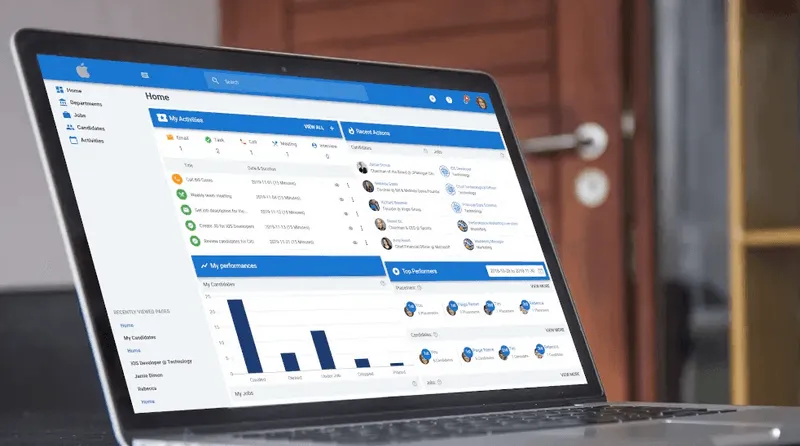
86% of businesses using an ATS reported a reduction in time-to-hire. [4] Manatal lets a five-person startup appear to have a full recruiting department.
- Career Page Builder: Build a branded careers page with zero code. Candidates arrive at a professional interface, apply through a structured form, and receive automated confirmations. First impressions matter. A Google Form says you're disorganized. A branded page says you're serious.
- AI Candidate Recommendations: Manatal's AI automatically scores and ranks applicants against your criteria. A founder who would spend four hours reading resumes can instead spend 20 minutes reviewing the top ten.
.webp)
Step 3: Sourcing on a Startup Budget
Tech job boards work better for recognized brands. For early-stage startups, the highest-quality candidates come from direct outreach.
- Use your founder network: Post weekly on LinkedIn about what you're building, not promotional content, actual insight. Engineers and operators who follow your thinking will apply for your jobs. When asking investors and advisors for referrals, ask for one specific name: "Do you know a product designer who's shipped a B2B SaaS product in the last two years?" beats "Do you know anyone good?"
- Go where candidates already are:
- Engineers: GitHub, Hacker News, "Who wants to be hired" threads, niche Slack or Discord communities such as Android United (Slack), DevOps Chat (Slack), Rust (Discord).
- Designers: Dribbble, Behance.
- Operators: cohort alumni networks like On Deck or Reforge.
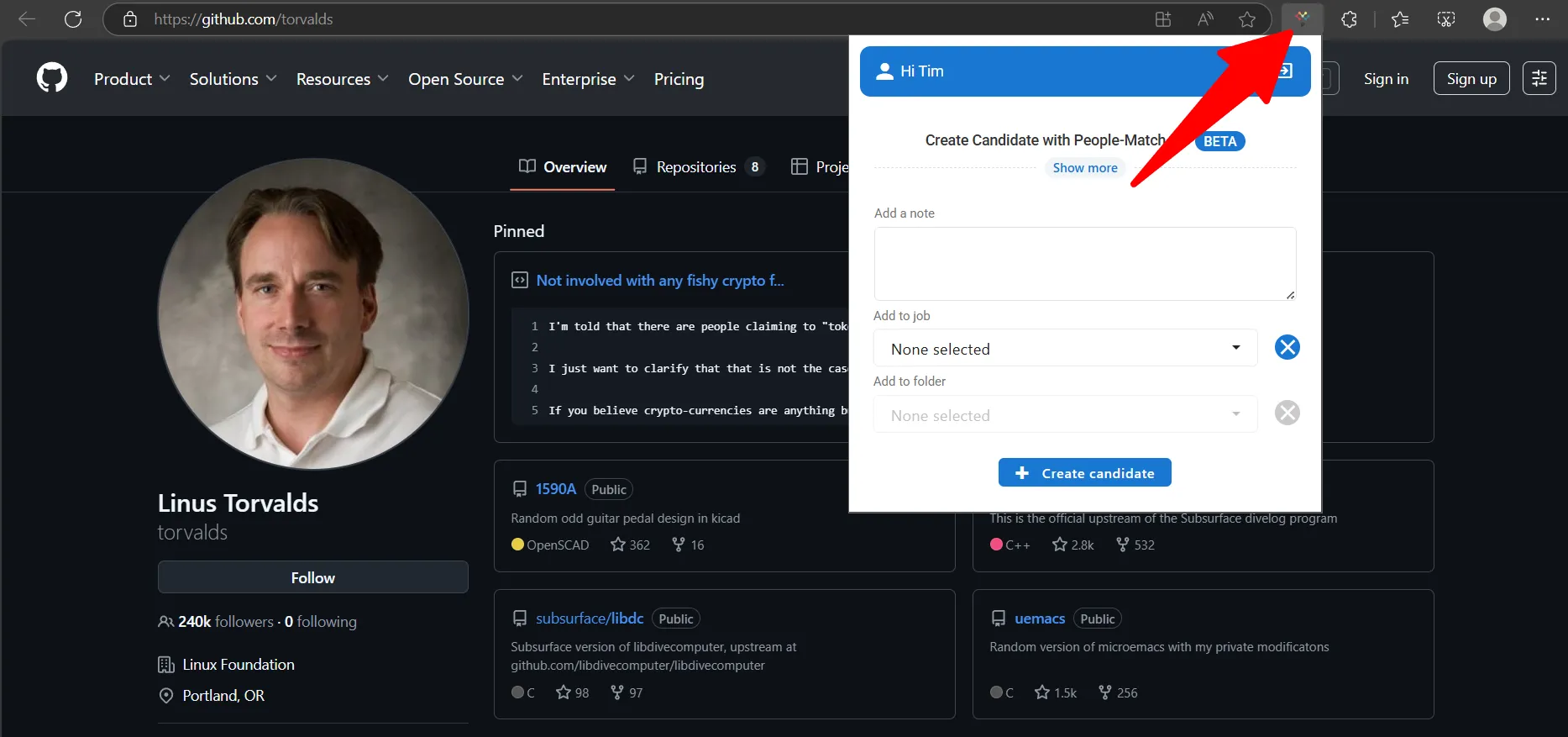
With the People-Match AI Chrome Extension in Manatal’s candidate sourcing feature, you can source candidates from platforms like LinkedIn, GitHub, SEEK Talent Search, Xing, and more. The candidate's public information is automatically parsed and added to their profiles in Manatal.
Step 4: The Agile Interview Process
Over half of job seekers expect an offer within one to two weeks. Too many stages of process with panels and presentations signal to your best candidates that you don't value their time, and they'll accept an offer elsewhere.
- Stage 1 Founder call (30 min): Equal parts sell and screen. Explain the company and the challenge honestly. Give the candidate 15 minutes to ask questions. Evaluate curiosity, communication quality, and whether they've done any research.
- Stage 2 Skills evaluation (60–90 min): Use real work, not hypothetical exercises. An engineering problem that mirrors the actual job. A marketing case built around a challenge you've genuinely faced. Pay candidates for significant take-home work; it filters out the unserious and signals respect.
- Stage 3 Team fit interview (60 min): One or two team members. Use real scenarios, not personality frameworks. "Tell me about a time you made a big decision with incomplete information" reveals more than any culture quiz.
Startup-specific interview questions that work:
- "Tell me about a project you owned with almost no guidance. What did you build, and what would you do differently?"
- "Describe a time you told a founder or manager their plan wasn't going to work. What happened?"
- "What's the fastest you've ever learned a new skill out of pure necessity?"
Founders can use our Interview Questions Library to avoid illegal interview questions, then seamlessly transition to Manatal’s AI Interviewer for execution. This tool allows you to either manually curate your list or automatically generate high-signal questions directly from your job description, ensuring every interview is both compliant and objective.
.webp)
Step 5: Making the Offer (Equity vs. Salary)
The offer conversation is a conversation about whether you can reach a mutual agreement that feels fair to both parties. Before sending the final offer, complete employment verification to confirm a candidate’s previous roles, responsibilities, and tenure. Employment verification helps startups reduce hiring risk, validate key experience claims, and ensure that the person joining the team can meet the expectations discussed throughout the interview process. Go in with a clear framework.
Walk every candidate through the vesting schedule before they sign. Four-year vest with a one-year cliff is standard. Explain what happens to their equity if the company is acquired, if they leave early, or if you raise a down round. Founders who avoid these conversations save a few uncomfortable minutes and create confusion, resentment, or legal disputes later.
If a candidate turns down your offer, ask why. The answer is information. It might tell you your equity offer is misaligned with market expectations, or that a competitor is offering full remote while you require three days in the office. That feedback shapes your next offer.
The Unique Challenges of Startup Recruitment
Startup hiring operates in a different environment than most recruitment strategy guides describe. Here are the constraints that actually define the work.
- No brand recognition. When your startup posts a job, you might get 30 applications. Half misread the location. You need direct outreach and a founder visible enough that candidates have heard the name before they apply.
- Lower base salaries. You cannot compete with FAANG-level base pay. Instead, emphasize equity, ownership, rapid learning, and direct impact. Be specific and transparent, not with buzzwords.
- The T-shaped hire requirement. Specialists who can only do one thing are liabilities at a ten-person company. Your first marketing hire needs to write copy, run paid ads, and pull basic analytics. Not world-class at all three. But capable enough that you're not waiting six months for backup.
- The founder's time problem. Over 90% of employers use social media as part of their hiring strategy [2], but posting and hoping isn't a process. Without a system, founders end up screening resumes at midnight, losing track of candidates, and making inconsistent decisions depending on how stressed they are that week.
For founders looking to secure unicorn candidates and top talent, discover our comprehensive guide >> Click here
How to Hire the First Employee for a Startup Checklist
- Define the exact problem this hire solves in the next 90 days
- Write a job description that leads with mission, not requirements
- Set up a branded career page before posting anywhere
- Cap your interview process at three stages
- Prepare the equity and compensation structure before any offer conversation
- Assign one decision-maker; no committee hires at the seed stage
- Build a 30-day onboarding plan before day one
Conclusion
The startups that build the best early teams are not the ones with the most sophisticated hiring process. They're the ones with the clearest vision and the conviction to communicate it without hedging. Get the process right. Then make the pitch worth saying yes to.
Start a 14-day Manatal free trial to set up your first hiring pipeline in minutes.
Frequently Asked Questions
Q: What is the biggest mistake founders make when hiring for startups?
A: Hiring for a specific skill set instead of adaptability. Early-stage roles change fast, and a candidate who can't function without a clear structure becomes a bottleneck within months. Prioritize people who have operated in ambiguous environments over those with polished corporate resumes. Manatal's structured scorecards help founders evaluate every candidate against the same criteria consistently, so hiring decisions don't shift based on mood or time pressure.
Q: How many employees should a startup hire in its first year?
A: Hire behind proven revenue, not projected revenue. Most seed-stage startups that scale sustainably keep headcount under 10 for the first 12–18 months. Andreessen Horowitz recommends proactive "bench-building," engaging high-potential candidates early on as fractional advisors before a full-time need arises, as a smart risk-management strategy for startups under $20 million in ARR. Manatal lets you keep warm candidates in a talent pool, so when the revenue signal hits, and you're ready to hire, you're not starting from zero.
Q: How to hire a first employee without a formal HR department?
A: The founder handles it personally, and that's fine, as long as the process is documented. Use a scoring rubric for every interview, store candidate data in a compliant ATS such as Manatal rather than a shared inbox, and have an employment lawyer review the first contract before it goes out. That groundwork becomes your hiring template for the next 50 people.
Q: What makes startup recruitment different from corporate hiring?
A: The average time to hire is 44 days across industries, a timeline most startups can't afford. Startup recruitment competes on mission and equity, not brand recognition or base salary, and the entire process needs to move in days without sacrificing rigor. Manatal's AI candidate ranking dramatically reduces manual screening time, helping startups move faster than the industry average of 44 days and reach top candidates before larger companies do.
Citations:
.webp)







.webp)

.webp)


.webp)


