





According to LinkedIn's 2026 Talent Velocity Advantage Report and related labor market analyses, top talent moves quickly in competitive segments, while overall time-to-hire has lengthened to an average of 42 days due to more selective hiring processes. [1] Companies with slow, multi-week hiring cycles risk losing strong candidates to faster competitors that can make decisions and extend offers more quickly. This guide covers how to recruit top talent before your competitors do and how to create the conditions that keep them.
What Actually Defines "Top Talent" in 2026?
According to the World Economic Forum’s Future of Jobs Report 2025, core skills such as analytical thinking, creative thinking, resilience, flexibility, and systems thinking are rising rapidly in importance. When combined with insights from engineering leadership frameworks and talent research, three traits increasingly separate high-leverage talent:
- Systems Thinking: They don't solve the problem in front of them in isolation. They identify and redesign the system that keeps producing the problem. An engineer who eliminates a category of bugs is worth more than one who resolves individual tickets faster.
- AI Fluency: Not occasional use of generative tools, but the ability to architect multi-step AI workflows, evaluate output quality critically, and produce work that would have required a team of three two years ago.
- Cross-disciplinary Impact: Senior candidates who can operate across functional boundaries, a GTM leader who understands product constraints, and a product manager who tracks revenue implications generate compounding value that specialists cannot replicate.
How to Recruit and Retain Top Talent in 2026
Step 1: Decentralized Employer Branding
Most corporate employer branding investment goes into company careers pages, HR-produced testimonials, and polished culture videos. In 2026, elite talent prioritizes peer-level credibility over corporate marketing. High-performers don't apply to job boards; they are discovered within their ecosystems. To find "A-Players," recruitment must move beyond LinkedIn and into discipline-specific "Deep Web" communities:
- Mine Niche Professional Ecosystems:
- For Technical Talent: Move beyond GitHub profiles and actively scout contributors on Discord servers for specific frameworks (e.g., Rust, OpenAI API) or in Slack communities like Android United or DevOps Chat. [2]
- For Executive/Product Talent: Monitor high-signal networks such as Reforge, Chief, or private Substack subscriber communities where thought leaders engage in peer-to-peer debate.
- Target "Output-First" Platforms: Instead of scanning resumes, audit the top 10% of contributors on Stack Overflow, Kaggle (for data science), or Behance/Dribbble (for design). Engaging with a candidate based on a specific "pull request" or project is the most personalized form of outreach.
- Leverage "Event-Horizon" Recruiting: Don't just sponsor conferences; also pull attendee lists from niche summits like Config (Figma), AWS re: Invent, or specialized AI symposia. Use these lists for targeted, authority-based outreach sent directly from your lead engineers or VPs.
Once you gain access to these communities, avoid posting job advertisements immediately, as this often leads to an instant ban. Instead, adopt a "stealth" sourcing approach:
- Monitor Targeted Channels: Focus your attention on channels like
#jobs,#showcase, or#general-discussionto understand the community’s pulse. - Identify Key Contributors: Look for individuals who consistently provide high-quality answers to complex technical questions or those who share their own innovative open-source projects.
- Execute "Soft Outreach": When you identify a high-potential candidate, reach out by first praising the specific work they shared within that community. Transition naturally into discussing career opportunities; this is known as Authority-Based Outreach.
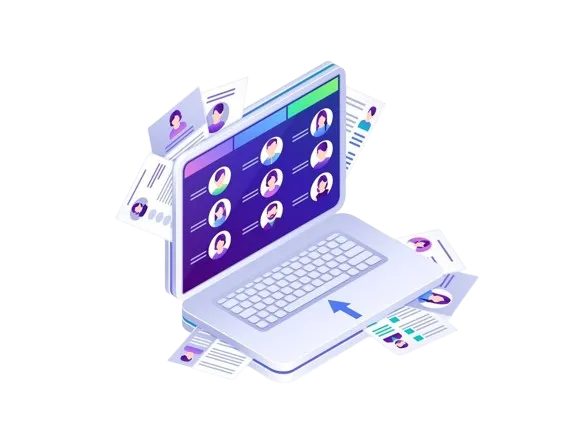
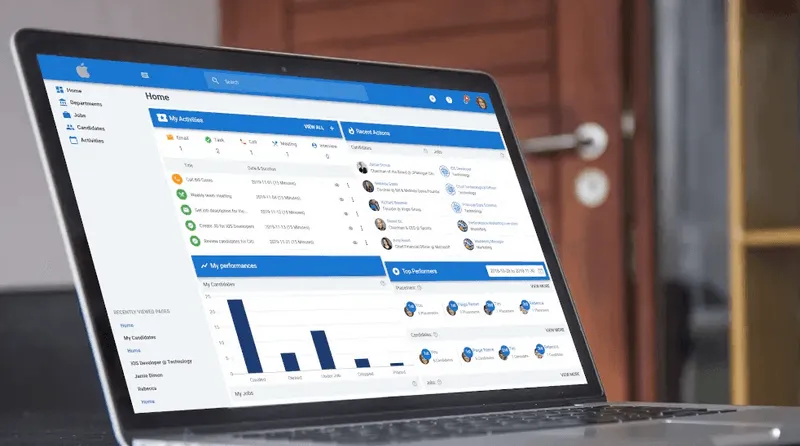
Generic outreach results in low conversion. To compete in 2026, you need to identify "intent" before a candidate even hits the market. Rather than manually building career pages, leverage Manatal’s AI-Powered Advanced Search and Scoring.
- AI Advanced Search: Instantly scan your existing database and external sources to find "hidden gems" who match the technical DNA of your top performers.
- AI Scoring: Automatically rank candidates based on skill-to-role compatibility and "flight risk" indicators, ensuring your hiring managers spend their time only on the highest-probability talent.
{{cta}}
Step 2: High-Signal Sourcing (Bypassing the InMail Noise)
Knowing how to recruit top talent starts with accepting that mass InMail campaigns no longer work for this segment. To capture unicorn candidates, recruiters must shift from "cold spamming" to high-signal, data-driven sourcing.
1. Strategic Competitor Mapping & "Receptivity" Windows.
- Use Crunchbase or PitchBook to set up alerts for competitors’ funding rounds, missed milestones, or “flat” Series C rounds (rounds where the valuation barely increased or they raised less money than expected).
- Monitor Layoffs.fyi or Blind for signs of internal dissatisfaction or leadership changes. When a competitor experiences a leadership shakeup, use LinkedIn Sales Navigator's “Past Company” filter to identify long-tenured employees (those who have stayed the longest). These individuals are often most receptive to a “Stability & Growth” pitch in the first 1–2 weeks after negative news breaks.
2. Network-Level Recruiting (The "Halo Effect")
- Track Keystone Leaders,high-performing VPs, or directors who consistently build successful teams on LinkedIn. When one of them joins a new company, they often leave a talent gap behind at their previous organization.
- Start with LinkedIn Boolean Search (using “Team Moves” or “reports to” search)
- "Team Moves" Analysis: Search for:
"[Company Name]" AND "left" OR "left for" OR "joined" AND "[Leader's Name].". Search for the Leader's "Alumni": Search for:"[Company Name]" AND "[Leader's Name]" AND "reported to".
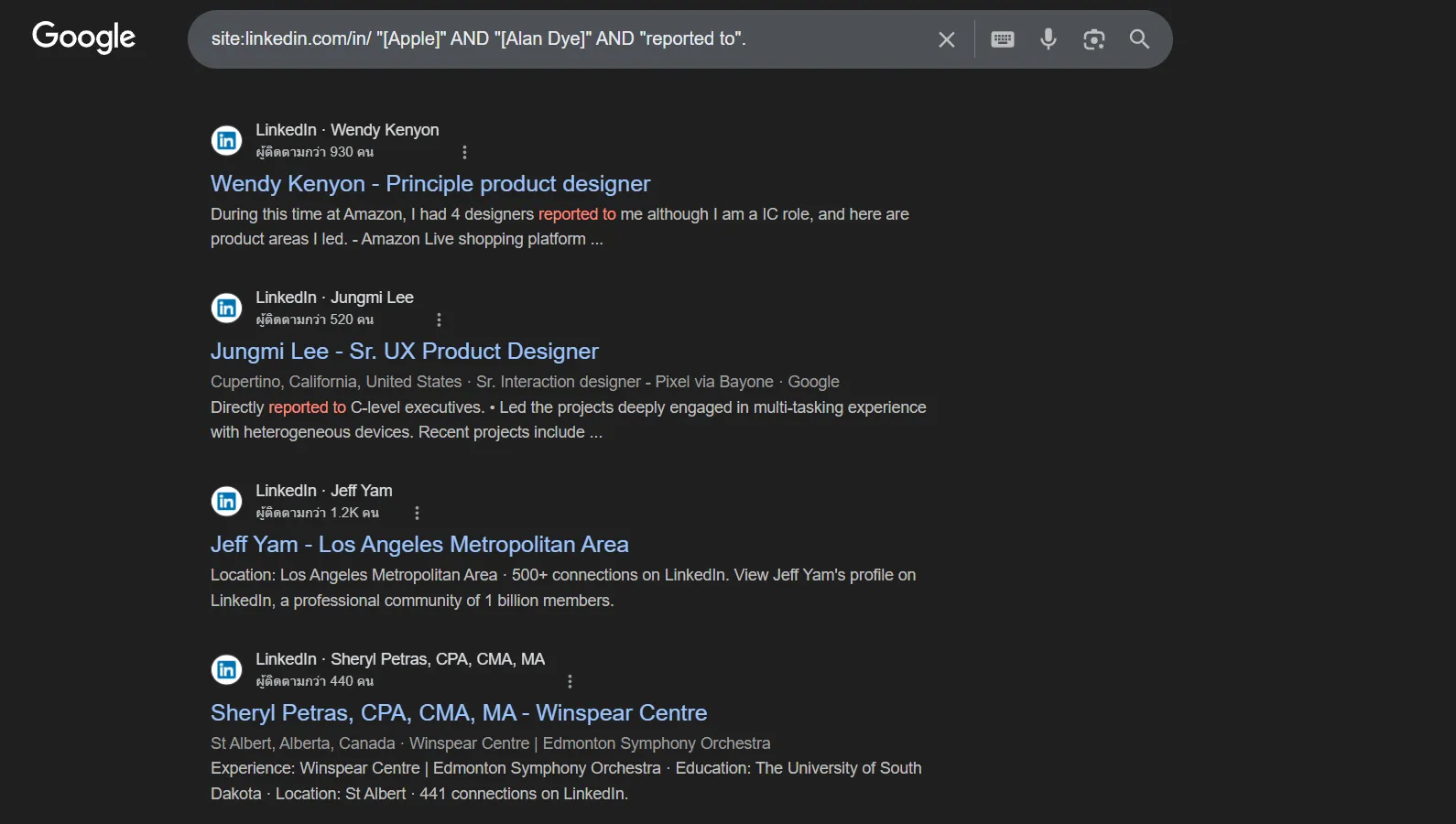
To map former direct reports of the Keystone Leader. Import them into Manatal, then leverage Manatal’s AI Advanced Search and AI Scoring to re-rank and enrich candidates from your database.
3. Candidate Rediscovery: Maximizing Your Existing Talent Pipeline
Before buying new leads, exhaust your existing ATS (Applicant Tracking System) first. Re-engage “Silver Medalists," strong candidates who reached the final round but came in second place. Within 1–2 years, many mid-level engineers or specialists often grow into senior roles.
Use Manatal’s AI Advanced Search to filter your database for candidates previously tagged as “Strong Fit” from 18–24 months ago. Then apply AI scoring to re-rank them based on their updated public profiles (GitHub, LinkedIn, etc.), identifying those who have upskilled into the exact roles you’re hiring for now.
Step 3: High-Signal, Low-Friction Interview Loops
The STAR-method behavior-based interview was built for consistency. What it actually measures is how well someone prepared for the interview. Candidates who rehearse produce polished answers. Those answers tell you very little about whether the person can do the job.
- The 60-Minute "Live Case" presents a tightly scoped, real-world business challenge relevant to the role. Spend 45–60 minutes solving a specific part of it alongside the candidate; you maintain a consistent rubric for all candidates while testing real-time logic, communication under uncertainty, and cultural add in a fraction of the time.
- Compensate for Expert Time: Treat the working session as a professional consultation. Paying candidates for their time signals that you respect their expertise and builds immediate brand equity.
- Compress the Funnel: Aim for a "High-Density" process. A-players despise wasted time. If your process involves more than three substantive interactions, you are creating friction without gaining additional signal.
Step 4: The Alumni Mindset for Retention
High performers typically operate on 3- to 4-year cycles driven by specific outcomes. Organizations that design for this "tour of duty" retain elite talent longer and more effectively.
- Shift to Milestone-Based Incentives: Tie equity refreshes and performance bonuses to the completion of high-impact projects and measurable outcomes. This keeps top performers focused on meaningful contributions rather than simply accumulating years of service. This strategy builds on outcome-based compensation models used by leading tech companies, as documented in First Round Review's talent management research. [3]
- Cultivate a High-Value Alumni Network: Maintain private LinkedIn or Slack groups to share company milestones and priority roles, keeping former staff engaged as brand advocates. Explicitly welcome top talent to return in the future; "boomerang" hires are 40% more productive in their first 90 days. Extend referral bonuses to former employees to build trust within your alumni network.
The Result: By moving away from "indefinite retention" toward "defined impact," you attract high-accountability talent and build a sustainable pipeline of elite referrals.
The High-Signal Competency Matrix
Generic 1-to-5 rating scales produce inconsistent data because interviewers calibrate them differently and often default to an overall impression rather than specific evidence. This matrix draws from proven industry frameworks, including Lou Adler’s Performance-Based Hiring and Liz Wiseman’s Multipliers leadership principles. The matrix below separates evaluation into three distinct categories: baseline requirements, performance multipliers, and patterns that are either red flags or misleadingly positive.
Structured scorecards produce reliable data only when every interviewer submits feedback against the same criteria before the debrief conversation. Manatal centralizes recruiting scorecard submissions from all interviewers for every candidate, preventing the most common failure mode in structured hiring: one strong voice in the debrief overriding hours of documented evaluation because the data was never aggregated in an accessible way.

Conclusion
Recruiting top talent in 2026 is a precision problem. Understanding how to recruit top talent is less about finding more candidates and more about reaching the right ones faster than anyone else does. They are hard to reach before a competitor does, hard to impress with a process that looks identical to everyone else's, and hard to keep once the work they joined to do is finished. The framework above addresses each of those problems in sequence.Start a free trial of Manatal and see how Manatal's AI-powered candidate rediscovery turns your existing talent pool into your fastest sourcing channel.
Frequently Asked Questions
Q: How much does a bad hire actually cost compared to missing a top performer?
A: A mid-level bad hire typically costs 50% to 200% of the employee's annual salary when factoring in lost productivity, recruiting expenses, onboarding, and team disruption. [4] Missing an A-player in an engineering or GTM leadership role can cost significantly more through delayed product velocity or missed revenue targets. Recruiting top talent is ultimately a risk management decision, not just a hiring preference.
Q: Should small companies compete for the same top talent as large enterprises?
A: Yes, but the pitch has to be different. Enterprise candidates optimize for compensation and stability. Candidates who thrive at smaller companies optimize for ownership, speed, and direct impact on outcomes. How to recruit and retain top talent at a smaller organization comes down to being radically honest about what the role offers: equity upside, real decision-making authority, and a chance to build something visible on their resume.
Q: How often should companies revisit their job descriptions to stay competitive?
A: Most companies write a job description once and reuse it indefinitely. That's a sourcing problem. Job requirements shift as the team grows, as tools change, and as the market moves. Reviewing job descriptions every six months against what the team actually needs, not what the role was originally scoped for, directly improves the quality of applicants. Recruiting top talent starts with telling the truth about what the job actually requires.
Q: Is offering remote work still a meaningful factor in attracting high-performers?
A: It depends on the role and the talent segment. For senior individual contributors in technical roles, remote flexibility remains a significant filter. Many will decline an otherwise strong offer solely on return-to-office requirements. How to recruit and retain top talent in 2026 means accepting that workplace policy is a sourcing decision, not just a people operations one. Companies that set policy without considering its effect on candidate quality are making a tradeoff, whether they intend to or not.
Citations:
.webp)






.webp)

.webp)


.webp)


