





Your recruiter just closed three offers this week. You may not know whether that performance is strong or if the recruiter is overloaded with 47 open requisitions. The recruiter capacity model tells you exactly how many roles a recruiter can own before their performance visibly deteriorates. It indicates when to hire additional recruiters before missing hiring targets and identifies bottlenecks within your TA team. To gain this level of clarity and move beyond guesswork, you need a structured approach starting with a clear understanding of the framework.
What Is a Recruiter Capacity Model?
A recruiter capacity model is a mathematical framework that determines the realistic number of open requisitions a recruiter can close in a given period. Unlike traditional methods, it is based on measured inputs such as time-to-close rates, interview requirements, and available hours after administrative tasks are completed. It serves as a critical planning tool for talent acquisition teams with hiring targets, providing a key metric to guide decisions on headcount, vendor spending, and hiring timelines.
How to Calculate Recruiter Capacity
Before you can build the model, you need four numbers from your own data. Not industry benchmarks.
- Avg. Time-to-Fill (by Role Type): Segment ATS data into at least Technical vs. Non-Technical buckets. A software engineer's role might take 40-55 days in the US. [2] The average time to fill for an entry-level administration position is 24 days. [3] Averaging 40-day and 24-day cycles together creates a misleading metric that obscures actual performance.
- Interviews Per Hire: Track candidate touchpoints (screens, panels, and assessments). If one role requires 6.5 interviews and another 3.2, the recruiter’s workload per requisition differs significantly despite having the same headcount.
- **Offer Acceptance Rate:** A low offer acceptance rate (OAR) increases redundant recruiting work, as each declined offer requires restarting the hiring process. Industry benchmarks typically place OAR between 70–90%, with high-performing organizations reaching 90%+. [4]
- Net Available Working Hours: Start with a 160-hour baseline monthly. The figure of 160 hours is derived from the International Standard Full-Time Equivalent (FTE), after subtracting meetings and admin tasks to arrive at the "true" recruiting time (typically 90–120 hours). Use actual data rather than optimistic estimates.
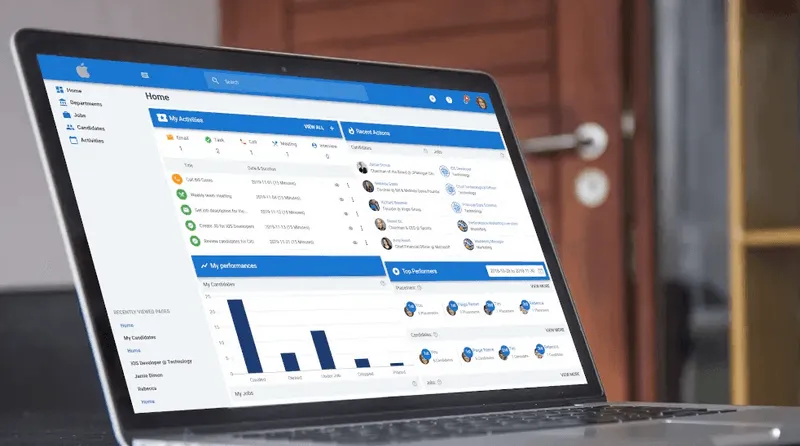
To improve recruitment efforts, Manatal provides features such as reports and analytics. Manatal allows recruiters to monitor hiring metrics, including time-to-fill. It also enables the visualization of performance trends over time.
{{cta}}
Recruiter Capacity Calculation Formula
Once you have those inputs, the base formula looks like this:
Net Available Hours ÷ Hours to Close One Standard Requisition* = Monthly Req Capacity
*The hour to close one standard requisition is calculated by taking the average time-to-fill in days and multiplying it by the percentage of a recruiter's day a role demands. A requisition requires focused bursts of attention for tasks like sourcing, screening, and coordinating.
A worked example:
Say you're hiring 50 software engineers in Q3. You have four recruiters.
- Average time-to-fill for engineering: 42 days
- Net recruiter working hours per month: 100 hours
- Hours per week per active eng req: 8 hours
- Monthly hours consumed per req: 8 hours × 4.3 weeks = approximately 34 hours
100 hours available ÷ 34 hours per req = ~2.9 requisitions per recruiter per month
Over a full quarter (3 months), one recruiter can realistically close 8-9 engineering requisitions. Four recruiters × 9 closed reqs = 36 hires in Q3. The company needs to fill 50 positions but is short by 14 hires. You need to decide whether to hire a recruiter, employ a contract sourcer, adjust the hiring timeline, or improve the offer acceptance rate (OAR) to reduce rework.
Ways to Increase Capacity Without Adding Headcount
Once you know your actual capacity number, you have two levers: add people or reduce the hours required per hire. Here are the ways to move the second lever.
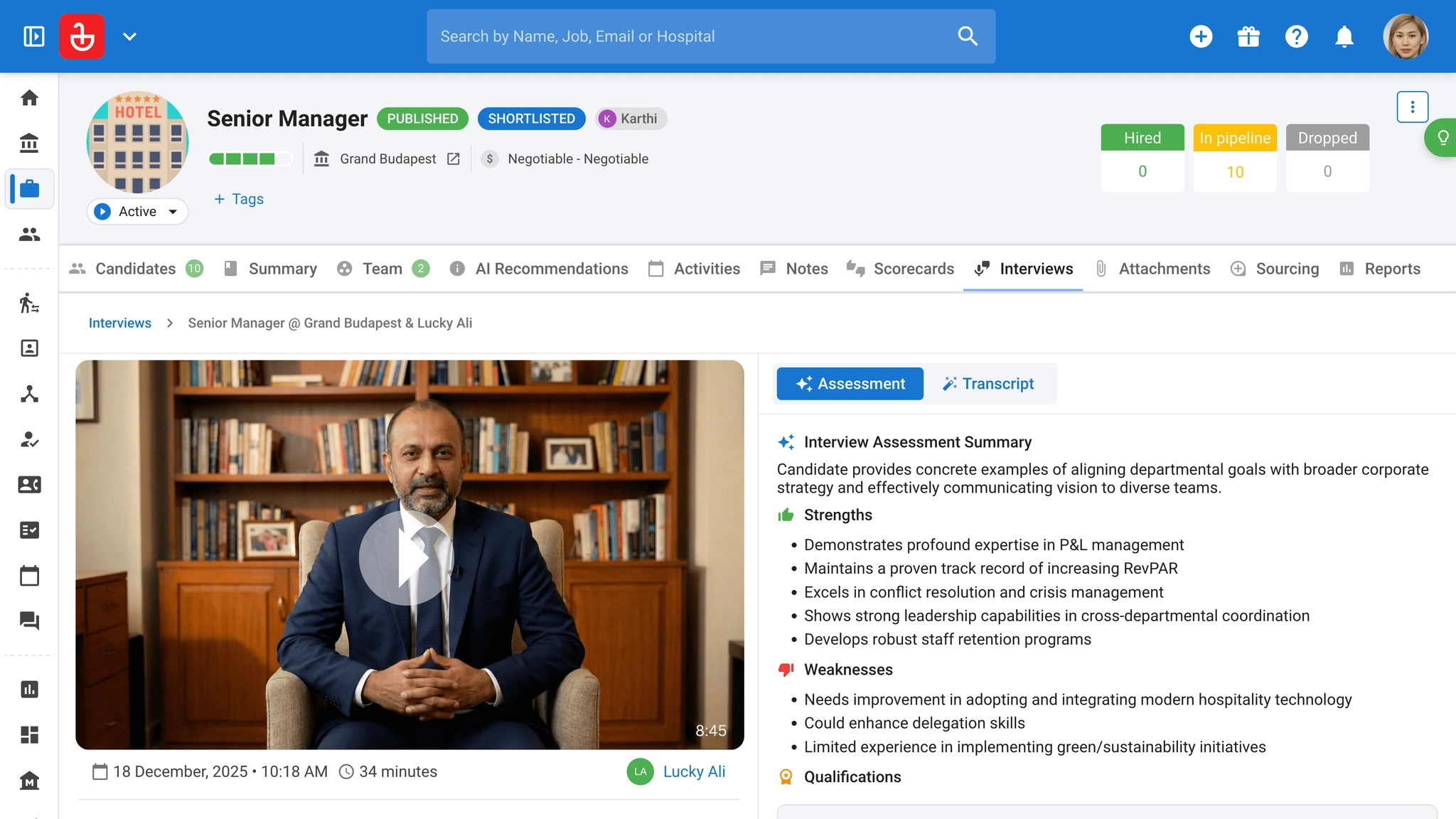
- Let AI handle the screening calls: Traditional phone screens and early-stage interviews consume a significant portion of recruiter time. Manatal's AI Interviewer conducts video interviews 24/7, allowing you to screen hundreds of candidates simultaneously without adding headcount or managing complex calendars.
Optimize Workflow with Recruitment Automations: Manual administration often creates hiring bottlenecks. Manatal’s automation eliminates repetitive tasks by using triggers and conditions to execute immediate actions, such as advancing candidates or sending follow-up emails.
.png)
Capacity Models: Staffing Agencies vs. In-House Teams
In-house talent acquisition (TA) teams and staffing agencies have distinct operational models and successful talent acquisition metrics.
- In-house teams focus on aligning capacity with internal hiring plans, optimizing for time-to-fill, hiring manager satisfaction, and quality of hire, while accounting for stakeholder management time.
- Staffing agencies focus on speed and revenue, navigating client submittal requirements, fall-off rates, and the best revenue per recruiter. Agency capacity models must be tailored around their unique economic structure, bill rate, and fall-off history.
Manatal’s revenue and ROI tracking, through reports and analytics features, allows you to link income directly to jobs, clients, and team members for a precise view of recruiter performance. These tools give you real-time cash flow visibility and help you forecast ROI by pipeline stage, so you can tailor capacity models to your agency’s unique economic structure and bill rates.
.jpg)
Conclusion
Implementing a capacity model for staffing and internal HR transforms recruitment from a guessing game into a predictable science. Understanding how to calculate recruiter capacity using metrics such as net working hours and time-to-fill, organizations can prevent recruiter burnout and ensure hiring targets are met. Ultimately, the recruiter capacity model is a vital tool for balancing workload and effectively scaling talent acquisition efforts
Frequently Asked Questions
Q: How does the recruiter capacity model account for high-volume vs. executive search roles?
A: The model segments roles by complexity. High-volume roles typically have a lower "hours per hire" requirement due to standardized processes, whereas executive searches demand more net available hours for deep sourcing and high-touch engagement, reducing the total requisition capacity per recruiter. By using Manatal’s reporting tools, you can easily segment data between technical and non-technical roles to ensure your recruiter capacity model remains accurate for different hiring complexities.
Q: Can a capacity model for staffing agencies help in predicting monthly revenue?
A: Yes. By knowing the average fee per placement and using the capacity model to forecast how many roles an agent can realistically close, agencies can project revenue and determine if they need more recruiters to hit specific financial targets.
Q: What is the impact of a high "fall-off" or turnover rate on how to calculate recruiter capacity?
A: A high fall-off rate acts similarly to a low offer acceptance rate; it creates "ghost work." When calculating capacity, you must factor in a buffer for roles that may reopen, effectively increasing the "hours to close" and decreasing the total number of new requisitions a recruiter can handle.
Q: How often should a TA leader update their recruiter capacity model?
A: The model should be reviewed quarterly or whenever there is a significant shift in team efficiency. Using an ATS like Manatal makes this process seamless, as its real-time reports and analytics allow leaders to monitor fluctuations in time-to-fill and candidate touchpoints. If the data show that AI-assisted screening consistently saves hours, you can update your model accordingly.
Q: Does the recruiter capacity model account for onboarding time for new recruiters?
A: A sophisticated model includes a "ramp-up" percentage. A new recruiter might operate at only 25% capacity in month one and 50% in month two, allowing leadership to see the temporary gap in hiring capacity before the new hire reaches full productivity.
Citations:
.webp)







.webp)

.webp)


.webp)


