

Employers expect to bring in 3.9% more interns in 2025-26 than in 2024-25, according to a NACE press release from April 2026. [1] Posting on a job board is only one part of how to hire interns, and the legal check and conversion plan need equal attention. This guide covers the employer side of hiring one or a few interns: role scope, the legal check, eight hiring steps, and the return-offer decision.
Before You Hire an Intern: Decide What the Role Is For
Without defined work, an internship can drift into ad hoc tasks. That makes the legal check harder and leaves the supervisor little to assess. Settle these points before you write a posting:
- Write 2–3 real projects with deliverables, such as "build a Q3 competitor pricing tracker in Google Sheets" rather than "help the marketing team."
- Assign a supervisor and schedule dedicated time for weekly mentoring.
- Set the term, hours per week, and location: in-person, hybrid, or remote.
- Decide whether the internship may lead to a full-time offer.
The NACE 2026 Internship & Co-op Report puts the average offer rate at 71.8% among employers with intern programs. [2] NACE also calls internships a means of identifying potential employees, so scope the role like an entry-level job with a learning plan. [3]
Paid vs Unpaid Internships: The Legal Check to Run First
Your project list also feeds the first legal decision: whether the intern can go unpaid. For private, for-profit employers, U.S. Department of Labor guidance in Fact Sheet #71 explains the primary beneficiary test. It is the test courts use to decide whether an intern is an employee under the Fair Labor Standards Act (FLSA).
Run the Primary Beneficiary Test
Answer yes or no to each question before you post an unpaid role:
- Do you and the intern clearly understand there is no expectation of pay?
- Does the internship give training similar to a school setting, including hands-on training?
- Is it tied to the intern's formal education through integrated coursework or academic credit?
- Does the schedule fit the intern's academic commitments and calendar?
- Is the internship limited to the period in which the intern is still learning?
- Does the intern's work complement paid employees' work instead of displacing it, while giving the intern significant educational benefits?
- Do both sides understand the internship carries no promise of a paid job at the end?
Fact Sheet #71 states that no single factor decides the outcome, so the test weighs all seven together. As a practical reading, several "no" answers are a signal to pay the intern. If the intern displaces or replaces paid staff, the arrangement likely fails the test. Treat that intern as an employee owed minimum wage and overtime.
Some states apply their own rules. New York, for example, requires unpaid internships at for-profit businesses to meet 11 criteria, including five of its own. [4] In a 2010 opinion letter, California's Labor Commissioner said no state statute or regulation expressly exempts interns from minimum wage. [5] The DOL's state labor office directory lists each state's agency, so check yours or ask employment counsel before finalizing an unpaid role.
Set Pay and Collect New-Hire Paperwork
Paying at least minimum wage and treating the intern as an employee avoids the unpaid-intern classification question. The NACE 2026 Internship & Co-op Report puts the average hourly wage for interns at $23.35. Use that figure as your anchor, then adjust for your state and field.
A paid intern is an employee, so collect the standard forms before day one:
- Form I-9 to verify identity and work authorization
- Form W-4 to set federal tax withholding
- An academic-credit agreement if the intern's school requires one
How to Hire an Intern in 8 Steps
With the role scoped and pay set, hiring an intern runs in eight steps. Each step names one concrete action. Steps 4 and 6 include human review before candidates advance. The supervisor reviews candidates before they move forward.
Starter Stack for Hiring an Intern
You need three things before step one:
- An ATS to hold the requisition, pipeline stages, and offer and onboarding dates
- One student job network, such as Handshake, plus 2–3 target university career center boards
- A shared doc for the work-sample prompt and scoring rubric
Manatal is used here as an example of an applicant tracking system (ATS) for in-house recruiting teams. When applications arrive there, resume parsing puts each applicant's coursework and projects into the same profile fields for step 4.
The 8 Steps to Hire an Intern
1. Write the posting around projects. Lead with what the intern will build, since many candidates will have little formal work history.
- Include project names, weekly hours, pay rate, start and end dates, and the remote, hybrid, or in-person setup.
- Add a short “expected deliverable” line that names the finished deliverable.
- Start with a marketing intern job description template, then tailor it to the projects and learning objectives.
How to do it: Manatal lets you store and manage reusable job templates directly within the platform. You can quickly generate a comprehensive posting that includes project deliverables, pay rate, schedules, and work arrangements using AI-assisted job description tools.
{{cta}}
2. Post 10–12 weeks before the start date. We recommend this lead time because it leaves room for screening, work samples, and paperwork.
- Publish on your company careers page, Handshake, and the career boards of 2–3 schools whose majors match the role.
- Ask current employees for referrals and apply your relative-hiring policy.
How to do it: Manatal enables multi-channel candidate sourcing by auto-posting your vacancy directly to your careers page and external job boards with a single click. Centralized channel tracking helps you monitor applicant volume across target university networks and employee referral channels.
3. Add intern-specific screening questions to the application. Add these five to your internship application form to catch schedule and eligibility gaps early.
- Graduation date
- Major and coursework
- Availability for the full term
- Academic credit need
- Work authorization
How to do it: Manatal allows you to build customized candidate intake forms with custom fields for graduation dates, majors, and work authorization. Responses map directly into applicant profiles to streamline your initial review.
4. Screen in one pass against a 3–4 criteria rubric. Human checkpoint: the supervisor reviews the shortlist before any work samples go out.
- Relevant coursework or projects
- Written communication
- Availability fit
- Interest in the field
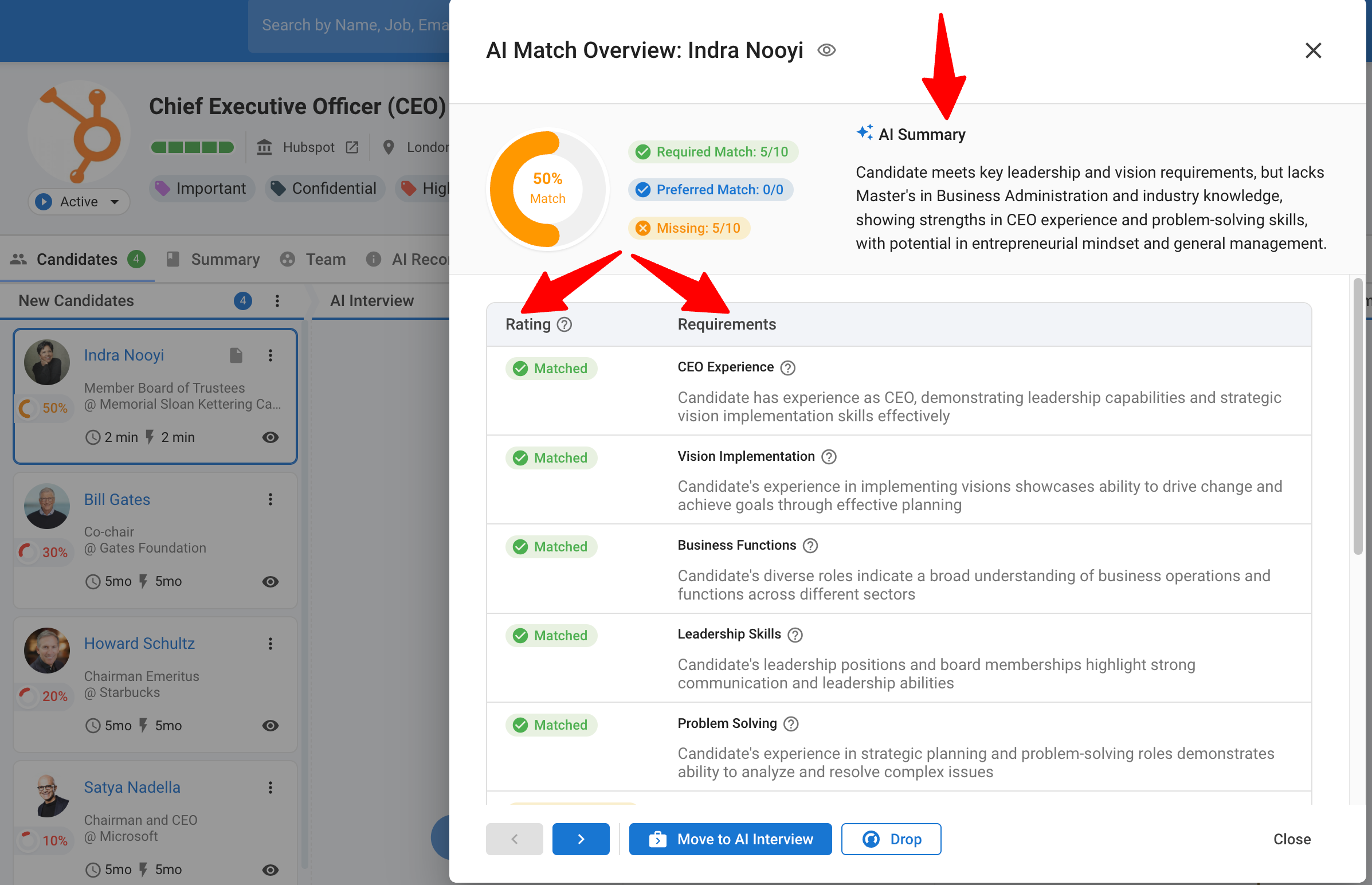
How to do it: Manatal uses AI recommendations to score resumes based on relevant skills and coursework. Human reviewers can quickly filter top candidates and share structured applicant profiles with supervisors for final approval.
5. Send a 60–90 minute work sample tied to a real project. Set a reasonable time limit that reflects the task's complexity and the candidate's expected experience.
- Pick a task such as a 300-word competitor summary, a small debugging task, or a mock social calendar.
- Use the same prompt and the same rubric for every candidate.
How to do it: Manatal automates communication workflows so you can email standardized prompt instructions and scoring links to candidates in bulk. All candidate submissions are saved directly to their applicant profiles for centralized tracking.
6. Run one structured 30-minute interview. Human checkpoint: the supervisor and one peer score separately before they discuss.
- Ask 4–5 behavioral questions about school projects, group work, and how the candidate handled feedback.
- Use a consistent set of questions drawn from your internship interview question bank.
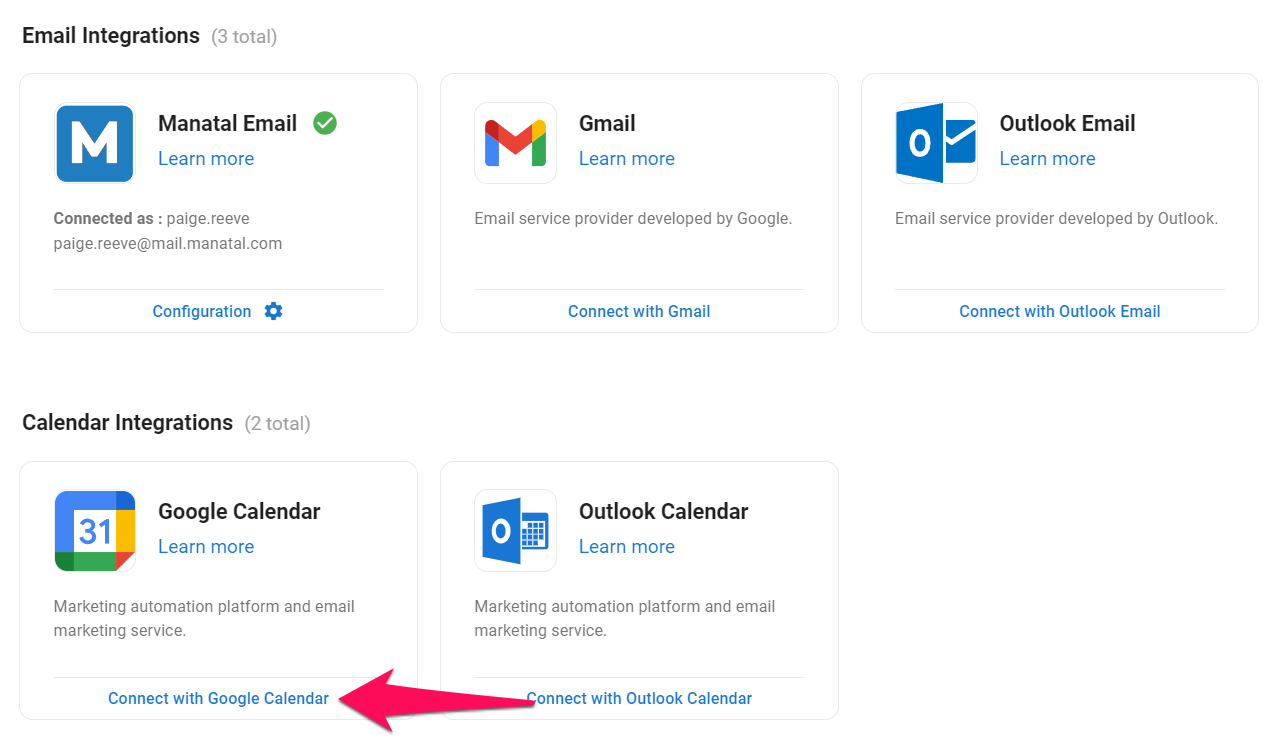
How to do it: Manatal simplifies scheduling by syncing with interviewer calendars and sending automated interview invites. Evaluation scorecards are built directly into the candidate profile, allowing interviewers to log separate feedback scores confidentially.
7. Send a written offer letter. Put every term in writing so the intern and the supervisor work from the same facts.
- State pay, hours, start and end dates, supervisor, location, and whether a return offer is possible.
- Collect Form I-9 and Form W-4, or the credit agreement, before day one.
- Adapt our internship offer email template for the cover message.
How to do it: Put every term in writing so the intern and the supervisor work from the same facts. Manatal offers built-in offer management tools to generate custom offer letters using your pre-approved templates. You can send offer packages directly through the platform and track acceptance status in real time.
8. Plan onboarding and the conversion review on the offer date. Put three dates on the calendar before the intern starts.
- A project kickoff during the first week
- A midterm check-in
- A decision on a potential return offer two to three weeks before the internship ends
How to do it: Manatal includes candidate onboarding workflows that automate welcome communications and document collection. You can assign milestone tasks and calendar reminders within the system for midterm reviews and final conversion evaluations.
How to Track Interns From Offer to Conversion
Step 8 only works if those dates hold through the term. An internship has a hard start date, a hard end date, paperwork deadlines, a midterm check-in, and a conversion decision date. Spread across spreadsheets and calendars, any one of them can slip.
Manatal Onboarding & Placement Management tracks each hire from the offer letter through onboarding milestones. Set it up once, at the offer stage:
- Enter the intern's start and end dates.
- Create a "Week 1 kickoff" milestone for the first project meeting.
- Schedule a "mid-term review" milestone for the supervisor check-in.
- Set a "Conversion decision" milestone 2–3 weeks before the end date.
The return-offer decision now sits on the candidate record with a date attached. For the mid-term review, an intern evaluation form gives the supervisor a consistent way to record progress. Our guide to ATS onboarding covers post-offer tracking in more depth.
Mistakes to Avoid When Hiring an Intern
Avoid these common mistakes throughout the hiring process:
- Running unpaid internships that replace paid staff. The U.S. Department of Labor states that one factor in determining intern status is whether interns complement, rather than displace, paid employees.
- Leaving interns without a designated supervisor. NACE's internship survey highlights the role of mentorship in internship experiences.
- Recruiting too late. NACE's recruiting benchmarks show that employers recruit interns in both fall and spring, so plan around your target candidates' academic calendars.
- Skipping relevant work samples. The U.S. Office of Personnel Management explains how work samples assess applicants' ability to perform job-related tasks.
- Leaving post-internship plans unclear. NACE's internship survey provides insights into interns' interest in staying with their host organizations. Discuss potential next steps before the internship ends.
Conclusion
A structured internship hiring process gives employers a consistent way to assess candidates, set clear expectations, and prepare interns for meaningful work. Define project deliverables before recruiting, apply the relevant employment rules, and schedule onboarding and evaluation milestones in advance. If a full-time role may be available, agree on the conversion criteria early and review the intern's progress before the placement ends. A clear process makes it easier to evaluate performance and decide on next steps.
Start a 14-day free trial with Manatal to explore how an ATS can support your hiring an intern.
Frequently Asked Questions
Q: What are the rules and regulations for internships?
A: For private, for-profit employers, courts use the primary beneficiary test in DOL Fact Sheet #71 to decide if an intern can go unpaid. It weighs factors such as ties to formal education, no expectation of pay, and no displacement of paid staff. Run the full checklist in the paid vs unpaid section above, then check your state's rules.
Q: How much should you pay an intern?
A: The NACE 2026 Internship & Co-op Report puts the average hourly wage for interns at $23.35. Use it as a starting point, then adjust for your state minimum wage and the going rate in your field.
Q: How do I hire a summer intern?
A: As a practical rule, post the role 10–12 weeks before the start date, which for summer internships often means January–March. Working back from the start date gives you time for work samples and paperwork before day one.
Q: Do paid internships lead to better job outcomes?
A: Paid internships are associated with better outcomes, though the data doesn't show they cause them. NACE's 2026 Student Survey found 55% of paid interns who applied for jobs received at least one offer. Paid interns with offers averaged a starting salary of $69,521, compared with $61,747 overall.
Citations: