





Many hiring teams move directly to the next open role once a position is filled, leaving little time to evaluate what worked and what did not during the hiring process. Over time, this can contribute to longer time-to-fill, inconsistent hiring decisions, and poor new-hire retention. [1] A retrospective interview helps break that cycle. It is a structured debrief conducted after a hiring cycle or talent initiative is completed, designed to evaluate process effectiveness, identify bottlenecks, and capture lessons learned for future hiring decisions. [2] This comprehensive guide outlines clear, process-focused steps to implement retrospective interviews within your talent acquisition team. You will find retrospective interview examples and questions, templates, and practical strategies to maximize long-term hiring efficiency and optimize future workforce planning.
What Is a Retrospective Interview in Recruitment?
A retrospective interview is a structured debriefing session conducted after a completed hiring cycle or talent-focused project. The goal is to surface process breakdowns, document what worked, and produce a concrete set of changes for the next round.
Two specific formats matter for HR professionals.
- The recruitment retrospective happens after a role is filled or closed. It brings together the hiring manager, recruiter, and any interviewers to examine the pipeline from job posting through offer acceptance. The questions center on sourcing quality, screening accuracy, and where candidates dropped out or stalled.
- The Post-Project / Contractor Retrospective happens after a project that relied on external contractors, freelancers, or a cross-functional team. It evaluates how well talent was matched to scope, how onboarding went, and whether the engagement should inform future workforce planning.
How to Conduct a Recruitment Retrospective
According to PMI’s Pulse of the Profession report, organizations that invest in proven project management practices waste 28 times less money than low-performing organizations. [3] This framework provides a structured approach for turning recruitment data into actionable process improvements.
Step 1: Gather and Analyze Empirical Data Pre-Meeting
- Extract Objective Performance Metrics: Retrieve all relevant quantitative data from the Applicant Tracking System prior to the session, including time-in-stage metrics, offer acceptance rates, interview-to-offer conversion ratios, and candidate sourcing breakdowns.
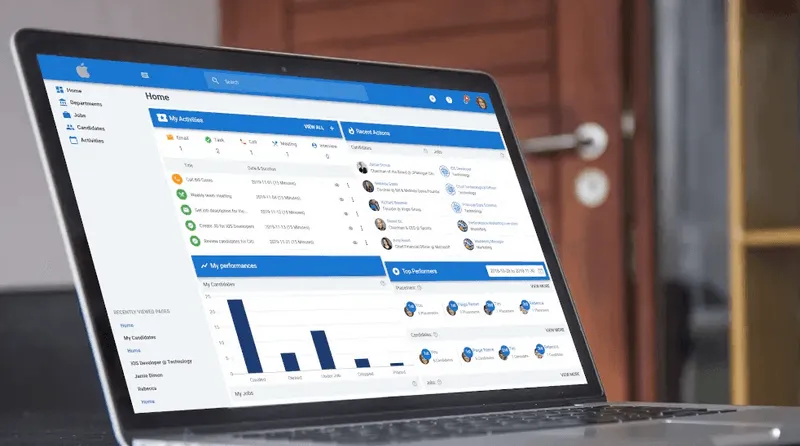
- Leverage Systemic Analytics Over Memory: Utilize Manatal’s Reports and Analytics and Candidate Enrichment features to review the precise timeline of each recruitment stage and evaluate the shared team notes left on candidate profiles. This establishes a factual baseline for interpretation and strategic action rather than relying on subjective recollections.
{{cta}}
Step 2: Establish a Process-Focused Environment
- Leverage Collaborative Hiring Tools and Centralized Team Notes: Address alignment issues objectively by reviewing the real-time feedback and evaluation notes left on candidate profiles. Utilizing Manatal's collaborative communication history allows the team to pinpoint exact calibration gaps and misunderstandings between recruiters and hiring managers without shifting to personal blame.

- Deploy Anonymous Feedback Channels: Implement an unattributed digital intake form or shared document before the live session to collect honest observations from team members, mitigating tension and ensuring psychological safety.
Step 3: Execute the "Start, Stop, Continue" Framework
This framework comes from Agile but translates directly to hiring process retrospectives. It structures the conversation around three questions.
- Identify Critical Process Additions (Start): Determine specific recruitment methodologies to integrate into the upcoming hiring cycle based on verifiable gaps, such as introducing structured recruiting scorecards earlier or engaging hiring managers during the initial job description design phase.

- Eliminate Value-Draining Activities (Stop): Isolate and terminate practices that demonstrably hindered the recent pipeline, such as utilizing counterproductive or illegal interview questions or extending final-round interview schedules over an excessive timeframe.
- Institutionalize Proven Workflows (Continue): Standardize and protect successful tactics that yielded positive data outcomes, such as effective recruitment assessment methods or high-performing referral channels, helping standardize evaluations using measurable criteria where appropriate.
Step 4: Document Actionable HR Takeaways
- Convert General Observations Into Concrete Operational Changes: Avoid ambiguous conclusions; instead, formulate specific operational revisions, shifting from vague goals like improving screening to explicit directives such as removing degree requirements from technical requisitions.
- Utilize Centralized Task Management and Automation Tools: Translate retrospective decisions into immediate action by using Manatal’s integrated Tasks and Reminders system. Assign ownership for operational updates, such as revising job descriptions or adjusting screening criteria, directly within the platform, setting automated deadlines to guarantee accountability before the next requisition opens.
.png)
Why Retrospectives Matter in Modern Recruitment
- Significant Cost and Time Reductions: SHRM data indicate that the average time-to-fill is approximately 44 days. [4] Implementing small, data-driven process adjustments directly minimizes the heavy operational costs associated with vacant organizational roles.
- Elimination of Workflow Bottlenecks: Structured reviews enable hiring teams to pinpoint and resolve specific operational delays, including internal approval bottlenecks, scheduling friction, ineffective assessments, and low-performing sourcing channels.
- Data-Driven Process Optimization: Retrospectives convert recruitment outcomes into immediate action items, allowing teams to rewrite misaligned job descriptions, replace poor interview formats, and reallocate resources toward high-conversion sourcing channels.
- Measurable Business Impact: According to APQC research, high-performing recruitment teams complete hiring processes in roughly half the time of low-performing organizations (20 days versus 40 days), [5] demonstrating the clear financial return of continuous optimization.
- Preservation of Institutional Memory: Documenting historical hiring successes and lessons learned prevents teams from repeating past mistakes. This collective knowledge protects the recruitment process from disruptions during recruiter or hiring manager transitions, establishing a scalable and consistent talent acquisition model.
Retrospective Interview Questions and Examples
This retrospective framework is informed by commonly used hiring retrospective practices, Agile project retrospective methods, and workforce planning guidance published by organizations such as SHRM. The questions below are intended as practical prompts for improving hiring quality, process efficiency, interviewer alignment, contractor onboarding, and long-term workforce planning.
Questions for a Hiring Cycle Retrospective
Use these at the end of every filled or closed role. Adapt based on what the pipeline data already showed you.
On sourcing and pipeline quality:
- Which sourcing channels produced candidates who advanced past the first screen, and which produced volume without quality?
- Did the job description accurately represent what the hiring manager actually wanted, and how do we know?
- Where in the pipeline did we lose candidates whom we later wished we had kept?
On process efficiency:
- At which stage did the most time accumulate, and what caused it?
- Were there approval or scheduling bottlenecks that were within our control to fix?
- Did the assessment format accurately reflect the actual requirements of the role?
On decision quality:
- Were the interview scorecards used consistently across all interviewers?
- Did interviewers calibrate on what “qualified” meant before the process started, or only after disagreements surfaced?
- Looking at the hire we made: what signals from early in the process predicted their performance, and what signals did we ignore or miss?
On team alignment:
- At what point did the hiring team and hiring manager have a shared definition of the ideal candidate?
- Were there misalignments in expectations that emerged late in the process and slowed the final decision?
Conclusion
Embracing a project retrospective interview model transforms recruitment from a series of isolated tasks into a continuous loop of operational improvement. HR leaders and recruitment agencies use these structured debriefs to establish a factual, blame-free environment for growth. One primary purpose of a retrospective is to convert hiring insights into actionable improvements, whether that means implementing automated AI screening or refining team evaluation scorecards. Organizations can build a highly agile talent acquisition engine that consistently reduces time-to-fill while elevating the long-term quality of hire.
Frequently Asked Questions
Q: What is a retrospective interview in the context of HR?
A: In HR, a retrospective interview is a structured debriefing session conducted immediately after a hiring cycle closes or a contract project concludes. Unlike exit interviews, which look at why an individual is leaving, this session evaluates the systemic process itself. It brings together recruiters, hiring managers, and cross-functional stakeholders to objectively review performance data and analytics pulled from recruitment platforms like Manatal, align expectations, and implement immediate workflow upgrades for future recruitment pipelines.
Q: How does a project retrospective interview differ from a standard hiring retrospective?
A: While a hiring retrospective focuses on permanent talent acquisition from job posting to offer acceptance, a project retrospective interview specifically evaluates engagements involving freelancers, external contractors, or temporary project teams. It examines how accurately talent was matched to the scope of work, the efficiency of short-term onboarding protocols, and how internal tools affected contractor output. Teams often use ATS platforms like Manatal to compare the time-to-hire and quality-of-hire metrics between these temporary contracts and permanent roles, better informing future agile workforce planning.
Q: What are some essential questions to ask during a recruitment debrief?
A: A comprehensive retrospective interview example includes evaluating sourcing channels, process efficiency, and team alignment. Teams should ask specific questions, such as "Which sourcing channels produced candidates who successfully advanced past the first screen?" "At which stage did the most time accumulate in the pipeline, and why?" and "Did interviewers calibrate on what 'qualified' meant before the technical interview process started?”
Citation
.webp)







.webp)

.webp)


.webp)


