





Inbound recruiting helps organizations attract talent through employer branding and recruitment marketing, while outbound recruiting enables recruiters to proactively engage qualified candidates for hard-to-fill roles. Understanding the differences between these approaches is essential when evaluating inbound vs outbound recruiting. Research shows that companies with strong employer brands can reduce cost per hire by up to 50%, [1] but employer branding alone may not be enough to fill urgent or specialized positions. This article explores how inbound and outbound recruiting work and when to use each strategy.
What is Outbound Recruiting?
Outbound recruiting is the direct, proactive identification and targeted pursuit of specific professionals. This strategy targets the passive talent market, focusing on individuals who are not actively browsing job boards but possess the exact skills required for your open position.
Core Methods for Outbound Recruitment
- Boolean Search Recruiting: Use precise search strings across search engines and databases to locate niche professionals.
- Cold Email Sequences: Write personalized, multi-step message campaigns detailing specific mutual benefits.
- Industry Networking: Attend niche technical conferences, webinars, trade fairs, or recruitment events to engage with subject matter experts.
- Direct Sourcing Extensions: Deploy software tools to source contact details directly from professional social profiles.
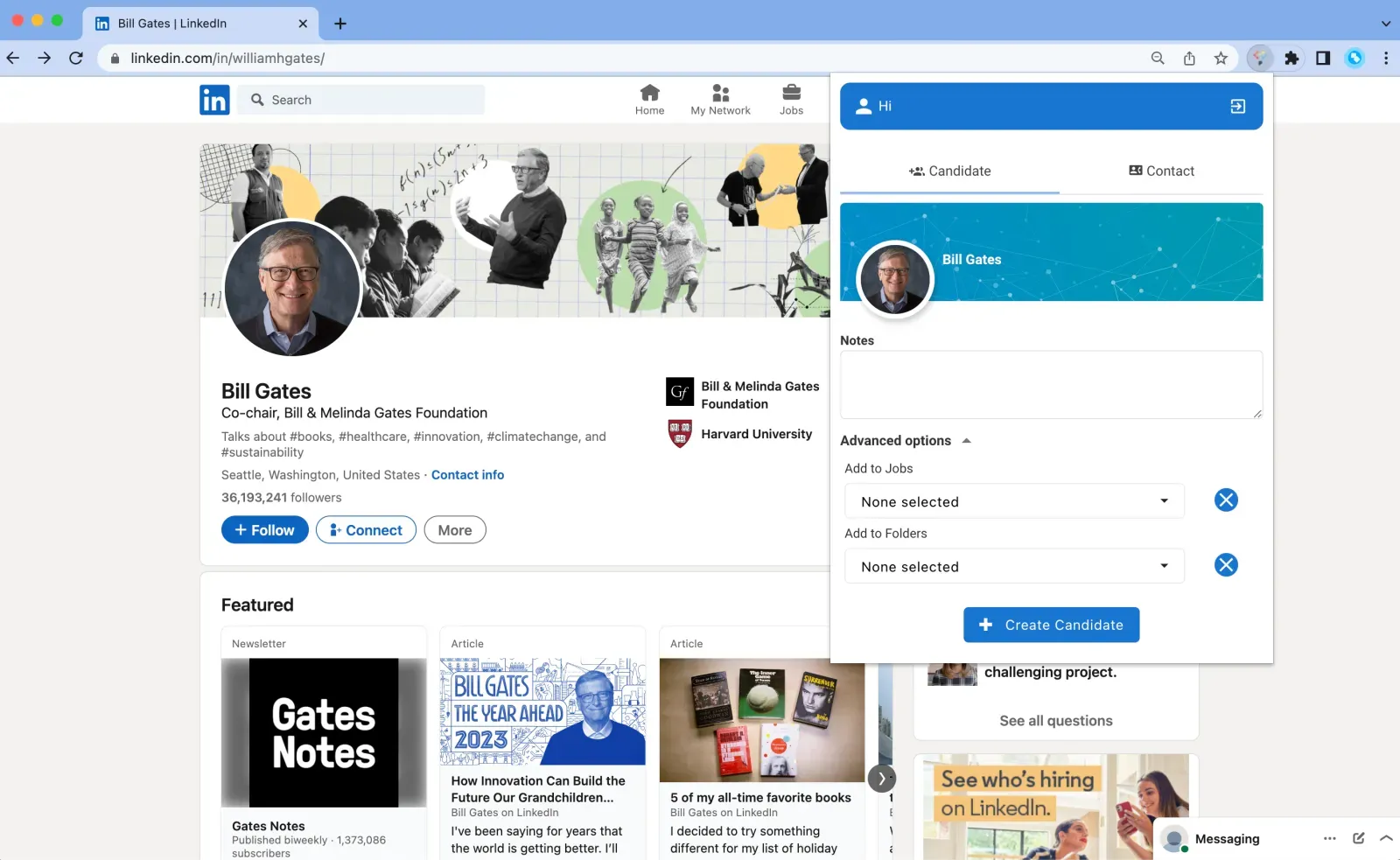
Pro-Tip: The People-Match AI Chrome extension allows for sourcing candidates from platforms such as LinkedIn and Indeed directly into Manatal. It helps parse public information to enhance candidate profiles in your ATS, enabling you to connect, short-list, and save candidates who best meet your job criteria.
{{cta}}
What is Inbound Recruiting?
Inbound recruiting is the process of building employer branding, high-visibility content, and conversion-focused application paths that naturally attract talent to your organization. Instead of hunting for candidates, you build an ecosystem where candidates choose to apply.
Core Tactics for Inbound Recruitment
- Career Page Optimization: Your career site should be the hub of your employer brand. It must be mobile-friendly, transparent about benefits, and feature authentic employee stories rather than stock photography.
- Employer Branding: Use platforms like LinkedIn, Instagram, and Glassdoor to showcase your team culture. Authenticity is the currency of the modern candidate; show the reality of your workspace.
- Search-Optimized Job Descriptions: Move beyond sterile, bulleted lists of requirements. Write compelling descriptions that use keywords potential candidates actually search for. Focus on the impact the role will have rather than just the tasks involved.
- Employee Referral Programs: Leverage your internal network. Employees who understand your culture are your best brand ambassadors and are highly likely to refer candidates who are a strong cultural fit.
Inbound vs Outbound Recruiting: The Core Differences
Choosing where to allocate your recruitment budget requires an understanding of how these methodologies perform across key operational metrics.
How to Build a Hybrid Recruiting Strategy
Industry guidance suggests that combining inbound and outbound recruiting can help organizations reach both active and passive candidates while supporting long-term talent attraction and urgent hiring needs. [2] The key is having a structured process that allows recruiters to move candidates seamlessly between pipelines while maintaining a single source of truth.
Step 1: Build a Consistent Inbound Talent Flow
Start by creating a steady stream of active candidates through your inbound recruitment channels.
- Publish job openings across multiple job boards and career sites:
- Avoid broadcasting mindlessly. Select platforms that precisely match your target audience: LinkedIn Jobs, Indeed, Glassdoor, industry-specific job boards (e.g., Wellfound for startups, Dice for tech talent, eFinancialCareers for finance professionals), university career centers, and alumni networks.
- Establish a "Job Refresh" calendar every 14–30 days to keep your listings active and ranking at the top of job board search algorithms.
- Optimize job descriptions with clear requirements and employer branding:
- Transform traditional job descriptions into dynamic "job advertisements.” Focus heavily on “What you will learn and achieve” rather than just listing a wall of daily duties.
- Strategically place critical SEO keywords (e.g., trending job titles, core skills, key tools) within the first three lines. Clearly specify the work model (e.g., remote, hybrid 2 days/week) and provide a transparent salary range to attract the right candidates from day one.
- Encourage employee referrals and talent community sign-ups:
- Implement an intuitive, frictionless "Employee Referral Program" with staggered cash bonuses (e.g., 50% paid on hire, 50% paid post-probation). Send weekly open-role updates to the company via internal channels like Slack or Microsoft Teams.
- Add a prominent "Join Our Talent Network" button on your career site to capture high-quality leads who are interested in your company but don't see an open role that currently fits their profile.
Step 2: Use Outbound Recruiting for Critical and Hard-to-Fill Roles
- Identify target candidate profiles:
- Conduct a structured "Intake Meeting" with the Hiring Manager (HM) to align on the Ideal Candidate Profile (ICP) before starting.
- Lock down 3 non-negotiable skills (must-haves) and 3 preferred skills (nice-to-haves). Identify and list at least 5–10 competitor target companies to source directly from.
- Source passive candidates through LinkedIn and professional networks:
- Utilize advanced Boolean search operators (e.g.,
("Software Engineer" OR "Developer") AND Python AND Django NOT Intern) to narrow down the target pool with high precision. - Look beyond standard LinkedIn profiles. Inspect code repositories on GitHub (for tech talent), portfolios on Behance/Dribbble (for designers), or cross-reference speaker lists from niche industry conferences.
- Utilize advanced Boolean search operators (e.g.,
- Launch personalized outreach campaigns:
- Stop using generic, 100% copy-pasted templates. Candidates spot them instantly.
- Follow the "3-Sentence Personalization Rule": Sentence 1: Greet them and mention a specific project or achievement of theirs you recently researched. Sentence 2: Explain exactly why their background bridges perfectly with your company's upcoming challenges. Sentence 3: Drop a low-friction Call-to-Action (CTA) (e.g., "Are you open to a casual 15-minute coffee chat this week? Here is my Calendly link.").
Step 3: Centralize All Candidate Data in One Talent Pool
A hybrid recruiting strategy only works when inbound applicants and sourced candidates are managed in a unified system.
- Consolidate candidate information into a single database or ATS:
- Enforce a golden team rule: "If it isn’t in the ATS, it doesn't exist." Every contact made via LinkedIn, networking events, or referrals must be logged into the ATS immediately.
- Equip the team with an ATS Chrome extension to allow one-click profile saving directly from professional networks into your database.
- Eliminate spreadsheet-based tracking wherever possible:
- Migrate all scattered data from Excel or Google Sheets into the centralized system to eliminate data silos, prevent candidate drop-offs, and maintain strict compliance with local data privacy laws (e.g., PDPA/GDPR).
- Standardize candidate profiles and hiring stages:
- Establish a uniform, company-wide hiring pipeline (e.g.,
[Screening -> HM Review -> Interview -> Offer -> Hired]). Recruiters must not create custom, ad-hoc stages, ensuring that clean, reliable data analytics can be pulled at any time.
- Establish a uniform, company-wide hiring pipeline (e.g.,
- Ensure recruiters have visibility across the entire talent pipeline:
- Configure system visibility and activity logs so recruiters can see ongoing communication history. This entirely prevents duplicate outreach, where two recruiters unknowingly pitch the same candidate simultaneously.
Step 4: Prioritize Candidates with Structured Screening
As candidate volume grows, manual screening can quickly become a bottleneck.
- Define role-specific evaluation criteria:
- Embed hard "Knockout Questions" into the application form (e.g., "Do you have professional experience with Tool X?" or "Are you comfortable working in a hybrid framework?") to automatically filter out unqualified applicants before they reach human review.
- Use structured screening questions and scorecards:
- Design a standard recruiting scorecard evaluating core competencies on a consistent 1–5 scale.
- Ask the exact same sequence of foundational questions to every candidate during the initial phone screen. This ensures an objective, apples-to-apples comparison and minimizes implicit bias.
- Standardize candidate assessments across recruiters:
- Conduct calibration alignment sessions within the recruitment team. Define exactly what a score of 3 (meets expectations) vs. a score of 5 (exceptional) looks like for key question sets.
- Prioritize candidates who meet the most critical requirements:
- Utilize an automated tagging system in your ATS (e.g., Tag:
#TopTalent,#StrongTech). Fast-track these profiles to the hiring manager within 24–48 hours to secure a screening slot before they accept competing offers.
- Utilize an automated tagging system in your ATS (e.g., Tag:
Step 5: Create a Talent Recycling Process
Not every candidate is a fit today, but they may be perfect for future opportunities. Recruiters can organize candidates into talent pools and leverage advanced search filters to quickly rediscover qualified talent already in their database before launching new sourcing efforts.
- Move qualified but unavailable candidates into talent pools:
- Build a robust categorization system for high-performing, runner-up candidates. Tag them under specialized categories such as
#FutureHire, and leave detailed feedback notes regarding their strengths.
- Build a robust categorization system for high-performing, runner-up candidates. Tag them under specialized categories such as
- Segment candidates by skills, experience, and career interests:
- Structure dedicated talent pools by domain expertise (e.g.,
[Talent Pool] Go Developer,[Talent Pool] Performance Marketing) instead of dumping all records into a single general database. - Apply seniority level tags (e.g.,
#Senior,#Manager) to enable instant filtering and laser-focused sourcing later on.
- Structure dedicated talent pools by domain expertise (e.g.,
- Re-engage candidates when relevant positions become available:
- Launch automated nurture campaigns every 3–6 months. Send tailored updates such as company milestones, exciting new projects, or a simple, warm touchpoint text checking if they are currently open to new career transitions.
Step 6: Search Existing Talent Before Sourcing New Candidates
Before investing time and resources into outbound sourcing, review your existing candidate database first.
- Search previous applicants and passive candidates:
- Implement a strict internal Service Level Agreement (SLA): "When a new job opens, external sourcing is locked for the first 3 days." Recruiters must first mine the existing ATS database.
- Use advanced semantic and keyword search tools within the ATS to locate previous candidates who scored exceptionally well in past interview cycles.
- Match existing profiles against new vacancies:
- Review past candidates who declined an offer from your company roughly 6–12 months ago; their current professional situation may have changed, making them receptive to a new approach.
- Re-engage qualified candidates who have already expressed interest:
- Reach out with highly intentional, personalized messaging that references their history with the company (e.g., "When you went through our pipeline 6 months ago, the team was incredibly impressed by your skills in X. A new opportunity has opened up that fits your profile perfectly, I would love to catch up."
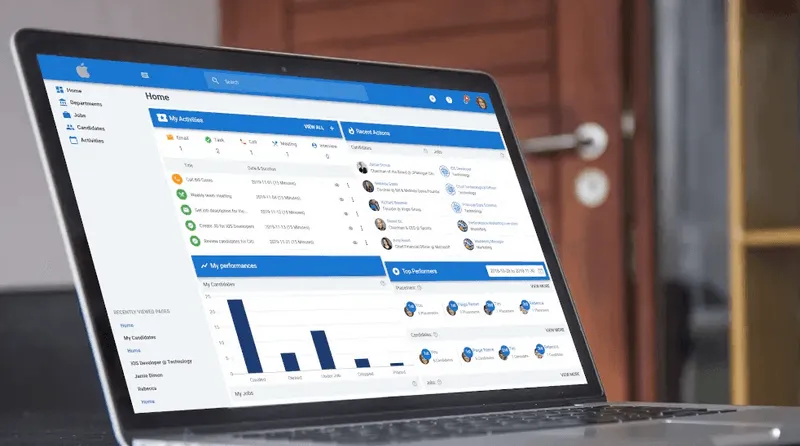
Manatal's centralized candidate database, advanced search filters, and talent pool management features make it easy to rediscover qualified candidates from previous hiring campaigns. Recruiters can quickly identify relevant profiles and re-engage them for new opportunities before launching fresh sourcing efforts, helping reduce time-to-fill and sourcing costs.
Measuring the ROI of Your Sourcing Channels
Build the measurement framework before you build the strategy. Without clean data, you cannot optimize either channel.
- For inbound: Track source of hire by channel. An Indeed listing might generate 300 applicants and four hires. A niche engineering board might generate 20 applicants and six hires. That is where your budget belongs. Also track the application-to-screen rate and application-to-offer rate to find where your funnel leaks.
- For outbound, the core metric is the sourced-to-hire rate. Track your response rate, interview conversion rate, and offer acceptance rate by campaign. A low response rate means your targeting or messaging is off. High response but low interview conversion means your qualification criteria need tightening.
Compare quality of hire across both channels over a 90-day post-hire window. Outbound hires at the executive level typically score higher on role fit. Referral hires score highest on cultural alignment. Use that data to set channel allocation rules before a role opens, not during the panic of trying to fill it.
Conclusion
The outdated debate of inbound vs. outbound recruiting is replaced by integrating both strategies. Building a strong employer brand and employing a data-driven, centralized platform allows companies to effectively attract quality talent and fill urgent roles. This approach reduces workflow friction and enhances candidate experiences by focusing on meaningful interactions over administrative tasks.
Start a free trial of Manatal and build your unified inbound and outbound pipeline today.
Frequently Asked Questions
Q: What is the main structural difference in outbound vs inbound recruiting?
A: The core difference lies in candidate intent and outreach direction. Inbound recruiting builds a brand ecosystem that naturally attracts active job seekers to apply to your company, whereas outbound recruiting involves recruiters directly sourcing and contacting passive professionals who aren't actively looking for a new role.
Q: When should a company prioritize outbound recruiting over inbound methods?
A: You should prioritize outbound sourcing when filling executive-level positions, highly technical roles, or unexpected, urgent talent gaps. Because these specialized candidates rarely browse job boards, direct, personalized outreach is necessary to get their attention quickly.
Q: How does inbound recruitment lower long-term talent acquisition costs?
A: An effective inbound recruitment strategy relies on a strong employer brand, social proof, and organic career page content. Over time, this content acts as a compounding asset, generating a continuous pipeline of warm candidates without requiring ongoing, manual sourcing hours or high ad spend.
Q: Can a company successfully combine inbound sourcing and outbound methods?
A: Yes. The most effective strategy is a hybrid model. Recruiters can use automated inbound channels to keep evergreen and high-volume roles filled while simultaneously deploying targeted outbound campaigns for critical, hard-to-fill vacancies.
Q: How does an ATS like Manatal bridge the gap between inbound and outbound pipelines?
A: Manatal acts as a centralized database that unifies both streams. It allows you to automatically parse inbound resumes from multiple job boards while using its Chrome Extension to instantly import outbound candidates from professional networks, ensuring all talent data is screened and scored in one place.
Citation:
.webp)







.webp)

.webp)


.webp)


